Home About Us Our Publications Email Us:
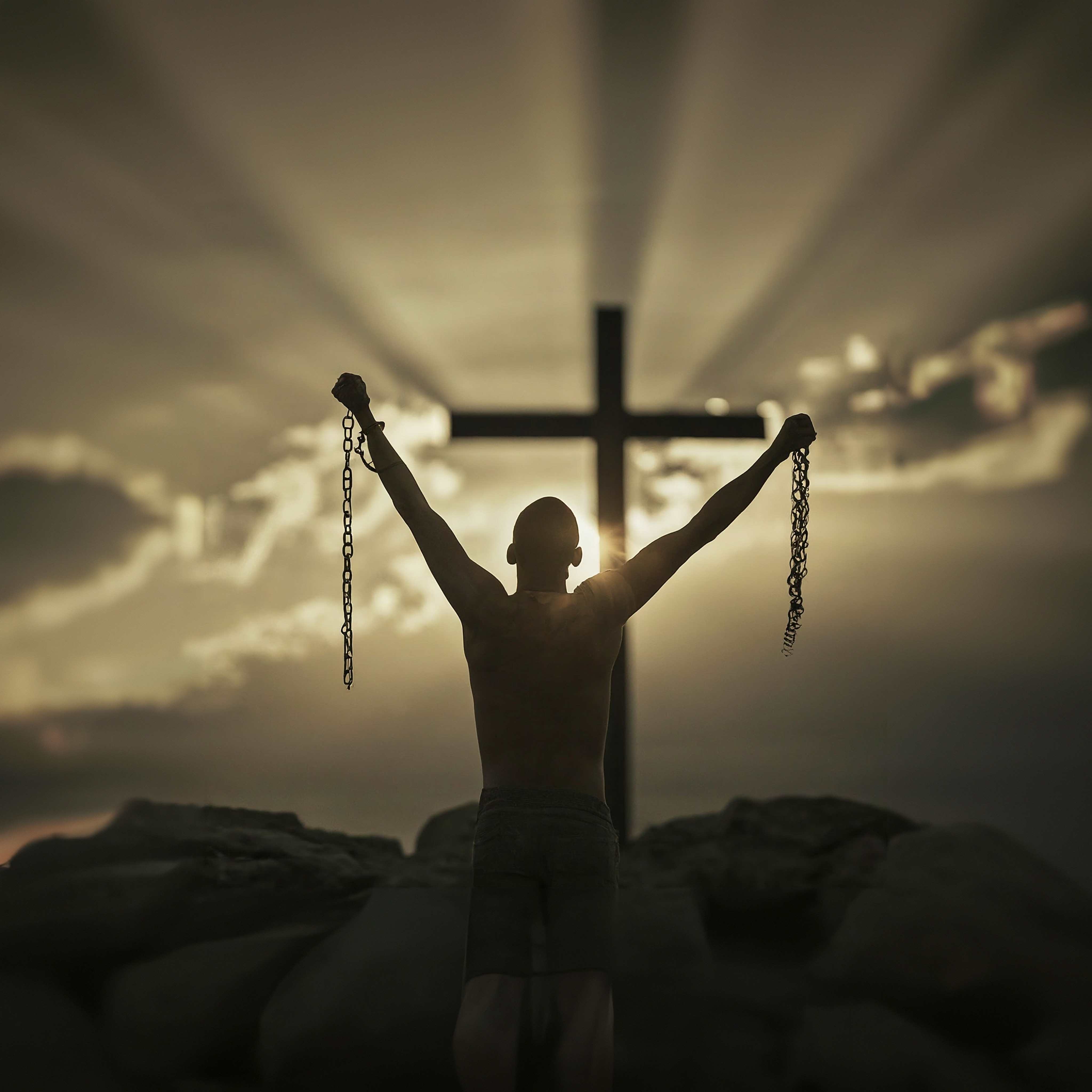
“For the law of the Spirit of life in Christ
Jesus has made me free from the law of sin and death.”
(Romans
8:2)
Sarah
– Wife of Abraham – Wikipedia
From Wikipedia, the free encyclopedia
This article is about the biblical figure. For the name,
see Sarah (given name). For other uses, see Sarah (disambiguation).
Sarah
שָׂרָה
Personal life
Born
Ur of the Chaldees
Died
Hebron, Canaan
Buried Cave of the
Patriarchs
Spouse Abraham
Children Isaac
Sarah[a] (originally Sarai)[b] is
a biblical matriarch, prophet, and major figure in Abrahamic religions. While
different Abrahamic faiths portray her differently, Judaism, Christianity, and
Islam all depict her character similarly, as that of a pious woman, renowned
for her hospitality and beauty, the wife of Abraham, and the mother of Isaac.
Sarah has her feast day on 1 September in the Catholic Church,[1] 19 August in
the Coptic Orthodox Church,[2] 20 January in the LCMS,[3] and 12 and 20
December in the Eastern Orthodox Church.[4]
In the Hebrew Bible
Narrative
In the biblical narrative, Sarah is the wife of Abraham.
She was originally called Sarai. During the narrative of the covenant of
circumcision in Genesis 17, God renames Abram and Sarai as Abraham and Sarah,
then promises them that they will have a son. According to most modern
scholars, both Sarah and Sarai come from the same root SRR, with both meaning
"important woman".[5] A minority of scholars derive Sarai from the
root SRY, meaning "contend with" or "withstand", similar to
the name Israel.[5]
Departure from Ur
Terah, with Abram (as he was
then called), Sarai and Lot, departed for Canaan, but stopped in a place named
Harran, where Terah remained until he died at the age
of 205.[6] God told Abram to leave his country and his father's house for a land
that he would show him, promising to make of him a great nation, bless him,
make his name great, bless those who blessed him, and curse "him"
that curses him.[7] Following God's command, Abram took his wife Sarai, his
nephew Lot, and the wealth and slaves that they had acquired, and traveled to
Shechem in Canaan. Abram was 75 at this time.[8]
Pharaoh
Sarai Is Taken to Pharaoh's Palace by James Tissot.
There was a severe famine in the land of Canaan, so Abram
and Lot and their households travelled south to Egypt. On the journey to Egypt,
Abram instructed Sarai to identify herself only as his sister, fearing that the
Egyptians would kill him in order to take his wife, saying,
I know what a beautiful woman you are. When the Egyptians
see you, they will say, 'this is his wife.' Then they will kill me but will let
you live. Say you are my sister, so that I will be treated well for your sake
and my life will be spared because of you.[9]
When brought before Pharaoh, Sarai said that Abram was her
brother, and the king thereupon took her into his palace and bestowed upon
Abram many presents and marks of distinction. However, God afflicted Pharaoh's
household with great plagues.[10] Pharaoh then realized that Sarai was Abram's
wife and demanded that they leave Egypt immediately.[11]
Genesis 16:1 records that Sarai had "an Egyptian
servant", Hagar,[12] whom Sarai may have brought with her from this
time.[13]
Hagar and Ishmael
Banishment of Hagar, an 18th century etching from Paris,
Fr. Fanet, editor, Rue des Saints Pères
n° 10, Sarah is seen at the left, looking on.
After having lived in Canaan for ten years and still
childless, Sarai suggested that Abram have a child with her Egyptian
handmaiden, Hagar, to which he agreed. Hagar's pregnancy resulted in tension between
Sarai and Hagar, and Sarai complained to her husband that the handmaid no
longer respected her.[14] At one point, Hagar fled from her mistress but
returned after angels consoled her. She gave birth to Abram's son Ishmael when
Abram was eighty-six years old.[15]
Isaac
In Genesis 17, when Abram was ninety-nine years old, God
declared his new name: "Abraham" – "a father of many
nations", and made the covenant of circumcision with him. God gave Sarai
the new name "Sarah", and blessed her.[16] Then God told Abraham that
Sarah would have a son and Abraham responded by laughing at the idea of a
pregnancy at their advanced age. Not long afterwards, Abraham and Sarah were
visited by three men. One of the visitors told Abraham that upon his return
next year, Sarah would have a son. While at the tent entrance, Sarah overheard
what was said, and she laughed to herself about the prospect of having a child
at their ages. The visitor inquired of Abraham why Sarah laughed at the idea of
bearing a child, for her age was as nothing to God. Sarah denied laughing,
because she was afraid.[17]
Sarah soon became pregnant and bore a son to Abraham, at
the very time which had been spoken. The patriarch, then a hundred years old,
named the child "Isaac" (Hebrew yitschaq,
"laughter") and circumcised him when he was eight days old.[18] For
Sarah, the thought of giving birth and nursing a child, at such an old age,
also brought her much laughter, as she declared, "God had made me to
laugh, [so that] all that hear will laugh with me."[19] Abraham held a
great feast on the day when Isaac was weaned.[20] It was during this banquet
that Sarah happened upon the then teenaged Ishmael mocking Isaac,[21] and she
was so disturbed that she requested that both he and Hagar be banished.[22]
Abraham was initially distressed by this, but he relented when told by God to
do as his wife had asked.[23]
Abimelech
After being visited by the three men, Abraham and Sarah
settled between Kadesh and Shur in the land of the
Philistines. While he was living in Gerar, Abraham
again claimed that Sarah was his sister. King Abimelech subsequently had her
brought to him. Later, God came to Abimelech in a dream and declared that
taking her would result in death because she was a married woman. Abimelech,
who had not laid hands on her, inquired if he would also slay a righteous
nation, especially since Abraham had claimed that he and Sarah were siblings.
In response, God told Abimelech that he did indeed have a blameless heart and
that was why he continued to exist. However, if he did not return Sarah to
Abraham, God would surely destroy Abimelech and his entire household. Abimelech
was informed that Abraham was a prophet who would pray for him.[24]
Early the next morning, Abimelech informed his servants of
his dream and approached Abraham inquiring as to why he had brought such great
guilt upon his kingdom. Abraham replied that he thought there was no fear of
God in that place, and that they might kill him for his wife. Then Abraham
defended what he had said as not being a lie at all: "And yet indeed she
is my sister; she is the daughter of my father, but not the daughter of my
mother; and she became my wife."[25] Abimelech returned Sarah to Abraham,
and gave him gifts of sheep, oxen, and servants; and invited him to settle
wherever he pleased in Abimelech's lands. Further, Abimelech gave Abraham a
thousand pieces of silver to serve as Sarah's vindication before all. Abraham
then prayed for Abimelech and his household, since God had stricken the women
with infertility because of the taking of Sarah.[26]
Death
Sarah died at the age of 127.[27] Abraham mourned after her
death,[28] and bought a piece of land with a cave near Hebron from Ephron the
Hittite in which to bury her. This was the first land owned by the Israelites
in Canaan, according to the biblical narrative. The place became known as the
Cave of the Patriarchs.[29][30]: 26
After her death, Abraham married Keturah, whose identity
midrashic writers and biblical scholars have debated (that is, whether or not
she was actually Hagar),[31] and together they had at least six more children.[32]
Isaac found comfort after the death of his mother in his
marriage to Rebekah.[33]
Later Hebrew Bible references
Sarah is mentioned alongside Abraham in Isaiah 51:2:
“Look to Abraham your father, and to Sarah who bore you.”
New Testament references
The First Epistle of Peter praises Sarah for obeying her
husband.[35] She is praised for her faith in the Hebrews "hall of
faith" passage alongside a number of other Old Testament figures.[36]
Other New Testament references to Sarah are in Romans[37] and Galatians.[38] In
Galatians 4, she and Hagar are used as an allegory of the old and new
covenants:
"For it is written that Abraham had two sons, one by
the slave woman and the other by the free woman. His son by the slave woman was
born in the ordinary way; but his son by the free woman was born as the result
of a promise. These things may be taken figuratively, for the women represent
two covenants. One covenant is from Mount Sinai and bears children who are to
be slaves: This is Hagar. Now Hagar stands for Mount Sinai and corresponds to
the present city of Jerusalem, because she is in slavery with her children. But
the Jerusalem that is above is free, and she is our mother...Now you, brothers,
like Isaac, are children of promise...Therefore, brothers, we are not children
of the slave woman, but of the free woman."[39]
Historicity
In the early and middle 20th century, leading
archaeologists such as William Foxwell Albright and
biblical scholars such as Albrecht Alt believed that the patriarchs and matriarchs
were either real individuals or believable composites of people who lived in
the "patriarchal age", the 2nd millennium BCE. But in the 1970s, new
arguments concerning Israel's past and the biblical texts challenged these
views; these arguments can be found in Thomas L. Thompson's The Historicity of
the Patriarchal Narratives (1974), and John Van Seters'
Abraham in History and Tradition (1975). Thompson, a literary scholar, based
his argument on archaeology and ancient texts. His thesis centered on the lack
of compelling evidence that the patriarchs lived in the 2nd millennium BCE, and
noted how certain biblical texts reflected first-millennium conditions and
concerns. Van Seters examined the patriarchal stories
and argued that their names, social milieu, and messages strongly suggested
that they were Iron Age creations.[40]: 18–19 By the beginning of
the 21st century, archaeologists had given up hope of recovering any context
that would make the patriarchs and matriarchs credible historical figures.[41][42]: 98
and fn.2
Religious views
In Judaism
Sarah first appears in the Book of Genesis, while the
Midrash and Aggadah provide some additional commentary on her life and role
within Judaism and its ancestral form, Yahwism. She is born Sarai (Hebrew: שָׂרַי) in Ur Kaśdim,
or Ur of the Chaldees, believed to have been in present-day Iraq, 1,958 Anno
Mundi, according to the Hebrew calendar. She was the daughter of Haran[43] and
the granddaughter of Terah, an idolater who worshiped
the Moon god Nanna[44] and high-ranking servant of Nimrod,[45] the king of Shinar,
or Mesopotamia, but not of his wife, Amathlai.[46]
Her name is a feminine form of sar (Hebrew: שַׂר),
meaning "chieftain" or "prince".[47] Through Terah, she would have been a 10th-generation descendant of
Noah, still alive,[48] living in the Mountains of Ararat, and over nine
centuries old at the time of her birth. No details are given as to her life or
her religious beliefs before Abraham's return to Ur Kaśdim
to thwart Nimrod's efforts to proclaim himself a god. It is known she wed
Abraham, then called Abram, sometime between the ages of forty and five and
following her husband's public humiliation of Nimrod, she, along with her
father Terah, her orphaned nephew Lot, her manservant
Eliezer, and some three hundred others left Ur Kaśdim
for Canaan, the present-day Levant, to save Abraham from a plot by Nimrod to
destroy him, commanded to do so by God.[49]
En route to Canaan, the
group stopped in Harran, possibly located in present-day Turkey, settling there
for some twenty years, until God urged them to move on and so, they left Terah behind to live out his days, and traveled through
Shechem and Bethel, both cities in the present-day West Bank, and, when a
famine strikes the region, to Mizraim, present-day
Egypt. While in Mizraim, Sarah's beauty attracts the
attention of Pharaoh and Abraham, fearing the Egyptians would kill him if they
knew Sarah was married to him, introduces himself as her brother and so,
Pharaoh bestows upon Abraham great wealth, in the form of livestock and slaves,
including Hagar, so that he may take Sarah as his concubine, to live in his
palace with him.[citation needed] For Pharaoh's unintentional transgression
against Abraham, he and members of his household, save for Sarah, are stricken
with plague. Pharaoh then realizes that Abraham is Sarah's husband, not only
her brother. Despite Abraham's willful deceit of Pharaoh, Pharaoh does not
punish Abraham nor does he require the return of the wealth Abram was given in
exchange for Sarah. However, he orders them to leave Mizraim.
After leaving Mizraim, Lot splits from their group
amicably. He eventually settles in Sodom, over disputes related to the
livestock.
They returned to Canaan, and a decade passed and still, she
and Abraham had no children. Thus, Sarah offered Hagar, her slavewoman,
as a concubine to her husband so that he may have a child. Hagar became
pregnant with Ishmael. During Hagar's pregnancy, Sarah and Hagar's relationship
deteriorated rapidly, with Sarah striking her and Hagar fleeing into the desert
to avoid her, returning only at the urging of angels. God then told Abraham
that Sarah would give him a son. Sarah, then ninety years old, laughed at this
idea. But, as prophesied, she became pregnant with Isaac and she nursed him
herself. She would ultimately demand that Abraham send Hagar and Ishmael away
and so, Abraham banished them and sent them into the desert.
Sometime after the birth of Ishmael but before the birth of
Isaac, Sarah and Abraham travel to Gerar, as
described in Genesis 20, where events took place which mirrored those of Mizraim, in which a king, this time Abimelech, took an
interest in Sarah for her beauty and, as he had done in Mizraim,
Abraham presented himself as her brother instead of her husband and so,
believing her unmarried Abimelech took her into her house as Pharaoh had
though, this time, God intervened before he touched Sarah, through dreams and
plague. Abimelech confronted Abraham, angry that his lie had caused him to
provoke the wrath of a god, but, also like Pharaoh, he bestows great wealth
upon Abraham. The two men part amicably, with Abraham saying he will pray for
the king, who is childless and without an heir.
Sarah died at the age of 127 years.[50] According to
rabbinic tradition in the Midrash, her passing was directly connected to the
shock of the Binding of Isaac. Midrashic accounts vary on the exact emotional
cause: some state she died from immediate grief upon hearing that her son was
about to be sacrificed,[51] others record that Satan intentionally deceived her
into believing Isaac had already been slaughtered causing her to die of a
broken heart,[52] while a third tradition states that Satan later corrected his
report and informed her that Isaac had survived, causing her to die of
overwhelming joy upon learning that he was actually alive.[53][54][55] She is
buried in Kiryat Arba, in
Hebron, in the Cave of Machpela.
In rabbinic literature
The Talmud identifies Sarai with Iscah,
daughter of Abraham's deceased brother Haran,[56] so that in this Sarah turns
out to be the niece of Abraham and the sister of Lot and Milcah.[57]
While in Genesis 20:12 Abraham claims that Sarah "is indeed my sister, my
father's daughter" rather than his niece, Rashi asserts that the term
"daughter" can also be used regarding a granddaughter, and thus
"sister" can be used regarding a niece.[58]
The fifth-century rabbinic midrash Genesis Rabbah dedicates
a large amount of attention to Sarah in particular.[59] Not only are a
relatively large number of drashot dedicated to the
matriarch, but she is repeatedly depicted as a model of personal and religious
excellence. This is marked break from the biblical and Second Temple literature
in which she plays a far more ancillary role. In light of parallels between the
rabbis' characterization of Sarah and early Christian themes connected to the
Virgin Mary popular in this same period, it has been suggested that the rabbis
used their portrayal of Sarah to establish her as a Jewish alternative to the
Virgin Mary.
When brought before Pharaoh, Sarah said that Abram was her
brother, and the king thereupon bestowed upon the latter many presents and
marks of distinction.[60] As a token of his love for Sarai the king deeded his
entire property to her, and gave her the land of Goshen as her hereditary
possession: for this reason the Israelites subsequently lived in that land.[61]
Sarai prayed to God to deliver her from the king, and He thereupon sent an
angel, who struck Pharaoh whenever he attempted to touch her. Pharaoh was so
astonished at these blows that he spoke kindly to Sarai, who confessed that she
was Abraham's wife. The king then ceased to annoy her.[60] According to another
version, Pharaoh persisted in annoying her after she had told him that she was
a married woman; thereupon the angel struck him so violently that he became
ill, and was thereby prevented from continuing to trouble her.[62] According to
one tradition it was when Pharaoh saw these miracles wrought in Sarai's behalf
that he gave her his daughter Hagar as slave, saying: "It is better that
my daughter should be a slave in the house of such a woman than mistress in
another house." Abimelech acted likewise.[63] In Genesis 17:15, God
changes her name to Sarah (princess) ("a woman of high rank") as part
of the covenant with El Shaddai after Hagar bears Abram his first
born son Ishmael.
Sarai treated Hagar well, and induced women who came to
visit her to visit Hagar also. Hagar, when pregnant by Abraham, began to act
superciliously toward Sarai, provoking the latter to treat her harshly, to
impose heavy work upon her, and even to strike her.[64] Some believe Sarai was
originally destined to reach the age of 175 years, but forty-eight years of
this span of life were taken away from her because she complained of Abraham,
blaming him as though he was the cause that Hagar no longer respected
her.[65][66] Sarah was sterile; but a miracle was granted to her[67] after her
name was changed from "Sarai" to "Sarah".[65] According to
one myth, when her fertility had been restored and she had given birth to
Isaac, the people would not believe in the miracle, saying that the patriarch
and his wife had adopted a foundling and pretended that it was their own son.
Abraham thereupon invited all the notabilities to a banquet on the day when
Isaac was to be weaned. Sarah invited the women, also, who brought their
infants with them; and on this occasion she gave milk from her breasts to all
the strange children, thus convincing the guests of the miracle.[68]
Legends connect Sarah's death with the attempted sacrifice
of Isaac,[69] however, there are two versions of the story. According to one,
Samael came to her and said: "Your old husband seized the boy and
sacrificed him. The boy wailed and wept; but he could not escape from his
father." Sarah began to cry bitterly, and ultimately died of her
grief.[70] According to the other legend, Satan came to Sarah disguised as an
old man, and told her that Isaac had been sacrificed. Believing it to be true,
she cried bitterly, but soon comforted herself with the thought that the
sacrifice had been offered at the command of God. She started from Beer-sheba to Hebron, asking everyone she met if he knew in
which direction Abraham had gone. Then Satan came again in human shape and told
her that it was not true that Isaac had been sacrificed, but that he was living
and would soon return with his father. Sarah, on hearing this, died of joy at
Hebron. Abraham and Isaac returned to their home at Beer-sheba,
and, not finding Sarah there, went to Hebron, where they discovered her
dead.[71][72] According to the Genesis Rabbah, during Sarah's lifetime her
house was always hospitably open, the dough was miraculously increased, a light
burned from Friday evening to Saturday evening, and a pillar of cloud rested
upon the entrance to her tent.[73]
In Islam
The Islamic portrayal of Sarah, who is unnamed in the
Quran, mimics that of her portrayal in Judaism and Christianity, in that she is
a good woman, kin and wife to Abraham, who, after years of barrenness, has a
son, the prophet Isaac (Is'ḥāq). However,
notable differences exist in the portrayal of her relationships with Abraham,
Hagar, and Ishmael. She is not portrayed as Abraham's sister but his first
cousin, said to be the daughter of Terah's brother,
Haran, and Hagar is not portrayed as Abraham's mistress but a second wife,
eliminating the hostility that Sarah feels for Hagar during her pregnancy and
toward Ishmael.[74][75][76]
The Quran likewise repeats the biblical story that Sarah
laughed when she received a divine message confirming her pregnancy, although
in the Quran this message is heralded by angels and not by God himself:[77]
11:69 And surely Our messenger-angels came to Abraham with
good news ˹of a son˺. They greeted ˹him with˺, “Peace!” And
he replied, “Peace ˹be upon you˺!” Then it was not long before he
brought ˹them˺ a ˹fat,˺ roasted
calf.
11:70 And when he saw that their hands did not reach for
the food, he became suspicious and fearful of them. They reassured
˹him˺, “Do not be afraid! We are ˹angels˺ sent
˹only˺ against the people of Lot.”
11:71 And his wife was standing by, so she laughed, then We
gave her good news of ˹the birth of˺ Isaac, and, after him, Jacob.
11:72 She wondered, “Oh, my! How can I have a child in this
old age, and my husband here is an old man? This is truly an astonishing
thing!”
— Surah
Hud 11:69-72
Tomb of Sarah
Mausoleum of Sarah, 1911.
Sarah is believed to be buried in the Cave of the
Patriarchs (known by Muslims as the Sanctuary of Abraham). The compound,
located in the ancient city of Hebron, is the second holiest site for Jews
(after the Temple Mount in Jerusalem), and is also venerated by Christians and
Muslims, both of whom have traditions which maintain that the site is the
burial place of three biblical couples; Abraham and Sarah, Isaac and Rebecca,
and Jacob and Leah.[78]
Relationship to Abraham
Main article: Wife–sister narratives in the Book of Genesis
There are three stories in Genesis where a patriarch
identifies his wife as his sister; scholars debate the relationship among
these, with some saying that the account of the encounter of Abraham and Sarah
with Pharaoh in Genesis 12-13 is the oldest, while the stories of Abraham and
Sarah encounter King Abimelech in Genesis 20, and of Isaac and Rebecca's
encounter with a different King Abimelech in Genesis 26, are interpretations of
that one, generated to explain it or deal with other matters of concern. It is
not clear which of the stories is actually older, or what the intent of the
editors of the Bible may have been.[79] Such unions were later explicitly
banned in the Book of Leviticus (Leviticus 18:9). However, some commentators
identify her as Iscah (Genesis 11:29), a daughter of
Abraham's brother Haran,[80][81] and point out that Abraham's claim that she
was his half-sister was a lie to avoid saying that she was his wife.
According to Emanuel Feldman (1965), basing his argument on
Albright's interpretation of the archaeology of Nuzu,
a wife could legally be awarded the title "sister", and that this was
the most sacred form of marriage, and hence Abraham and Isaac referred to their
wives as "sisters" for this reason.[citation needed] Most
archaeologists,[who?] however, dispute that view, instead arguing the opposite
- that sisters in the region were often awarded the title "wife" in
order to give them much greater status in society.[82] Savina
Teubal's book Sarah the Priestess posits that while
Sarah was indeed both Abram's wife and sister, there was no incest taboo
because she was a half-sister by a different mother.[83]
In popular culture
'Sarah' is also the title of one of Wales' best known
hymns. Here are the first few opening bars, sung by the Pontarddulais
Male Voice Choir.
Sarah has been featured in several novels, and she is the
central character in Sarah by Orson Scott Card in the Women of Genesis series,
Sarai: A Novel by Jill Eileen Smith (2012),[84] and Sarah: A Novel by Marek
Halter, and Song of Sarai by Zannah Martin. In the
Christian fiction novel Redeeming Love by Francine Rivers, the protagonist,
called "Angel" throughout the duration of the story, is barren. At
the end of the book, she reveals that her birth name is "Sarah" to
her husband, who takes the revelation as a promise from God that they will one
day be able to have children. Sarah is also the focus of one of several stories
collected in Sarah and After by Lynne Reid Banks. In the 1994 film Abraham,
Sarah is portrayed by Barbara Hershey.
Sarah is also a subject discussed in nonfiction books. In
Twelve Extraordinary Women by Pastor John F. MacArthur, her life and story is
analyzed along with that of Eve, Rahab, Ruth, Hannah, the Virgin Mary, Anna the
Prophetess, the Samaritan woman at the well, Mary of Bethany, Martha, Mary
Magdalene, and Lydia of Thyatira.[85] Sarah appears alongside several other
biblical women in Slightly Bad Girls of the Bible: Flawed Women Loved by a
Flawless God by Liz Curtis Higgs.[86]
See also
Pregnancy over age 50
Sarah (given name)
Notes
Hebrew: שָׂרָה, Modern: Sara, Tiberian: Śārā; Arabic: سَارَة,
Sārah
שָׂרַי Sāray
References
Zeno. "Lexikoneintrag zu »Sara (5)«. Vollständiges Heiligen-Lexikon, Band 5. Augsburg 1882, ..."
www.zeno.org (in German). Retrieved 2021-10-24.
"Sara".
DEON.pl (in Polish). Retrieved 2022-01-01.
"Lutheran -
Religious calendar 2021 - Calendar.sk". calendar.zoznam.sk. Retrieved
2021-10-24.
"Праведная
Са́рра, жена ветхозаветного
патриарха
Авраа́ма".
azbyka.ru (in Russian). Retrieved 2021-12-16.
"שרה, רבקה,
רחל ולאה".
Archived from the original on 2019-07-05. Retrieved 2019-07-05.
Genesis 11:27–11:32
Genesis 12:1–3
Genesis 12:4
Genesis 12:11–13
Genesis 12:14–17
Genesis 12:18–20
Genesis 16:1: NET
Bible
Ryle, H. E. (1921),
Cambridge Bible for Schools and Colleges on Genesis 16, accessed on 16 April
2026
Genesis 16:1–6
Genesis 16:7–16
Genesis 17:1–27
Genesis 18:1–15
Genesis 21:4
Genesis 21:6–7
Genesis 21:8
Genesis 21:9
Genesis 21:10
Genesis 21:12
Genesis 20:1–7
Genesis 20:12
Genesis 20:8–18
Genesis 23:1.
Genesis 23:2
Blenkinsopp, Joseph
(2009). "Abraham as Paradigm in the Priestly History in Genesis".
Journal of Biblical Literature. 128 (2): 225–41. doi:10.2307/25610180. JSTOR
25610180.
Clifford, Richard J;
Murphy, Roland E. (1990). "2: Genesis". In Brown, Raymond E.; Fitzmyer, Joseph A.; Murphy, Roland E. (eds.). The New
Jerome Biblical Commentary. Englewood Cliffs, NJ: Prentice-Hall. ISBN
0-13614934-0.
See Keturah#Relationship with Abraham
Genesis 25:2
Genesis 24:67
Isaiah 51:2
1 Peter 3:6, cited
in Herbermann, Charles, ed. (1913). "Sara" . Catholic Encyclopedia. New York: Robert Appleton
Company.
Hebrews 11:11
Romans 4:19, 9:9 9,
cited in Herbermann, Charles, ed. (1913). "Sara" . Catholic Encyclopedia. New York: Robert Appleton
Company.
Galatians 4:22–23
Galatians 4:22-26,
28, 31 NIV
Moore, Megan Bishop;
Kelle, Brad E. (2011). Biblical History and Israel's Past. Eerdmans. ISBN
978-0-8028-6260-0.
Pardee,
Dennis (1977). "Review of The Historicity of the Patriarchal Narratives:
The Quest for the Historical Abraham". Journal of Near Eastern Studies. 36
(3): 222–224. doi:10.1086/372571. JSTOR 545164.
Dever,
William G. (2002). What Did the Biblical Writers Know, and when Did They Know It?: What Archaeology Can Tell Us about the Reality of
Ancient Israel. Wm. B. Eerdmans Publishing. ISBN 978-0-8028-2126-3.
"Genesis
20:12". www.sefaria.org. Retrieved 2020-06-14. See Rashi commentary:
"If, however, you ask, "But was she not his brother's daughter? (see
chapter 11:29, and so she was granddaughter of Terah,
Abraham's father), then I reply, one's children's children are considered as
one's own children."
"Abraham - The
Genesis narrative in the light of recent scholarship". Encyclopedia
Britannica. 25 December 2023.
Noah, Mordecai
Manuel (1840). "Chapter 7:49". Sefer HaYashar, or The Book of Jasher.
New York: M.M. Noah & A.S. Gould. And Terah...
was a prince of the host, and he was chief over all the king's captains.
"Baba Batra
91a". Babylonian Talmud. The mother of Abraham was named Amathlai... the mother of Haman was Amtelai...
Gesenius,
Wilhelm (1893). "שַׂר". Gesenius'
Hebrew and Chaldee Lexicon to the Old Testament
Scriptures. Wiley. p. 801.
ben Halaphta, Yose (c. 160).
"Chapter 1". Seder Olam Rabbah. Noah lived 950 years; he survived
until Abraham was 58 years old.
Noah, Mordecai
Manuel (1840). "Chapter 12:41". Sefer HaYashar, or The Book of Jasher.
New York: M.M. Noah & A.S. Gould. And Abram went forth from the king in
peace, and many of the king's servants followed him, and about three hundred
men joined him.
Genesis 23:1.
Freedman, H. (1939).
"Bereishit Rabba
58:5". Midrash Rabbah: Genesis. Vol. 2. The Soncino Press. p. 511.
Friedlander, Gerald
(1916). "Chapter 32". Pirke de Rabbi
Eliezer. The Kegan Paul, Trench, Trubner & Co. p.
228.
Heilprin,
Yechiel (1769). "Yemot
Olam: Year 2085". Seder HaDoros.
Ginzberg,
Louis (1909). "The Binding of Isaac". The Legends of the Jews. Vol.
1. The Jewish Publication Society.
Wolff, Michael
(November 5, 2025). "Explaining Sarah's Absence: Why Sarah is not
Mentioned at the Akeidah". The Lehrhaus. Retrieved June 29, 2026.
Genesis 11:29
Sanhedrin 69b
"Genesis
20:12". www.sefaria.org.
Schwartz, Rami
(2021). "The Virgin Mother Sarah: The Characterization of the Matriarch in
Genesis Rabbah". Journal for the Study of Judaism. 52: 63–103.
doi:10.1163/15700631-BJA10026. S2CID 234296316.
Sefer
haYashar (Book of Jasher),
section "Lek Leka".
Pirkei
De-Rabbi Eliezer 36
Genesis Rabbah 41:2
Genesis Rabbah 45:2
Genesis Rabbah 45:9.
Rosh Hashanah 16b
Genesis Rabbah 45:7.
Genesis Rabbah 47:3
Bava
Metzia 87a; compare Genesis Rabbah 53:13
Ginzberg,
Louis (1909). "The Binding of Isaac". The Legends of the Jews. Vol.
1. The Jewish Publication Society.
Buber, Salomon
(1885). "Vayera 22". Midrash Tanhuma.
Heilprin,
Yechiel (1769). "Yemot
Olam: Year 2085". Seder HaDoros.
Wolff, Michael
(November 5, 2025). "Explaining Sarah's Absence: Why Sarah is not
Mentioned at the Akeidah". The Lehrhaus. Retrieved June 29, 2026.
Freedman, H. (1939).
"Bereishit Rabba 60:16".
Midrash Rabbah: Genesis. Vol. 2. The Soncino Press. p. 531.
Arastu,
Shaykh Rizwan (2014). God and his Emissaries - Adam to Jesus. Imam Mahdi
Association of Marjaeya (I.M.A.M.). p. 227. ISBN 97
8-0-6 92-21411-4. Archived from the original on 2019-06-22. Retrieved
2018-10-19.
Lings, Martin
(1983). "The House of God". Muhammad: His Life Based on the Earliest
Sources. Islamic Texts Society. ISBN 978-0042970509.
Mufti, Imam.
"The Story of Abraham (part 5 of 7): The Gifting of Hagar and Her
Plight". www.islamreligion.com. Retrieved 2019-08-29.
Reynolds, Gabriel
Said (2009). "Reading The Qurʾan
As Homily: The Case of Sarah's Laughter". In Marx, Michael; Neuwirth,
Angelika; Sinai, Nicolai (eds.). The Qurʾān
in Context: Historical and Literary Investigations into the Qurʾānic
Milieu. Texts and Studies on the Qurʾān.
Vol. 6. Leiden: Brill Publishers. pp. 585–592. doi:10.1163/ej.9789004176881.i-864.158.
ISBN 978-90-04-17688-1. ISSN 1567-2808. S2CID 191038420. Retrieved 17 January
2021.
Easton's Bible
Dictionary "Machpelah"
Alexander, T. D.
(1992). "Are the Wife/Sister Incidents of Genesis Literary Compositional
Variants?". Vetus Testamentum.
42 (2): 145–153. doi:10.1163/156853392x00017. JSTOR 1519495.
Yitzhaki,
Solomon. RASH'I Commentary on the Torah.
Schwartz, Howard,
(1998). Reimagining the Bible: The Storytelling of the Rabbis, Oxford
University Press, New York, p. 36.
Emanuel Feldman.
Changing patterns in Biblical criticism. Tradition 1965; 7(4) and 1966; 8(5).
Savina
Teubal (1984). Sarah The Priestess: The First
Matriarch Of Genesis. Swallow Press. ISBN
978-0-8040-0844-0.
Smith, J. E., Sarai,
accessed on 12 March 2026
Twelve Extraordinary
Women: How God Shaped Women of the Bible, and What He Wants to Do with You
(2008) ISBN 1-4002-8028-1
Higgs, Liz, Slightly
Bad Girls of the Bible: Flawed Women Loved by a Flawless God. 978-1400072125
External links
Wikiquote has
quotations related to Sarah.
Wikimedia Commons logo
Wikimedia Commons has media related to Sarah (Biblical
figure).
Rubenstein, Nechama. "The
Three Faces of Sarah", Chabad.org
vte
Prophets in the Hebrew Bible / Old Testament
vte
People and things in the Quran
vte
Islamic honored women
Authority control databases Edit this at Wikidata
Categories: Prophets in the Hebrew Bible21st-century BC peopleFamily of AbrahamWomen in
the Hebrew BibleAngelic visionariesBiblical
matriarchsLech-LechaPeople celebrated in the Lutheran
liturgical calendarPeople in the catholic epistlesVayeiraUr of the ChaldeesChristian
female saints from the Old Testament
This page was last edited on 30 June 2026, at 10:08 (UTC).
Page was rendered with Parsoid.
Text is available under the Creative Commons Attribution-ShareAlike 4.0 License; additional terms may apply. By
using this site, you agree to the Terms of Use and Privacy Policy. Wikipedia®
is a registered trademark of the Wikimedia Foundation, Inc., a non-profit
organization.
Privacy policyAbout WikipediaDisclaimersContact WikipediaLegal
& safety contactsCode of ConductDevelopersStatisticsCookie
statementMobile view
Wikimedia Foundation
Powered by MediaWiki