Home About Us Our Publications Make a
Donation Email: glenn.benson@yourbrotherglenn.org
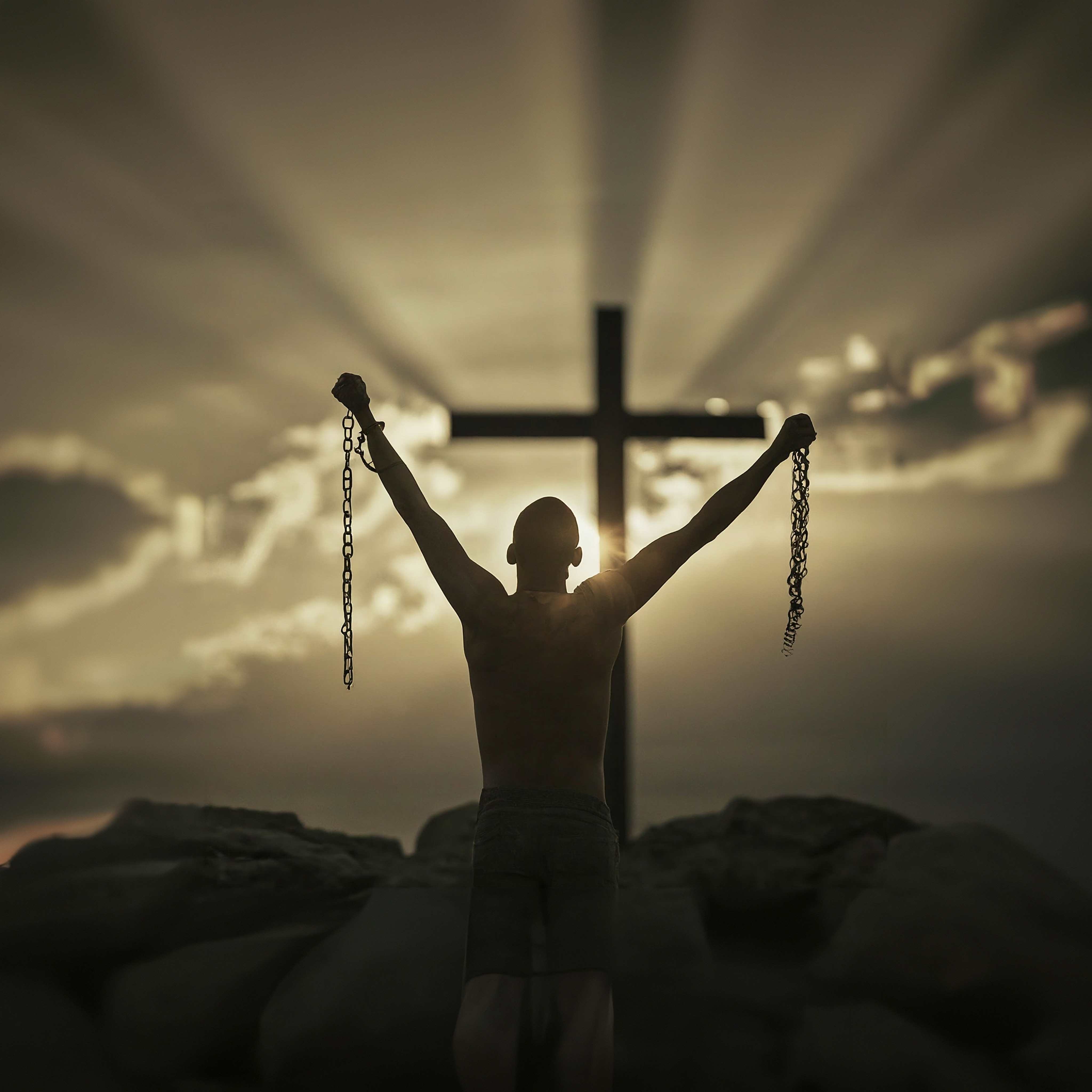
“For the law of the Spirit of life in Christ
Jesus has made me free from the law of sin and death.”
(Romans
8:2)
Zephaniah
the Profit – Wikipedia
From Wikipedia, the free encyclopedia
For other uses, see Zephaniah (disambiguation).
Zephaniah (/zɛfəˈnaɪ.ə/, Hebrew: צְפַנְיָה,
Modern: Ṣəfanya, Tiberian: Ṣep̄anyā, "Concealed
of/is YHWH"; Greek: Σοφονίας –
Sōfənīəs) is the name of several people in the Hebrew
Bible; the most prominent being the prophet who prophesied in the days of
Josiah, king of Judah (640–609 BCE) and is attributed a book bearing his name
among the Twelve Minor Prophets.[1] His name is commonly transliterated
Sophonias in Bibles translated from the Vulgate or Septuagint. The name might
mean "Yahweh has hidden/protected,"[2] or "Yah lies in wait".[3]
The church father Jerome interpreted the name to mean "the watchman of the
Lord".[4]
The prophet Zephaniah
The best known Biblical figure bearing the name Zephaniah
is the son of Cushi, and great-great grandson of King[5] Hezekiah, ninth in the
literary order of the Twelve Minor Prophets. He prophesied in the days of
Josiah, ruler of the Kingdom of Judah (640–609 BCE), but before Josiah's reform
in 621 BCE,[1] and was contemporary with Jeremiah, with whom he had much in
common. The unique source containing the minimal knowledge of his personality
and rhetorical and literary qualities is the short, three chapter book of the
Old Testament which bears his name.[1] The scene of his activity was the city
of Jerusalem, which he seems to know well.[1] The existence of two Zephaniahs
linked to the book is considered purely hypothetical.[1]
Date of activity
Under the two preceding kings of Judah, Amon of Judah and
Manasseh of Judah, the cult of other deities, especially Baal and Astarte, had
developed in Jerusalem,[6][7] bringing with it elements of alien culture and
morals. Josiah, a dedicated reformer,[8] wished to put an end to perceived
misuse of the holy places. One of the most zealous champions and advisers of
this reform was Zephaniah, and his writing remains one of the most important
documents for the understanding of the era of Josiah.
Boldly predicting the destruction of Judah for the evil
committed by its occupants,[1] the prophet spoke against the religious and
moral corruption, when, in view of the idolatry which had penetrated even into
the sanctuary, he warned that God would "destroy out of this place the
remnant of Baal, and the names of the idolatrous priests" (Zeph 1:4), and
pleaded for a return to the simplicity of their fathers instead of the
luxurious foreign clothing which was worn especially in aristocratic circles
(1:8).
The age of Zephaniah was also a key historical period,
because the lands of Western Asia were overrun by foreigners due to the
migration of the Scythians in the last decades of the seventh century BC, and
because Jerusalem was only a few decades before its downfall in 586 BC.[9] In
light of these events, a message of impending judgment is the primary burden of
this figure's preaching (1:7).
The Book of Zephaniah
The Book of Zephaniah contains the fundamental ideas of the
preaching of Zephaniah. The scheme of the book in its present form is as
follows:
Zephaniah 1:2–2:3. Warnings about the "day of the
Lord", a Dies irae, dies illa[10] of the Old Testament. The judgment of
the Lord will descend on Judah and Jerusalem as a punishment for the awful
degeneracy in religious life (1:4–7a); it will extend to all classes of the
people (1:7b–13), and will be attended with all the horrors of a frightful
catastrophe (1:14–18); therefore, repent and seek the Lord (2:1–3).
Zephaniah 2:4–15. Not only Jerusalem, but the entire world
is subject to judgment, including the Philistines, (4–7) Moabites, Ammonites,
(8–11) Ethiopians, (12) Assyrians and Ninevites (13-15).
Zephaniah 3:1–8. The Prophet focuses once again on
Jerusalem: "Woe to the provoking, and redeemed city ... She hath not
hearkened to the voice, neither hath she received discipline." The
severest reckoning will be required of the leading classes of the civil
community, and of the Prophets and priests as the directors of public worship.
Zephaniah 3:9–20. With a prophetic glance at the Kingdom of
God of the future, in which all the world unites and turns to God, the
prosperity of the Messianic Kingdom will be enjoyed.
Zephaniah 3:9–20. The last message of Zephaniah also has a
Messianic coloring, although not to an extent comparable with that which may be
found in the Book of Isaiah.
In Christianity
He is commemorated with the other minor prophets in the
calendar of saints of the Armenian Apostolic Church on July 31. On the Eastern
Orthodox liturgical calendar and in the Roman Martyrology, he is commemorated
on December 3.
His book is an inspiration for the hymn, Dies irae.
In Islam
In Islam, Safanyah (Arabic: صفني)
is recognized by some scholars as a prophet sent to Bani-Israel, though he is
not mentioned in the Quran and there are no authentic Hadiths about him. His
story is known mainly through Israʼiliyyat and historical works like Ibn
Kathir's Al-Bidaya wa l-Nihaya.[citation needed] Details about his life,
family, and mission remain largely unknown in Islamic sources.
Other Zephaniahs in the Bible
Other individuals named Zephaniah include:
The son of Maaseiah, the "second priest" in the
reign of Zedekiah, often mentioned in Jeremiah as having been sent from the
king to inquire (Jer. 21:1) regarding the coming woes which he had denounced,
and to entreat the prophet's intercession that the judgment threatened might be
averted (Jer 29:25, 26, 29; 37:3; 52:24). He, along with some other captive
Jews, was put to death by Nebuchadnezzar II "at Riblah in the land of
Hamath" (2 Kings 25:21).
A Kohathite ancestor of the prophet Samuel (1 Chr 6:36).
The father of Josiah, the kohen (priest) who dwelt in
Jerusalem when Darius I issued the decree that the temple should be rebuilt ...
(Zech 6:10).