Home About Us Our Publications Make a
Donation Email:
glenn.benson@yourbrotherglenn.org
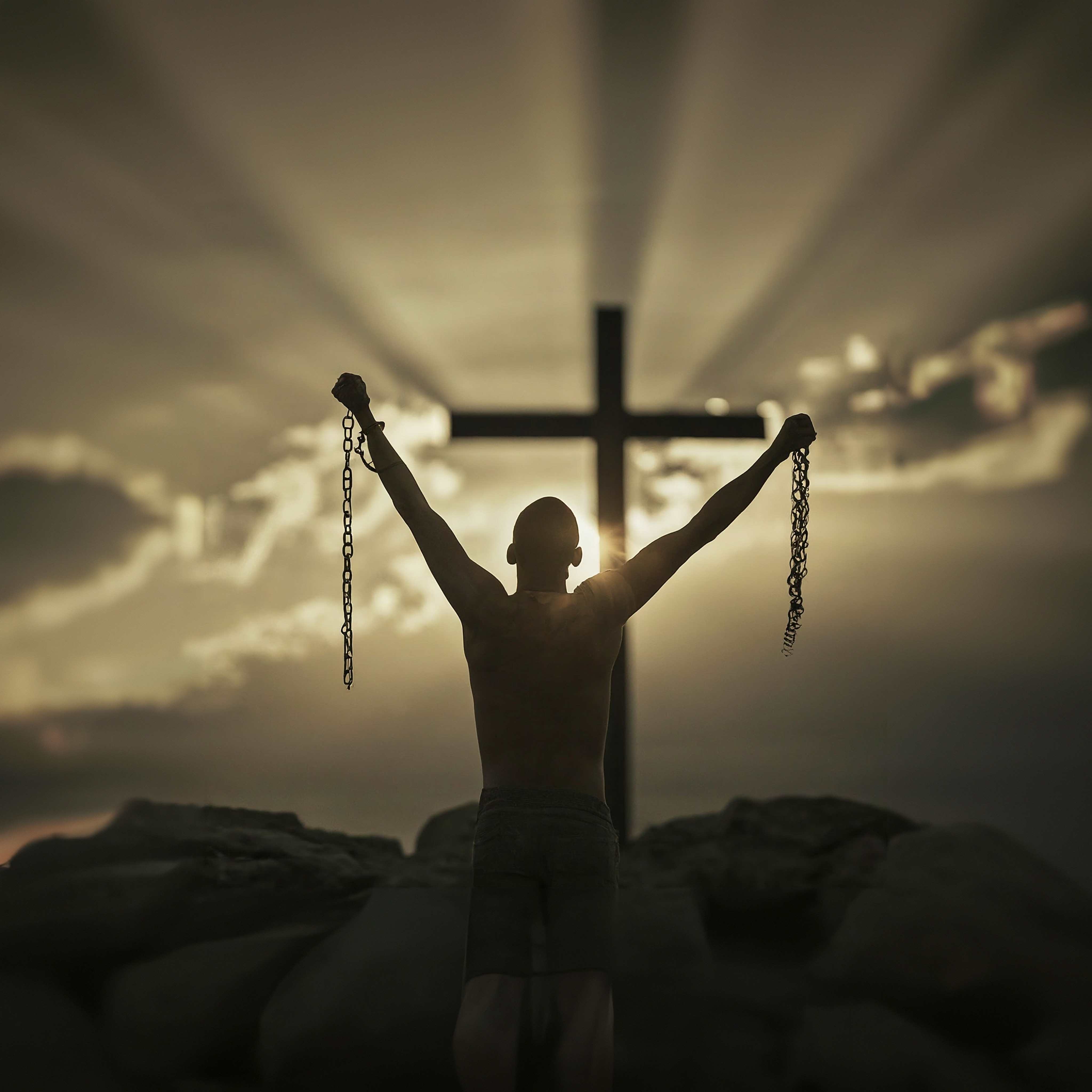
“For the law of the Spirit of life in Christ
Jesus has made me free from the law of sin and death.”
(Romans
8:2)
Saint
Peter the Apostle – Britannica
The following is an Article on Saint Peter from Encyclopedia
Britannica:
St. Peter the Apostle
TABLE OF CONTENTS
Introduction
The man and his position among the disciples
Incidents important in interpretations of Peter
The position of Peter in the apostolic church
Tradition of Peter in Rome
The feasts of St. Peter
St. Peter the Apostle, painting by Gerardus Laurentius Keultjes, 1816; in the Rijksmuseum, Amsterdam.
St. Peter the Apostle (died 64 CE, Rome [Italy]) was a
disciple of Jesus Christ, recognized in the early Christian church as the
leader of the 12 disciples and by the Roman Catholic Church as the first of its
unbroken succession of popes. Peter, a Jewish fisherman, was called to be a
disciple of Jesus at the beginning of Jesus’ ministry. He received from Jesus
the name Cephas (from Aramaic Kepa [“Rock”]; hence
Peter, from Petros, a Greek translation of Kepa).
The man and his position among the disciples
The sources of information concerning the life of Peter are
limited to the New Testament: the four Gospels, Acts, the letters of Paul, and
the two letters that bear the name of Peter. He probably was known originally
by the Hebrew name Simeon or the Greek form of that name, Simon. The former
appears only twice in the New Testament, the latter 49 times. At solemn moments
(Gospel According to John 21:15), he was called “Simon, son of John.” The
Gospel According to John prefers Simon (17 times) or the compound, rarely found
elsewhere, of Simon Peter. Though Paul has a distinct preference (8 times out
of 10) for the Greek transliteration Kēphas
(Latinized as Cephas) of the Aramaic name or title Kepa,
meaning “Rock,” the Gospels and Acts use the Greek translation Petros
approximately 150 times. From the Synoptic Gospels (Gospel According to Matthew
8:14) and Paul (First Letter of Paul to the Corinthians 9:5), there is indirect
evidence that Peter was the son of John and was married. His family originally
came from Bethsaida in Galilee (John 1:44), but during the period of Jesus’
ministry Peter lived in Capernaum, at the northwest end of the Sea of Galilee,
where he and his brother St. Andrew were in partnership as fishermen with St.
James and St. John, the sons of Zebedee (Gospel According to Luke 5:10).
Who were the most influential popes in the history of the
Roman Catholic Church?
Much can be learned about Peter from the New
Testament—either explicitly from the statements made by and about Peter or
indirectly from his actions and reactions as revealed in a number of episodes
in which he figures prominently. He was at times vacillating and unsure, as in
his relations with the church of Antioch when he at first ate with the Gentiles
and later refused to do so (Letter of Paul to the Galatians 2:11–14). He could
also be resolute (Acts of the Apostles 4:10; 5:1–10). Occasionally he is
depicted as rash and hasty (Luke 22:33, etc.) or irritable and capable of great
anger (John 18:10). Often he is pictured as gentle but
firm and, as in his professions of love to Jesus, capable of great loyalty and
love (John 21:15–17).
The New Testament reports that Peter was unlearned in the
sense that he was untrained in the Mosaic Law (Acts 4:13), and it is doubtful
that he knew Greek. He apparently learned slowly and erred time and time again,
but later, when entrusted with responsibility, he demonstrated that he was
mature and capable.
The Gospels agree that Peter was called to be a disciple of
Jesus at the beginning of his ministry, but when and where the event took place
is recorded differently in the several Gospels. Luke (5:1–11) scarcely mentions
James and John and omits Andrew while emphasizing the call of Peter. Matthew
(4:18–22) and Mark (Gospel According to Mark 1:16–20) note the call of the four
men and—with Luke—agree that the event took place at the Sea of Galilee. The
Gospel According to John places the call in Judaea (1:28) and states that
Andrew—who had been a follower of St. John the Baptist (1:35) and had heard
John indicate that Jesus was the Lamb of God—left John and introduced Peter to
“the Messiah,” who at that time gave him the name (or title) Cephas (i.e.,
Peter, or Rock).
The Synoptic Gospels (Matthew, Mark, and Luke) are probably
correct in recording that the call to Peter was extended in Galilee when Jesus
first began his work in that area. The Gospel According to John is here, as
elsewhere, perhaps more theologically than historically motivated; the author
of John wishes to stress that Peter recognized Jesus’ messiahship from the
beginning and that Jesus had seen Simon as the “rock” from their first meeting.
The Synoptic Gospels largely agree in the amount of emphasis
each gives to the leadership of Peter among the Twelve Apostles, but there are
differences also. For example, in one case Matthew and Luke note that Peter was
the speaker in questioning Jesus about a parable, but Mark attributes these
words to the group of disciples (Matthew 15:15; Luke 8:45; and Mark 7:17). With
differing degrees of emphasis, the Synoptic Gospels agree that Peter served as
spokesman, the outstanding member of the group, and enjoyed a certain
precedence over the other disciples. Whenever the disciples are listed, Peter
is invariably mentioned first (Matthew 10:2–4; Mark 3:16–19; Luke 6:14–16; Acts
1:13; compare only Galatians 2:9). Although it is not certain whether or not
this priority is primarily due to reading back into the Gospel narrative
Peter’s importance in the apostolic church, his forceful personality was surely
a factor.
Those not belonging to the immediate followers of Jesus
also recognized the authority of Peter, such as when the collectors of the
temple tax approached him for information (Matthew 17:24). Again, with
characteristic quickness he sought a clarification from Jesus on behalf of the
disciples concerning the meaning of a parable (Matthew 15:15) or of a saying
(Matthew 18:21). As both an individual and a representative of the Twelve
Apostles, he made a plea for personal preference in the kingdom of heaven as a
reward for faithful service (Matthew 19:27, 28).
On several occasions, Peter alone is mentioned by name and
others are indicated as merely accompanying him (Mark 1:36; Luke 8:45). Even
when the three disciples closest to Jesus (the “pillars”—Peter, James, and
John) figure in a particular incident, it is frequently Peter alone who is
named. When the three are named, Peter’s name invariably appears first (as in
Matthew 17:1, 26:37). It was his home in Capernaum that Jesus visited when he
cured Peter’s mother-in-law (Matthew 8:14), and it was Peter’s boat that Jesus
used when he instructed the crowd (Luke 5:3). It was Peter who possessed
remarkable insight and displayed his depth of faith in the confession of Christ
as the Son of God (Matthew 16:15–18; Mark 8:29; Luke 9:20), and it was Peter
who rebuked, and in turn was rebuked by, Jesus when the Master prophesied that
he would suffer and die (Mark 8:32, 33). It was also Peter who manifested the
momentary weakness of even the strongest when he denied his Lord (Matthew
26:69–75; Mark 14:66–72; Luke 22:54–61). Later, however, with greater maturity,
Peter discovered strength and, as he was charged by Jesus (Luke 22:31, 32),
effected the strengthening of others. Finally, Peter, who survived his denial,
is permitted to be the first of the Apostles to see Jesus after the
Resurrection (Luke 24:34).
In John’s Gospel the prominence of Peter is challenged in
the person of St. John the Apostle, the “Beloved Disciple.” Though Peter
receives mention in John 37 times (out of a total of 109 times in the four
Gospels), one-third of the references are found in the appendix (chapter 21),
and he appears in only nine incidents. The Gospel According to John attempts to
show the close relationship between John and Jesus while still reserving to
Peter the role of representative and spokesman. The fact that Peter is
emphasized in John and charged by Jesus to “tend my sheep” and “feed my lambs”
(John 21:15, 16) at the same time that the role of the disciples as a whole is
being deemphasized attests to the prestige of Peter in the apostolic church.
But throughout John’s Gospel, Peter shares his prominence with John (13:24;
18:15; 19:26, 27, etc.). Among the purposes of chapter 21 in emphasizing Peter
may well be an attempt to restore the disciple who denied his Lord to the
position he enjoyed in the Synoptic Gospels.
Incidents important in interpretations of Peter
Nardo di Cione:
St. Peter
Nardo di Cione:
St. Peter
St. Peter, detail of a tempera painting on wood by Nardo di Cione, second half of
the 14th century; in the Yale University Art Gallery, New Haven, Connecticut.
Out of the many incidents in which Peter figures
prominently in the Gospels, three should be separately considered, for each is
important, contains problems of interpretation, and is controversial.
In Mark (8:29) and Luke (9:20), to a question of Jesus
concerning his essential identity, about which he pressed the disciples for an
opinion, Peter answered for them all that Jesus is the “Messiah” or “God’s
Messiah.” In adjuring them to be silent, Jesus rejected the response as perhaps
too partial, too political. In the Matthean version (16:13), expanding upon the
narrative in Mark, Peter answered for himself and presumably for the other
disciples, “You are the Christ, the Son of the living God.” A new dimension of
understanding was thus reached, and this heightened awareness of Jesus’
divinity was approved by Jesus and occasioned Peter’s “ordination.”
In what may be a grouping of Petrine material (Matthew
16:18, 19)—the confession, naming, and receiving of authority—Jesus gave to
Simon the title of Cephas, or Peter. Though in the past some authorities considered
that the title, meaning “rock,” refers to Jesus himself or to Peter’s faith,
the consensus of the great majority of scholars today is that the most obvious
and traditional understanding should be construed—namely, that the title refers
to the person of Peter. In John the title was granted at what may have been the
first meeting between Jesus and Simon (1:42). Thus, when the name was given is
open to question, but that the name was given by Jesus to Simon seems fairly
certain. Matthew goes on to state that upon this rock—that is, upon Peter—the
church will be built. The word “church” in the 1st-century Gospel According to
Matthew is to be understood as referring to the community of the faithful
rather than to a definite ecclesiastical organization.
The authenticity of the uniquely Matthean material (Matthew
16:16–19) of this narrative has been widely discussed and has been challenged
on the basis that verses 16–19 are found only in Matthew or that the inclusion
of the word “church” suggests a level of organization acquired only at a later
period. Though these and other arguments against authenticity are given most
careful consideration, the general consensus is that at some time—and more
likely at the end of his career—these words were spoken by Jesus.
If Peter’s confession demonstrates his faith and insight,
his denial that he knew Jesus demonstrates a weakness of will (even if
momentary), capability of inaction, and a tendency toward vacillation, but not
a loss of faith. Prior to the denial, out of his deep love for Jesus and his
overestimation of his own capabilities, he had sought to overrule Jesus’
prophecy of his denial and declared that, even if the other disciples deserted
Jesus, he would suffer death rather than disown his Lord (Matthew 26:33–35;
Mark 14:29–31; Luke 22:31–34; John 13:37–38). As the drama unfolded, Peter fled
when Jesus was arrested but did find his way to the palace of the high priest
where Jesus had been taken. When confronted in the courtyard with the danger of
admitting association with Jesus, he chose to deny (Matthew 26:69–75; Mark
14:66–72; Luke 22:54–61; John 18:15–18, 25–27). The degree of his shame and the
depth of his love were revealed when he later realized that the prophecy had
been fulfilled, and he wept bitterly (Matthew 26:75; Mark 14:72).
The fact of Peter’s denial did not destroy the love and
trust that Jesus felt for him. Among the Apostles, it was to Peter—who had
confessed the sonship of Jesus (Matthew 16:16), who had been commissioned
earlier to “lend strength” to his brothers (Luke 22:32), who had hesitated in
his resolution at one crucial point (Mark 14:66–72), and who on the morning of
the Resurrection “ran to the tomb” (Luke 24:12)—that the resurrected Christ
first appeared. The earliest report of Peter’s priority as a witness to the
risen Jesus is found in the letters of Paul (1 Corinthians 15:5), and this most
probably is the intent of Luke (24:34). An initial appearance to Peter in
Galilee may have been included in the original ending of Mark (16:6–8).
The silence concerning this important matter of priority in
Matthew and John is remarkable. It may be, however, that Matthew 14:27, 28
represents a misplaced post-Resurrection narrative, and John 21 may contain an
echo of the tradition preserved by Paul (1 Corinthians 15:5). Whether or not
Jesus appeared first to Peter after the Resurrection, he was a witness, which
Peter declared to be a criterion of apostleship (Acts 1:22).
The position of Peter in the apostolic church
Given the information supplied by the Gospels, it is not
unexpected that Peter should emerge immediately after Jesus’ death as the
leader of the earliest church. For approximately 15 years after the
Resurrection, the figure of Peter dominated the community. He presided over the
appointment of St. Matthias as an apostle (Acts 1:23–26) to take the place of
Judas, who had betrayed Christ and later died. It was Peter who first “raised
his voice” and preached at Pentecost, the day when the church began its mission
to the world (Acts 1:14–39). It was Peter who served as an advocate for the
Apostles before the Jewish religious court in Jerusalem (Acts 4:5–22). And it
was he who exercised the role of judge in the disciplining of those who erred
within the church (Acts 5:1–10).
Peter led the Twelve Apostles in extending the church “here
and there among them all” (Acts 9:32). He went first to the Samaritans (Acts
8:4–17), “who received the Holy Spirit”; in Samaria he encountered the magician
and faith healer Simon Magus. Then he went to Lydda, in the Plain of Sharon
(Acts 9:32–35), where he healed the paralyzed Aeneas. Then, at the
Mediterranean coastal town of Joppa (Acts 9:36–43), he effected the cure of
Tabitha (Dorcas) in the name of Christ.
He went farther north on the Mediterranean coast to Caesarea
(Acts 10:1–11:18), where, through the conversion of Cornelius, “a centurion of
what was known as the Italian Cohort” (Acts 10:1), Peter introduced Gentiles
into the church. According to Jewish requirements, a Gentile convert must first
become a Jew through the rite of circumcision and be acceptable as a proselyte.
In accepting Cornelius and the others—who may have had some informal connection
with the synagogue (Acts 10:1)—and ordering “them to be baptized in the name of
Jesus Christ” (Acts 10:48) without submission to the prior rite of
circumcision, Peter introduced an innovation that ensured the opposition of the
Jewish Christians and others. This independent course, set by Peter with the
blessing of “the Spirit” (Acts 10:10–15), was possibly a factor in Herod’s
beheading of St. James (the brother of John) and in the arrest of Peter (Acts
12:2, 3). In prison (c. 44 CE) Peter was visited by an “angel of the Lord.…And
the chains fell off his hands,” and he made his escape (Acts 12:1–8). He went
immediately to “the house of Mary, the mother of John whose other name was
Mark” (Acts 12:12). After asking them to report his escape “to James and to the
brethren,” he “went to another place” (Acts 12:17).
At this point the unchallenged leadership of Peter in Jerusalem
came to an end. It is not at all clear where Peter went, but it is not probable
that the words “to another place” refer to a different home in the same general
area that would provide temporary refuge.
The later work of Peter is not covered in Acts, perhaps
because the author of Luke-Acts had planned a third book that would have
included such a discussion, but the book was never written or was written and
later lost. Perhaps the events would have included unedifying material, such as
the internal jealousy within the church referred to in the First Letter of
Clement 4–6, or perhaps the author died before completion of his work. Whatever
momentary glimpses into the period of the later ministry of Peter remain can
only be noted in a discussion of his relationship with the two other
outstanding apostles of the time, St. James and St. Paul.
Peter was the most prominent figure in the Jerusalem church
up to the time of his departure from Jerusalem after his imprisonment by King
Herod and his subsequent release in the New Testament account (Acts 12:1–17).
For example, Paul went up to Jerusalem to consult with Peter three years after
he was converted, and he remained with Peter for two weeks (Galatians 1:18,
19). When Peter left Jerusalem, however, it appears clear to many New Testament
scholars (although unconvincing to others) that he assumed a missionary role
while the actual leadership of the church devolved upon James, “the brother of
the Lord.” This sequence of authority is suggested by Peter’s obedience to the
wishes of “certain persons who came from James” and hence his ceasing to eat
with Gentile Christians at Antioch (Galatians 2:11–14); by a final “summing up”
of decisions made in the so-called apostolic Council of Jerusalem (Acts 15:7)
by James; and later, when Peter made his departure from the home of the mother
of John whose other name was Mark, by the word of explanation or “report” of
his whereabouts left primarily for James (Acts 12:17).
Paul first met with Peter at Jerusalem three years after
his conversion. In the record of this meeting the name of Cephas (Peter)
precedes that of James, although Galatians notes that in another meeting 14
years later the name of James precedes that of Cephas (Galatians 2:9). Paul
also emphasizes an incident involving himself and Peter at Antioch. Apparently,
Paul had achieved some success in the difficult matter of welding the Jewish
and Gentile Christians of Antioch into one congregation. The Jewish Christians
saw the sharing of food with Gentiles as quite alien to their tradition. In the
absence of Paul, Peter, perhaps in his capacity as missionary, visited Antioch
and ate with the united group. Later, “certain persons came from James” and
opposed the united congregation’s custom of eating together. In apparent
deference to James, Peter “drew back and began to hold aloof,” and the Jewish
Christians did likewise. The unity of the group had been destroyed. When Paul
returned, he upbraided Peter for what he may have considered Peter’s
vacillation or perhaps even purposeful disruption (Galatians 2:11–14). This
incident may have occasioned the Jerusalem Council (49 or 50 CE), in which it
was settled that hereafter Paul should be “entrusted with the gospel to the
uncircumcised” (Galatians 2:7) and Peter “for the mission to the circumcised”
(Galatians 2:8).
In passing, Paul refers to a party of Cephas (Peter) in 1
Corinthians 1:12 that suggests that a group in the church of Corinth was
especially devoted to Peter (leading some to assume a residence of Peter in
Corinth) and refers to Peter in 1 Corinthians 9:5 as carrying on missionary
activity accompanied by his wife. A missionary journey to Asia Minor may be
suggested in the First Letter of Peter 1:1.
Tradition of Peter in Rome
The problems surrounding the residence, martyrdom, and
burial of Peter are among the most complicated of all those encountered in the
study of the New Testament and the early church. The absence of any reference
in Acts or Romans to a residence of Peter in Rome gives pause but is not
conclusive. If Peter did write 1 Peter, the mention of “Babylon” in 5:13 is
fairly reliable evidence that Peter resided at some time in the capital city.
If Peter was not the author of the first epistle that bears his name, the
presence of this cryptic reference witnesses at least to a tradition of the
late 1st or early 2nd century. “Babylon” is a cryptic term indicating Rome, and
it is the understanding utilized in Revelation 14:8; 16:19; 17:5, 6 and in the
works of various Jewish seers.
It may be said that by the end of the 1st century there
existed a tradition that Peter had lived in Rome. Further early evidence for
the tradition is found in the Letter to the Romans by St. Ignatius, the early
2nd-century bishop of Antioch. It is probable that the tradition of a 25-year
episcopate of Peter in Rome is not earlier than the beginning or the middle of
the 3rd century. The claims that the church of Rome was founded by Peter or
that he served as its first bishop are in dispute and rest on evidence that is
not earlier than the middle or late 2nd century.
Words of John 21:18, 19 clearly refer to the death of Peter
and are cast into the literary form of prophecy. The author of this chapter is
aware of a tradition concerning the martyrdom of Peter when the apostle was an
old man. And there is a possible reference here to crucifixion as the manner of
his death. But as to when or where the death took place, there is not so much
as a hint.
The strongest evidence to support the thesis that Peter was
martyred in Rome is to be found in the Letter to the Corinthians (c. 96 CE;
5:1–6:4) of St. Clement of Rome:
Peter, who by reason of wicked jealousy, not only once or
twice but frequently endured suffering and thus, bearing his witness, went to
the glorious place which he merited (5:4).…To these men [Peter and Paul] who
lived such holy lives there was joined a great multitude of the elect who by
reason of rivalry were victims of many outrages and tortures and who became
outstanding examples among us (6:1).
These sources, plus the suggestions and implications of
later works, combine to lead many scholars to accept Rome as the location of
the martyrdom and the reign of Nero as the time.
As part of the general question of Peter’s residence and
martyrdom in Rome, debated since the appearance of the Defensor pacis of Marsilius of Padua (c.
1275–c. 1342), the particular question of where Peter was buried has been
argued. There is not the slightest hint at a solution in the New Testament. The
earliest evidence (c. 200 CE) is found in a fragment of a work by St. Gaius (or
Caius) witnessing to a tradition at least a generation earlier (c. 165 CE) that
the “trophy” (i.e., tropaion, or monument) of Peter was located at the Vatican.
Though difficult to interpret, the use of the word “trophy” indicates that in
this period the Vatican area was associated with either the tomb of the apostle
or simply a monument erected in the area of Peter’s victory (i.e., his
martyrdom).
Some scholars find support for a tradition that the apostle
was buried ad catacumbas (“at the catacombs” of San
Sebastiano) on the Via Appia in an inscription of St.
Damasus I (pope, 366–384), composed in such ambiguous
terms that it was certain to foster such misinterpretations as are found in the
letter of St. Gregory the Great to the empress Constantina
and in the notice of Pope St. Cornelius in the Liber pontificalis.
Apart from the aforementioned, later literary tradition is unanimous in
indicating the Vatican Hill as the place of burial. See Peristephanon
12, of Prudentius, various notices in the Liber pontificalis, and the Salzburg Itinerary. Liturgical
sources such as the Depositio martyrum
and the Martyrologium Hieronymianum,
though interesting, add nothing to the literary evidence.
Excavations were begun in the late 19th century in order to
substantiate the theory that the burial of Peter and Paul was ad catacumbas. After a half century of investigation, it now
seems reasonable to concede that a cult of the apostles existed there about 260
CE, though Christian influence may have been exerted as early as 200 CE. None
of the excavations, however, in all of the areas indicated at various times as
the resting place of the apostolic relics, have produced any evidence whatsoever
that the bodies of Peter and Paul were either buried there originally or
brought there at a later time after earlier burials elsewhere.
In the early 4th century the
emperor Constantine (died 337 CE) with considerable difficulty erected a
basilica on the Vatican Hill. The difficulty of the task, combined with the
comparative ease with which this great church might have been built on level
ground only a slight distance to the south, may support the contention that the
emperor was convinced that the relics of Peter rested beneath the small
aedicula (shrine for a small statue) over which he had erected the basilica.
The task before the excavators was to determine whether or not the belief of
Constantine accorded with the facts or was based merely upon a misunderstanding.
The excavation of this site, which lies far beneath the
high altar of the present church of St. Peter, was begun in 1939. The problems
encountered in excavation and interpretation of what has been discovered are
extremely complex. There are some scholars who are convinced that a box found
in one of the fairly late sidewalls of the aedicula contains fragments of the
remains of the apostle, fragments which at an earlier time may have rested in
the earth beneath the aedicula. Others are most definitely not convinced. If a
grave of the apostle did exist in the area of the base of the aedicula, nothing
identifiable of that grave remains today. Furthermore, the remains discovered
in the box that until comparatively recently rested in the sidewall do not lead
necessarily to a more positive conclusion. Archaeological investigation has not
solved with any great degree of certainty the question of the location of the
tomb of Peter. If it was not in the area of the aedicula, perhaps the grave
rested elsewhere in the immediate vicinity, or perhaps the body was never
recovered for burial at all.
The feasts of St. Peter
Five festivals in the calendar of the Roman Catholic Church
involve honour paid to Peter. In each the name of
Paul is also associated. First chronologically, on January 18 is celebrated the
festival of the Cathedra Petri (Latin: “Chair of Peter”) at Rome and on
February 22 at Antioch. June 29 marks the festival of Peter and Paul, ranking
among the 12 most important celebrations of the Roman Catholic Church. The
escape of Peter from his chains is noted in the feast of August 1. Last, the
dedications of the basilicas of Peter and Paul, commemorating their
construction by the emperor Constantine, are celebrated in the festival of
November 18.
Daniel William O'Connor The Editors of Encyclopaedia
Britannica
CITATION INFORMATION
ARTICLE TITLE: St. Peter the Apostle
WEBSITE NAME: Encyclopaedia
Britannica
PUBLISHER: Encyclopaedia
Britannica, Inc.
DATE PUBLISHED: 10 December 2025
URL:
https://www.britannica.com/biography/Saint-Peter-the-Apostle
ACCESS DATE: August 06, 2026