Home About Us Our Publications Make a
Donation Email: glenn.benson@yourbrotherglenn.org
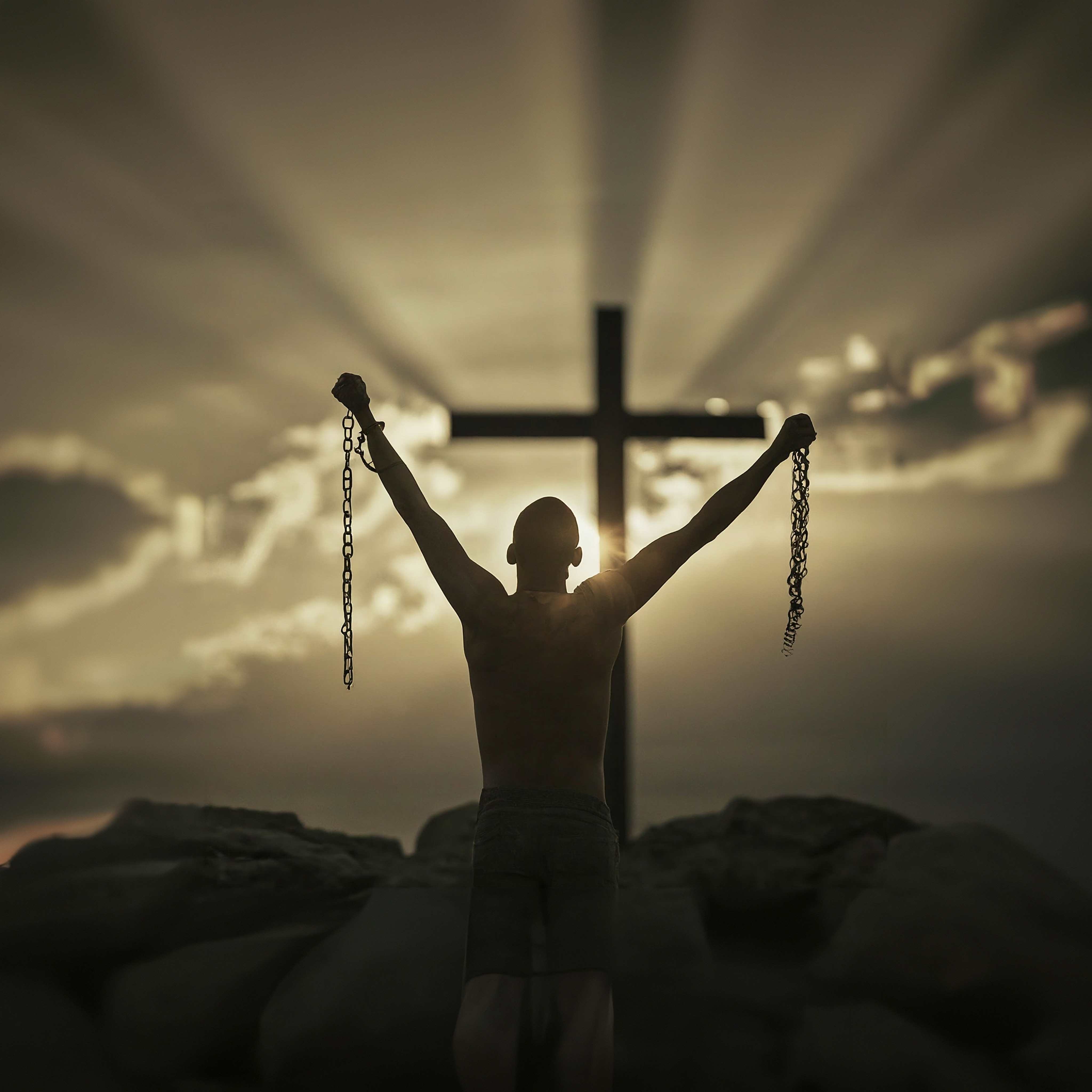
“For the law of the Spirit of life in Christ
Jesus has made me free from the law of sin and death.”
(Romans
8:2)
Saint
Paul the Apostle – Wikipedia
The following is the Article “Saint Paul the Apostle” from Wikipedia:
Paul[a] (born Saul of Tarsus;[b] c. 5 –
c. 64/65 AD), commonly known as Paul the Apostle[10] or Saint Paul,[11]
was a Christian apostle who spread the teachings of Jesus in the first-century
AD.[12] For his contributions towards the New Testament, he is generally
regarded as one of the most important figures of the Apostolic Age,[11][13] and
he also founded several Christian communities in Asia Minor and Europe from the
mid-40s to the mid-50s AD.[12]
The main sources of information on Paul's life and works
are Paul's letters and the Acts of the Apostles in the New Testament.
Approximately half of their contents document his travels, preaching, and
miracles. While he was not one of the Twelve Apostles and did not know Jesus
during his lifetime, Paul was a contemporary of Jesus and personally knew
eyewitnesses of Jesus such as his closest disciples (Peter and John) and
brother James since the mid 30s AD, within a few years of the crucifixion
(c. 30–33 AD).[14][15][16] He had knowledge of the life of Jesus and his
teachings.[note 1] Paul argued over issues such as the circumcision of gentiles,
while his exalted Christology was taken for granted and widely accepted in the
early church.[17] According to Acts, Paul lived as a Pharisee and participated
in the persecution of early disciples of Jesus before his conversion.[note 2]
On his way to arrest Christians in Damascus, Paul saw a bright light, heard
Christ speak, was blinded, and later healed by Ananias. After these events,
Paul was baptized, beginning immediately to proclaim that Jesus of Nazareth was
the Jewish messiah and the Son of God.[18] He made three missionary journeys to
spread the Christian message to non-Jewish communities.
Fourteen of the 27 books in the New Testament have
traditionally been attributed to Paul.[19] Seven of the Pauline epistles are
undisputed by scholars as being authentic. Of the other six, Ephesians, 1 and 2
Timothy, and Titus are generally considered pseudepigraphical, while Colossians
and 2 Thessalonians are debated. Pauline authorship of the Epistle to the
Hebrews is almost universally rejected by scholars.[20] The other six are
believed by some scholars to have come from followers writing in his name,
using material from Paul's surviving letters and letters written by him that no
longer survive.[11][note 3]
Today, Paul's epistles continue to be vital roots of the
theology, worship, and pastoral life in the Latin and Protestant traditions of
the West, as well as the Eastern Catholic and Orthodox traditions of the
East.[22] Paul's influence on Christian thought and practice is pervasive in
scope and profound in impact.[23] Christians, particularly in the Lutheran
tradition, have read Paul as saying that people are saved through faith rather
than by following Jewish law. He has been accused of corrupting or hijacking
Christianity, often by introducing pagan or Hellenistic themes to the early
church.[24] There has been increasing acceptance of Paul as a fundamentally
Jewish figure in line with the original disciples in Jerusalem over past
interpretations, manifested through movements like "Paul Within Judaism".[25][26][27]
Names
Paul's Jewish name was "Saul" (Hebrew: שָׁאוּל,
Modern: Sha'ûl, Tiberian: Šā'ûl), perhaps after the biblical King Saul,
the first king of Israel and, like Paul, a member of the Tribe of Benjamin; the
Latin name Paulus, meaning small, was not a result of his conversion as is
commonly believed but a second name for use in communicating with a Greco-Roman
audience.[28][29]
According to the Acts of the Apostles, he was a Roman
citizen.[30] As such, he bore the Latin name Paulus, which is transliterated in
biblical Greek as Παῦλος (Paulos).[31][32] It
was not uncommon for the Jews of that time to have two names: one Hebrew, the
other Latin or Greek.[33][page needed][34] [page needed][35][page needed]
Jesus called him "Saul, Saul"[36] in "the
Hebrew tongue" in the Acts of the Apostles, when he had the vision which
led to his conversion on the road to Damascus.[37] Later, in a vision to
Ananias of Damascus, "the Lord" referred to him as "Saul, of
Tarsus".[38] When Ananias came to restore his sight, he called him
"Brother Saul".[39]
In Acts 13:9, Saul is called "Paul" for the first
time on the island of Cyprus, much later than the time of his conversion.[40]
The author of Luke–Acts indicates that the names were interchangeable:
"Saul, who also is called Paul." He refers to him as Paul through the
remainder of Acts, except in the accounts of the events that occurred on his
way to Damascus, where it is reported that the voice from heaven, and, later,
Ananias of Damascus, called him Σαούλ, a Greek
transliteration of the Hebrew name (Acts 9:4, 17; 22:7, 13; 26:14). Paul was
apparently Paul's own preference, since he always refers to himself as Paul in
his letters (18 times in the letters generally regarded as written by Paul
himself, and 10 more times in the other "Pauline" letters). Adopting
his Roman name was typical of Paul's missionary style. His method was to put
people at ease and approach them with his message in a language and style that
was relatable to them, as he did in 1 Corinthians 9:19–23.[41]
If Saul/Paul was born a Roman citizen, as in Acts and
contemporary scholarship,[42] his parents, and perhaps their ancestors, must
have been Roman citizens as well. Hence, he would probably have been given a full
Roman name at birth, the tria nomina of praenomen, nomen, and cognomen, with
Paulus as his cognomen.[43][44] There is no information about the Roman patron
of Paul's ancestors, or the ruler at the time of their enfranchisement, but if
Paul's ancestors had been granted Roman citizenship under the auspices of Gaius
Julius Caesar, for example, Paul's full name may have been
Γάϊος Ἰούλιος
Παῦλος ὁ καὶ
Σαούλ, when expressed in Greek, and C. Julius Paulus
qui est Saoul, when expressed in Latin.[45]
The main source for information about Paul's life is the
material found in his epistles and in the Acts of the Apostles, the sequel to
the Gospel of Luke.[46][47] However, the epistles contain little information
about Paul's pre-conversion past. The Acts of the Apostles recounts more
information but leaves several parts of Paul's life out of its narrative, such
as his probable but undocumented execution in Rome.[48] Although recent
scholarship tends to have a more favorable appraisal of the historical value of
Acts, the Pauline epistles are preferred when differences between the two
arise.[49] Recent scholarship has challenged the idea that the Paul of Acts and
the letters share little resemblance.[50]
Sources outside the New Testament that mention Paul (or at
least his writings) include:
Clement of Rome's epistle to the Corinthians (late 1st/early
2nd century);
Ignatius of Antioch's epistles to the Romans and to the
Ephesians[51] (early 2nd century);
Polycarp's epistle to the Philippians (early 2nd century);
Eusebius's Historia Ecclesiae (early 4th century);
The apocryphal Acts narrating the life of Paul (Acts of
Paul, Acts of Paul and Thecla, Acts of Peter and Paul), the apocryphal epistles
attributed to him (the Latin Epistle to the Laodiceans, the Third Epistle to
the Corinthians, and the Correspondence of Paul and Seneca) and some apocalyptic
texts attributed to him (Apocalypse of Paul and Coptic Apocalypse of Paul).
These writings are all later, usually dated from the 2nd to the 4th century.
The two main sources of information that give access to the
earliest segments of Paul's career are the Acts of the Apostles and the
autobiographical elements of Paul's letters to the early Christian
communities.[46] Paul was likely born between the years of 5 BC and 5 AD.[52]
The Acts of the Apostles indicates that Paul was a Roman citizen by birth, and
scholars largely accept this claim.[53][54] Some have suggested that Paul's
ancestors may have been freedmen from among the thousands of Jews whom Pompey
took as slaves in 63 BC, which would explain how he was born into Roman
citizenship, as slaves of Roman citizens gained citizenship upon
emancipation.[55]
He was from a devout Jewish family.[56] The Book of Acts
and modern scholars agree that Paul came from the city of Tarsus, which was
part of the Roman province of Cilicia.[57][58] Tarsus was one of the larger
centers of trade on the Mediterranean coast and renowned for its academy. It
had been among the most influential cities in Asia Minor since the time of Alexander
the Great, who died in 323 BC.[56]
Paul referred to himself as being "of the stock of
Israel, of the tribe of Benjamin, a Hebrew of the Hebrews; as touching the law,
a Pharisee".[59][60] The Bible reveals very little about Paul's family.
Acts quotes Paul referring to his family by saying he was "a Pharisee,
born of Pharisees".[61][62] Paul's nephew, his sister's son, is mentioned
in Acts 23:16.[63]
The family had a history of religious piety.[64][note 4]
Apparently, the family lineage had been very attached to Pharisaic traditions
and observances for generations.[65] Acts says that he was an artisan involved
in the leather crafting or tent-making profession.[66][67] This was to become
an initial connection with Priscilla and Aquila, with whom he would partner in
tent-making[68] and later become very important teammates as fellow
missionaries.[69]
While he was still fairly young, he was sent to Jerusalem
to receive his education at the school of Gamaliel,[70][60] one of the most
noted teachers of Jewish law in history. Although modern scholarship accepts
that Paul was educated under the supervision of Gamaliel in Jerusalem,[60] he
was not preparing to become a scholar of Jewish law, and probably never had any
contact with the Hillelite school.[60] Some of his family may have resided in
Jerusalem since later the son of one of his sisters saved his life
there.[63][28] Nothing more is known of his biography until he takes an active
part in the martyrdom of Stephen,[71] a Hellenised diaspora Jew.[72]
Some modern scholarship argues that while Paul was fluent
in Koine Greek, the language he used to write his letters, his first language
was probably Aramaic.[73] In his letters, Paul drew heavily on his knowledge of
Stoic philosophy, using Stoic terms and metaphors to assist his new Gentile
converts in their understanding of the Gospel and to explain his
Christology.[74][75]
Persecutor of early Christians
Paul says that before his conversion,[76] he persecuted
early Christians "beyond measure", more specifically Hellenised
diaspora Jewish members who had returned to the area of Jerusalem.[77][note 2]
Paul does not describe explicitly what form this persecution took. According to
James Dunn, the Jerusalem community consisted of "Hebrews", Jews
speaking both Aramaic and Greek, and "Hellenists", Jews speaking only
Greek, possibly diaspora Jews who had resettled in Jerusalem.[79] Paul's
initial persecution of Christians probably was directed against these
Greek-speaking "Hellenists" due to their anti-Temple attitude.[80]
Within the early Jewish Christian community, this also set them apart from the
"Hebrews" and their continuing participation in the Temple cult.[80]
Conversion
Main article: Conversion of Paul the Apostle
Paul's conversion to the movement of followers of Jesus has
been dated to 31–36 AD[81][82][83] by his reference to it in one of his
letters. In Galatians 1:16, Paul writes that God "was pleased to reveal
his son to me."[84] In 1 Corinthians 15:8, as he lists the order in which
Jesus appeared to his disciples after his resurrection, Paul writes, "last
of all, as to one untimely born, He appeared to me also,"[85] without an
explicit description of how long after.
According to the account in the Acts of the Apostles, it
took place on the road to Damascus, where he reported having experienced a
vision of the ascended Jesus. The account says that "He fell to the ground
and heard a voice saying to him, 'Saul, Saul, why do you persecute me?' He
asked, 'Who are you, Lord?' The reply came, 'I am Jesus, whom you are
persecuting'."[86]
According to the account in Acts 9:1–22, he was blinded for
three days and had to be led into Damascus by the hand.[87] During these three
days, Saul took no food or water and spent his time in prayer to God. When
Ananias of Damascus arrived, he laid his hands on him and said: "Brother
Saul, the Lord Jesus, that appeared unto thee in the way as thou camest, hath
sent me, that thou mightest receive thy sight, and be filled with the Holy
Spirit."[88] His sight was restored, he got up and was baptized.[89] This
story occurs only in Acts, not in the Pauline epistles.[90]
The author of the Acts of the Apostles may have learned of
Paul's conversion from the church in Jerusalem, or from the church in Antioch,
or possibly from Paul himself.[91]
According to Timo Eskola, early Christian theology and
discourse was influenced by the Jewish Merkabah tradition.[92] John Bowker,
Alan Segal and Daniel Boyarin have variously argued that Paul's accounts of his
conversion experience and his ascent to the heavens (in 2 Corinthians 12) are
the earliest first-person accounts that are extant of a Merkabah mystic in
Jewish or Christian literature.[93] Conversely, Timothy Churchill has argued
that Paul's Damascus road encounter does not fit the pattern of Merkabah.[94]
Post-conversion
According to Acts:
And immediately he proclaimed Jesus in the synagogues,
saying, "He is the Son of God." And all who heard him were amazed and
said, "Is not this the man who made havoc in Jerusalem of those who called
upon this name? And has he not come here for this purpose, to bring them bound
before the chief priests?" But Saul increased all the more in strength,
and confounded the Jews who lived in Damascus by proving that Jesus was the
Christ.
— Acts
9:20–22[95]
Early ministry
After his conversion, Paul went to Damascus, where Acts 9
states he was healed of his blindness and baptized by Ananias of Damascus.[96]
Paul says that it was in Damascus that he barely escaped death.[97] Paul also
says that he then went first to Arabia, and then came back to Damascus.[98][99]
Paul's trip to Arabia is not mentioned anywhere else in the Bible, although it
has been theorized that he traveled to Mount Sinai for meditations in the
desert.[100][101] He describes in Galatians how three years after his
conversion he went to Jerusalem. There he met James and stayed with Simon Peter
for 15 days[102] starting around 35 or 36 AD.[15][103][16] Paul located Mount
Sinai in Arabia in Galatians 4:24–25.[104]
Paul asserted that he received the Gospel not from man, but
directly by "the revelation of Jesus Christ".[105] He claimed almost
total independence from the Jerusalem community[106] (possibly in the Cenacle),
but agreed with it on the nature and content of the gospel.[107] He appeared
eager to bring material support to Jerusalem from the various growing Gentile
churches that he started. In his writings, Paul used the persecutions he
endured to avow proximity and union with Jesus and as a validation of his
teaching.
Paul's narrative in Galatians states that 14 years after
his conversion he went again to Jerusalem.[108] It is not known what happened
during this time, but both Acts and Galatians provide some details.[109] At the
end of this time, Barnabas went to find Paul and brought him to
Antioch.[110][111] The Christian community at Antioch had been established by
Hellenised diaspora Jews living in Jerusalem, who played an important role in
reaching a Gentile, Greek audience, notably at Antioch, which had a large
Jewish community and significant numbers of Gentile
"God-fearers."[112] From Antioch the mission to the Gentiles started,
which would fundamentally change the character of the early Christian movement,
eventually turning it into a new, Gentile religion.[113]
When a famine occurred in Judea, around 45–46,[114] Paul
and Barnabas journeyed to Jerusalem to deliver financial support from the
Antioch community.[115] According to Acts, Antioch had become an alternative
center for Christians following the dispersion of the believers after the death
of Stephen. It was in Antioch that the followers of Jesus were first called
"Christians".[116]
First missionary journey
It has been estimated that the apostle Paul traveled over
12,000 kilometres by land and over 8,000 kilometres by sea just on the journeys
that he made in the latter half of his life that happen to be recorded in the
Acts of the Apostles.[117]
The author of Acts arranges Paul's missionary journeys into
three separate accounts. The first journey,[118] for which Paul and Barnabas
were commissioned by the Antioch community,[119] and led initially by
Barnabas,[note 5] took Barnabas and Paul from Antioch to Cyprus then into
southern Asia Minor, and finally returning to Antioch. In Cyprus, Paul rebukes
and blinds Elymas the magician[120] who was criticizing their teachings.
They sailed to Perga in Pamphylia. John Mark left them and
returned to Jerusalem. Paul and Barnabas went on to Pisidian Antioch. On
Sabbath they went to the synagogue. The leaders invited them to speak. Paul
reviewed Israelite history from life in Egypt to King David. He introduced
Jesus as a descendant of David brought to Israel by God. He said that his group
had come to bring the message of salvation. He recounted the story of Jesus'
death and resurrection. He quoted from the Septuagint[121] to assert that Jesus
was the promised Christos who brought them forgiveness for their sins. Both the
Jews and the "God-fearing" Gentiles invited them to talk more next
Sabbath. At that time almost the whole city gathered. This upset some
influential Jews who spoke against them. Paul used the occasion to announce a
change in his mission which from then on would be to the Gentiles.[122]
Antioch served as a major Christian home base for Paul's
early missionary activities,[6] and he remained there for "a long time
with the disciples"[123] at the conclusion of his first journey. The exact
duration of Paul's stay in Antioch is unknown, with estimates ranging from nine
months to as long as eight years.[124]
In Raymond E. Brown's An Introduction to the New Testament,
published in 1997, a chronology of events in Paul's life is presented,
illustrated from later 20th-century writings of biblical scholars.[125] The
first missionary journey of Paul is assigned a "traditional" (and
majority) dating of 46–49 AD, compared to a "revisionist" (and minority)
dating of after 37 AD.[126]
Council of Jerusalem
Main article: Council of Jerusalem
See also: Circumcision controversy in early Christianity
A vital meeting between Paul and the Jerusalem church took
place in the year AD 49 by traditional (and majority) dating, compared to a
revisionist (and minority) dating of AD 47 or 51.[127] The meeting is described
in Acts 15:2[128] and usually seen as the same event mentioned by Paul in
Galatians[129][48] The key question raised was whether Gentile converts needed
to be circumcised.[130][131] At this meeting, Peter, James, and John, who Paul
calls Pillars of the Church,[132][133] accepted Paul's mission to the Gentiles.
The Jerusalem meetings are mentioned in Acts, and also in
Paul's letters.[134] For example, the Jerusalem visit for famine relief[135]
apparently corresponds to the "first visit" (to Peter and James
only).[136][134] F. F. Bruce suggested that the "fourteen years"
could be from Paul's conversion rather than from his first visit to
Jerusalem.[137]
Incident at Antioch
Main article: Incident at Antioch
Despite the agreement achieved at the Council of Jerusalem,
Paul recounts how he later publicly confronted Peter in a dispute sometimes
called the "Incident at Antioch", over Peter's reluctance to share a
meal with Gentile Christians in Antioch because they did not strictly adhere to
Jewish customs.[130]
Writing later of the incident, Paul recounts, "I
opposed [Peter] to his face, because he was clearly in the wrong", and
says he told Peter, "You are a Jew, yet you live like a Gentile and not
like a Jew. How is it, then, that you force Gentiles to follow Jewish
customs?"[138] Paul also mentions that even Barnabas, his traveling
companion and fellow apostle until that time, sided with Peter.[130]
The outcome of the incident remains uncertain. The Catholic
Encyclopedia suggests that Paul won the argument, because "Paul's account
of the incident leaves no doubt that Peter saw the justice of the
rebuke".[130] However, Paul himself never mentions a victory, and L.
Michael White's From Jesus to Christianity draws the opposite conclusion:
"The blowup with Peter was a total failure of political bravado, and Paul
soon left Antioch as persona non grata, never again to return".[139]
The primary source account of the incident at Antioch is
Paul's letter to the Galatians.[138]
Second missionary journey
St. Paul in Athens delivering the Areopagus sermon in which
he addressed early issues in Christology, depicted in a 1515 portrait by
Raphael[140][141]
Paul left for his second missionary journey from Jerusalem,
in late Autumn 49 AD,[142] after the meeting of the Council of Jerusalem where
the circumcision question was debated. On their trip around the Mediterranean
Sea, Paul and his companion Barnabas stopped in Antioch where they had a sharp
argument about taking John Mark with them on their trips. The Acts of the
Apostles said that John Mark had left them in a previous trip and gone home.
Unable to resolve the dispute, Paul and Barnabas decided to separate; Barnabas
took John Mark with him, while Silas joined Paul.
Paul and Silas initially visited Tarsus (Paul's
birthplace), Derbe and Lystra. In Lystra, they met Timothy, a disciple who was
spoken well of, and decided to take him with them. Paul and his companions,
Silas and Timothy, had plans to journey to the southwest portion of Asia Minor
to preach the gospel but during the night, Paul had a vision of a man of
Macedonia standing and begging him to go to Macedonia to help them. After
seeing the vision, Paul and his companions left for Macedonia to preach the
gospel to them.[143] The Church kept growing, adding believers, and
strengthening in faith daily.[144]
In Philippi, Paul cast a spirit of divination out of a
servant girl, whose masters were then unhappy about the loss of income her
soothsaying provided.[145] They seized Paul and Silas and dragged them into the
marketplace before the authorities and Paul and Silas were put in jail. After a
miraculous earthquake, the gates of the prison fell apart and Paul and Silas
could have escaped but remained; this event led to the conversion of the
jailor.[146] They continued traveling, going by Berea and then to Athens, where
Paul daily preached to the Jews and God-fearing Greeks in the synagogue as well
as to the Agora[147] and was taken to the court of the Areopagus where he
preached to the elite including the Greek intellectuals. Paul continued from
Athens to Corinth.
Interval in Corinth
Around 50–51 AD Paul arrived at Corinth and founded the
Church of Corinth,[148] he stayed there for 18 months.[149] The reference in
Acts to Proconsul Gallio helps ascertain this date (cf. Gallio
Inscription).[48] In Corinth, Paul met Priscilla and Aquila,[150] who became
faithful believers and helped Paul through his other missionary journeys. The
couple followed Paul and his companions to Ephesus and stayed there to start
one of the strongest and most faithful churches at that time.[151]
In 52, departing from Corinth, Paul stopped at the nearby
village of Cenchreae to have his hair cut off, because of a vow he had earlier
taken.[152] It is possible this was to be a final haircut before fulfilling his
vow to become a Nazirite for a defined period of time.[153] With Priscilla and
Aquila, the missionaries then sailed to Ephesus[154] and then Paul alone went
on to Caesarea to greet the Church there. He then traveled north to Antioch,
where he stayed for some time (Ancient Greek: ποιήσας
χρόνον τινὰ).[155] Some New
Testament texts[note 6] suggest that he also visited Jerusalem during this
period for one of the Jewish feasts, possibly Pentecost.[156] Textual critic
Henry Alford and others consider the reference to a Jerusalem visit to be genuine[157]
and it accords with Acts 21:29,[158] according to which Paul and Trophimus the
Ephesian had previously been seen in Jerusalem.
Third missionary journey
According to Acts, Paul began his third missionary journey
by traveling all around the region of Galatia and Phrygia to strengthen, teach
and rebuke the believers. Paul then traveled to Ephesus, an important center of
early Christianity, and stayed there for almost three years, probably working
there as a tent maker,[160] as he had done when he stayed in Corinth. He is
said to have performed numerous miracles, healing people and casting out
demons, and he apparently organized missionary activity in other regions.[48]
Paul left Ephesus after a silversmith incited a large crowd against his
preaching, resulting in pro-Artemis riots that involved much of the city.[48]
During his stay in Ephesus, Paul wrote four letters to the church in
Corinth.[161] The letter to the church in Philippi is generally thought to have
been written from Ephesus, though a minority view considers it may have been
penned while he was imprisoned in Rome.[162]
Paul went through Macedonia into Achaea[163] and stayed in
Greece, probably Corinth, for three months[163] during 56–57 AD.[48]
Commentators generally agree that Paul dictated his Epistle to the Romans
during this period.[164] He then made ready to continue on to Syria, but he
changed his plans and traveled back through Macedonia, putatively because
certain Jews had made a plot against him. In Romans 15:19,[165] Paul wrote that
he visited Illyricum, but he may have meant what would now be called Illyria Graeca,[166]
which was at that time a division of the Roman province of Macedonia.[167] On
their way back to Jerusalem, Paul and his companions visited other cities such
as Philippi, Troas, Miletus, Rhodes, and Tyre. Paul finished his trip with a
stop in Caesarea, where he and his companions stayed with Philip the Evangelist
before finally arriving in Jerusalem.[168]
In 57 AD, upon completion of his third missionary journey,
Paul arrived in Jerusalem for his fifth and final visit with a collection of
money for the local community. The Acts of the Apostles reports that initially
he was warmly received. However, Acts goes on to recount how Paul was warned by
James and the elders that he was gaining a reputation for being against the
Law, saying, "they have been told about you that you teach all the Jews
living among the Gentiles to forsake Moses, and that you tell them not to
circumcise their children or observe the customs."[186] Paul underwent a
purification ritual so that "all will know that there is nothing in what
they have been told about you, but that you yourself observe and guard the
law."[187]
When the seven days of the purification ritual were almost
completed, some "Jews from Asia" (most likely from Roman Asia)
accused Paul of defiling the temple by bringing gentiles into it. He was seized
and dragged out of the temple by an angry mob. When the tribune heard of the
uproar, he and some centurions and soldiers rushed to the area. Unable to
determine his identity and the cause of the uproar, they placed him in
chains.[188] He was about to be taken into the barracks when he asked to speak
to the people. He was given permission by the Romans and proceeded to tell his
story. After a while, the crowd responded. "Up to this point they listened
to him, but then they shouted, 'Away with such a fellow from the earth! For he
should not be allowed to live.'"[189] The tribune ordered that Paul be
brought into the barracks and interrogated under flogging. Paul asserted his
Roman citizenship, which would prevent his flogging. The tribune "wanted
to find out what Paul was being accused of by the angry Jerusalemites, the next
day he released him and ordered the chief priests and the entire council to
meet".[190] Paul spoke before the council and caused a disagreement
between the Pharisees and the Sadducees. When this threatened to turn violent,
the tribune ordered his soldiers to take Paul by force and return him to the
barracks.[191]
The next morning, 40 Jews "bound themselves by an oath
neither to eat nor drink until they had killed Paul",[192] but the son of
Paul's sister heard of the plot and notified Paul, who notified the tribune
that the conspiracists were going to ambush him. The tribune ordered two
centurions to "Get ready to leave by nine o'clock tonight for Caesarea
with two hundred soldiers, seventy horsemen, and two hundred spearmen. Also
provide mounts for Paul to ride, and take him safely to Felix the
governor."[193]
Paul was taken to Caesarea, where the governor ordered that
he be kept under guard in Herod's headquarters. "Five days later the high
priest Ananias came down with some elders and an attorney, a certain Tertullus,
and they reported their case against Paul to the governor."[194] Both Paul
and the Jewish authorities gave a statement "But Felix, who was rather
well informed about the Way, adjourned the hearing with the comment, "When
Lysias the tribune comes down, I will decide your case."[195] Tradition
identifies a vaulted cellar near the ruins of Caesaria's Crusader cathedral as
the location of Paul's imprisonment.[196]
Marcus Antonius Felix then ordered the centurion to keep
Paul in custody, but to "let him have some liberty and not to prevent any
of his friends from taking care of his needs."[197] He was held there for
two years by Felix, until a new governor, Porcius Festus, was appointed. The
"chief priests and the leaders of the Jews" requested that Festus
return Paul to Jerusalem. After Festus had stayed in Jerusalem "not more
than eight or ten days, he went down to Caesarea; the next day he took his seat
on the tribunal and ordered Paul to be brought." When Festus suggested
that he be sent back to Jerusalem for further trial, Paul exercised his right
as a Roman citizen to "appeal unto Caesar".[48] Finally, Paul and his
companions sailed for Rome where Paul was to stand trial for his alleged
crimes.[198]
Acts recounts that on the way to Rome for his appeal as a
Roman citizen to Caesar, Paul was shipwrecked on Melita, which is present-day
Malta,[199] where the islanders showed him "unusual kindness." Paul's
traveling companion and author of Acts of the Apostles, Luke, recorded that the
islanders "built a fire and welcomed us all because it was raining and
cold. Paul gathered a pile of brushwood and, as he put it on the fire, a
poisonous snake, driven out by the heat, fastened itself on his hand. When the
islanders saw the snake hanging from his hand, they said to each other, 'This
man must be a murderer; for though he escaped from the sea, the goddess Justice
has not allowed him to live.'" But Paul shook the snake off into the fire
and suffered no ill effects."[200] After this, Paul was met by
Publius.[201] From Malta, he travelled to Rome via Syracuse, Rhegium, and
Puteoli.[202]
Two years in Rome
Paul finally arrived in Rome c. 60 AD, where he spent
another two years under house arrest, according to the traditional
account.[203] The narrative of Acts ends with Paul preaching in Rome for two
years from his rented home while awaiting trial.[204]
Irenaeus wrote in the 2nd century that Peter and Paul had
been the founders of the church in Rome and had appointed Linus as succeeding
bishop.[205] However, Acts makes no mention of Paul being a bishop of
Rome.[206] Paul only played a supporting part in the life of the church in
Rome.[207]
Death
Paul's death is believed to have occurred after the Great
Fire of Rome in July 64 AD, but before the last year of Nero's reign, in 68
AD.[4] Acts 28 concludes with Paul's living and preaching in Rome but does not
mention his death. Despite Acts mentioning the martyrdoms of James and Stephen,
New Testament scholar Eric Franklin sees this as the author's
"omission."[208]
Pope Clement I writes in his Epistle to the Corinthians
that after Paul "had borne his testimony before the rulers", he
"departed from the world and went unto the holy place, having been found a
notable pattern of patient endurance."[209] Ignatius of Antioch writes in his
Epistle to the Ephesians that Paul was "martyred", without giving any
further information.[210] Tertullian writes that Paul was "crowned with an
exit like John" (Paulus Ioannis exitu coronatur), although it is unclear
which John he meant.[211]
Eusebius states that Paul was killed during the Neronian
Persecution[212] and, quoting from Dionysius of Corinth, argues that Peter and
Paul were martyred "at the same time".[213] This is also reported by
Sulpicius Severus, who claimed Peter was crucified while Paul was beheaded.[214]
John Chrysostom provides an account of Nero's imprisoning Paul, but not of his
execution, and no mention of Peter.[215] Lactantius only mentioned '[It was
Nero] who first persecuted the servants of God; he crucified Peter, and slew
Paul' (Paulum interfecit).[216][217]
Based on the letters attributed to Paul, Jerome claims Paul
was imprisoned by Nero in 'the twenty-fifth year after our Lord's passion'
(post passionem Domini vicesimo quinto anno), 'that is the second of Nero' (id
est, secundo Neronis), 'at the time when Festus Procurator of Judea succeeded
Felix, he was sent bound to Rome, (...) remaining for two years in free
custody'. Jerome interpreted the Second Epistle to Timothy to indicate that
'Paul was dismissed by Nero' (Paulum a Nerone dimissum) 'that the gospel of
Christ might be preached also in the West'; but 'in the fourteenth year of
Nero' (quarto decimo Neronis anno) 'on the same day with Peter, [Paul] was
beheaded at Rome for Christ's sake and was buried in the Ostian way, the
thirty-seventh year after our Lord's passion' (anno post passionem Domini
tricesimo septimo).[218][219][220]
A legend later developed that his martyrdom occurred at the
Aquae Salviae, on the Via Laurentina. According to this legend, after Paul was
decapitated, his severed head bounced three times, giving rise to a source of
water each time that it touched the ground, which is how the place earned the
name "San Paolo alle Tre Fontane" ("St Paul at the Three
Fountains").[221][222] The apocryphal Acts of Paul also describe the
martyrdom and the burial of Paul.[223]
Remains
According to the Liber Pontificalis, Paul's body was buried
outside the walls of Rome, at the second mile on the Via Ostiensis, on the
estate owned by a Christian woman named Lucina.[224] It was here, in the fourth
century, that the Emperor Constantine the Great built a first church. Then,
between the fourth and fifth centuries, it was considerably enlarged by the
Emperors Valentinian I, Valentinian II, Theodosius I, and Arcadius. The
present-day Basilica of Saint Paul Outside the Walls was built there in the
early 19th century.[221]
Caius in his Disputation Against Proclus (198 AD) mentions
this of the places in which the remains of the apostles Peter and Paul were
deposited: "I can point out the trophies of the apostles. For if you are
willing to go to the Vatican or to the Ostian Way, you will find the trophies
of those who founded this Church".[225]
Writing on Paul's biography, Jerome in his De Viris
Illustribus in 392 AD mentions that "Paul was buried in the Ostian Way at
Rome".[226]
In 2002, an 8-foot (2.4 m)-long marble sarcophagus,
inscribed with the words "PAULO APOSTOLO MART", which translates as
"Paul apostle martyr", was discovered during excavations around the
Basilica of Saint Paul Outside the Walls on the Via Ostiensis. Vatican
archaeologists declared this to be the tomb of Paul the Apostle in December
2006, the excavation having been completed in November.[227][228] In the early
2000s, Vatican archaeologists conducted excavations to make the tomb more
accessible to pilgrims. These excavations confirmed the presence of a white
marble sarcophagus beneath the altar. The sarcophagus was not removed, but a
window was created to allow visitors to view it.[229][230]
In 2009, Pope Benedict XVI announced that radiocarbon
dating of bone fragments found in the sarcophagus indicated they were from the
1st or 2nd century, aligning with the traditional timeline of Paul's life.[230]
The Pope argued that this discovery, along with other artifacts such as a piece
of purple linen laminated with pure gold, grains of incense, and blue textiles
with linen filaments, all support the hypothesis that the remains are indeed
those of Saint Paul.[231][232] However, Ulderico Santamaria, the head of the
Vatican Museums' diagnostics laboratory and a Professor with expertise in
Analytical Chemistry and Materials Engineering at Tuscia University, urged
caution, noting that the dating neither confirms nor invalidates the relics'
traditional assignment to St. Paul.[233]
The Vatican also confirmed that it had discovered and
restored the earliest known image of Saint Paul, dating to the early 4th
century AD, in the Catacomb of Saint Thekla, close to the Basilica of St Paul
Outside the Walls in Rome.[234] In 2010 it was revealed that this icon, painted
on the ceiling of a catacomb, was adjacent to the oldest known depictions of
Saint Peter, Saint John, and Saint Andrew, surrounding an image of Christ as
the Good Shepherd.[235]
Church tradition
Various Christian writers have suggested more details about
Paul's life:
1 Clement, a letter written by the Roman bishop Clement of
Rome around the year 90, reports this about Paul:
By reason of jealousy and strife Paul by his example
pointed out the prize of patient endurance. After that he had been seven times
in bonds, had been driven into exile, had been stoned, had preached in the East
and in the West, he won the noble renown which was the reward of his faith,
having taught righteousness unto the whole world and having reached the
farthest bounds of the West; and when he had borne his testimony before the
rulers, so he departed from the world and went unto the holy place, having been
found a notable pattern of patient endurance.
— Lightfoot
1890, p. 274, The First Epistle of Clement to the Corinthians, 5:5–6
Commenting on this passage, Raymond Brown writes that while
it "does not explicitly say" that Paul was martyred in Rome,
"such a martyrdom is the most reasonable interpretation".[236]
Eusebius of Caesarea, who wrote in the 4th century, states that Paul was
beheaded in the reign of the Roman Emperor Nero.[225] This event has been dated
either to the year 64 AD, when Rome was devastated by a fire, or a few years
later, to 67 AD. According to one tradition, the church of San Paolo alle Tre
Fontane marks the place of Paul's execution. A Roman Catholic liturgical
solemnity of Peter and Paul, celebrated on 29 June, commemorates his martyrdom,
and reflects a tradition (preserved by Eusebius) that Peter and Paul were
martyred at the same time.[225] The Roman liturgical calendar for the following
day now remembers all Christians martyred in these early persecutions;
formerly, 30 June was the feast day for St. Paul.[237] Persons or religious
orders with a special affinity for St. Paul can still celebrate their patron on
30 June.
The apocryphal Acts of Paul and the apocryphal Acts of
Peter suggest that Paul survived Rome and traveled further west. Some think
that Paul could have revisited Greece and Asia Minor after his trip to Spain,
and might then have been arrested in Troas, and taken to Rome and
executed.[238][note 4] A tradition holds that Paul was interred with Saint
Peter ad Catacumbas by the via Appia until moved to what is now the Basilica of
Saint Paul Outside the Walls in Rome. Bede, in his Ecclesiastical History,
writes that Pope Vitalian in 665 gave Paul's relics (including a cross made from
his prison chains) from the crypts of Lucina to King Oswy of Northumbria,
northern Britain. The skull of Saint Paul is claimed to reside in the
Archbasilica of Saint John Lateran since at least the ninth century, alongside
the skull of Saint Peter.[239]
The Feast of the Conversion of Saint Paul is celebrated on
25 January.[240]
Feast days
Paul the Apostle, detail of the mosaic in the Basilica of
San Vitale, Ravenna, 6th century
Roman Catholicism
The Roman Martyrology commemorates Paul with a feast
celebrating his conversion on 25 January.[241]: 115 The Roman
Martyrology also commemorates Paul and Peter with a solemnity on 29
June.[241]: 359
Eastern Orthodoxy
The Eastern Orthodox Church has several fixed days for the
commemoration of Paul:
7 March – The Synaxis of the Saints of the Dodecanese
Islands.[242]
29 June – The Apostles Peter and Paul.[243]
30 June – The Twelve Apostles.[244]
12 October – The Synaxis of the Saints of Athens.[245]
The Eastern Orthodox Church also has numerous non-fixed
days for the veneration of Paul:
21 Days before Pascha – Synaxis of the Saints of
Rhodes.[246]
21 Days after Pascha – Synaxis of the Saints of
Euboea.[247]
First Sunday of May – Synaxis of the Saints of Gortyna and
Arkadia in the island of Crete.[248][249]
The Sunday between 16 and 22 August – Synaxis of the Saints
of Lefkada.[250]
The Church of England
The Church of England celebrates the Conversion of Saint
Paul on 25 January as a Festival.[251] Furthermore, along with Saint Peter,
Paul is remembered by the Church of England with a Festival on 29 June.[251]
Lutheran Church Missouri Synod
The Lutheran Church Missouri Synod has two festivals for
Saint Paul, the first being his conversion on 25 January, and the second being
for Saints Peter and Paul on 29 June.[252]
Patronage
Paul is the patron saint of several locations. He is the
patron saint of the island of Malta, which celebrates Paul's arrival to the
island via shipwreck on 10 February. This day is a public holiday on the
island.[253] Paul is also considered to be the patron saint of the city of
London.
Physical appearance
A facial composite of St. Paul created by experts of the
Landeskriminalamt of North Rhine-Westphalia using historical sources
The New Testament offers little if any information about
the physical appearance of Paul, but several descriptions can be found in
apocryphal texts. In the Acts of Paul[254] he is described as "A man of
small stature, with a bald head and crooked legs, in a good state of body, with
eyebrows meeting and nose somewhat hooked".[255] In the Latin version of
the Acts of Paul and Thecla it is added that he had a red, florid face.
In The History of the Contending of Saint Paul, his
countenance is described as "ruddy with the ruddiness of the skin of the
pomegranate".[256] The Acts of Saint Peter confirms that Paul had a bald
and shining head, with red hair.[257] As summarised by Barnes,[258] Chrysostom
records that Paul's stature was low, his body crooked and his head bald. Paul
is described in Philopatris, a dialogue formerly attributed to Lucian but now
generally admitted to be spurious, as "corpore erat parvo, contracto, incurvo,
tricubitali" ("he was small, contracted, crooked, of three cubits, or
four feet six").[33]
Nicephorus claims that Paul was a little man, crooked, and
almost bent like a bow, with a pale countenance, long and wrinkled, and a bald
head. Pseudo-Chrysostom echoes Lucian's height of Paul, referring to him as
"the man of three cubits".[33]
Of the 27 books in the New Testament, 13 identify Paul as
the author; seven of these are widely considered authentic and Paul's own,
while the authorship of the other six is disputed.[259][260][261] The
undisputed letters are considered the most important sources since they contain
what is widely agreed to be Paul's own statements about his life and thoughts.
Theologian Mark Powell writes that Paul directed these seven letters to
specific occasions at particular churches. As an example, if the Corinthian
church had not experienced problems concerning its celebration of the Lord's
Supper,[262] today it would not be known that Paul even believed in that
observance or had any opinions about it one way or the other. Powell comments
that there may be other matters in the early church that have since gone
unnoticed simply because no crises arose that prompted Paul to comment on
them.[263]
In Paul's writings, he provides the first written account
of what it is to be a Christian and thus a description of Christian
spirituality. His letters have been characterized as being the most influential
books of the New Testament after the Gospels of Matthew and John.[11][note 9]
Date
Paul's authentic letters are roughly dated to the years
surrounding the mid-1st century. Placing Paul in this time period is done on
the basis of his reported conflicts with other early contemporary figures in
the Jesus movement including James and Peter,[264] the references to Paul and
his letters by Clement of Rome writing in the late 1st century,[265] his
reported issues in Damascus from 2 Corinthians 11:32 which he says took place
while King Aretas IV was in power,[266] a possible reference to Erastus of
Corinth in Romans 16:23,[267] his reference to preaching in the region of
Illyricum (which had been reorganized by AD 10 into the provinces of Dalmatia
and Pannonia),[268] the lack of any references to the Gospels indicating a
pre-war time period, the chronology in the Acts of the Apostles placing Paul in
this time, and the dependence on Paul's letters by other 1st-century
pseudo-Pauline epistles.[269]
Seven of the 13 letters that bear Paul's name, Romans, 1
Corinthians, 2 Corinthians, Galatians, Philippians, 1 Thessalonians and
Philemon, are almost universally accepted as being entirely authentic and
dictated by Paul himself.[11][259][260][261] They are considered the best
source of information on Paul's life and especially his thought.[11]
Four of the letters (Ephesians, 1 and 2 Timothy and Titus)
are widely considered pseudepigraphical, while the authorship of the other two
is subject to debate.[259] Colossians and 2 Thessalonians are possibly
"Deutero-Pauline" meaning they may have been written by Paul's
followers after his death. Similarly, 1 Timothy, 2 Timothy, and Titus may be
"Trito-Pauline" meaning they may have been written by members of the
Pauline school a generation after his death. According to their theories, these
disputed letters may have come from followers writing in Paul's name, often using
material from his surviving letters. These scribes also may have had access to
letters written by Paul that no longer survive.[11]
The authenticity of Colossians has been questioned on the
grounds that it contains an otherwise unparalleled description (among his
writings) of Jesus as "the image of the invisible God", a Christology
found elsewhere only in the Gospel of John.[270]
Acts
Although approximately half of the Acts of the Apostles
deals with Paul's life and works, Acts does not refer to Paul writing letters.
Charles Williams believes that the author of Acts did not have access to any of
Paul's letters. He claims that one piece of evidence suggesting this is that
Acts never directly quotes from the Pauline epistles. Further, discrepancies between
the Pauline epistles and Acts could also support this conclusion.[271] The
scholarly consensus was indeed that the author of Acts did not know the Pauline
epistles, but such consensus got superseded.[272]
British Jewish scholar Hyam Maccoby contended that Paul, as
described in the Acts of the Apostles, is quite different from the view of Paul
gleaned from his own writings. Some difficulties have been noted in the account
of his life. Paul as described in the Acts of the Apostles is much more
interested in factual history, less in theology; ideas such as justification by
faith are absent as are references to the Spirit, according to Maccoby. He also
pointed out that there are no references to John the Baptist in the Pauline
Epistles, although Paul mentions him several times in the Acts of the Apostles.
Others have objected that the language of the speeches is
too Lukan in style to reflect anyone else's words. Moreover, George Shillington
writes that the author of Acts most likely created the speeches accordingly and
they bear his literary and theological marks.[273] Conversely, Howard Marshall
writes that the speeches were not entirely the inventions of the author and
while they may not be accurate word-for-word, the author nevertheless records
the general idea of them.[274]
F. C. Baur (1792–1860), professor of theology at Tübingen
in Germany, the first scholar to critique Acts and the Pauline Epistles, and
founder of the Tübingen School of theology, argued that Paul, as the
"Apostle to the Gentiles", was in violent opposition to the original
12 Apostles. Baur considers the Acts of the Apostles were late and unreliable.
This debate has continued ever since, with Adolf Deissmann (1866–1937) and
Richard Reitzenstein (1861–1931) emphasising Paul's Greek inheritance and
Albert Schweitzer stressing his dependence on Judaism.
In the opening verses of Romans 1,[275] Paul provides a
litany of his own apostolic appointment to preach among the Gentiles[276] and
his post-conversion convictions about the risen Christ.[11] Paul described
himself as set apart for the gospel of God and called to be an apostle and a
servant of Jesus Christ. Jesus had revealed himself to Paul, just as he had
appeared to Peter, to James, and to the twelve disciples after his
resurrection.[277] Paul experienced this as an unforeseen, sudden, startling
change, due to all-powerful grace, not as the fruit of his reasoning or
thoughts.[278]
Paul also describes himself as afflicted with "a thorn
in the flesh";[279] the nature of this "thorn" is unknown.[280]
There are debates as to whether Paul understood himself as
commissioned to take the gospel to the gentiles at the moment of his
conversion.[281] Before his conversion he believed his persecution of the
church to be an indication of his zeal for his religion;[282] after his
conversion he believed Jewish hostility toward the church was sinful
opposition, that would incur God's wrath.[283][284] Paul believed he was halted
by Christ, when his fury was at its height.[285] It was "through
zeal" that he persecuted the Church,[282] and he obtained mercy because he
had "acted ignorantly in unbelief".[286][note 4]
Understanding of Jesus Christ
Throughout his letters, Paul shows awareness of
biographical information about the life and teachings of Jesus.[note 1] Paul's
writings emphasized the crucifixion, Christ's resurrection, and his Second
coming.[81] Paul saw Jesus as Lord (kyrios), the messiah and the Son of God,
who was promised by God's prophets in the Scriptures. While being a biological
descendant from David ("according to the flesh"),[297] he was declared
to be the Son of God by his resurrection from the dead.
According to E. P. Sanders, Paul "preached the death,
resurrection, and lordship of Jesus Christ, and he proclaimed that faith in
Jesus guarantees a share in his life."[11] In Paul's view, "Jesus'
death was not a defeat but was for the believers' benefit",[11] a
sacrifice which substitutes for the lives of others, and frees them from the
bondage of sin. Believers participate in Christ's death and resurrection by
their baptism. The resurrection of Jesus was of primary importance to Paul,
bringing the promise of salvation to believers. Paul taught that when Christ
returned, the dead would be raised, while the living would be "caught up
in the clouds together with them to meet the Lord in the air".[298][11]
Sanders concludes that Paul's writings reveal the essence
of the Christian message: (1) God sent his Son; (2) the Son was crucified and
resurrected for the benefit of humanity; (3) the Son would return; and (4)
those who belonged to the Son would live with him forever. Paul's gospel also
included (5) the admonition to live by the highest moral standard: "May
your spirit and soul and body be kept sound and blameless at the coming of our
Lord Jesus Christ"."[299][11]
In Paul's writings, the corporate devotional patterns
towards Jesus in the early Christian community are reflective of Paul's
perspective on the divine status of Jesus in a "binitarian" pattern
of devotion. For Paul, Jesus receives prayer,[300][301][302] the presence of
Jesus is confessionally invoked by believers,[303][304][305] people are
baptized in Jesus' name,[306][307] Jesus is the reference in Christian
fellowship for a religious ritual meal (the Lord's Supper;[308] in pagan cults,
the reference for ritual meals is always to a deity), and Jesus is the source
of continuing prophetic oracles to believers.[309][310] While the apostle had
to debate various issues such as circumcision and spiritual gifts, Paul's
exalted Christology was taken for granted and widely accepted in the early
church.[311]
Atonement
Main article: Atonement in Christianity
Paul taught that Christians are redeemed from sin by Jesus'
death and resurrection. His death was an expiation as well as a propitiation,
and by Christ's blood peace is made between God and man.[312] By grace, through
faith,[313] a Christian shares in Jesus' death and in his victory over death,
gaining as a free gift a new, justified status of sonship.[314]
According to Krister Stendahl, the main concern of Paul's
writings on Jesus' role, and salvation by faith, is not the individual
conscience of human sinners, and their doubts about being chosen by God or not,
but the problem of the inclusion of gentile (Greek) Torah observers into God's
covenant.[315][316][317][note 10] "Dying for our sins" refers to the
problem of gentile Torah-observers, who, despite their faithfulness, cannot
fully observe commandments, including circumcision, and are therefore
'sinners', excluded from God's covenant.[319] Jesus' death and resurrection
solved this problem of the exclusion of the gentiles from God's covenant, as
indicated by Romans 3:21–26.[320]
Paul's conversion fundamentally changed his basic beliefs
regarding God's covenant and the inclusion of Gentiles into this covenant. Paul
believed Jesus' death was a voluntary sacrifice, that reconciled sinners with
God.[321] The law only reveals the extent of people's enslavement to the power
of sin—a power that must be broken by Christ.[322] Before his conversion Paul
believed Gentiles were outside the covenant that God made with Israel; after
his conversion, he believed Gentiles and Jews were united as the people of God
in Christ.[323] Before his conversion he believed circumcision was the rite
through which males became part of Israel, an exclusive community of God's
chosen people;[324] after his conversion he believed that neither circumcision
nor uncircumcision means anything, but that the new creation is what counts in
the sight of God,[325] and that this new creation is a work of Christ in the
life of believers, making them part of the church, an inclusive community of
Jews and Gentiles reconciled with God through faith.[326]
According to E. P. Sanders, who initiated the New
Perspective on Paul with his 1977 publication Paul and Palestinian Judaism,
Paul saw the faithful redeemed by participation in Jesus' death and rising.
Though "Jesus' death substituted for that of others and thereby freed
believers from sin and guilt", a metaphor derived from "ancient
sacrificial theology",[11][note 11] the essence of Paul's writing is not
in the "legal terms" regarding the expiation of sin, but the act of
"participation in Christ through dying and rising with him."[citation
needed] According to Sanders, "those who are baptized into Christ are
baptized into his death, and thus they escape the power of sin [...] he died so
that the believers may die with him and consequently live with him."[11]
By this participation in Christ's death and rising, "one receives
forgiveness for past offences, is liberated from the powers of sin, and
receives the Spirit."
Relationship with Judaism
Main articles: Paul the Apostle and Judaism and New
Perspective on Paul
Some scholars see Paul as completely in line with
1st-century Judaism (a Pharisee and student of Gamaliel as presented by
Acts),[329] others see him as opposed to 1st-century Judaism (see Marcionism),
while the majority see him as somewhere in between these two extremes, opposed
to insistence on keeping the "Ritual Laws" (for example the
circumcision controversy in early Christianity) as necessary for entrance into
God's New Covenant,[330][331] but in full agreement on "Divine Law".
These views of Paul are paralleled by the views of Biblical law in
Christianity.
Paul redefined the people of Israel, those he calls the
"true Israel" and the "true circumcision" as those who had
faith in the heavenly Christ, thus excluding those he called "Israel after
the flesh" from his new covenant.[332][333] He also held the view that the
Torah given to Moses was valid "until Christ came," so that even Jews
are no longer "under the Torah," nor obligated to follow the
commandments or mitzvot as given to Moses.[334]
Paul is critical both theologically and empirically of
claims of moral or lineal superiority[335] of Jews while conversely strongly
sustaining the notion of a special place for the Children of Israel.[336]
Paul's theology of the gospel accelerated the separation of the messianic sect
of Christians from Judaism, a development contrary to Paul's own intent. He
wrote that faith in Christ was alone decisive in salvation for Jews and
Gentiles alike, making the schism between the followers of Christ and
mainstream Jews inevitable and permanent. He argued that Gentile converts did
not need to become Jews, get circumcised, follow Jewish dietary restrictions,
or otherwise observe Mosaic laws to be saved.[48]
According to Paula Fredriksen, Paul's opposition to male
circumcision for Gentiles is in line with Old Testament predictions that
"in the last days the gentile nations would come to the God of Israel, as
gentiles (e.g., Zechariah 8:20–23),[337] not as proselytes to
Israel."[338] For Paul, Gentile male circumcision was therefore an affront
to God's intentions.[338] According to Hurtado, "Paul saw himself as what
Munck called a salvation-historical figure in his own right," who was
"personally and singularly deputized by God to bring about the predicted
ingathering (the "fullness") of the nations."[339][338]
According to Sanders, Paul insists that salvation is
received by the grace of God; according to Sanders, this insistence is in line
with Judaism of c. 200 BC until 200 AD, which saw God's covenant with
Israel as an act of grace of God. Observance of the Law is needed to maintain
the covenant, but the covenant is not earned by observing the Law, but by the
grace of God.[340]
Sanders' publications[330][341] have since been taken up by
Professor James Dunn who coined the phrase "The New Perspective on
Paul".[342] N.T. Wright,[343] the Anglican Bishop of Durham, notes a
difference in emphasis between Galatians and Romans, the latter being much more
positive about the continuing covenant between God and his ancient people than
the former. Wright also contends that performing Christian works is not
insignificant but rather proof of having attained the redemption of Jesus
Christ by grace (free gift received by faith).[344] He concludes that Paul
distinguishes between performing Christian works which are signs of ethnic identity
and others which are a sign of obedience to Christ.[343]
World to come
See also: Christian eschatology, Second Coming, and World
to come
N. T. Wright argues that Paul's eschatology was not static,
developing in his later epistles the idea that he would probably not see the
Second Coming in his lifetime. Wright also argues that this shift was due to
perspective and not belief.[345] Ehrman and Rowland argue that Paul held an
apocalyptic eschatology, though he is unspecific about times and seasons and encourages
his hearers to expect a delay in his letters to Thessalonica. [346][347] Dale
Allison and Christopher Hays argue for a contingent eschatology in the Pauline
epistles where God's judgment is conditional on Israel's repentance; Hays thus
suggests that unfulfilled imminent expectations would not be failures or
unusual in the Jewish prophetic context.[348][349] Paul expected that
Christians who had died in the meantime would be resurrected to share in God's
kingdom, and he believed that the saved would be transformed, assuming
heavenly, imperishable bodies.[350]
Before his conversion he believed God's messiah would put
an end to the old age of evil, and initiate a new age of righteousness; after
his conversion, he believed this would happen in stages that had begun with the
resurrection of Jesus, but the old age would continue until Jesus
returns.[351][284]
Role of women
Main article: Paul the Apostle and women
See also: 1 Timothy 2:12 ("I suffer not a woman")
The second chapter of the first letter to Timothy—one of
the six disputed letters—is used by many churches to deny women a vote in
church affairs, reject women from serving as teachers of adult Bible classes,
prevent them from serving as missionaries, and generally disenfranchise women
from the duties and privileges of church leadership.[352]
9) In like manner also, that women adorn themselves in
modest apparel, with shamefacedness and sobriety; not with broided hair, or gold,
or pearls, or costly array;
10) But (which becometh women professing godliness) with
good works.
11) Let the woman learn in silence with all subjection.
12) But I suffer not a woman to teach, nor to usurp
authority over the man, but to be in silence.
13) For Adam was first formed, then Eve.
14) And Adam was not deceived, but the woman being deceived
was in the transgression.
15) Notwithstanding she shall be saved in childbearing, if
they continue in faith and charity and holiness with sobriety.
— 1
Timothy 2:9–15[353]
The King James Bible (Authorized Version) translation of
this passage taken literally says that women in the churches are to have no
leadership roles vis-à-vis men.[354]
Fuller Seminary theologian J. R. Daniel Kirk[355] finds
evidence in Paul's letters of a much more inclusive view of women. He writes
that Romans 16 is a tremendously important witness to the important role of
women in the early church. Paul praises Phoebe for her work as a deaconess and
Junia who is described by Paul in Scripture as being respected among the
Apostles.[356] It is Kirk's observation that recent studies suggest that the
passage in 1 Corinthians 14 ordering women to "be silent" during
worship[357] was a later addition, apparently by a different author, and not
part of Paul's original letter to the Corinthians.[citation needed]
Other scholars, such as Giancarlo Biguzzi, believe that Paul's
restriction on women speaking in 1 Corinthians 14 is genuine to Paul but
applies to a particular case where there were local problems of women, who were
not allowed in that culture to become educated, asking questions or chatting
during worship services. He does not believe it to be a general prohibition on
any woman speaking in worship settings since in 1 Corinthians Paul affirms the
right (responsibility) of women to prophesy.[358][359]
Biblical prophecy is more than "fore-telling":
two-thirds of its inscripturated form involves "forth-telling", that
is, setting the truth, justice, mercy, and righteousness of God against the
backdrop of every form of denial of the same. Thus, to speak prophetically was
to speak boldly against every form of moral, ethical, political, economic, and
religious disenfranchisement observed in a culture that was intent on building
its own pyramid of values vis-a-vis God's established system of truth and
ethics.
— Baker's
Evangelical Dictionary of Biblical Theology[360]
There were Israelite female prophets in the largely
patriarchal era of antiquity, as recorded in the Hebrew Bible (Tanakh).[360]
Just as the second of the three main divisions of the Tanakh is called Nevi’im
("Prophets"), the most common term for prophet in the Hebrew Bible is
navi in the masculine form, and neviah in the Hebrew feminine form. This
feminine word form, prophetess, is used six times of women who performed the
same task of receiving and proclaiming the message given by God. These women
include Miriam, Aaron and Moses' sister,[361] Deborah,[362] the prophet
Isaiah's wife,[363] and Huldah, the one who interpreted the Book of the Law
discovered in the temple during the days of Josiah.[364] There were false
prophetesses just as there were false prophets. The prophetess Noadiah was
among those who tried to intimidate Nehemiah.[365] Apparently, they held equal
rank in prophesying right along with Abraham, Isaac, Jacob, Moses, Elisha,
Aaron, and Samuel.[360]
Kirk's third example of a more inclusive view is Galatians
3:28:
There is neither Jew nor Gentile, neither slave nor free,
nor is there male and female, for you are all one in Christ Jesus. — Galatians
3:28[366]
In pronouncing an end within the church to the divisions
which are common in the world around it, he concludes by highlighting the fact
that "there were New Testament women who taught and had authority in the
early churches, that this teaching and authority was sanctioned by Paul, and
that Paul himself offers a theological paradigm within which overcoming the
subjugation of women is an anticipated outcome".[367]
Classicist Evelyn Stagg and theologian Frank Stagg believe
that Paul was attempting to "Christianize" the societal household or
domestic codes that significantly oppressed women and empowered men as the head
of the household. The Staggs present a serious study of what has been termed
the New Testament domestic code, also known as the Haustafel.[368] The two main
passages that explain these "household duties" are Paul's letters to
the Ephesians[369] and to the Colossians.[370] An underlying Household Code is
also reflected in four additional Pauline letters and 1 Peter: 1 Timothy 2:1ff,
8ff; 3:1ff, 8ff; 5:17ff; 6:1f; Titus 2:1–10[371] and 1 Peter.[372] Biblical
scholars have typically treated the Haustafel in Ephesians as a resource in the
debate over the role of women in ministry and in the home.[373] Margaret
MacDonald argues that the Haustafel, particularly as it appears in Ephesians,
was aimed at "reducing the tension between community members and
outsiders".[374]
E. P. Sanders has labeled Paul's remark in 1
Corinthians[375] about women not making any sound during worship as
"Paul's intemperate outburst that women should be silent in the
churches".[330][341] Women, in fact, played a very significant part in
Paul's missionary endeavors:
He became a partner in ministry with the couple Priscilla
and Aquila who are specifically named seven times in the New Testament—always
by their couple name and never individually. Of the seven times they are named
in the New Testament, Priscilla's name appears first in five of those
instances, suggesting to some scholars that she was the head of the family
unit.[376] They lived, worked, and traveled with the Apostle Paul, becoming his
honored, much-loved friends and coworkers in Jesus.[377] In Romans 16:3–4,[378]
thought to have been written in 56 or 57, Paul sends his greetings to Priscilla
and Aquila and proclaims that both of them "risked their necks" to
save Paul's life.
Chloe was an important member of the church in
Corinth.[379]
Phoebe was a "deacon" and a
"benefactor" of Paul and others.[380]
Romans 16[381] names eight other women active in the
Christian movement, including Junia ("prominent among the apostles"),
Mary ("who has worked very hard among you"), and Julia.
Women were frequently among the major supporters of the new
Christian movement.[11]
Beth Allison Barr believes that Paul's beliefs on women
were progressive for the time period. Barr notes that medieval theologians
rarely quoted him to support their patriarchal views and that Pope John Paul II
believed that using these passages to support the inferiority of women would be
akin to justifying slavery, due to the historical context of the household
codes. Wives, like slaves, were considered to be under male authority in Roman
law. Barr believes that Paul's intended message was to counter these ideals: he
addresses women first and places Jesus as the ultimate authority that everyone
was meant to submit to. She also notes that Paul did not believe that women
were "deformed men" like his Roman contemporaries and used maternal language
most frequently, often using such metaphors to describe himself as a woman.
Barr believes that Roman authorities thought that early Christians were
"gender deviants" precisely because they did not enforce the
household codes as intended. She also believes that Paul was quoting Cicero
when saying that women should be silent, before going on to counter this
reasoning, and that this is more obvious when the verses are read aloud.[382]
Views on homosexuality
See also: Homosexuality in the New Testament
Most Christian traditions[383][384][385] say Paul clearly
portrays homosexuality as sinful in two specific locations: Romans
1:26–27,[386] and 1 Corinthians 6:9–10.[387] Another passage, 1 Timothy 1:8–11,
addresses the topic more obliquely.[388] Since the 19th century, however, most
scholars have concluded that 1 Timothy (along with 2 Timothy and Titus) is not
original to Paul, but rather an unknown Christian writing in Paul's name some
time in the late-1st to mid-2nd century.[389][390]
Influence
Paul's influence on Christian thinking arguably has been
more significant than any other New Testament author.[11] Paul declared that
"Christ is the end of the law",[391] exalted the Christian church as
the body of Christ, and depicted the world outside the Church as under
judgment.[48] Paul's writings include the earliest reference to the
"Lord's Supper",[392] a rite traditionally identified as the
Christian communion or Eucharist. In the East, church fathers attributed the
element of election in Romans 9[393] to divine foreknowledge.[48] The themes of
predestination found in Western Christianity do not appear in Eastern theology.
Pauline Christianity
Main article: Pauline Christianity
Paul had a strong influence on early Christianity. Hurtado
notes that Paul regarded his own Christological views and those of his
predecessors and that of the Jerusalem Church as essentially similar. According
to Hurtado, this "work[s] against the claims by some scholars that Pauline
Christianity represents a sharp departure from the religiousness of Judean
'Jesus movements'."[27]
Marcion
Main articles: Marcion and Marcionites
Marcionism, regarded as heresy by contemporary mainstream
Christianity, was an Early Christian dualist belief system that originated in
the teachings of Marcion of Sinope at Rome around the year 144.[note 12]
Marcion asserted that Paul was the only apostle who had rightly understood the
new message of salvation as delivered by Christ.[394]
Marcion believed Jesus was the savior sent by God, and Paul
the Apostle was his chief apostle, but he rejected the Hebrew Bible and the God
of Israel. Marcionists believed that the wrathful Hebrew God was a separate and
lower entity than the all-forgiving God of the New Testament.
Augustine
In his account of his conversion experience, Augustine of
Hippo gave his life to Christ after reading Romans 13.[395][396] Augustine's
foundational work on the gospel as a gift (grace), on morality as life in the
Spirit, on predestination, and on original sin all derives from Paul,
especially Romans.[48]
Reformation
Main article: Reformation
In his account of his conversion Martin Luther wrote about
righteousness in Romans 1 praising Romans as the perfect gospel, in which the
Reformation was birthed.[397] Martin Luther's interpretation of Paul's writings
influenced Luther's doctrine of sola fide.
John Calvin
John Calvin said the Book of Romans opens to anyone an
understanding of the whole Scripture.[398]
Modern theology
See also: Pauline Christianity and Jesuism
Visit any church service, Roman Catholic, Protestant or
Greek Orthodox, and it is the apostle Paul and his ideas that are central – in
the hymns, the creeds, the sermons, the invocation and benediction, and of
course, the rituals of baptism and the Holy Communion or Mass. Whether birth,
baptism, confirmation, marriage or death, it is predominantly Paul who is
evoked to express meaning and significance. — Professor James D. Tabor for the
Huffington Post[399]
In his commentary The Epistle to the Romans (German: Der
Römerbrief; particularly in the thoroughly re-written second edition of 1922),
Karl Barth argued that the God who is revealed in the cross of Jesus challenges
and overthrows any attempt to ally God with human cultures, achievements, or
possessions.
In addition to the many questions about the true origins of
some of Paul's teachings posed by historical figures as noted above, some
modern theologians also hold that the teachings of Paul differ markedly from
those of Jesus as found in the Gospels.[400] Barrie Wilson states that Paul
differs from Jesus in terms of the origin of his message, his teachings and his
practices.[401] Some have even gone so far as to claim that, due to these
apparent differences in teachings, that Paul was no less than the "second
founder" of Christianity (Jesus being its first).[402][403]
As in the Eastern tradition in general, Western humanists
interpret the reference to election in Romans 9 as reflecting divine
foreknowledge.[48]
Views on Paul
In Judaism
Main article: Paul the Apostle and Judaism
See also: Messianic Judaism
Jewish interest in Paul is a recent phenomenon. Before the
positive historical reevaluations of Jesus by some Jewish thinkers in the 18th
and 19th centuries, he had hardly featured in the popular Jewish imagination,
and little had been written about him by the religious leaders and scholars.
Arguably, he is absent from the Talmud and rabbinical literature, although he
makes an appearance in some variants of the medieval polemic Toledot Yeshu (as
a particularly effective spy for the rabbis).[404] The Karaite scholar Jacob
Qirqisani also believed that Paul created Christianity by introducing the
doctrine of Trinitarianism.[405]
However, with Jesus no longer regarded as the paradigm of
gentile Christianity, Paul's position became more important in Jewish
historical reconstructions of their religion's relationship with Christianity.
He has featured as the key to building barriers (e.g. Heinrich Graetz and
Martin Buber) or bridges (e.g. Isaac Mayer Wise and Claude G. Montefiore) in
interfaith relations,[406] as part of an intra-Jewish debate about what
constitutes Jewish authenticity (e.g. Joseph Klausner and Hans Joachim
Schoeps),[407] and on occasion as a dialogical partner (e.g. Richard L.
Rubenstein and Daniel Boyarin).[408] Boyarin in particular reads Paul as a
'Jewish thinker', one who 'lived and died convinced he was a Jew living out
Judaism.'[409]
He features in an oratorio (by Felix Mendelssohn), a
painting (by Ludwig Meidner) and a play (by Franz Werfel),[410] and there have
been several novels about Paul (by Shalom Asch and Samuel Sandmel).[411] Jewish
philosophers (including Baruch Spinoza, Leo Shestov, and Jacob Taubes)[412] and
Jewish psychoanalysts (including Sigmund Freud and Hanns Sachs)[413] have
engaged with the apostle as one of the most influential figures in Western
thought. Scholarly surveys of Jewish interest in Paul include those by Hagner
1980, pp. 143–65, Meissner 1996, Langton 2010, Langton 2011a, pp. 55–72 and
Langton 2011b, pp. 585–87.
In Gnosticism
See also: Gnosticism § Paul and Gnosticism
In the 2nd (and possibly late 1st) century, Gnosticism was
a competing religious tradition to Christianity which shared some elements of
theology.
Elaine Pagels concentrated on how the Gnostics interpreted
Paul's letters and how evidence from gnostic sources may challenge the
assumption that Paul wrote his letters to combat "gnostic opponents"
and to repudiate their statement that they possess secret wisdom. In her
reading, the Gnostics considered Paul as one of their own.[414]
In Islam
Muslim views of Paul (Arabic: بولس,
romanized: Būlus) have ranged from critical to interpretive across
history. Early Muslim writers generally depicted him as a figure who altered
the original revealed teachings of Jesus,[415][416] while later scholars
developed these assessments into more structured theological and philosophical
critiques. According to some perspectives, Paul is said to have introduced
foreign elements into Christian doctrine—including pagan
influences,[24][417][418] the formulation of Christianity as a theology of the
cross,[419][420] and the doctrines of original sin and vicarious redemption—all
of which are viewed in Islamic theology as incompatible with the concept of
pure monotheism (tawḥīd).[421][422]
Early period
In early Islamic historiography, Paul is occasionally
mentioned in relation to Christian history, though not recognized as a
disciple. Ibn Ishaq (d. 767), as cited by al-Tabari and al-Qurtubi, records a
narrative in which Paul is sent alongside Peter to Rome, though he clarifies
that Paul was not a disciple (ḥawārī) but a later
follower.[423] Some tafsīr literature, including works by Al-Baghawi and
Ibn Kathir, link Paul to verses such as Surah Ya-Sin 36:14, though these
interpretations—derived from Isra'iliyyat traditions—are not universally accepted.
Ali ibn Ibrahim al-Qummi (d. 919) listed Paul as a theological opponent of
Jesus, grouping him with heretical figures like Marcion and Barzatiq, stating
that each prophet had an adversary and that Paul was the one sent against
Jesus.[424]
Classical period
In theological critique, al-Qadi Abd al-Jabbar (d. 1025)
asserted that Paul altered the Gospel, abolished the Mosaic law, and promoted
permissiveness, declaring circumcision and Sabbath observance no longer
required and wine permissible.[425] Al-Shahrastani (d. 1153) accused Paul of
distorting divine knowledge by mixing it with philosophical speculations,
stating he corrupted Peter's message through Greek metaphysics.[426]
In polemical literature, Paul plays a role analogous to
that of the later figure Abdullah ibn Saba', who is alleged to have attempted
to undermine Islam from within.[427][428][429] Scholars such as Ibn Taymiyya
(d. 1328) argued that while Paul succeeded in corrupting Christianity, Ibn
Saba' failed in his efforts against Islam. He wrote that Paul "entered the
religion of the Christians and corrupted it to mislead them."[430] Sayf
ibn Umar (d. ±786–809) claimed that certain rabbis persuaded Paul to
deliberately misguide early Christians by introducing what Ibn Hazm (d. 1064)
viewed as objectionable doctrines into Christianity.[405][427] Ibn Hazm
repeated Sayf's claims and regarded Paul as the principal figure responsible
for introducing theological innovations inconsistent with Islamic
monotheism.[428] Ibn Hazm likewise claimed that the Jews even admitted to
Paul's subversive role.
Modern era
In the modern era, Paul has been the subject of renewed
criticism by a range of Muslim scholars. Syed Muhammad Naquib al-Attas argued
that Paul was chiefly responsible for distorting the original message of Jesus
by introducing foreign philosophical concepts and shifting the focus of the
religion away from its Semitic, prophetic origins.[416][431] Rashid Rida
accused Paul of introducing shirk (polytheism) into Christianity.[24] Mohammad
Ali Jouhar quoted Adolf von Harnack's critical writings on Paul.[419] Reza
Aslan wrote that Paul redefined Jesus into a new theological construct
unrecognizable to Judaism: "Christ ... seems almost wholly of his [Paul's]
own making."[432]
Ismail al-Faruqi offered one of the most systematic Muslim
critiques of Pauline theology. He argued that Paul introduced doctrines absent
from Jesus' original teachings, stating that "what Jesus did not furnish,
Paul was ready to offer to Christianity," including the ideas of incarnation,
crucifixion, and salvation through atonement.[420] He identified Paul's
ambiguous formulations as the source of key dogmas such as original sin
(peccatism) and vicarious redemption (saviourism), rather than anything
traceable to Jesus himself.[422] Al-Faruqi further noted that Pauline theology
retained structural ties to Greco-Roman mystery religions, particularly in its
use of sacramental and incarnational motifs, which he regarded as incompatible
with the Islamic emphasis on divine transcendence.[417]
By contrast, others have offered more charitable or
literary appraisals. Shabbir Akhtar, in his study of Paul's epistles, described
him as a "prophet manqué"—a man of spiritual ambition who failed to
attain true prophethood. Akhtar wrote: "If Muhammad was the last prophet,
Paul was the lost prophet. That is the most charitable Islamic verdict on the
man Muslims see as the founder of Christianity."[433] Mustafa Akyol, a
Turkish journalist and public intellectual, likewise rejects polemical portrayals
of Paul as a conspirator and instead offers a more historically grounded
evaluation. He writes: "At the end of the day, it seems astonishing how
the vision of Paul, a man who had never seen or heard Jesus with his earthly
eyes and ears, defined the Christ to the world and built the foundation of the
greatest religion that has ever existed." Akyol concludes: "If there
can be any informed Islamic critique of Paul, it can be that he parted ways
with Judaism too much."[434]
Other views
Other critics of Paul the Apostle include United States
president Thomas Jefferson, a Deist who wrote that Paul was the "first
corrupter of the doctrines of Jesus."[435] Christian anarchists, Leo
Tolstoy and Ammon Hennacy, as well as German philosopher Friedrich Nietzsche
held similar views.[436][437]
Discussions in Bahá'í scholarship have focused on whether
Paul changed the original message of Christ or delivered the true gospel, there
being proponents of both positions.[438]
Some examples of
Paul's knowledge of the life and teachings of Jesus : born of a woman (Gal
4:4), from David's lineage (Rom 1:3); upbringing as Jew under the Law (Gal
4:4); had 12 apostles (1 Cor 15:5) and siblings (Gal 1:19, 1 Cor 9:5); the Last
Supper and was betrayed (1 Cor 11:23-25); was crucified (1 Cor 2:2, Gal 3:1);
Jewish involvement in his death (1 Thess 2:14-15); burial, resurrection,
appearances to others (1 Cor 15:4-8); Sermon on the Mount allusions, also
drawing on the Hebrew Bible (Rom 12:17-19, Prov 25:21–22, Deut
32:35);[287][288][289][290] paying taxes message echoes "Render to
Caesar," although, not direct quote (Rom 13:7);[290][291][292][293][294]
divorce and marriage (1 Cor 7:10) [295][16][296]
Acts 8:1 "at
Jerusalem"; Acts 9:13 "at Jerusalem"; Acts 9:21 "in
Jerusalem"; Acts 26:10 "in Jerusalem". In Galatians 1:13, Paul
states that he "persecuted the church of God and tried to destroy
it," but does not specify where he persecuted the church. In Galatians
1:22 he states that more than three years after his conversion he was
"still unknown by sight to the churches of Judea that are in Christ,"
seemingly ruling out Jerusalem as the place he had persecuted Christians.[78]
Paul's undisputed
epistles are 1 Thessalonians, Galatians, 1 and 2 Corinthians, Romans,
Philippians, and Philemon. The six letters believed by some to have been
written by Paul are Ephesians, Colossians, 2 Thessalonians, 1 Timothy, 2
Timothy, and Titus.[21]
1 Timothy, 2
Timothy, and Titus may be "Trito-Pauline", meaning they may have been
written by members of the Pauline school a generation after his death.
The only indication
as to who is leading is in the order of names. At first, the two are referred
to as Barnabas and Paul, in that order. Later in the same chapter, the team is
referred to as Paul and his companions.
This clause is not
found in some major sources: Codex Sinaiticus, Codex Alexandrinus, Codex
Vaticanus or Codex Laudianus
Paul does not
exactly say that this was his second visit. In Galatians, he lists three
important meetings with Peter, and this was the second on his list. The third
meeting took place in Antioch. He does not explicitly state that he did not
visit Jerusalem in between this and his first visit.
Note that Paul only
writes that he is on his way to Jerusalem, or just planning the visit. There
might or might not have been additional visits before or after this visit, if
he ever got to Jerusalem.
Sanders 2019:
"Paul [...] only occasionally had the opportunity to revisit his churches.
He tried to keep up his converts' spirit, answer their questions, and resolve
their problems by letter and by sending one or more of his assistants,
especially Timothy and Titus. Paul's letters reveal a remarkable human being:
dedicated, compassionate, emotional, sometimes harsh and angry, clever and
quick-witted, supple in argumentation, and above all possessing a soaring,
passionate commitment to God, Jesus Christ, and his own mission. Fortunately,
after his death one of his followers collected some of the letters, edited them
very slightly, and published them. They constitute one of history's most
remarkable personal contributions to religious thought and practice.
Dunn 1982, p. n.49
quotes Stendahl 1976, p. 2 "... a doctrine of faith was hammered out by
Paul for the very specific and limited purpose of defending the rights of
Gentile converts to be full and genuine heirs to the promise of God to
Israel" Westerholm 2015, pp. 4–15: "For Paul, the question that
'justification by faith' was intended to answer was, 'On what terms can
Gentiles gain entrance to the people of God?" Bent on denying any
suggestion that Gentiles must become Jews and keep the Jewish law, he answered,
'By faith—and not by works of the (Jewish) law.'" Westerholm refers to:
Stendahl 1963 Westerholm quotes Sanders: "Sanders noted that 'the
salvation of the Gentiles is essential to Paul's preaching; and with it falls
the law; for, as Paul says simply, Gentiles cannot live by the law'.[318]
(496). On a similar note, Sanders suggested that the only Jewish 'boasting' to
which Paul objected was that which exulted over the divine privileges granted
to Israel and failed to acknowledge that God, in Christ, had opened the door of
salvation to Gentiles."
According to the
Jewish Encyclopedia (1906), "The Mishnah says that sins are expiated (1)
by sacrifice, (2) by repentance at death or on Yom Kippur, (3) in the case of
the lighter transgressions of the positive or negative precepts, by repentance
at any time [...] The graver sins, according to Rabbi, are apostasy, heretical
interpretation of the Torah, and non-circumcision (Yoma 86a). The atonement for
sins between a man and his neighbor is an ample apology (Yoma 85b)."[327]
The Jewish Encyclopedia states, "Most efficacious seemed to be the atoning
power of suffering experienced by the righteous during the Exile. This is the
idea underlying the description of the suffering servant of God in Isa. liii.
4, 12, Hebr. [...] of greater atoning power than all the Temple sacrifices was
the suffering of the elect ones who were to be servants and witnesses of the
Lord (Isa. xlii. 1–4, xlix. 1–7, l. 6). This idea of the atoning power of the
suffering and death of the righteous finds expression also in IV Macc. vi. 27,
xvii. 21–23; M. Ḳ. 28a; Pesiḳ. xxvii. 174b; Lev. R. xx.; and formed
the basis of Paul's doctrine of the atoning blood of Christ (Rom. iii.
25)."[328] 115 years and 6 months from the Crucifixion, according to Tertullian's
reckoning in Adversus Marcionem, xv
Citations
Trebilco 2023, pp.
368–369.
"Saul of
Tarsus: Rooted in Three Worlds". In the Footsteps of Paul. PBS. 2003.
Retrieved 19 November 2010.
Fitzmyer, Joseph
(1998). The Acts of the Apostles: A New Translation with Introduction and
Commentary by Joseph A. Fitzmyer. Yale University Press. p. 133. ISBN
978-0300139822. …it is almost universally admitted that certain details in the
Lucan story are to be accepted: the fact that Paul came from Tarsus (21: 39)
Brown 1997, p. 436.
Harris 2003, p. 42:
He was probably martyred in Rome about 64–65 AD
Harris 2003.
Domar: the
calendrical and liturgical cycle of the Armenian Apostolic Orthodox Church.
Armenian Orthodox Theological Research Institute. 2003. p. 446.
Acts 22:3
Acts 18:3
Brown 1997, p. 442.
Sanders 2019.
"Saint Paul the
Apostle | Biography & Facts | Britannica". www.britannica.com.
Archived from the original on 30 April 2015. Retrieved 16 June 2025.
Dunn 2001, p. 577,
Ch 32.
Hansen, Chrissy M. (1
August 2025). "Familial Brother(s) of the Lord? On Recent Disagreements on
Galatians 1.19 and 1 Corinthians 9.5". The Expository Times. 136 (11):
483–493. doi:10.1177/00145246251346748. ISSN 0014-5246. Showing that Paul's
language almost certainly refers to biological kinship means that Paul was
definitely aware of, and met, Jesus' biological family, and as such we can
infer there was probably some information contained in his epistles that may
have stemmed from firsthand witnesses to Jesus' life.
Ehrman, Bart (2012).
Did Jesus Exist?: The Historical Argument for Jesus of Nazareth. HarperOne. pp.
130–132, 144–146. ISBN 9780062206442.
Gathercole, Simon
(2018). "The Historical and Human Existence of Jesus in Paul's
Letters". Journal for the Study of the Historical Jesus. 16 (2–3):
183–212. doi:10.1163/17455197-01602009.
Allison, Dale
(2024). The New Cambridge Companion to Jesus. Cambridge University Press. p.
21. ISBN 978-1009232999.
Acts 9:3–22
Brown 1997, p. 407.
Brown, Fitzmyer
& Murphy 1990, p. 920, col.2, Ch 60:2.
"Paul and His
Influence in Early Christianity". United Methodist Church. Archived from
the original on 23 August 2000.
Aageson 2008, p. 1.
Powell 2009.
Waardenburg 1999, p.
276.
Thiessen, Matthew
(2023). A Jewish Paul. Baker Academic. pp. 4–10. ISBN 978-1540965714.
Fredriksen, Paula
(2018). Paul: The Pagans' Apostle. Yale University Press. ISBN 978-0300240153.
Hurtado 2005, p.
160.
Dunn 2003, p. 21.
a. Marrow, Stanley
B. (1986). Paul: His Letters and His Theology : an Introduction to Paul's
Epistles. Paulist Press. pp. 5, 7. ISBN 978-0809127443.
b. "Why did God change Saul's name to Paul?".
Catholic Answers. Archived from the original on 30 October 2012. Retrieved 31
August 2014.
Acts 22:25–29
Greek lexicon G4569
Σαύλος (Saul) Archived 14 November 2012 at the
Wayback Machine
Greek lexicon G3972 Παύλος
(Paul) Archived 5 December 2011 at the Wayback Machine
Hebrew lexicon H7586 שׁאוּל
(Shaul/Saul) Archived 20 December 2011 at the Wayback Machine
Acts 16:37, Acts
22:25–29
Prat 1911.
Lewis & Short
1879, Paulus: "a Roman surname (not a praenomen;)".
Cole 1989.
Acts 9:4; 22:7;
26:14
Acts 26:14
Acts 9:11
Acts 9:17; 22:13
Acts 13:9
"Why did God
change Saul's name to Paul?". Catholic Answers. Archived from the original
on 30 October 2012. Retrieved 31 August 2014.
Fitzmyer, Joseph
(1998). The Acts of the Apostles: A New Translation with Introduction and
Commentary by Joseph A. Fitzmyer. Yale University Press. p. 133. ISBN 978-0300139822.
…it is almost universally admitted that certain details in the Lucan story are
to be accepted: the fact…that he was a Roman citizen (22:25-27). Such details
are never mentioned by Paul and are supplied only by Luke.
Hemer, C.J. (1985).
"The Name of Paul". Tyndale Bulletin. 36 (36): 179–183.
doi:10.53751/001c.30574. Archived from the original on 7 October 2025.
Retrieved 28 October 2025.
Harrer, G.A. (1940).
"Saul Who Is Also Called Paul". Harvard Theological Review (33):
19–33. doi:10.1017/S0017816000018654 – via JSTOR.
Reece, Steve (2025).
Wordplay on Proper Names in Luke-Acts. Amsterdam: E.J. Brill - Novum
Testamentum Supplements 197. p. 47. ISBN 978-90-04-74641-1.
Dunn 2003, pp.
19–20.
Fitzmyer, Joseph
(1998). The Acts of the Apostles: A New Translation with Introduction and
Commentary by Joseph A. Fitzmyer. Yale University Press. p. 55. ISBN
978-0300139822.
Cross &
Livingstone 2005, St Paul.
Horn, Friedrich
(2013). Paulus Handbuch. Mohr Siebeck. p. 45. ISBN 978-3161500831. Zwar wird der
Geschichtswert der Apostelgeschichte in der neueren Forschung wieder positiver
gesehen als in der Vergangenheit, aber auch Lukas hat ein eigenes Paulusbild,
dem er chronologische und biographische Angaben zuordnet.
Parsons, Mikeal
(2021). The Cambridge Companion to the New Testament. Cambridge University
Press. p. 146. ISBN 978-1108437707.
Ladeuze 1909.
White 2007, pp.
145–47.
Koester 2000, p.
107.
Fitzmyer, Joseph
(1998). The Acts of the Apostles: A New Translation with Introduction and
Commentary by Joseph A. Fitzmyer. Yale University Press. p. 133. ISBN
978-0300139822. …it is almost universally admitted that certain details in the
Lucan story are to be accepted: the fact that Paul came from Tarsus (21: 39),
that he was hailed before the proconsul L. Junius Gallio in Achaia (18:12)-the
"one link between the Apostle's career and general history that is
accepted by all scholars" (Murphy-O'Connor, St. Paul's Corinth, 141 )-or
that he was a Roman citizen (22:25-27). Such details are never mentioned by
Paul and are supplied only by Luke.
John B. Polhill,
532; cf. Richard R. Losch, The Uttermost Part of the Earth: A Guide to Places
in the Bible (Grand Rapids, Mich.: Eerdmans, 2005), 176–77.
Wright 1974, p. 404.
"Saint Paul the
Apostle | Biography & Facts | Britannica". britannica.com. 22 July
2024. Archived from the original on 30 April 2015. Retrieved 28 August 2024.
Fitzmyer, Joseph
(1998). The Acts of the Apostles: A New Translation with Introduction and
Commentary by Joseph A. Fitzmyer. Yale University Press. p. 133. ISBN
978-0300139822. …it is almost universally admitted that certain details in the
Lucan story are to be accepted: the fact that Paul came from Tarsus (21: 39),
that he was hailed before the proconsul L. Junius Gallio in Achaia (18:12)-the
"one link between the Apostle's career and general history that is
accepted by all scholars" (Murphy-O'Connor, St. Paul's Corinth, 141 )-or
that he was a Roman citizen (22:25-27). Such details are never mentioned by
Paul and are supplied only by Luke.
Philippians 3:5
Dunn 2003, pp.
21–22.
Acts 23:6
Dunn 2003, p. 22.
Acts 23:16
2 Timothy 1:3
Philippians 3:5–6
Acts 18:1–3
Dunn 2003, pp.
41–42.
Acts 18:3
Romans 16:4
Acts 22:3
Acts 7:58–60; 22:20
Dunn 2009, pp.
242–44.
Bruce 2000, p. 43.
Lee 2006, pp. 13–26.
Kee 1983, p. 208.
Galatians 1:13–14,
Philippians 3:6, Acts 8:1–3
Dunn 2009, pp.
246–47, 277.
Martin, Dale B.
(2009). "Introduction to the New Testament History and Literature – 5. The
New Testament as History". Open Yale Courses. Yale University. Archived
from the original on 3 April 2019. Retrieved 14 September 2015.
Dunn 2009, pp.
246–47.
Dunn 2009, p. 277.
Bromiley 1979, p.
689.
Barnett 2002, p. 21.
Niswonger 1992, p.
200.
Galatians 1:16
1 Corinthians 15:8
Acts 9:4–5
Acts 9:1–22
Acts 9:17
Acts 9:18
Aslan 2013, p. 184.
McRay 2007, p. 66.
Eskola 2001.
Churchill 2010, pp.
4, 16–17, 22–23.
Churchill 2010, pp.
250ff..
Acts 9:20–22
Hengel 1997, p. 43.
2 Corinthians 11:32
Galatians 1:17
Lake 1911, pp.
320–23.
Wright 1996, pp.
683–92.
Hengel 2002, pp.
47–66.
Galatians 1:13–24
Longenecker, Bruce,
ed. (2020). The New Cambridge Companion to St. Paul. Cambridge University
Press. p. 23. ISBN 978-1108438285.
Galatians 4:24–25
Galatians 1:11–16
Harris 2003, p. 517.
Galatians 1:22–24
Galatians 2:1–10
Barnett 2005, p.
200.
Dunn 2009, p. 369.
Acts 11:26
Dunn 2009, p. 297.
Dunn 2009.
Ogg 1962.
Barnett 2005, p. 83.
Acts 11:26
Reece, Steve (2025).
"By Land or by Sea: Paul's Preferred Mode of Travel in the Acts of the
Apostles". Tyndale Bulletin. 76 (76): 95–129. doi:10.53751/001c.141398.
Acts 13–14
Dunn 2009, p. 370.
Acts 13:8–12
"Saul Of Tarsus
(known as Paul, the Apostle of the Heathen)". JewishEncyclopedia.com.
2011. Archived from the original on 11 December 2020. Retrieved 12 February
2020. His quotations from Scripture, which are all taken, directly or from
memory, from the Greek version, betray no familiarity with the original Hebrew
text (...) Nor is there any indication in Paul's writings or arguments that he
had received the rabbinical training ascribed to him by Christian writers
Acts 13:13–48
Acts 14:28
Spence-Jones 2015,
p. 16.
Brown 1997, p. 445.
Brown 1997, pp.
428–29.
Brown 1997, pp.
428–29, 445.
Acts 15:2
Galatians 2:1–10
Bechtel 1910.
Acts 15:2,Galatians
2:1
Galatians 2:9
Margaret M.
Mitchell, Gentile Christianity (2006), p. 103
White 2007, pp.
148–49.
Acts 11:27–30
Galatians 1:18–20
Bruce 2000, p. 151.
Galatians 2:11–14
White 2007, p. 170.
McGrath 2006.
Mills 2003, pp.
1109–10.
Köstenberger, Kellum
& Quarles 2009, p. 400.
Acts 16:6–10
Acts 16:5
Acts 16:16–24
Acts 16:25–40
Acts 17:17
Barton &
Muddiman 2001, p. 1109.
Phillips 2010, p.
ii.
Acts 18:2
Acts 18:18–21
Acts 18:18
Driscoll 1911.
Acts 18:19–21
Acts 18:22–23
Acts 18:21
"Pulpit
Commentary on Acts 18". biblehub.com. Archived from the original on 15
September 2015. Retrieved 4 October 2015.
Acts 21:29
Crease 2019, pp.
309–10.
Acts 20:34
McRay 2007, p. 185.
Michael Flexsenhar
111, 'The Provenance of Philippians and Why it Matters: Old Questions, New
Approaches,' Archived 27 August 2024 at the Wayback Machine Journal for the
Study of the New Testament Volume 42, Issue 1 2019 : 18-45.
Acts 20:1–2
Sanday n.d., p. 202.
Romans 15:19
Burton 2000, p. 26.
Petit 1909.
Acts 21:8–10, Acts
21:15
1st Clement –
Lightfoot translation Archived 20 October 2006 at the Wayback Machine Early
Christian Writings 1 Clem 5:5: "By reason of jealousy and strife Paul by
his example pointed out the prize of patient endurance. After that he had been
seven times in bonds, had been driven into exile, had been stoned, had preached
in the East and in the West, he won the noble renown which was the reward of
his faith, [5:6] having taught righteousness unto the whole world and having
reached the farthest bounds of the West; and when he had borne his testimony
before the rulers, so he departed from the world and went unto the holy place,
having been found a notable pattern of patient endurance".
See also the endnote
(3) by Arthur Cleveland Coxe on the last page of wikisource 1st Clement
regarding Paul's preaching in Britain.
Chrysostom's
Homilies on 2 Timothy, verse 4:20
Cyril on Paul and
gifts of the Holy Ghost (Nicene and Post-Nicene Fathers, Series II Volume VII,
Lecture 17, para. 26)
The Muratorian
Fragment Archived 18 October 2006 at the Wayback Machine lines 38–39 Bible
Research
Acts 9:26–27
Galatians 1:17–18
Acts 11:29–30, Acts
12:25
Acts 11:30, 12:25
Acts 15
Galatians 2:1
Acts 15:1–19
Acts 15:36–40
Acts 18:21–22
Acts 21:17ff
Acts 24:17
Romans 15:25, 2
Corinthians 8–9, 1 Corinthians 16:1–3
Acts 21:21
Acts 21:22–26
Acts 21:27–36
Acts 22:22
Acts 22:30
Acts 23:10
Acts 23:12
Acts 23:23
Acts 24:1
Acts 24:22
Sasson, Avi; Marom,
Roy; Kharanbeh, Saleh (2025). "Bayyarat al-Khuri: An Ecclesiastical
Agricultural Estate in Caesarea, Israel". Palestine Exploration Quarterly.
doi:10.1080/00310328.2025.2515756.
Acts 24:23
Capes, Reeves &
Richards 2011, p. 203.
Acts 27:39–44
Acts 28:2–5
Acts 28:1–10
Acts 28:11–14
Polhill 1999, pp.
80, 164–5, 329.
Acts 28:30–31
Irenaeus Against
Heresies 3.3 Archived 13 July 2023 at the Wayback Machine.2: the
"...Church founded and organized at Rome by the two most glorious apostles,
Peter and Paul; as also [by pointing out] the faith preached to men, which
comes down to our time by means of the successions of the bishops. [...] The
blessed apostles, then, having founded and built up the Church, committed into
the hands of Linus the office of the episcopate"; Christian Classics
Ethereal Library
Foxe, J., The Acts
and Monuments of the Church: Containing the History and Sufferings of The
Martyrs, p16
MaGee Greg.
"The Origins of the Church at Rome" Archived 14 March 2013 at the
Wayback Machine Bible.org; Accessed 18 March 2013
Franklin, Eric
(2007). "Luke". In Barton, J., & Muddiman, J. (Eds.). The Oxford
Bible Commentary. Oxford: Oxford University Press. p. 939 ISBN
978-0-19-875500-5
Pope Clement I,
First Epistle to the Corinthians, 5:7
Ignatius of Antioch,
Epistle to the Ephesians Archived 4 December 2019 at the Wayback Machine,
12:55. "You are initiated into the mysteries of the Gospel with Paul, the
holy, the martyred, the deservedly most happy, at whose feet may I be found (...)."
Quintus Septimius
Florens Tertullianus. "De praescriptione haereticorum. Caput XXXVI [3] -
Wikisource". la.wikisource.org (in Latin). Retrieved 12 November 2023.
Tertullian (1885). "CHURCH FATHERS: The Prescription Against Heretics
(Tertullian)". New Advent. Translated by Peter Holmes. Archived from the
original on 17 March 2023. Retrieved 12 November 2023.
Eusebius, Church
History, Book 2, Chapter 22, Paragraph 3
Eusebius, Church
History, Book 2, Chapter 25, Paragraph 8
Sulpitius Severus
(1894). "Chronicle / Sacred History, Book II. Chapter 29". New
Advent. Retrieved 11 November 2023. In the meantime, the number of the
Christians being now very large, it happened that Rome was destroyed by fire,
while Nero was stationed at Antium. (...) Nero could not by any means he tried
escape from the charge that the fire had been caused by his orders. He
therefore turned the accusation against the Christians (...) At that time Paul
and Peter were condemned to death, the former being beheaded with a sword, while
Peter suffered crucifixion.
John Chrysostom
(1889). "Concerning Lowliness of Mind. Chapter 4". New Advent.
Retrieved 11 November 2023. Now Nero had then cast him into prison. (...) when
he saw Paul having lighted a lamp throughout the world, (...) [Nero] exerted
himself both to extinguish what was preached, and to put the teachers out of
the way; in order that he might be allowed with authority to do anything he
pleased; and after binding that holy man, cast him into prison.
Lactantius. "Of
the Manner in Which the Persecutors Died, addressed to Donatus". ccel.org.
Lactantius. "De
mortibus persecutorum - Wikisource". la.wikisource.org (in Latin).
Retrieved 12 November 2023.
Jerome (1892).
"De Viris Illustribus Chapter 5: Paul". New Advent. Translated by Ernest
Cushing Richardson. Archived from the original on 12 June 2018. Retrieved 11
November 2023.
Khazarzar, Ruslan.
"Hieronymus. De viris illustribus. Caput V". khazarzar.skeptik.net
(in Latin). Archived from the original on 26 March 2023. Retrieved 11 November
2023.
Tajra 2010, p. 188.
Ratzinger, Joseph
Aloisius (2009). General Audience of 4 February 2009: St Paul's martyrdom and
heritage. Paul VI Audience Hall, Rome: Libreria Editrice Vaticana. Retrieved 1
April 2016.
De Leonardis &
Masi 1999, p. 21.
James 1924.
"Lucina".
spazioinwind.libero.it.
Eusebius (1885).
"Book II/Chapter 25" . Church History
– via Wikisource.
Jerome. "On
Illustrious Men : Chapter 5". New Advent. Archived from the original on 9
November 2017. Retrieved 3 June 2015.
Fraser, Christopher
(7 December 2006). "St Paul's tomb unearthed in Rome". BBC News.
Archived from the original on 24 December 2023. Retrieved 8 August 2024.
"On Paul's
tomb, at the origins of Roman Christianity". Exaudi. 4 July 2024. Archived
from the original on 5 July 2024. Retrieved 8 August 2024.
Valsecchi, Maria
Cristina (31 December 2006). "St. Paul's Tomb Unearthed in Rome".
National Geographic. Archived from the original on 30 May 2023. Retrieved 8
August 2024.
"Bones
confirmed as St Paul's remains". The Independent. 29 June 2009. Archived
from the original on 28 June 2024. Retrieved 8 August 2024.
"Pope Says
Tests 'Seem to Conclude' Bones Are the Apostle Paul's". The New York
Times. 29 June 2009. ISSN 0362-4331. Archived from the original on 28 June
2024. Retrieved 8 August 2024.
Squires, Nick (29
June 2009). "Bone fragments confirmed to be Saint Paul". The Daily
Telegraph. Archived from the original on 19 November 2023. Retrieved 8 August
2024.
"Vatican:
Relics analysis is inconclusive". UPI. 4 July 2009. Retrieved 2 November
2024.
Pisa, Nick (28 June
2009). "'Oldest' image of St Paul discovered". The Daily Telegraph. Archived
from the original on 23 February 2024. Retrieved 8 August 2024.
"Earliest icons
of Peter and Paul found". NBC News. 22 June 2010. Archived from the
original on 29 March 2023. Retrieved 8 August 2024.
Brown & Meier
1983, p. 124.
Butler 1866, 30 June:
St. Paul, the Apostle.
2 Timothy 4:13
Cuming, H. Syer
(December 1870). "Notes on a group of reliquaries". Journal of the
British Archaeological Association.
"Chambers' The
Book of Days". 1869. Archived from the original on 24 January 2012.
Retrieved 9 February 2012.
Martyrologium
Romanum (2nd ed.). Vatican City: Vatican Publishing House. 2004.
Sanidopoulos, John
(7 March 2015). "Synaxis of All Saints of the Dodecanese". Mystagogy
Research Center. Archived from the original on 17 June 2017. Retrieved 21 May
2023.
"Lives of all
saints commemorated on June 29". www.oca.org. Archived from the original
on 21 May 2023. Retrieved 21 May 2023.
"Lives of all
saints commemorated on June 30". www.oca.org. Archived from the original
on 21 May 2023. Retrieved 21 May 2023.
Sanidopoulos, John
(12 October 2010). "Synaxis of All Saints of Athens". Orthodox
Christianity Then and Now. Archived from the original on 30 June 2022.
Retrieved 21 May 2023.
"Σύναξη
πάντων των εν
Ρόδω Αγίων".
Ορθόδοξος
Συναξαριστής (in Greek).
Archived from the original on 26 March 2023. Retrieved 6 August 2023.
"Σύναξη
πάντων των
Ευβοέων
Αγίων". Ορθόδοξος
Συναξαριστής (in
Greek). Archived from the original on 30 July 2023. Retrieved 6 August 2023.
Sanidopoulos, John
(7 May 2017). "Synaxis of All Saints of Gortyna and Arkadia in
Crete". Orthodox Christianity Then and Now. Archived from the original on
4 October 2022. Retrieved 21 May 2023.
Kontogiorgakis,
Georgios. "Αγιολόγιο –
Ιερά
Μητρόπολις
Γορτύνης και
Αρκαδίας" (in Greek). Archived
from the original on 25 September 2022. Retrieved 21 May 2023.
"Σύναξη
των εν Λευκάδι
Αγίων".
Ορθόδοξος Συναξαριστής
(in Greek). Archived from the original on 2 June 2023. Retrieved 6 August 2023.
"The
Calendar". The Church of England. Archived from the original on 15
December 2021. Retrieved 27 March 2021.
"Feasts and
Festivals". www.lcms.org. Archived from the original on 27 April 2023.
Retrieved 21 May 2023.
"Public
Holidays in Malta". www.gov.mt. Archived from the original on 29 September
2023. Retrieved 21 May 2023.
Barnstone 1984, p.
447.
Malherbe 1986, p.
170.
Budge 1901, p. 531,
The History of the Contending of Saint Paul.
Budge 1901, p. 501,
The Acts of Saint Peter.
Barnes 1844, p. 212.
Aune 2010, p. 9.
Dunn & Rogerson
2003, p. 1274.
Perkins 1988, pp.
4–7.
1 Corinthians
11:17–34
Powell 2009, p. 234.
Wiley 2002, p. 21.
Donaldson 2010, p.
53.
Donaldson 2010, p.
39.
Bitner 2015, p. 268.
Andria 2012, p. 271.
Dunn 2010, pp.
170–71.
MacDonald &
Harrington 2000, p. 58.
Williams 1957, pp.
22, 240.
Mount 2022, p. 32.
Shillington 2007, p.
18.
Marshall 1980, p.
42.
Romans 1
Galatians 1:16
1 Corinthians 9:1
Galatians 1:12–15, 1
Corinthians 15:10
2 Corinthians 12:7
Coogan, Michael D.;
Brettler, Marc Z.; Newsom, Carol A.; Perkins, Pheme, eds. (2010). "The
Second Letter Of Paul To The Corinthians". The New Oxford Annotated Bible:
New Revised Standard Version With The Apocrypha (4th ed.). New York: Oxford
University Press. p. 2038. [Footnote 7] Nature of the thorn is unknown.
Horrell 2006, p. 30.
Philippians 3:6
1 Thessalonians
2:14–16
Powell 2009, p. 236.
Acts 9:1–2
1 Timothy 1:13
Thompson, Michael B.
(1991). Clothed With Christ: The Example and Teaching of Jesus in Romans
12.1–15.13. Journal for the Study of the New Testament Supplement Series. Vol.
59. Sheffield: JSOT Press. ISBN 978-1850753094.
Allison, Dale C. Jr.
(1982). "The Pauline Epistles and the Synoptic Gospels: The Pattern of the
Parallels". New Testament Studies. 28 (1): 1–32.
doi:10.1017/S0028688500007232.
Seifrid, Mark A.
(2007). "Romans". In Beale, G. K.; Carson, D. A. (eds.). Commentary
on the New Testament Use of the Old Testament. Grand Rapids, MI: Baker
Academic. pp. 680–681. ISBN 978-0801026935.
Dunn, James D. G.
(1988). Romans 9–16. Word Biblical Commentary. Vol. 38B. Dallas: Word Books.
pp. 754–756. ISBN 978-0849902529.
Moo, Douglas J.
(2018). The Epistle to the Romans. New International Commentary on the New
Testament (2nd ed.). Grand Rapids: Eerdmans.
Cranfield, C. E. B.
(1979). A Critical and Exegetical Commentary on the Epistle to the Romans.
International Critical Commentary. Vol. 2. Edinburgh: T&T Clark.
Jewett, Robert
(2007). Romans: A Commentary. Hermeneia. Minneapolis: Fortress Press.
Coleman, Thomas M.
(1997). "Binding Obligations in Romans 13:7: A Semantic Field and Social
Context". Tyndale Bulletin. 48 (2): 307–327. doi:10.53751/001c.30372.
Blomberg, Craig L.
(2022). Jesus and the Gospels, Third Edition: An Introduction and Survey (3rd
ed.). B&H Academic. pp. 601–602. ISBN 9781087753157.
Eddy, Paul Rhodes;
Boyd, Gregory A. (2007). The Jesus Legend: A Case for the Historical
Reliability of the Synoptic Jesus Tradition. Baker Academic. pp. 202, 208–228.
ISBN 978-0-8010-3114-4.
Romans 1:3
1 Thessalonians
4:14–18
1 Thessalonians 5:23
1 Corinthians 1:2
2 Corinthians 12:8–9
1 Thessalonians 3:11
1 Corinthians 16:22
Romans 10:9–13
Philippians 2:10–11
1 Corinthians 6:11
Romans 6:3
1 Corinthians
11:17–34
1 Thessalonians
4:15–17
Hurtado 2005, pp.
134–52.
Allison, Dale
(2024). The New Cambridge Companion to Jesus. Cambridge University Press. p.
21. ISBN 978-1009232999.
Cross &
Livingstone 2005, Atonement.
Ephesians 2:8–9
Galatians 4:4–7
Dunn 1982, p. n.49.
Finlan 2004, p. 2.
Westerholm 2015, pp.
4–15.
Gal 2.14
Mack 1997, pp.
88–89, 92.
Mack 1997, pp.
91–92.
Romans 5:6–10,
Philippians 2:8
Romans 3:20b, Romans
7:7–12
Galatians 3:28
Philippians 3:3–5
Galatians 6:15
Romans 6:4
Jewish Encyclopedia,
SIN Archived 1 April 2019 at the Wayback Machine
Jewish Encyclopedia
(1906), ATONEMENT
Orr 1915, p. 2276.
Sanders 1977.
Dunn 1982.
Galatians 6:16
Philippians 3:3
Galatians 3–4
Romans 2:16–26
Romans 9–11
Zechariah 8:20–23
Larry Hurtado (4
December 2018 ), "When Christians were Jews": Paula Fredriksen on
"The First Generation" Archived 3 April 2019 at the Wayback Machine
Romans 11:25
Jordan Cooper, E.P.
Sanders and the New Perspective on Paul Archived 27 March 2019 at the Wayback
Machine
Sanders 1983.
Dunn 1982, pp.
95–122.
"New
Perspectives on Paul". Ntwrightpage.com. 28 August 2003. Archived from the
original on 13 September 2016. Retrieved 19 November 2010.
Romans 2:13ff
N.T. Wright (2018),
Hope Deferred? Against the Dogma of Delay, page 58, University of St. Andrews
Rowland 1985, p.
113.
Ehrman 2006.
Hays, Christopher
(2016). When the Son of Man Didn't Come: A Constructive Proposal on the Delay
of the Parousia. Fortress Press. pp. 19–20, 90–95. ISBN 978-1451465549.
Allison, Dale
(1985). "Romans 11:11-15: A Suggestion". Perspectives in Religious
Studies. 12: 23–30.
1 Corinthians
15:51–53
Romans 16:25, 1
Corinthians 10:11, Galatians 1:4
Kroeger &
Kroeger 1998.
1 Timothy 2:9–15
Wright 2006, pp.
5–10.
Kirk, J. R. Daniel.
"Faculty". fuller.edu. Archived from the original on 24 April 2012.
Romans 16:7
1 Corinthians 14
1 Corinthians 11
Giguzzi 2004, pp.
95–107.
"Prophet,
Prophetess, Prophecy". Baker's Evangelical Dictionary of Biblical
Theology.
Exodus 15:20
Judges 4:4
Isaiah 8:3
2 Kings 22:14, 2
Chronicles 34:22
Nehemiah 6:14
Galatians 3:28
Kirk 2012.
Stagg & Stagg
1978.
Ephesians 5:22–6:5
Colossians 3:18–4:1
Titus 2:1–10
1 Peter 3:1–9
Gombis 2005, pp.
317–30.
MacDonald 2004, p.
109.
1 Corinthians
14:34–36
Achtemeier 1985, p.
882.
Keller 2010.
Romans 16:3–4
1 Corinthians 1:11
Romans 16:1–2
Romans 16
Allison Barr, Beth
(2021). The Making of Biblical Womanhood. Brazos Press. pp. 44–62. ISBN
9781587434709.
"Catechism of
the Catholic Church – Article 6: The sixth commandment". vatican.va. 10
January 1951. Archived from the original on 10 September 2002. Retrieved 15
March 2020.
M. Mikhail.
"The Coptic Orthodox Church's View on Homosexuality Archived 6 April 2018
at the Wayback Machine."
"Christianity
and Homosexuality". CARM – The Christian Apologetics & Research
Ministry. 25 November 2008. Archived from the original on 17 December 2014.
Retrieved 17 December 2014.
Romans 1:26–27
1 Corinthians 6:9–10
1 Timothy 1:8–11
Ehrman 2000, p. 393.
Collins 2002, p. 4.
Romans 10:4
1 Corinthians
10:14–17, 1 Corinthians 11:17–34
Romans 9
Mack 1995.
"Guzik".
15 December 2015.
Augustine 2019, pp.
354–430.
Herrmann 2016, pp.
475–488.
Parker 1993.
"Christianity
Before Paul". HuffPost. 29 November 2012. Archived from the original on 9
September 2017. Retrieved 27 August 2017.
Maccoby 1998, p. 14.
Wilson 2011,
chapters 9, 10, 12.
Dwyer 1998, p. 27.
Wrede 1907, p. 179.
Langton (2010), pp.
23–56
Adang 1996, pp.
105–06.
Langton (2010), pp.
57–96
Langton (2010), pp.
97–153
Langton (2010), pp.
154–76
Boyarin 1994, p. 4.
Langton (2010), pp.
178–209
Langton (2010), pp.
210–30
Langton (2010), pp.
234–62
Langton (2010), pp.
263–78
Pagels 1992, pp.
1–12, 98.
De Young 2004, p.
60.
Riddell 2001, p.
235.
al-Faruqi 1983, p.
21.
Abd al-Jabbar 2010,
p. 183.
Waardenburg 1999, p.
255.
al-Faruqi 1967, p.
203.
De Young 2004, p.
64.
al-Faruqi 1967, p.
180.
Guillaume 1998, p.
653.
al-Qummi 2018, p. 49.
Abd al-Jabbar 2010,
pp. 153, 183.
al-Shahrastani &
Kaylānī, p. 264.
Anthony 2011, p. 68.
Brann 2010, pp.
65–66.
Pall 2013, p. 55.
Ibn Taymiyya 1995,
p. 483.
al-Attas 1993, p.
28.
Aslan 2013, p. 118.
Akhtar 2018, p. 269.
Akyol 2017, pp.
56–57.
Jefferson 1854.
Tolstoy 1891, p. 17
Hennacy 2010
"Christianity
from a Bahá'í Perspective". bahai-library.com. Archived from the original
on 18 September 2010. Retrieved 26 December 2021.
Bibliography
Aageson, James W. (2008). Paul, the Pastoral Epistles, and
the Early Church. Hendrickson. ISBN 978-1-59856-041-1.
Adang, Camilla (1996). Muslim Writers on Judaism and the
Hebrew Bible: From Ibn Rabban to Ibn Hazm. Brill. ISBN 978-90-04-10034-3.
Aherne, Cornelius (1908). "Epistle to the
Colossians" . In Herbermann, Charles (ed.). Catholic Encyclopedia. Vol. 4.
New York: Robert Appleton Company.
Achtemeier, Paul J. (1985). Harper's Bible dictionary.
Harper & Row. ISBN 978-0-06-069862-1 – via Society of Biblical Literature.
Akhtar, Shabbir (2018). The New Testament in Muslim Eyes:
Paul's Letter to the Galatians. London: Routledge. ISBN 9781138213494. OCLC
1030445353.
Akyol, Mustafa (2017). The Islamic Jesus: How the King of
the Jews Became a Prophet of the Muslims (First ed.). New York: St. Martin's
Press. pp. 56–57. ISBN 9781250088697. OCLC 1080313631.
al-Attas, Syed Muhammad Naquib (1993). Islam and
Secularism. Kuala Lumpur: International Institute of Islamic Thought and
Civilization (ISTAC). ISBN 9789839962864. OCLC 954265072.
al-Faruqi, Ismaʿil Raji (1967). Christian Ethics: A
Historical and Systematic Analysis of its Dominant Ideas. McGill University
Press. doi:10.2307/j.ctt1w0dc5d. ISBN 9780773592711. OCLC 10015677879.
al-Faruqi, Ismaʿil Raji (1983). Divine Transcendence
and Its Expression. ABIM. OCLC 843942856.
al-Qummi (2018). Ṭayyib al-Mūsawī
al-Jazāʾirī (ed.). Tafsir al-Qummi (in Arabic). Vol. 1. Beirut:
Dār al-Walāʾ. OCLC 1317696998.
al-Shahrastani. Muḥammad Sayyid Kaylānī
(ed.). Kitab al-Milal wa al-Nihal (in Arabic). Beirut: Dār
al-Maʿrifah. OCLC 972200869.
Andria, Solomon (2012). Romans. Harpercollins Christian
Pub. ISBN 978-9966-003-06-5.
Anthony, Sean (2011). The Caliph and the Heretic: Ibn
Sabaʾ and the Origins of Shīʿism. Brill. ISBN 978-90-04-21606-8.
Augustine (2019). Thomas Williams (ed.). Confessions.
Hackett. ISBN 978-1-62466-782-4. OCLC 1057245526.
Aulén, Gustaf. Christus Victor (SPCK 1931)
Aune, David E. (2010). The Blackwell Companion to The New
Testament. John Wiley & Sons. ISBN 978-1-4443-1894-4.
Abd al-Jabbar (2010). Reynolds, Gabriel Said; Samir, Samir
Khalil (eds.). Critique of Christian Origins: A Parallel Arabic-English Text.
Provo, UT: Brigham Young University Press.
Aslan, Reza (2013). Zealot: The Life and Times of Jesus of
Nazareth. Random House. ISBN 9780812981483. OCLC 852257871.
Barnes, Albert (1844). Notes on the New Testament
Explanatory and Practical. Vol. VI. II. Corinthians and Galatians. Glasgow:
Blackie & Son.
Barnett, Paul (2002). Jesus and the Rise of Early
Christianity: A History of New Testament Times. InterVarsity Press. ISBN
978-0-8308-2699-5.
Barnett, Paul (2005). The Birth of Christianity: The First
Twenty Years. Wm. B. Eerdmans. ISBN 978-0-8028-2781-4.
Barrett, C. K. (1963). The Pastoral Epistles. Oxford:
Clarendon Press.
Barnstone, Willis (1984). The Other Bible. Harper &
Row. ISBN 978-0-06-250031-1.
Barton, John; Muddiman, John, eds. (2001). The Oxford Bible
Commentary. Oxford University Press. ISBN 978-0-19-875500-5.
Bechtel, Florentine Stanislaus (1910).
"Judaizers" . In Herbermann, Charles (ed.). Catholic Encyclopedia.
Vol. 8. New York: Robert Appleton Company.
Bitner, Bradley J. (2015). Paul's Political Strategy in 1
Corinthians 1-4. Cambridge University Press. ISBN 978-1-107-08848-1.
Black, C. Clifton; Smith, D. Moody; Spivey, Robert A., eds.
(2019) [1969]. "Paul: Apostle to the Gentiles". Anatomy of the New
Testament (8th ed.). Minneapolis: Fortress Press. pp. 187–226.
doi:10.2307/j.ctvcb5b9q.17. ISBN 978-1-5064-5711-6. OCLC 1082543536. S2CID
242771713.
Boyarin, Daniel (1994). A Radical Jew: Paul and the
Politics of Identity. University of California Press. ISBN 978-0-520-21214-5.
Brann, Ross (2010). Power in the Portrayal: Representations
of Jews and Muslims in Eleventh- and Twelfth-Century Islamic Spain. Princeton
University Press. ISBN 978-0-691-14673-7.
Bromiley, Geoffrey William (1979). The International
Standard Bible Encyclopedia. Vol. A–D. Wm. B. Eerdmans. ISBN 978-0-8028-3781-3.
Bruce, F. F.. "Is the Paul of Acts the Real
Paul?" Bulletin John Rylands Library 58 (1976) 283–305
Bruce, Frederick Fyvie (2000). Paul: Apostle of the Heart
Set Free. Eerdmans. ISBN 978-0-8028-4778-2.
Budge, E.A. Wallis (1901). The Contendings of the Twelve
Apostles: Being the Histories and the Lives and Martyrdomes and Deaths of the
Twelve Apostles and Evangelists. Vol. 2. The English Translation. London: Henry
Frowde.
Burton, Ernest de Witt (2000). A Critical and Exegetical
Commentary on the Epistle to the Galatians. A&C Black. ISBN
978-0-567-05029-8.
Butler, Alban (1866). "Saint Paul, the Apostle. June
30". The Lives of the Fathers, Martyrs, and Other Principal Saints.
Compiled from Original Monuments and Authentic Records. Vol. VI: June. Dublin:
James Duffy. Archived from the original on 3 April 2019. Retrieved 30 June 2013
– via bartleby.com.
Brown, Raymond Edward; Meier, John P. (1983). Antioch and
Rome: New Testament Cradles of Catholic Christianity. Paulist Press. ISBN
978-0-8091-2532-6.
Brown, Raymond Edward (1984). The Churches the Apostles
Left Behind. Paulist Press. p. 48. ISBN 978-0-8091-2611-8.
Brown, Raymond Edward; Fitzmyer, Joseph A.; Murphy, Roland
Edmund (1990). The New Jerome Biblical Commentary. G. Chapman. ISBN
978-0-225-66640-3.
Brown, Raymond Edward (1997). An Introduction to the New
Testament. Doubleday. ISBN 978-0-385-24767-2.
Calisi, Antonio (February 2021). Paul Apostle of Christ:
Call, Journeys, Epistles, Teachings, Martyrdom. Amazon Digital Services LLC -
KDP Print US. ISBN 978-9-9189-5171-0.
Capes, David B.; Reeves, Rodney; Richards, E. Randolph
(2011). Rediscovering Paul: An Introduction to His World, Letters and Theology.
InterVarsity Press. ISBN 978-0-8308-3941-4.
Carson, D.A.; Moo, Douglas J. (2009). An Introduction to
the New Testament. Zondervan. ISBN 978-0-310-53955-1.
Churchill, Timothy W.R. (2010). Divine Initiative and the
Christology of the Damascus Road Encounter. Eugene: Pickwick. ISBN
978-1-60899-325-3.
Cole, R. Alan (1989). The Letter of Paul to the Galatians:
An Introduction and Commentary. Wm. B. Eerdmans. ISBN 978-0-8028-0478-5.
Collins, Raymond F. (2002). 1 & 2 Timothy and Titus: A
Commentary. Westminster John Knox Press. ISBN 978-0-664-22247-5.
Crease, Robert P. (18 March 2019). "The rise and fall
of scientific authority – and how to bring it back". Nature. 567 (7748):
309–10. Bibcode:2019Natur.567..309C. doi:10.1038/d41586-019-00872-w. ISSN
0028-0836. S2CID 81987842. Hanging in the Louvre Museum in Paris is an imposing
painting, The Preaching of St Paul at Ephesus. In this 1649 work by Eustache Le
Sueur, the fiery apostle lifts his right hand as if scolding the audience,
while clutching a book of scripture in his left. Among the rapt or fearful
listeners are people busily throwing books into a fire. Look carefully, and you
see geometric images on some of the pages.
Cross, F. L.; Livingstone, E. A., eds. (2005). The Oxford
Dictionary of the Christian Church (3rd Revised ed.). Oxford University Press.
ISBN 978-0-19-280290-3.
Conzelmann, Hans. The Acts of the Apostles – A Commentary
on the Acts of the Apostles (Augsburg Fortress, 1987)
De Leonardis, Serena; Masi, Stefano (1999). Art and
History: Rome and the Vatican. Casa Editrice Bonechi. ISBN 978-88-476-0178-9.
De Young, James (2004). Terrorism, Islam, and Christian
Hope: Reflections on 9-11 and Resurging Islam. Wipf and Stock. ISBN
978-1-59752-005-8.
Donaldson, Terence (2010). "Ch. 3 Introduction to the
Pauline Corpus". In John Muddiman; John Barton (eds.). The Pauline
Epistles. The Oxford Bible Commentary. Oxford University Press. ISBN
978-0-19-958026-2.
Driscoll, James F. (1911). "Nazarite" . In
Herbermann, Charles (ed.). Catholic Encyclopedia. Vol. 10. New York: Robert
Appleton Company.
Dunn, James D. G. (1982). "The New Perspective on
Paul". Bulletin of the John Rylands Library. Manson Memorial Lecture, 4
November 1982. 65 (2): 95–122. doi:10.7227/BJRL.65.2.6.
Dunn, James D. G. (1990). Jesus, Paul, and the Law: Studies
in Mark and Galatians. Louisville, KY: Westminster John Knox Press. ISBN
0-664-25095-5.
Dunn, James (2001). McDonald, Lee Martin; Sanders, James A.
(eds.). The Canon Debate. Baker. ISBN 978-1-4412-4163-4.
Dunn, James D. G., ed. (2003). The Cambridge Companion to
St. Paul. Cambridge University Press. ISBN 0-521-78155-8.
Dunn, James D. G. (2009). Christianity in the Making Volume
2: Beginning from Jerusalem. Wm. B. Eerdmans.
Dunn, J.D.G. (2010). "Ch. 8 Ephesians". In John
Muddiman; John Barton (eds.). The Pauline Epistles. The Oxford Bible
Commentary. Oxford University Press. ISBN 978-0-19-958026-2.
Dunn, James D. G., Jesus, Paul, and the Gospels (Grand Rapids,
MI), Wm. B. Eerdmans, 2011
Dwyer, John C. (1998). Church History: Twenty Centuries of
Catholic Christianity. Paulist Press. ISBN 978-0-8091-3830-2.
Dunn, James D. G.; Rogerson, John William, eds. (2003).
Eerdmans Commentary on the Bible. Wm. B. Eerdmans. ISBN 978-0-8028-3711-0.
Ehrman, Bart D. (2000). The New Testament: A Historical
Introduction to the Early Christian Writings. Oxford University Press. ISBN
978-0-19-512639-6.
Ehrman, Bart D (2006). Peter, Paul and Mary Magdalene: The
Followers of Jesus in History and Legend. Oxford University Press. p. 98. ISBN
978-0-19-974113-7.
Eisenman, Robert (1996). "Paul as Herodian".
Journal of Higher Criticism. 3 (1): 110–22. Archived from the original on 24
May 2020. Retrieved 13 February 2020.
Eskola, Timo (2001). Messiah and the Throne: Jewish
Merkabah Mysticism and Early Exaltation Discourse. Tubingen: Mohr Siebeck.
Finlan, Stephen (2004). The Background and Content of
Paul's Cultic Atonement Metaphors. Society of Biblical Literature.
Freeman, Charles (2010). "What Did Paul
Achieve?". A New History of Early Christianity. New Haven, CT / London:
Yale University Press. pp. 45–65. doi:10.12987/9780300166583. ISBN
978-0-300-12581-8. JSTOR j.ctt1nq44w. LCCN 2009012009. S2CID 170124789.
Guillaume, Alfred (1998). The Life of Muhammad: A
Translation of Ibn Ishaq's Sirat Rasul Allah. Oxford: Oxford University Press.
Giguzzi, Giancarlo (2004). "Paolo, un apostolo contro
le donne?". Credere Oggi: in dialogo con San Paolo e le sue lettere. No.
124. Padova: Edizioni Messaggero. pp. 95–107. Archived from the original on 31
March 2018. Retrieved 21 November 2010.
Gombis, Timothy (June 2005). "A Radically Different
New Humanity: The Function of the Haustafel in Ephesians" (PDF). Journal
of the Evangelical Theological Society. 48 (2): 317–30. Archived (PDF) from the
original on 24 May 2013. Retrieved 14 February 2013.
Hagner, Donald (1980). Hagner, Donald (ed.). Paul in Modern
Jewish Thought in Pauline Studies. Exeter: Paternoster Press.
Hanson, Anthony T. Studies in Paul's Technique and
Theology. Eerdmans, 1974. ISBN 0-8028-3452-3
Harris, Stephen L. (2003). Understanding the Bible.
McGraw-Hill. ISBN 978-0-7674-2916-0. OCLC 436028175.
Hengel, Martin (1997). Paul Between Damascus and Antioch:
The Unknown Years. Westminster John Knox Press. ISBN 978-0-664-25736-1.
Hengel, Martin (2002). "Paul in Arabia" (PDF).
Bulletin for Biblical Research. 12 (1): 47–66. doi:10.2307/26422340. JSTOR
26422340. S2CID 53622634. Archived from the original (PDF) on 27 February 2019.
Retrieved 31 July 2014.
Hennacy, Ammon (2010). The Book of Ammon. Wipf and Stock.
ISBN 978-1-60899-053-5.
Herrmann, Erik H. (2016). "Preface to the Wittenberg
Edition of Luther's German Writings, 1539". The Annotated Luther, Volume
4. Augsburg Fortress. doi:10.2307/j.ctt19qgg0d.20. ISBN 978-1-4514-6510-5.
Horrell, David G. (2006). An Introduction to the Study of
Paul (2nd ed.). A&C Black. ISBN 978-0-567-04083-1.
Hurtado, Larry (2005). Lord Jesus Christ: Devotion to Jesus
in Earliest Christianity. Eerdmans. ISBN 978-0-8028-3167-5.
Ibn Taymiyya (1995). ʿAbd al-Raḥmān b.
Qāsim (ed.). Majmūʿ al-Fatāwā (in Arabic). Vol. 28.
Riyadh: al-Ri'āsah al-ʿĀmmah li-Dāʾirat al-Buḥūth
al-ʿIlmiyyah wa-l-Iftāʾ.
Irenaeus, Against Heresies
James, Montague Rhodes (1924). "The Acts of
Paul". The Apocryphal New Testament. Oxford: Clarendon.
Jefferson, Thomas (1854). H. A. Washington (ed.). The
Writings of Thomas Jefferson: Being his Autobiography, Correspondence, Reports,
Messages, Addresses, and Other Writings, Official and Private. Published by the
Order of the Joint Committee of Congress on the Library, from the Original
Manuscripts, Deposited in the Department of State, With Explanatory Notes,
Tables of Contents, and a Copious Index to Each Volume, as well as a General
Index to the Whole. Vol. VII. Washington, D.C.: Taylor Maury.
Kee, Howard Clark (1983). Understanding the New Testament.
Prentice-Hall. ISBN 978-0-13-936591-1.
Keller, Marie Noël (2010). Priscilla and Aquila: Paul's
Coworkers in Christ Jesus. Liturgical Press. ISBN 978-0-8146-5284-8.
Kim, Yung Suk. A Theological Introduction to Paul's
Letters. Eugene, Oregon: Cascade Books, 2011. ISBN 978-1-60899-793-0
Kirk, J. R. Daniel (2012). Jesus Have I Loved, but Paul?: A
Narrative Approach to the Problem of Pauline Christianity. Baker Academic. ISBN
978-1-4412-3625-8.
Koester, Helmut (2000). History and Literature of Early
Christianity. Walter de Gruyter. ISBN 978-3-11-014970-8.
Köstenberger, Andreas J.; Kellum, Leonard Scott; Quarles,
Charles L. (2009). The Cradle, the Cross, and the Crown: An Introduction to the
New Testament. B&H. ISBN 978-0-8054-4365-3.
Kroeger, Richard Clark; Kroeger, Catherine Clark (1998). I
Suffer Not a Woman: Rethinking I Timothy 2:11–15 in Light of Ancient Evidence.
Baker. ISBN 978-0-8010-5250-7.
Kümmel, Werner Georg (1975). Introduction to the New
Testament. Abingdon. ISBN 978-0-687-19576-3.
Ladeuze, Paulin (1909). "Epistle to the
Ephesians" . In Herbermann, Charles (ed.). Catholic Encyclopedia. Vol. 5.
New York: Robert Appleton Company.
Lake, Kirsopp (1911). The earlier Epistles of St. Paul,
their motive and origin. London: Rivingtons.
Langton, Daniel R. (2010). The Apostle Paul in the Jewish
Imagination. Cambridge University Press. ISBN 978-0-521-51740-9.
Langton, Daniel (2011). Westerholm, Stephen (ed.). Jewish
Readings of Paul in Blackwell Companion to Paul. Blackwell.
Langton, Daniel (2011). Levine, Amy-Jill (ed.). Paul in
Jewish Thought in The Jewish Annotated New Testament. Oxford University Press.
Lee, Michelle V. (2006). Paul, the Stoics, and the Body of
Christ. Society for New Testament Studies Monograph Series. Vol. 137. Cambridge
University Press. doi:10.1017/CBO9780511584541. ISBN 978-0-51-158454-1.
Lewis, Charlton T.; Short, Charles, eds. (1879). A Latin
Dictionary. Oxford University Press.
Lightfoot, Joseph Barber (1890). The Apostolic Fathers: A
Revised Text with Introductions, Notes, Dissertations, and Translations.
Macmillan. p. 274. Archived from the original on 23 December 2018. Retrieved 13
July 2007.
Maccoby, Hyam (1998). The Mythmaker: Paul and the Invention
of Christianity. Barnes & Noble. ISBN 978-0-7607-0787-6.
MacDonald, Dennis Ronald, 1983. The Legend and the Apostle:
The Battle for Paul in Story and Canon Philadelphia: Westminster Press, 1983.
ISBN 978-0664244644
MacDonald, Margaret Y.; Harrington, Daniel J. (2000).
Colossians and Ephesians. Liturgical Press. ISBN 978-0-8146-5819-2.
MacDonald, Margaret Y. (2004). The Pauline Churches: A
Socio-Historical Study of Institutionalization in the Pauline and
Deutrero-Pauline Writings. Cambridge University Press. ISBN 978-0-521-61605-8.
Mack, Burton L. (1995). Who wrote the New Testament? The
making of the Christian myth. Harper San Francisco. ISBN 978-0-06-065517-4.
Mack, Burton L. (1997) [1995]. Wie schreven het Nieuwe
Testament werkelijk? Feiten, mythen en motieven. (Who Wrote the New Testament?
The Making of the Christian Myth). Uitgeverij Ankh-Hermes bv.
Malherbe, Abraham J. (1986). "A Physical Description
of Paul". Harvard Theological Review. 79 (1–3): 170–175.
doi:10.1017/S0017816000020435. ISSN 0017-8160. JSTOR 1509409. S2CID 162687215.
Marrow, Stanley B. (1986). Paul: His Letters and His
Theology: An Introduction to Paul's Epistles. Paulist Press. p. 5. ISBN 978-0809127443.
Marshall, I. Howard (1980). The Acts of the Apostles. Grand
Rapids: W. B. Eerdmans. ISBN 0-8028-1423-9.
McDowell, Sean (2016). The Fate of the Apostles: Examining
the Martyrdom Accounts of the Closest Followers of Jesus. Routledge. ISBN 978-1-317-03190-1.
McGrath, Alister E. (2006). Christianity: An Introduction.
Wiley. ISBN 978-1-4051-0901-7.
McRay, John (2007). Paul: His Life and Teaching. Grand
Rapids, MI: Baker Academic. ISBN 978-1441205742.
Meissner, Stefan (1996). Die Heimholung des Ketzers.
Tübingen: Mohr.
Mills, Watson E. (2003). Mercer Commentary on the New
Testament. Mercer University Press. ISBN 978-0-86554-864-0.
Montague, George T. (1966). The Living Thought of St. Paul.
Milwaukee: Bruce Publishing Co.
Mount, Christopher (2022). "Acts". In
Schellenberg, Ryan S.; Wendt, Heidi (eds.). T&T Clark Handbook to the
Historical Paul. T&T Clark Handbooks. Bloomsbury Publishing. p. 32. ISBN
978-0-567-69199-6. Retrieved 5 October 2024.
Ogg, George (1962). "Chronology of the New
Testament". In Black, Matthew (ed.). Peake's Commentary on the Bible.
Nelson. OL 5847288M.
Niswonger, Richard L. (1992). New Testament History.
Zondervan. ISBN 978-0-310-31201-7.
Orr, James, ed. (1915). The International Standard Bible
Encyclopaedia. Vol. IV. Chicago: Howard-Severance.
Pagels, Elaine (1992). The Gnostic Paul: Gnostic Exegesis
of the Pauline Letters. Bloomsbury. ISBN 978-1-85539-591-6.
Parker, Thomas Henry Louis. (1993). Calvin's New Testament
commentaries. T. and T. Clark. ISBN 0-567-29241-X. OCLC 716774834.
Perkins, Pheme (1988). Reading the New Testament: An
Introduction. Paulist Press. p. 4. ISBN 978-0-8091-2939-3.
Phillips, T. E. (2010). Paul, His Letters, and Acts. United
States: Baker Publishing Group. ISBN 978-0-8010-4743-5.
Polhill, John B. (1999). Paul and His Letters. Broadman
& Holman. ISBN 978-0-805-41097-6.
Petit, Louis (1909). "Archdiocese of Durazzo" .
In Herbermann, Charles (ed.). Catholic Encyclopedia. Vol. 5. New York: Robert
Appleton Company.
Powell, Mark Allan (2009). Introducing the New Testament: A
Historical, Literary, and Theological Survey. Baker. ISBN 978-0-8010-2868-7.
Prat, Ferdinand (1911). "St. Paul" . In
Herbermann, Charles (ed.). Catholic Encyclopedia. Vol. 11. New York: Robert
Appleton Company.
Rhoads, David M. (1996). The Challenge of Diversity: The
Witness of Paul and the Gospels. Fortress Press. ISBN 978-1-4514-0617-7.
Riddell, Peter G. (2001). Islam and the Malay-Indonesian
World: Transmission and Responses. University of Hawaii Press. ISBN
978-0-8248-2473-0.
Rowland, Christopher (1985). Christian Origins: An Account
of the Setting and Character of the Most Important Messianic Sect of Judaism.
SPCK. ISBN 978-0-281-04110-7.
Sanday, W. (n.d.). "The Epistle of Paul the Apostle to
the Romans". In Ellicott, Charles John (ed.). A Bible commentary for
English readers. London: Cassell.
Sanders, E.P. (1977). Paul and Palestinian Judaism: A
Comparison of Patterns of Religion. Fortress. ISBN 978-1-4514-0740-2.
Sanders, E.P. (1983). Paul, the Law, and the Jewish People.
SCM Press. ISBN 978-1-4514-0741-9.
Sanders, E.P. (27 December 2019). "Saint Paul, the
Apostle". Encyclopædia Britannica. Archived from the original on 30 April
2015. Retrieved 8 January 2013.
Seifrid, Mark A. (1992). Justification by Faith: The Origin
and Development of a Central Pauline Theme. Novum Testamentum Supplements.
Leiden: Brill Publishers. ISBN 90-04-09521-7. ISSN 0167-9732.
Shillington, V. George (2007). An Introduction to the Study
of Luke-Acts. A&C Black. ISBN 978-0-567-03053-5.
Spence-Jones, Henry (2015). The Pulpit Commentary. Vol. 8.
Delmarva Publications. GGKEY:EER24GEUYX4.
Spong, John Shelby (1992). "The Man From Tarsus".
Rescuing the Bible From Fundamentalism (Reprint ed.). New York: HarperCollins.
Archived from the original on 6 August 2010.
Stagg, Evelyn; Stagg, Frank (1978). Woman in the World of
Jesus. Westminster Press. ISBN 978-0-664-24195-7.
Stendahl, Krister (1963). "The Apostle Paul and the
Introspective Conscience of the West" (PDF). Harvard Theological Review.
56 (3): 199–215. doi:10.1017/S0017816000024779. ISSN 0017-8160. S2CID
170331485.
Stendahl, Krister (1976). Paul Among Jews and Gentiles, and
Other Essays. Fortress Press. ISBN 978-0-8006-1224-5.
Tabor, James D. (16 September 2013). "Paul the Jew as
Founder of Christianity?". HuffPost. Retrieved 28 August 2017.
Tajra, Harry W. (2010) [1994]. The Martyrdom of St.
Paul:Historical and Judicial Context, Traditions, and Legends. Wipf and Stock.
ISBN 978-1-610-97006-8. Archived from the original on 12 July 2025. Retrieved 5
October 2024.
Tolstoy, Leo (1891). Church and State and Other Essays:
Including Money; Man and Woman: Their Respective Functions; The Mother; A
Second Supplement to the Kreutzer Sonata. B. R. Tucker. p. 17.
Trebilco, Paul R. (15 June 2023). "The Reception of
Paul in Ephesus from the Second to the Fifth Century CE". Paul, Christian
Textuality, and the Hermeneutics of Late Antiquity. Brill. pp. 351–378.
doi:10.1163/9789004680821_017. ISBN 978-90-04-68082-1. Retrieved 26 June 2025.
Waardenburg, Jacques (1999). Muslim Perceptions of Other
Religions: A Historical Survey. Oxford University Press. ISBN
978-0-19-535576-5.
Westerholm, Stephen (2015). "The New Perspective on
Paul in Review". Direction. 44 (1): 4–15.
White, L. Michael (2007). From Jesus to Christianity. San
Francisco, CA: HarperCollins. ISBN 978-0-06-081610-0.
Wiley, Tatha (2002). Original Sin: Origins, Developments,
Contemporary Meanings. Paulist Press. ISBN 978-0-8091-4128-9.
Wilken, Robert Louis (2013). "Ephesus, Rome, and
Edessa: The Spread of Christianity". The First Thousand Years: A Global
History of Christianity. New Haven, CT / London: Yale University Press. pp.
17–27. ISBN 978-0-300-11884-1. JSTOR j.ctt32bd7m.6. LCCN 2012021755. S2CID 160590164.
Williams, Charles Stephan Conway (1957). A Commentary on
the Acts of the Apostles. Harper.
Wilson, Barrie (2011). How Jesus Became Christian: The
Early Christians And The Transformation Of A Jewish Teacher Into The Son Of
God. Orion. ISBN 978-1-78022-206-6.
Wrede, William (1907). Paul. Translated by Edward Lummis.
London: Philip Green.
Wright, G. Ernest (1974). Great People of the Bible and How
They Lived. Pleasantville, NY: The Reader's Digest Association, Inc.
Wright, N. T. (1996). "Paul, Arabia, and Elijah
(Galatians 1:17)" (PDF). Journal of Biblical Literature. 115 (4): 683–92.
doi:10.2307/3266349. ISSN 0021-9231. JSTOR 3266349.
Wright, N.T. (2006). "The Biblical Basis for Women's
Service in the Church" (PDF). Priscilla Papers. 20 (4). Archived from the
original (PDF) on 13 February 2020. Retrieved 13 February 2020.
Pall, Zoltan (2013). Lebanese Salafis Between the Gulf and
Europe: Development, Fractionalization and Transnational Networks of Salafism
in Lebanon. Amsterdam University Press. ISBN 978-90-8964-451-0.
Further reading
Agosto, Efrain (2012). Servant Leadership: Jesus and Paul.
Chalice Press. ISBN 978-0-8272-3506-9.
Bradford, Ernle (1974). Paul the Traveller: Saint Paul and
his World. Allen Lane.
Davies, W. D. (1970). Paul and Rabbinic Judaism: Some
Rabbinic Elements in Pauline Theology (3rd ed.). S.P.C.K. ISBN 0-281-02449-9.
OCLC 41373687.
Davies, W. D. (1986) [1962]. "The Apostolic Age and
the Life of Paul". In Matthew Black (ed.). Peake's Commentary on the
Bible. London: T. Nelson. ISBN 0-8407-5019-6. OCLC 647414451.
Fredriksen, Paula (2018). When Christians Were Jews: The
First Generation. Yale University Press. ISBN 978-0-300-24074-0.
Schoeps, Hans-Joachim (2002). Paul: The Theology of the
Apostle in the Light of Jewish Religious History. Lutterworth Press. ISBN
978-0-227-17013-7. OL 21083510M.
Holzbach, Mathis Christian (2008). "Die textpragmat.
Bedeutung der Kündereinsetzungen des Simon Petrus und des Saulus Paulus im
lukanischen Doppelwerk" [The Text-Pragmatic Significance of the
Appointments of Simon Peter and Saul Paul in the Lukan Double Work]. Jesus als
Bote des Heils [Jesus as Messenger of Salvation] (in German). Stuttgart: Katholisches
Bibelwerk. pp. 166–172. ISBN 9783460006010. OCLC 192081179.
Juferi, Mohd Elfie Nieshaem [in Malay] (2025). Paulus
Perosak Risalah al-Masīḥ [Paul Corruptor of the Messiah's Message]
(in Malay) (First ed.). Seri Kembangan: Langgam Fikir. ISBN 978-629-96135-0-3.
OCLC 1531949453. OL 60450682M.
Murphy-O'Connor, Jerome (2007). Jesus and Paul: Parallel
Lives. Collegeville, MN: Liturgical Press. ISBN 978-0-8146-5173-5. OCLC
71552200.
Murphy-O'Connor, Jerome (1995). Paul the Letter-Writer: His
World, His Options, His Skills. Collegeville, MN: Liturgical Press. ISBN
0-8146-5845-8. OCLC 30436613.
Murphy-O'Connor, Jerome (1996). Paul: A Critical Life.
Oxford: Clarendon Press. ISBN 0-19-826749-5. OCLC 45733830.
Lapide, Pinchas; Stuhlmacher, Peter (1984). Paul: Rabbi and
Apostle. Augsburg Publishing House. p. 77. ISBN 9780806621227. OCLC 11496620.
Lapide, Pinchas; Swidler, Leonard; Moltmann, Jürgen (2002).
Jewish Monotheism and Christian Trinitarian Doctrine. Wipf & Stock. p. 94.
ISBN 9780800614058. OCLC 6649620.
Reece, Steve (2020). Paul's Large Letters: Pauline
Subscriptions in the Light of Ancient Epistolary Conventions. London: T&T
Clark. ISBN 9780567669094. OCLC 1201427104.
Rashdall, Hastings (1919). The Idea of Atonement in
Christian Theology. OCLC 289513889.
Ruef, John (1971). Paul's First Letter to Corinth. Penguin.
OCLC 3089642.
Segal, Alan F. (1990). Paul, the Convert. New Haven;
London: Yale University Press. ISBN 0-300-04527-1.
Segal, Alan F. (1986). "Paul, the Convert and
Apostle". Rebecca's Children: Judaism and Christianity in the Roman World.
Harvard University Press. ISBN 978-0674750760. OCLC 12342361. OL 26820670M.
External links
Wikiquote has quotations related to Paul of Tarsus.
Wikimedia Commons logo
Wikimedia Commons has media related to Paul of Tarsus.
Wikisource logo
English Wikisource has original works by or about:
Paul of Tarsus
Wiktionary logo
Look up Pauline conversion in Wiktionary, the free
dictionary.
Listen to this article (1 hour and 14 minutes)
Duration: 1 hour, 13 minutes and 43 seconds.1:13:43Spoken
Wikipedia icon
This audio file was created from a revision of this article
dated 23 February 2019, and does not reflect subsequent edits.
(Audio help · More spoken articles)
St Paul on In Our Time at the BBC
Lecture on Paul of Tarsus s by Dr. Henry Abramson
Catholic Encyclopedia: Paul of Tarsus
Documentary film on Apostle Paul
Bartlet, James Vernon (1911). "Paul, the Apostle"
. Encyclopædia Britannica. Vol. 20 (11th ed.). pp. 938–55.
Novena to Saint Paul Apostle
Paul's mission and letters From PBS Frontline series on the
earliest Christians.
Representations of Saint Paul Archived 1 December 2017 at
the Wayback Machine
"Saint Paul, the Apostle". Encyclopædia
Britannica Online. 2009.
The Apostle and the Poet: Paul and Aratus Dr. Riemer Faber
The Apostle Paul's Shipwreck: An Historical Examination of
Acts 27 and 28
Why Paul Went West: The Differences Between the Jewish
Diaspora Biblical Archaeology Review
Santiebeati: Saint Paul
Catholic Online: Saint Paul
Footsteps of St. Paul by Christian Tours
Old maps showing the travels of Paul from the Eran Laor
Cartographic Collection, National Library of Israel
Articles relating to Saint Paul
Authority control databases Edit this at Wikidata
Categories: Paul the Apostle1st-century Christian
theologians1st-century writersAncient Greek letter writersChristian saints from
the New TestamentConverts to Christianity from JudaismEarly Jewish
ChristiansChristian miracle workersNational symbols of MaltaPeople executed by
the Roman EmpirePeople from Tarsus, MersinPhilosophers of deathSaints from
Roman AnatoliaShipwreck survivorsPhariseesTribe of Benjamin
This page was last edited on 30 July 2026, at 00:37 (UTC).
Page was rendered with Parsoid.
Text is available under the Creative Commons
Attribution-ShareAlike 4.0 License; additional terms may apply. By using this
site, you agree to the Terms of Use and Privacy Policy. Wikipedia® is a
registered trademark of the Wikimedia Foundation, Inc., a non-profit
organization.
Privacy policyAbout WikipediaDisclaimersContact
WikipediaLegal & safety contactsCode of ConductDevelopersStatisticsCookie
statementMobile view
Wikimedia Foundation
Powered by MediaWiki