Home About Us Our Publications Make a
Donation Email: glenn.benson@yourbrotherglenn.org
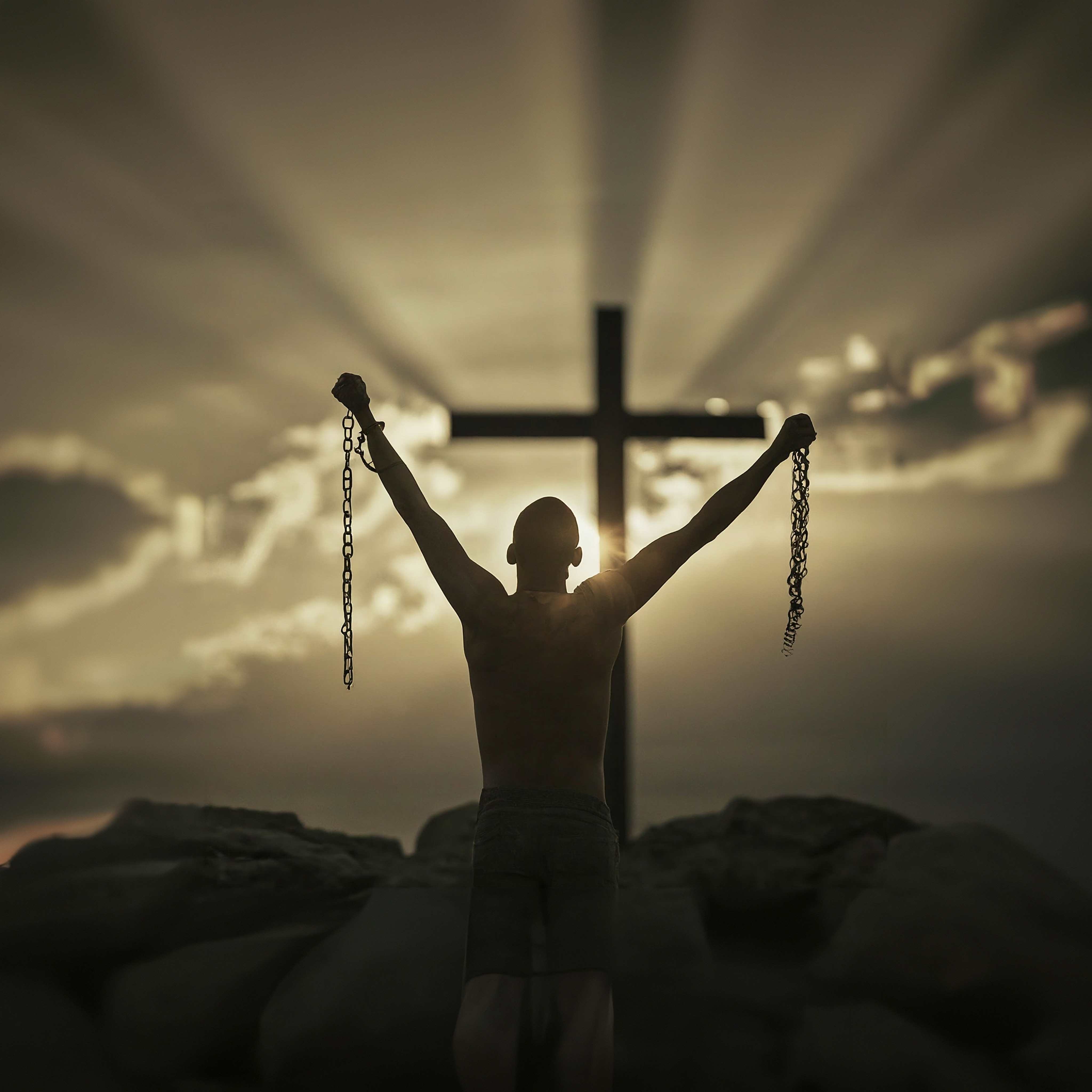
“For the law of the Spirit of life in Christ
Jesus has made me free from the law of sin and death.”
(Romans
8:2)
Prophecy
– Britannica
Prophecy
Gösta W. Ahlström
Britannica Editors
History
Prophecy, in religion, a divinely inspired revelation or
interpretation. Although prophecy is perhaps most commonly associated with
Judaism and Christianity, it is found throughout the religions of the world,
both ancient and modern.
In its narrower sense, the term prophet (Greek
prophētēs, “forthteller”) refers to an inspired person who believes
that he has been sent by his god with a message to tell. He is, in that sense,
the mouthpiece of his god. In a broader sense, the word can refer to anybody
who utters the will of a deity, often ascertained through visions, dreams, or
the casting of lots; the will of the deity also may be spoken in a liturgical
setting. The prophet, thus, is often associated with the priest, the shaman (a
religious figure in tribal societies who functions as a healer, diviner, and
possessor of psychic powers), the diviner (foreteller), and the mystic.
Nature and significance
A primary characteristic of prophetic self-consciousness is
an awareness of a call, which is regarded as the prophet’s legitimization. That
call is viewed as coming ultimately from a deity and by means of a dream, a
vision, or an audition or through the mediation of another prophet. The Hebrew
prophet Jeremiah’s call was in the form of a vision, in which he was told by
God that he had already been chosen to be a prophet before he was born
(Jeremiah 1:5). When the call of the deity is mediated through a prophet who is
the master of a prophetic group or an individual follower, such a call can be
seen as a mandate. Furthermore, such mediation means that the spirit of the
prophet master has been transferred simultaneously to the disciple. In the case
of cult prophets, such as the prophets of the gods Baal and Yahweh in ancient
Canaan, the call may be regarded as a mandate of the cult.
Prophets were often organized into guilds in which they
received their training. The guilds were led by a prophet master, and their
members could be distinguished from other members of their society by their
garb (such as a special mantle) or by physical marks or grooming (such as
baldness, a mark on the forehead, or scars of self-laceration).
The nature of prophecy is twofold: either inspired (by
visions or revelatory auditions) or acquired (by learning certain techniques).
In many cases both aspects are present. The goal of learning certain prophetic
techniques is to reach an ecstatic state in which revelations can be received.
That state might be reached through the use of music, dancing, drums, violent
bodily movement, and self-laceration. The ecstatic prophet is regarded as being
filled with the divine spirit, and in that state the deity speaks through him.
Ecstatic oracles, therefore, are generally delivered by the prophet in the
first-person singular pronoun and are spoken in a short, rhythmic style.
That prophets employing ecstatic techniques have been
called madmen is accounted for by descriptions of their loss of control over
themselves when they are “possessed” by the deity. Prophets in ecstatic trances
often have experienced sensations of corporeal transmigration (as did the
6th-century-BCE Hebrew prophet Ezekiel and the 6th–7th-century-CE founder of
Islam, Muhammad). Such prophets are esteemed by coreligionists to have a
predisposition for such unusual sensations.
The functions of the prophet and priest occasionally
overlap, for priests sometimes fulfill a prophetic function by uttering an
oracle of a deity. Such an oracle often serves as part of a liturgy, as when
ministers or priests in modern Christian churches read scriptural texts that
begin with the proclamation “Thus says the Lord.” The priest, in this instance,
fulfills the prophetic function of the cult. Not only do the roles of the
prophet and priest overlap, but so do the roles of the prophet and shaman. A
shaman seldom remembers the message he has delivered when possessed, whereas
the prophet always remembers what has happened to him and what he “heard.”
The diviner, sometimes compared with the prophet, performs
the priestly art of foretelling. His art is to augur the future on the basis of
hidden knowledge discerned almost anywhere, as in the constellations
(astrology), in the flight of birds (auspices), in the entrails of sacrificial
animals (haruspicy), in hands (chiromancy), in casting lots (cleromancy), in
the flames of burning sacrifices (pyromancy), and in other such areas of
special knowledge (see also divination: Astrology; divination: Other forms;
shamanism).
Mystics and prophets are similar in nature in that they
both claim a special intimacy with the deity. But while many religious
traditions hold that the mystic strives for a union with the deity, who usurps
control of his ego, the prophet never loses control of his ego. On occasion
mystics have delivered messages from the deity, thus acting in the role of a
prophet, and have been known to use ecstatic trances to reach the divine or
sacred world; e.g., many Roman Catholic saints and Sufi Muslims (Islamic
mystics).
Types of prophecy
Types of prophecy can be classified on the basis of inspiration,
behaviour, and office. Divinatory prophets include seers, oracle givers,
soothsayers, and diviners, all of whom predict the future or tell the divine
will in oracular statements by means of instruments, dreams, telepathy,
clairvoyance, or visions received in the frenzied state of ecstasy. Predictions
and foretellings, however, may also be the result of inspiration or of common
sense by the intelligent observation of situations and events, albeit
interpreted from a religious point of view.
Of broad importance to the religious community is the cult
prophet, or priest-prophet. Under the mandate of the cult, the priest-prophet
(who may be an ordinary priest) is part of the priestly staff of a sanctuary,
and his duty is to pronounce the divine oracular word at the appropriate point
in a liturgy. As such, he is an “institutional” prophet. The difference between
a cult prophet and a prophet in the classical sense is that the latter has
always experienced a divine call, whereas the cult prophet, pronouncing the
word of the deity under cultic mandate, repeats his messages at a special
moment in the ritual. Because of the timeless character of cultic activity,
however, every time he prophesies, his message is regarded as new.
Missionary (or apostolic) prophets are those who maintain
that the religious truth revealed to them is unique to themselves alone. Such
prophets acquire a following of disciples who accept that their teachings
reveal the true religion. The result of that kind of prophetic action may lead
to a new religion, as in the cases of Zarathustra, Jesus, and Muhammad. The
founders of many modern religious sects also should be included in this type.
Another type of prophet is of the reformative or
revolutionary kind (looking to the past and the future), closely related to the
restorative or purificatory type (looking to the past as the ideal). The best
examples are the classical prophets from the Hebrew Bible (Old Testament);
e.g., Amos and Jeremiah. Many of those so-called literary prophets were working
to reform the religion of Yahweh, attempting to free it from its Canaanite
heritage and accretions. In the Arab world Muhammad is included in this
category. The social sympathy found among such prophets is rooted in their
religious conscience. What may have been preached as religious reform,
therefore, often took on the form of social reform. This kind of prophecy is
also found in India and Africa, where prophets in modern times have arisen to
restore or purify the old tribal religious forms, as well as the customs and
laws that had their sources in the older precolonial religious life. Many of
those movements became revolutionary not only by force of logic but also by
force of social and political pressure (see eschatology).
Though there may be several categories of prophecy
according to scholars, no sharp line of demarcation differentiates among these
different types. Any given prophet may be both predictive and missionary,
ecstatic as well as reformative.
Prophecy in the ancient Middle East and Israel
The ancient Middle East
In ancient Egypt, charismatic prophecy apparently was not
commonplace, if it occurred at all, though institutional prophecy was of the
greatest importance because life was regarded as depending upon what the gods
said. Some ancient texts contain what has sometimes been regarded as prophetic
utterances, but those are more often considered to be the product of wise men
who were well acquainted with Egyptian traditions and history. Among Egyptian
sages, historical events were thought to follow a pattern, which could be
observed and the laws of which could be discerned. Thus, times of hardship were
always thought to be followed by times of prosperity, and predictions were made
accordingly.
In Egyptian mantic (divinatory) texts there are prophetic
sayings, but the particular concerns of those texts are more political than
religious. Some are fictitious, and many are considered to have been prophesied
after the event has already taken place. The papyrus text “The Protests of the
Eloquent Peasant” is considered by some authorities as a prophecy, since the
peasant is forced to deliver speeches, saying: “Not shall the one be silent
whom thou hast forced to speak.” That compulsion to speak in the name of the divine
is called by some scholars the “prophetical condition.”
In a Hittite text, King Mursilis II (reigned c. 1334–c.
1306 BCE) mentions the presence of prophets, but there is no information about
the type of prophecy. More informative are texts from Mari (Tall al-Ḥarīrī,
18th century BCE) in northwest Mesopotamia, where some striking parallels to
Hebrew prophecy have been discovered. The Mari prophets—believed to be
inspired—spoke the word of the god Dagon just as Israelite prophets spoke the
word of Yahweh.
In Mari the two key words for prophet are muḫḫum
(“ecstatic,” “frenzied one”) and āpilum (“one who responds”). Both may be
connected with the cult, but there are incidents indicating that the muḫḫum
was not bound to the cultic setting but received his message in a direct
revelation from his god. The āpilum usually acted within a group of fellow
prophets. Many of their sayings are political in nature, but there are also
oracles that deal with the king’s duty to protect the poor and needy, indicating
that an ethical dimension was present among the Mari prophets. The messages
could also contain admonitions, threats, reproofs, accusations, and predictions
of either disaster or good fortune.
The Mari texts are important in the history of prophecy
because they reveal that inspired prophecy in the ancient Middle East dates
back 1,000 years before Amos and Hosea (8th century BCE) in Israel. From
Mesopotamia there is evidence of the maḫḫu, the frenzied one, known
in Sumerian texts as the lú-gub-ba. Mention also is made of some prophets who
spoke to Assyrian kings, and their message is sometimes introduced with the
clause “Do not fear.” Omina (omens) texts containing promises or predictions
are also known. In one of the maqlu (“oath”) texts, in which an āšipu priest
is being sent forth by his god, the deity first asks “Whom shall I send?”
The baru (a divinatory or astrological priest) declared the
divine will through signs and omens, and thus is considered by some to have
been a prophet. Though he might possibly have had visions, he was not in
actuality an ecstatic. The art of divination became very elaborate in the
course of time and required a long period of training.
The ancient Iranian prophet and religious reformer
Zarathustra (also known by his Greek name Zoroaster; died c. 551 BCE), whose
teachings gave rise to the religion that bears his name (Zoroastrianism), is
one of the least well-known figures associated with the founding of a religion
because of the character of the existing textual materials and because some
scholars have argued that he is a mythical figure. He may have been, however,
an ecstatic priest-singer, or zaotar, who used special techniques (especially
intoxication) to achieve a trance. Zarathustra found the priests and cult of
his day offensive and opposed them. He preached the coming of the kingdom of
the god Ahura Mazdā (Ormazd), who is claimed to have revealed to
Zarathustra the sacred writings, the Avesta. In the Yasna (a section of the
Avesta), Zarathustra refers to himself as a Saoshyans (“Saviour”). Messianic
prophecies of the end of the world are found in Zoroastrian literature, but
those are more a literary product than actual prophetic utterance.
Prophets were a common phenomenon in Syria-Palestine. In an
Egyptian text (11th century BCE), Wen-Amon (a temple official at Karnak) was
sent by the pharaoh to Gebal (Byblos) to procure timber. While Wen-Amon was
there, a young noble of that city was seized by his god and in frenzy gave a
message to the king of Gebal that the request of Wen-Amon should be honoured.
In another instance, an Aramaic inscription from Syria records that the god
Baal-shemain told King Zakir (8th century BCE) through seers and diviners that
he would save the king from his enemies. Those chapters reveal the close connection
between sacrificial rites and divine inspiration. In the Hebrew Bible, verses
22 through 24 of the Book of Numbers mention the Mesopotamian prophet Balaam
(who may have been a maḫḫu) from Pethor, whom the Moabite king
Balak had asked to curse the invading Israelites. In the Book of Jeremiah, it
is said that prophets, diviners, and soothsayers were in the neighbouring
countries of Judah: in Edom, Moab, Ammon, Tyre, and Sidon (27:9). Since so
little is known about those prophets, the question of the uniqueness of Hebrew
prophecy is difficult to assess (see also Middle Eastern religion).
Origins and development of Hebrew prophecy
The Hebrew word for prophet is naviʾ, usually
considered to be a loanword from Akkadian nabū, nabāʾum, “to
proclaim, mention, call, summon.” Also occurring in Hebrew are ḥoze and
roʾe, both meaning “seer,” and neviʾa, “prophetess.”
Though the origins of Israelite prophecy have been much
discussed, the textual evidence gives no information upon which to build a
reconstruction. When the Israelites settled in Canaan, they became acquainted
with Canaanite forms of prophecy. The structure of the prophetic and priestly
function was very much the same in Israel and Canaan. Traditionally, the
Israelite seer is considered to have originated in Israel’s nomadic roots, and
the naviʾ is considered to have originated in Canaan, though such
judgments are virtually impossible to substantiate. In early Israelite history,
the seer usually appears alone, but the naviʾ appears in the context of a prophetic
circle. According to the First Book of Samuel, there was no difference between
the two categories in that early time; the terms naviʾ and roʾe seem
to be synonymous. In Amos, ḥoze and naviʾ are used for one and the
same person. In Israel, prophets were connected with the sanctuaries. Among the
Temple prophets officiating in liturgies were the Levitical guilds and singers.
Other prophetic guilds are also mentioned. Members of those guilds generally
prophesied for money or gifts and were associated with such sanctuaries as
Gibeah, Samaria, Bethel, Gilgal, Jericho, Jerusalem, and Ramah. Jeremiah
mentions that the chief priest of Jerusalem was the supervisor of both priests
and prophets and that those prophets had rooms in the Temple buildings. In pre-Exilic
Israel (before 587/586 BCE), prophetic guilds were a social group as important
as the priests. Isaiah includes the naviʾ and the qosem (“diviner,”
“soothsayer”) among the leaders of Israelite society. Divination in the
pre-Exilic period was not considered to be foreign to Israelite religion.
In reconstructing the history of Israelite prophecy, the
prophets Samuel, Gad, Nathan, and Elijah (11th–9th century BCE) have been
viewed as representing a transitional stage from the so-called vulgar
prophetism to the literary prophetism, which some scholars believed represented
a more ethical and therefore a “higher” form of prophecy. The literary prophets
also have been viewed as being antagonistic toward the cultus. Modern scholars
recognized, however, that such an analysis is an oversimplification of an
intricate problem. It is impossible to prove that the neviʾim did not
emphasize ethics, simply because few of their utterances are recorded. What is
more, none of the so-called “transitional” prophets was a reformer or was said
to have inspired reforms. Samuel was not only a prophet but also a priest,
seer, and ruler (“judge”) who lived at a sanctuary that was the location of a
prophetic guild and furthermore was the leader of that naviʾ guild. In the
cases of Nathan and Gad there are no indications that they represented some new
development in prophecy. Nathan’s association with the priest Zadok, however,
has led some scholars to suspect that Nathan was a Jebusite (an inhabitant of
the Canaanite city of Jebus).
Elijah was a “prophet father” (or prophet master) and a
prophet priest. Much of his prophetic career was directed against the Tyrian
Baal cult, which had become popular in the northern kingdom (Israel) during the
reign (mid-9th century BCE) of King Ahab and his Tyrian queen, Jezebel.
Elijah’s struggle against that cult indicated a religio-political awareness, on
his part, of the danger to Yahweh worship in Israel—namely, that Baal of Tyre
might replace Yahweh as the main god of Israel.
The emergence of classical prophecy in Israel (the northern
kingdom) and Judah (the southern kingdom) begins with Amos and Hosea (8th
century BCE). What is new in classical prophecy is its hostile attitude toward
Canaanite influences in religion and culture, combined with an old
nationalistic conception of Yahweh and his people. The reaction of those
classical prophets against Canaanite influences in the worship of Yahweh is a
means by which scholars distinguish Israel’s classical prophets from other
prophetic movements of their time. Essentially, the classical prophets wanted a
renovation of the Yahweh cult, freeing it from all taint of worship of Baal and
Asherah (Baal’s female counterpart). Though not all aspects of the Baal-Asherah
cult were completely eradicated, ideas and rituals from that cult were
rethought, evaluated, and purified according to those prophets’ concept of true
Yahwism.
Included in such ideas was the view that Yahweh was a
jealous God who, according to the theology of the psalms, was greater than any
other god. Yahweh had chosen Israel to be his own people and, therefore, did
not wish to share his people with any other god. When the prophets condemned
cultic phenomena, such condemnation reflected a rejection of certain kinds of
cult and sacrifice—namely, those sacrifices and festivals directed not exclusively
to Yahweh but rather to other gods. The prophets likewise rejected liturgies
incorrectly performed. The classical prophets did not reject all cults, per se;
rather, they wanted a cultus ritually correct, dedicated solely to Yahweh, and
productive of ethical conduct. Another important concept, accepted by the
classical prophets, was that of Yahweh’s choice of Zion (Jerusalem) as his cult
site. Thus, every cult site of the northern kingdom of Israel and all the
sanctuaries and bamot (“high places”) were roundly condemned, whether in Israel
or Judah.
Amos, whose oracles against the northern kingdom of Israel
have been misunderstood as reflecting a negative attitude toward cultus per se,
simply did not consider the royal cult of the northern kingdom at Bethel to be
a legitimate Yahweh cult. Rather, like the prophet Hosea after him, Amos
considered the Bethel cult to be Canaanite.
Prophets of the ancient Middle East generally interjected
their opinions and advice into the political arena of their countries, but in
that regard the classical Hebrew prophets were perhaps more advanced than other
prophetic movements. They interpreted the will of God within the context of
their particular interpretation of Israel’s history, and on the basis of that
interpretation often arrived at a word of judgment. Important to that
interpretation of history was the view that Israel was an apostate
people—having rejected a faith once confessed—from the very earliest times, and
the view that Yahweh’s acts on behalf of his chosen people had been answered by
their worship of other gods. In that situation, the prophets preached doom and
judgment, and even the complete destruction of Israel. The source of prophetic
insight into those matters is the cultic background of liturgical judgment and
salvation, wherein Yahweh judged and destroyed his enemies, and in so doing
created the “ideal” future. What is totally unexpected is that the prophets
would go so far as to include Israel itself as among Yahweh’s enemies, thus
using those ideas against their own people. Usually, however, the prophets
allowed some basis for hope in that a remnant would be left.
The future of that remnant (Israel) lay in the reign of an
ideal king (as described in Isaiah), indicating that the prophets were not
antiroyalists. Though they could and did oppose individual kings, the prophets
could not make a separation between Yahweh and the reign of his chosen king or
dynasty. Their messianic ideology, referring to the messiah, or anointed one,
is based on old royal ideology, and the ideal king is not an eschatological
figure (one who appears at the end of history). In that respect, the prophets
were nationalistic. They believed that the ideal kingdom would be in the
promised land, and its centre would be Jerusalem.
With the Exile of the Judaeans to Babylon of 586 BCE,
prophecy entered a new era. The prophecies of what is called Deutero-Isaiah
(Isaiah 40–45), for instance, were aimed at preserving Yahwism in Babylonia.
His vision of the future went beyond the pre-Exilic concept of a remnant and
extended the concept into a paradisiacal future wherein Yahweh’s new creation
would be a new Israel. That tone of optimism is continued in the prophetic
activity (late 6th century BCE) of Haggai and Zechariah, prophets who announced
that Yahweh would restore the kingdom and the messianic vision would come to
pass. Prerequisite to that messianic age was the rebuilding of the Temple
(which was viewed as heaven on earth). When, however, the Temple had been
rebuilt and long years had passed with neither the kingdom being restored nor
the messianic age initiated, Israelite prophecy declined.
There is a tendency in prophetic preaching to spiritualize
those aspects of religion that remain unfulfilled; therein lie the roots of
eschatology, which is concerned with the last times, and apocalyptic
literature, which describes the intervention of God in history to the
accompaniment of dramatic, cataclysmic events. Since the predictions of the
classical prophets were not fulfilled in a messianic age within history, those
visions were translated into a historical apocalypse, such as the Book of
Daniel. Why prophecy died out in Israel is difficult to determine, but
Zechariah offers as good an answer as any in saying that the prophets “in those
days” told lies. Prophets did appear, but after Malachi none gained the status
of the classical prophets. Another reason may be found in Ezra’s reform of the
cult in the 5th century BCE, in which Yahwism was so firmly established that
there was no longer any need for the old polemics against Canaanite religion.
Prophecy and apocalyptic literature
With the advent of post-Exilic Judaism (Ezra and after),
including its emphasis on law and cult, there was not much room left for
prophecy. The prophetic heritage was channelled through the teaching of their
words. What remained of prophetic activity was expressed in various literary
works that claimed esoteric knowledge of the divine purpose. The apocalyptic
writers saw themselves as taking over and carrying on the prophetic task, but
they went beyond the prophets in their use of old mythological motifs. The
events they described had usually occurred long ago, but their recounting of
those events was for the purpose of hinting and even predicting the events of the
future. There was a far greater emphasis upon predictive speculation about the
future than on the prophetic analysis and insight into history. The apocalyptic
authors wrote pseudonymously, using the names of ancient worthies (such as
Adam, Enoch, Abraham, Daniel, and Ezra). The literature is predominantly prose,
but that of the classical prophets was predominantly poetry. Apocalyptic
language is lavish in its use of fantastic imagery, frequently using riddles
and numerical speculations. In apocalyptic literature angelology came into full
blossom, with accounts of fallen angels (fallen stars) caught up in the forces
opposed to God, frequently pictured in the old mythological motif of the
struggle between darkness and light. Wild beasts symbolized peoples and
nations, and there were esoteric calculations and speculations about the
different eras through which history was passing as the world approached the
eschaton (the consummation of history).
Dominant in apocalyptic literature is the theme of God’s
sovereignty and ultimate rule over all the universe. The message of the
apocalyptic writers is one of both warning, of the doom to come at the end of
history, and hope in the new age beyond history under the rule of God, when the
righteous will be vindicated.
Prophecy and prophetic religion in postbiblical Judaism
Though prophecy did not cease functioning in early Judaism,
rabbinical Judaism—that influenced by rabbis, scholars, and commentators of the
Bible—sought to limit it by advocating the pre-Exilic era as the classical time
of prophecy. Prophecy was not suppressed, but it came to be encircled by the
Torah (the first five books of the Hebrew Bible) in that all prophecy had to be
in harmony with Torah, which was the definitive revelation of God’s will. Thus,
rabbinical Judaism gave prophecy its place of importance, but only as a
phenomenon of the past. Such a theological stricture could not restrain the
charismatic, eschatologically oriented patriots who arose during the time of
Roman hegemony (mid-1st century BCE–4th century CE). One rabbi, Akiba ben
Joseph, joined with a messianic pretender, Bar Kokhba (originally Simeon ben
Koziba) in a revolt (132–135) and functioned as a prophet within that movement.
Some prophets are known from the period of Hellenistic Judaism.
Chapter 14 of the First Book of Maccabees relates that Simon Maccabeus, who
finally secured political independence for Judaea in 142 BCE, was chosen as
“leader and high priest forever, until a trustworthy prophet should arise.” The
same notion of a prophet soon to appear is expressed in chapter 1 of First
Maccabees . The Hasmonean (Maccabean) prince John Hyrcanus I (reigned
135/134–104 BCE) was regarded as fulfilling those expectations and was called a
prophet by the 1st-century-CE Jewish historian Flavius Josephus, better known
as Josephus. Josephus also mentions some Zealots (Jewish revolutionaries) as
prophets and also one Jesus, son of Ananias, who in 62 CE predicted the
destruction of the Temple and the defeat of the Jews. Josephus also mentions
the seer Simon, a prophet leader (Antiquities), and Menahem, who prophesied in
the 1st century BCE. Among the followers of Judas Maccabeus, the leader of the
2nd-century-BCE revolt, there apparently were persons who divined knowledge of
the future. Those and other notations indicate that seers and prophets played
an important role in the intertestamental and postbiblical periods.
Jewish theology in Alexandria (Egypt) took up early
rabbinical ideas and postulated that the will of God was to be discerned in the
Torah and affirmed that the interpretation of law succeeded both the prophetic
office and the role of sages. The law was thus considered to be superior to
prophetic teaching. The Jewish philosopher Philo Judaeus (flourished 1st
century CE) affirmed that the Jews are a people of prophets. He also asserted
that when a prophet has reached the fourth and final stage of ecstasy, he is
ready to become an instrument of divine power. Though Philo was influenced by
Hellenistic concepts of prophecy, his basic foundation was still the Hebrew
Bible. Later rabbis believed that prophecy, though it was a gift from the world
beyond, still required some knowledge. In rabbinic discussions of the nature of
truth, it was generally held that reason alone was necessary but insufficient;
prophecy could supply what was missing.
The medieval Jewish philosopher Moses Maimonides
(1135–1204) understood prophecy as an emanation from God to the intellect of
man. Thus, prophecy could not be acquired by human effort. The divine gift of
prophecy was bestowed upon those with both mental and moral perfection,
combined with the presence of superior imagination. Opponents of that view
advocated that Maimonides’ concept of prophecy was not Jewish, because Jewish
prophecy always showed itself to be miraculous.
Prophecy in Christianity
Divination and prophecy in the Hellenistic world
The problem of false prophets that occurred during the
period of classical Hebrew prophecy also occurred in the early Christian
communities. Prophets and diviners were widespread throughout the Hellenistic
world. The Greek prophētēs was not only a forthteller but also an
interpreter of divine messages. In addition, there were mantics (from the Greek
mantis)—i.e., visionary seers—whose visions were interpreted by prophets,
soothsayers, diviners of all kinds, and especially astrologers. The impetus for
much of that activity came from Babylonia. The influx of new religions from the
East brought a profusion of astrologers and prophets. Many schools of astrology
were founded throughout the Hellenistic world, and old schools of philosophy
became very much occupied with astrology.
New Testament and early Christianity
Prophecy in the New Testament is seen as both a
continuation of the prophecy in the Hebrew Bible, which Christians consider to
be the “Old Testament,” as well as its fulfillment. For New Testament authors,
the correct interpretation of Old Testament prophecy is that it speaks in toto
of Jesus Christ. To prove their point, they often cite passages from the Hebrew
prophets that are then elucidated as the words of God about Christ. New
Testament writers follow Jesus himself in this matter, and Jesus is taken to be
the prophet that was promised in Deuteronomy (see John 1:45, cf. 5:39, 6:14;
Acts 3:22 ff.). Jesus regarded himself as a prophet, and so did some of his
contemporaries. One special aspect of the prophetic image, however, is missing
in Jesus: he was not an ecstatic, although supernatural revelations are found
in connection with him; e.g., the Transfiguration of Jesus as witnessed by some
of his Apostles on Mount Tabor. In those New Testament descriptions of the
Transfiguration, Jesus is proclaimed to be the Son of God in words borrowed
directly from the enthronement ritual mentioned in the Scriptures. As a
prophet, Jesus predicted his own death, his return as the Son of Man at the end
of the world, and the destruction of the Jerusalem Temple. At many points in
New Testament writings, Jesus is compared with and interpreted through the
classical prophets: his death—seen as the martyrdom of a prophet—his
sufferings, and even his identity.
Though the New Testament describes Jesus as a prophet, he
is at the same time believed to be more than a prophet: he is the expected
Messiah (Greek christos, “anointed one”)—predicted by prophets of old—who
should reign as the Son of David and the Son of God. The royal ideology of the
Hebrew Scriptures was most important to early Christianity, for therein lay the
seeds of its doctrines of Christ.
Several prophets are mentioned in the New Testament. One,
Zechariah, is said to have perished “between the altar and the sanctuary”
(Luke). Reference to his death is included by the Gospel writers because he was
the last prophet before Jesus to have been killed by the Jews. Zechariah, the
father of John the Baptist, uttered the Benedictus (“Blessed,” the initial
Latin word of the prophetic song) under the inspiration of the spirit. His
wife, Elizabeth, also was described as being inspired by the spirit. Others are
Simeon, the prophetess Anna, and John the Baptist. Those prophets are conceived
by the New Testament writers as the termination of Old Testament prophecy, a
concept also expressed by Jesus with reference to John the Baptist.
The New Testament mentions several prophetic figures in the
early church. Among them are Agabus of Jerusalem; Judas Barsabbas and Silas,
who also were elders of the Jerusalem church; the four prophesying daughters of
Philip the Evangelist; and John, the author of Revelation. The term prophet is
used with reference to an office in the early church along with evangelists and
teachers, and the recipient of the letter bearing his name, Timothy, is called
both a minister and a prophet. The prophet’s role in the early church was to
reveal divine mysteries and God’s plan of salvation. Paul the Apostle
instructed his followers in the correct use of prophecy and evaluated it as
more beneficial to the life of congregations than ecstatic glossolalia
(speaking in tongues). He considered prophecy to be the greatest spiritual gift
from God, and in his view a prophet therefore ranks ahead of evangelists and
teachers. With all that prophetic activity, the problem of false prophecy was
crucial, and warnings against it abound in the New Testament. The most
dangerous of the false prophets is predicted in the Revelation to John as yet
to come. Many of those prophets, viewed as magicians and exorcists, are condemned
for inducing chaos and for leading people astray. Therefore, all prophetic
activity had to be examined.
In the period immediately after the Apostles, prophets
continued to play an important leadership role in the church, sometimes being
called high priests. They were the only ones permitted to speak freely in the
liturgy, because of their inspiration by the Holy Spirit. Gradually, however,
the liturgy became more and more fixed, and less freedom and innovation was
permitted; that change, combined with the threat of false prophecy, eliminated
those charismatic personalities. Among the heretical sects that advocated a
return to prophetic activity, Montanism (2nd century), led by the prophet
Montanus, advocated that the spirit of truth had come through Montanus. The
freedom of doctrinal innovation that Montanus advocated could well have led to
doctrinal anarchy, and the result of the struggle against that heresy was the
suppression of charismatic prophecy, wherein ecstatic inspiration came to be
viewed by the church as demonic.
Another prophet who created a problem in the early church
was Mani—the 3rd-century founder of a dualistic religion that was to bear his
name (Manichaeism)—who considered himself to be the final messenger of God,
after whom there was to be no other.
Prophetic and millenarian movements in later Christianity
In Western medieval church doctrines and rituals, active
prophecy had no place. Prophetic activity was carried on, however, through holy
orders. Mystically oriented holy men would sometimes appear as prophets with a
special message, and even ecstatics found their places within the monasteries.
In Eastern Christianity, monastic life stressed training in mystical
experience.
Throughout Christian history there have been millenarian
movements, usually led by prophetic-type personalities and based on the New
Testament belief in Christ’s return. Their basic doctrine is chiliasm (from
Greek chilioi, “thousand”), which affirms that Christ will come to earth in a
visible form and set up a theocratic kingdom over all the world and thus usher
in the millennium, the 1,000-year reign of Christ and his elect. The early and
medieval church hierarchy generally opposed chiliasm because such movements
often became associated with nationalistic aspirations. Though the key leaders
of the Protestant Reformation opposed chiliasm, and therefore minimized its
effects upon the emergent denominations (e.g., Lutheran, Calvinist, and
Anglican), chiliasm did influence Anabaptist circles (radical reformation groups),
and through them chiliastic ideas influenced Protestant Reformed theology and
have appeared in reform movements, such as Pietism in Lutheran churches, and
various revivalistic movements.
Prophecy in Islam
The centrality of prophecy in Islam
Pre-Islamic prophecy in Arabia was no different in
character from other Semitic prophecy. Pre-Islamic terms for prophet are
ʿarrāf and kāhin (“seer,” cognate to Hebrew kohen, “priest”).
The kāhin could often be a priest, and as a diviner he was an ecstatic.
The kāhin was considered to be possessed by a jinnī (“spirit”), by
means of whose power miracles could be performed. Also, poets were considered
to be possessed by a jinnī through whose inspiration they composed their
verses. The importance of the seers and diviners was noted in all aspects of
life. Any problem might be submitted to such men, and their oracular answers
were given with divine authority. It is not surprising, therefore, to find that
a kāhin often became a shaykh, a temporal leader, and there were instances
in which the position of kāhin was hereditary.
It was against that background that the founder of Islam,
the Prophet Muhammad, appeared. During his early career in Mecca (in Arabia) he
was considered by his tribesmen, the Quraysh, to be only another
jinnī-possessed kāhin. His utterances during that time were delivered
in the same rhymed style as that used by other Arab prophets and were mostly
the products of ecstatic trances. At about 40 years of age Muhammad experienced
the promptings of the one God, Allah, and retreated into the solitude of the
mountains. Those retreats served psychologically as preparations for his later
revelations.
The central religious problem of Muhammad was the fact that
Jews had their sacred Scriptures in Hebrew, and Christians had theirs in Greek,
but there was no written divine knowledge in Arabic. Muhammad’s preoccupation
with that concern, along with a sense of the coming Day of Judgment, became the
seeds of his new religion. Contemplation had matured Muhammad, and biographers
point out that, as one may conclude from the Qurʾān, Muhammad
received the divine call in a vision. His ecstatic revelations were in the form
of auditions, usually involving the archangel Gabriel reading the divine
message from a book. The illiterate Muhammad had his wife Khadījah, who
was 15 years his senior, record them, and they are preserved in the
Qurʾān. Because it is believed to be a verbatim copy of the Heavenly
Book, literally the words of Allah himself, it cannot be questioned.
Muhammad considered himself to be more than a mere prophet
(nābi); he thought of himself as the messenger (rasūl) of Allah, the
final messenger in a long chain that had begun with Noah and run through Jesus.
As Allah’s rasūl, Muhammad saw his first mission to be that of warning the
Arab peoples of the impending doomsday. No doubt Muhammad was influenced by
Judaism and Christianity in his concept of the Day of Judgment, as well as in
his concept of himself as a prophet. Muhammad, who had felt at one time that
Arabs were religiously inferior to Jews and Christians, became the medium of
revelations that created Islam and raised the Arabs in Muhammad’s own
evaluation to a status equal with that of the other two religions.
After 622 CE, when Muhammad left Mecca and found refuge in
Medina, ecstatic revelations began to play a secondary role in his prophecy—due
to his political concerns—and not only does the rhymed prose of his message
give way to more conventional prose but the content is more obviously the
product of reasoned reflection on all aspects of life.
The Qurʾānic doctrines of prophecy
An official Islamic view, and also that of Muhammad
himself, was that Muhammad was the final prophet. The Qurʾān mentions
those men who are considered to have imparted divine knowledge: Adam, Noah,
Abraham, Isaac, Jacob, Moses, David, and Jesus. None of those revealed Allah’s
message in full, since they were sent only to one nation. Muhammad, on the
other hand, was sent to all nations and also to the jinn. The messages of the
prophets before Muhammad were believed to have been either forgotten or
distorted, but Islam claims that the Qurʾān both corrects and
confirms the sayings of the earlier prophets. Muhammad is the “seal of the
prophets”—i.e., the end of prophecy. All prophecy before Muhammad is incomplete
and points to the coming of the final revelation.
The prophetic activity of Muhammad serves as the foundation
of Islam and Muslim society. The incomparable revelations of Muhammad are
believed to have brought true monotheism into the world, to which nothing can
be added or taken away. Thus, there is no more need of prophets or revelations.
Later theological and philosophical doctrines
After the death of Muhammad, the expansion of Islam brought
it into contact with the world at large, and a Muslim culture (involving
science, philosophy, and literature) emerged, partially as a result of the
Muslim acquisition of Byzantine culture. Christians and Jews became advisers
and officials in Muslim courts. Christian philosophers introduced Muslim
students to the works of the 4th-century-BCE Greek philosopher Aristotle and to
Neoplatonism, to theories about human nature, to theology, to the nature of
existence, and to cosmology. Philosophical discussions about God, however,
leave little or no room for prophets, and the savant displaced the prophet as
the one proclaiming the will of God. As religious leaders, the savants were the
keepers of Sunnah (the life and habits of the Prophet) and Hadith (traditions
about the Prophet’s utterances and actions), which are supplements to the
Qurʾān. Study of Hadith and Sunnah contributed to the beginning of
scholarly and scholastic activities in Islam, from which study emerged the
Muslim system of duties and obligations (fiqh). Muslim theology began in the
formulation of the doctrine of the general consensus (ijmāʿ), which
was used to determine what was genuine Sunnah. None ventured to question that
Allah was the only God, that Muhammad was his prophetic messenger, or that the
Qurʾān was Allah’s word; to have done so would have been tantamount
to admitting that one was not a Muslim.
Scholastic philosophy was first introduced openly into
Muslim theology by al-Ashʿarī (10th century), who was the first to
give Islam a systematic exposition. Another theologian, Ibn Sīnā
(Avicenna), considered prophecy still to be a fundamental aspect of Islam, but,
for him, a prophet was not the spirit-possessed spokesman of God but rather an
intelligent, intuitive man whose insight results in a place of leadership in
society. Another philosopher, Ibn Rushd (Averroës), denied the belief that
man’s knowledge could ever be the same as God’s knowledge; he also denied
doctrines of predestination and corporeal resurrection, both of which were
aspects of Muhammad’s message.
Prophetic figures after Muhammad
The fact that Muhammad was considered to be the final
prophet did not end prophecy in Islam. After Muhammad’s death, several seers
proclaimed themselves his successors. Muhammad had designated no one to succeed
himself and had left no sons. Abū Bakr, the father of Muhammad’s wife ʿAʾishah,
was chosen caliph (Arabic khalīfah, “substitute, deputy”), but that did
not discourage others from claiming that they were called of Allah and thus
trying to lead their own tribes as Muhammad had led his. Such movements were
crushed by force, which contributed to the rapid expansion of Islam.
Some prophets claimed that they were a long-awaited
saviour-deliverer (mahdī, “restorer of the faith”) and even gained some
following beyond their own local tribes. Muḥammad Aḥmad ibn
al-Sayyid ʿAbd Allāh of the Sudan preached a holy war against Egypt
(1881) and fought and defeated the British governor-general Charles George
Gordon at Khartoum in 1885. In India (Punjab), Mirza Ghulan Aḥmad claimed
that he had received the spirit of Jesus and that he was a prophet-messiah. He
recorded his revelations from Allah in a book. Considering himself to be the
Christ to his generation, he set out to reform Islam by liberalizing strict
orthodoxy, yet avoiding the extremes of the pro-Western movements of his time.
He gained a large following among middle-class Muslims but was soon disowned by
orthodox Islam. His sect, the Aḥmadiyyah, though small in numbers, has
through its missionary activities spread over much of the world.
Prophecy in other religions
Prophetic movements and figures in the Eastern religions
Buddhist literature contains predictions of the buddha
Maitreya, who will come as a kind of saviour-messiah to inaugurate a
paradisaical age on earth. The historical Buddha himself (flourished c. 5th
century BCE) mentioned that prediction.
Among the Hindus, the Purana literature (“old history”)
contains prophetic passages, but those are to be understood as predictions
after the event has occurred. Hindu religion has had many prophetic reformers,
and the tribes of India, in their struggle for freedom, produced prophets who
combined the ideas of religious freedom with the hope of political and social
freedom. The Oraons, a tribe in Chota Nagpur, saw several prophets (bhagats)
appear about the turn of the 20th century. Their intent was to free their
people from foreign culture and political rule, returning to the older Hindu
culture and religion. Such efforts often led to armed rebellion and ended in
disaster.
In ancient China, divination was commonplace. One Confucian
book involving divination, the Yijing (“Classic of Changes”), may have been
connected with pre-Han Confucianism (before the 3rd century BCE). Classical
Confucian tradition, however, emphasized the importance of rational process
over inspiration and divination. Autocratic governments eliminated any such
revolutionary, prophet-led movements as occurred in India, and any prophecy
against the establishment was regarded as heretical. Inspired prophecy found
little place in the official state religion. That situation did not rule out
prophecy in folk religion, in which prophets appeared and promised their
followers the good life in this world and in the next. In modern times, some of
those movements became religio-political movements, as when Hong Xiuquan, an
ecstatic epileptic noble of the middle 19th century, started a movement called
the Taiping (“Great Peace”), a sect claiming that it was establishing the
correct political order anew. Hong’s movement—perhaps under the impact of
Protestant missions—was quite austere, and it opposed magic, idols, and belief
in spirits. He considered the New Testament to be authoritative for his new
sect, and its rapid growth—aided by connections with other revolutionary movements—soon
resulted in a genuine danger to the Manchu ruler of China. The Taiping
Rebellion was crushed by Gordon in 1864.
Diviners and shamans (male and female) are well represented
in old Japanese Shintō. Japanese shamanism, which was closely related to
Korean shamanism, often played a role in political disturbances and still does.
Among old Japanese Buddhist sects is that founded by Nichiren (13th century
CE), a prophetic enthusiast, religious revivalist, and zealous nationalist who
taught that the Buddha’s dharma (teaching) would be regenerated and spread from
Japan to the rest of the world. In the Shintō revival movements of the
18th and 19th centuries, inspired persons with eschatological concepts founded
movements that became messianic in character, and drew many of their followers
from among the farmers, many of whom had practiced a Buddhist folk piety.
Prophetic movements and figures in the religions of
nonliterate cultures
In many nonliterate cultures, especially those of Africa,
shamans, seers, and prophets are quite common. The same distinction between
technical divination and charismatic prophecy is to be found in those cultures
as in the ancient Middle East. When it is possible to trace the history of
prophetic activity in Africa, scholars usually find that it arises in times of
confrontations with foreign cultures and with the advent of new religions. A
sharp distinction between the diviner and the prophet cannot always be
maintained, for diviners sometimes appear as prophets. A diviner may hear the
voice of a god or spirit in his dreams and visions (in Zulu he is called a
“dreamhouse”) and receive a message. Some prophets, avowing a call, deny any
training in prophecy. There are many parallels with the “rebel” prophets of
India. Ecstatic prophets have played an important role not only in chiliastic
and messianic movements but also in those movements opposing imperialism and
European colonization of Africa. Their goal was and is a return to the old
African culture and religion. Eschatological motifs have often been used in the
prophetic preaching of tribal and national movements aspiring for freedom. Many
of those prophets took up Christian ideas. Nxele, a 19th-century prophet of the
South African Xhosas, preached the return of the dead on a certain day, and his
successor, Mlandsheni, claimed to be the reincarnation of Nxele. He and others
like him were healers and miracle workers.
Some of the prophetic founders of reform movements, which
often were more political than religious, became messianic figures. Other
prophets started out as Christian converts but came to a strong awareness that
God had destined them to separate from their churches and lead syncretistic
movements (fusions of various sources), all of which incorporate aspects of old
African religion and, often, allow polygamy. In all those movements,
syncretistic or not, there are also many prophetesses.
Prophets also have been found among American Indians. In
1675 a medicine man, Popé, arose as a prophetic leader among the Pueblo Indians.
He preached the end of Spanish tyranny and a restoration of Indian sovereignty.
At the height of the movement, several massacres took place, along with the
burning of various church buildings.
Gösta W. Ahlström The Editors of Encyclopaedia Britannica