Home About Us Our Publications Make a
Donation Email: glenn.benson@yourbrotherglenn.org
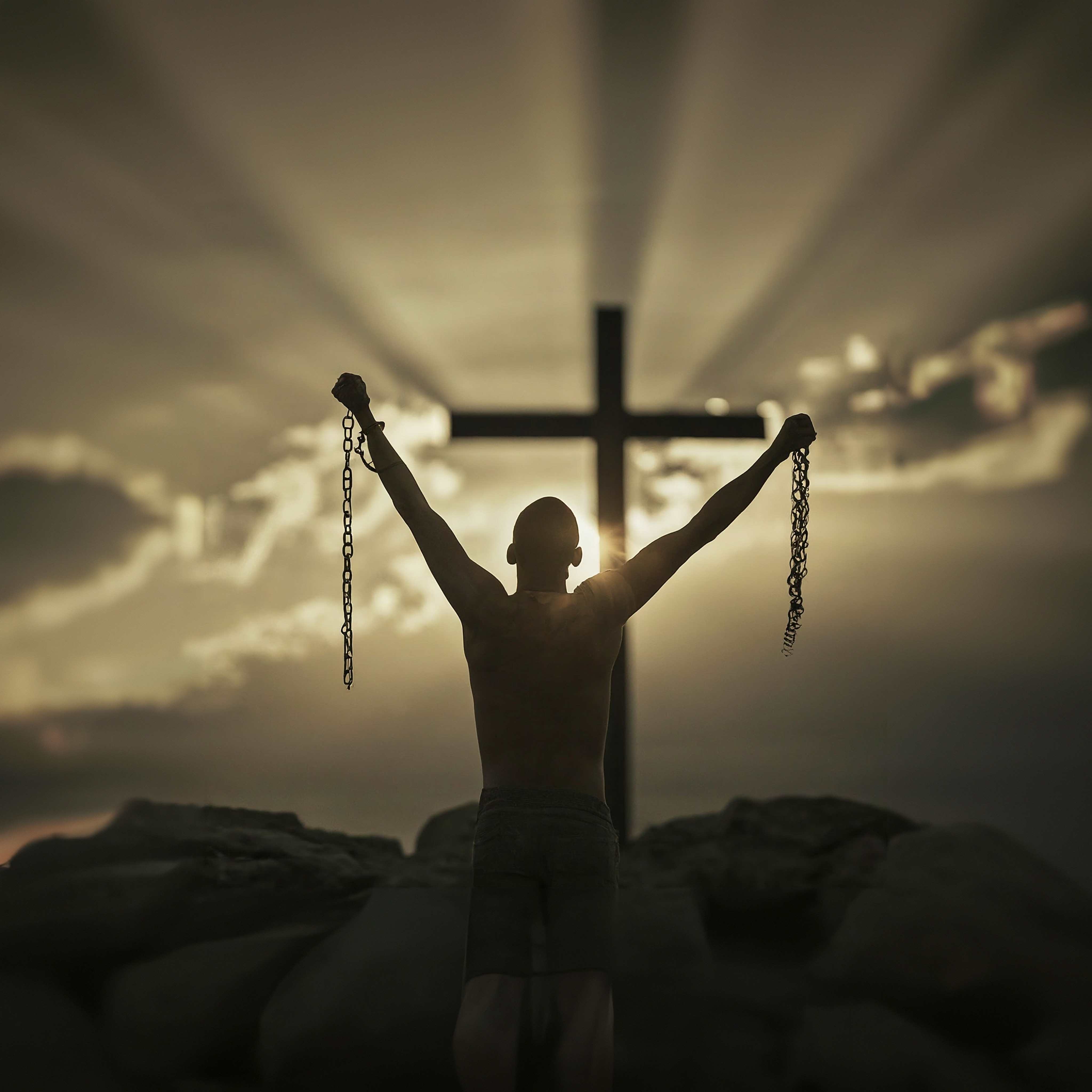
“For the law of the Spirit of life in Christ
Jesus has made me free from the law of sin and death.”
(Romans
8:2)
Priscilla
and Aquila – Wikipedia
Priscilla and Aquila
From Wikipedia, the free encyclopedia
Saints
Aquila and Priscilla of Rome
Holy Couple and Martyrs
Born Unknown
Died Rome
Venerated in
Catholic Church
Anglican Communion
Eastern Orthodoxy
Oriental Orthodoxy
Lutheran Church
Canonized Pre-Congregation
Feast
8 July (Catholic Church, Anglican Communion)
13 February (Eastern Orthodoxy)
14 July (other Orthodox Churches commemorate Saint Aquila
alone as an Apostle)
Attributes Crown
of Martyrdom
Martyr's palm
Cross
Patronage
Love
Marriage
Priscilla[a] and Aquila[b] were a first-century Christian
missionary married couple described in the New Testament. Aquila is
traditionally listed among the Seventy Disciples. They lived, worked, and
traveled with the Apostle Paul, who described them as his "fellow workers
in Christ Jesus" (Romans 16:3).[1]
Priscilla and Aquila are described in the New Testament as
providing a presence that strengthened the early Christian churches. Paul was
generous in his recognition and acknowledgment of his indebtedness to them
(Romans 16:3–4). Together, they are credited with instructing Apollos,[2] a
major evangelist of the first century, and "[explaining] to him the way of
God more accurately" (Acts 18:26). They were forced from their home during
the persecution under Claudius.
It is thought by some to be possible, in light of her
apparent prominence, that Priscilla held the office of presbyter.[3] She also
is thought by some to be the anonymous author of the Epistle to the Hebrews.[4]
New Testament references
They are mentioned six times in four different books and by
two different human penman (Paul and Luke)[5] in the New Testament. They are
always named as a couple and never individually. Of those six references,
Aquila's name is mentioned first only twice: and one of the times on account of
it being Paul's first encounter with them, probably through Aquila first.
Acts 18:2–3: "There he became acquainted with a Jew
named Aquila, born in Pontus, who had recently arrived from Italy with his
wife, Priscilla. They had left Italy when Claudius Caesar deported all Jews
from Rome. Paul lived and worked with them, for they were tentmakers just as he
was."
Acts 18:18: "Paul stayed in Corinth for some time
after that, then said good-bye to the brothers and sisters and went to nearby
Cenchrea. There he shaved his head according to Jewish custom, marking the end
of a vow. Then he set sail for Syria, taking Priscilla and Aquila with
him."
Acts 18:26: "When Priscilla and Aquila heard him
preaching in the synagogue, they took him aside and explained the way of God
even more accurately."
Romans 16:3: "Give my greetings to Priscilla and
Aquila, my co-workers in the ministry of Christ Jesus."
1 Corinthians 16:19: "The churches here in the
province of Asia send greetings in the Lord, as do Aquila and Priscilla and all
the others who gather in their home for church meetings."
2 Timothy 4:19: "Give my greetings to Priscilla and
Aquila and those living in the household of Onesiphorus."
Note: This is not KJV; in the KJV, Acts 18:26 lists their
names as "Aquila and Priscilla" making the count three and three.
The couple
Paul staying in the house of Saints Aquila and Priscilla by
Jan van de Venne, 17th century: Paul is at left, writing a letter; Priscilla is
at right, spinning, and her husband Aquila is in the background, working on the
loom.[6]
Priscilla and Aquila were tentmakers as was Paul.[7]
Priscilla and Aquila had been among the Jews expelled from Rome by the Roman
Emperor Claudius in the year 49 as written by Suetonius. They ended up in
Corinth. Paul lived with Priscilla and Aquila for approximately 18 months. Then
the couple started out to accompany Paul when he proceeded to Syria, but
stopped at Ephesus in the Roman province of Asia, now part of modern Turkey.
In 1 Corinthians 16:19, Paul passes on the greetings of
Priscilla and Aquila to their friends in Corinth, indicating that the couple
were in his company. Paul founded the church in Corinth.[8] His including them
in his greetings implies that Priscilla and Aquila were also involved in the
founding of that church. Since 1 Corinthians discusses a crisis deriving from a
conflict between the followers of Apollos and the followers of Cephas (possibly
the apostle Peter), it can be inferred that Apollos accompanied Priscilla and
Aquila when they returned to Corinth. This happened before 54, when Claudius
died and the expulsion of the Jews from Rome was lifted.
In Romans 16:3–4, thought to have been written in 56 or
57,[9] Paul sends his greetings to Priscilla and Aquila and proclaims that both
of them "risked their necks" to save Paul's life.
Tradition reports that Aquila and Priscilla were martyred
together.[10][11]
Priscilla
Priscilla was a woman of Jewish heritage and one of the
earliest known Christian converts who lived in Rome. Her name is a Roman
diminutive for Prisca which was her formal name. She is often thought to have
been the first example of a female preacher or teacher in early church history.
Coupled with her husband, she was a celebrated missionary, and a friend and
co-worker of Paul.[12]
While the view is not widely held among scholars, some scholars
have suggested that Priscilla was the author of the Book of Hebrews. Although
acclaimed for its artistry, originality, and literary excellence, it is one of
the few books in the New Testament with author anonymity.[4] Hoppin and others
suggest that Priscilla was the author, but that her name was omitted either to
suppress its female authorship, or to protect the letter itself from
suppression.[4][13]
She is the only Priscilla named in the New Testament. The
fact that she is always mentioned with her husband, Aquila, disambiguates her
from different women revered as saints in Catholicism, Orthodoxy and
Lutheranism, such as (1) Priscilla of the Roman Glabrio family, the wife of
Quintus Cornelius Pudens, who according to some traditions hosted St. Peter circa
AD 42, and (2) a third-century virgin martyr named Priscilla and also called
Prisca.
Aquila
Aquila, husband of Priscilla, was originally from
Pontus[14] Acts 18:2 and also was a Jewish Christian. According to church
tradition, Aquila did not dwell long in Rome: the Apostle Paul is said to have
made him a bishop in Asia Minor. The Apostolic Constitutions identify Aquila,
along with Nicetas, as the first bishops of Asia Minor (7.46).
Significance
This couple were among the earliest known Christian missionaries
in the first century. In Acts 18:24–28, Luke reports the couple explaining
Jesus' baptism to Apollos, an important Jewish-Christian evangelist in Ephesus.
Paul indicates Apollos is an apostle,[15]: pp.230–231 an
"eloquent speaker" who had a "thorough knowledge of the
Scriptures". He had been "instructed in the way of the Lord"
which he taught with great "enthusiasm". He began to preach boldly in
the synagogue. However, he knew only the baptism of John the Baptist—not the
baptism taught by Jesus. When Priscilla and Aquila heard him, they took him
aside and explained the Way of God to him "more accurately".[16]
Amongst churches today, this passage is often held in
perceived tension with 1 Timothy 2:12–14, which the reads, "I do not
permit a woman to teach or have authority over a man; rather, she is to remain
quiet. For Adam was formed first, then Eve; and Adam was not deceived but the
woman was deceived and became a transgressor." Opponents of female
pastorship cite his reference to Adam and Eve to be indicating that the issue
is a matter of universal gender propriety.
Advocates of female pastorship perceive this as an
imperative that was a reflection of cultural and legal restrictions of the day.
They cite 1 Corinthians 11:11–12, where Paul writes "Nevertheless, in the
Lord woman is not independent of man nor man of woman; for as woman was made
from man, so man is now born of woman. And all things are from God" and
his affirmation of Priscilla's instruction of the prominent evangelist Apollos
as evidence that Paul was acceding to the law and customs of his day.
Chronology
The appearance of the two in the Acts of the Apostles helps
to provide a chronological synchronism for the chronology of Paul's life.
According to Acts 18:2f, before Paul meets them in Corinth, they were part of a
group of Jews whom the Emperor Claudius expelled from Rome; if this edict of
the Emperor can be dated, then we would be able to infer when Paul arrived in
Corinth.
The evidence of other ancient sources points to two possible
periods during the reign of Claudius: either during his first regnal year (AD
41; so Dio Cassius, Roman History 60.6.6), or during his ninth regnal year
(AD49; so Orosius, Historia 7.6.15f). As a result, the experts are divided over
when this expulsion took place: some, like Jerome Murphy-O'Connor, argue for
the earlier year,[17] while others, like Joseph Fitzmyer, argue for the later
year.[18]
Veneration
Priscilla and Aquila are regarded as saints in most
Christian churches that canonize saints. In the Catholic Church, the Roman
Martyrology lists their feast as July 8.[14] Most churches in The Anglican
Communion follow suit.[19] The Greek Orthodox Church and the Antiochian
Orthodox Church commemorate them together on February 13.[20][21] The Greek
Orthodox Church recognizes Aquila separately as an apostle on July 14.[11]