Home About Us Our Publications Make a
Donation Email: glenn.benson@yourbrotherglenn.org
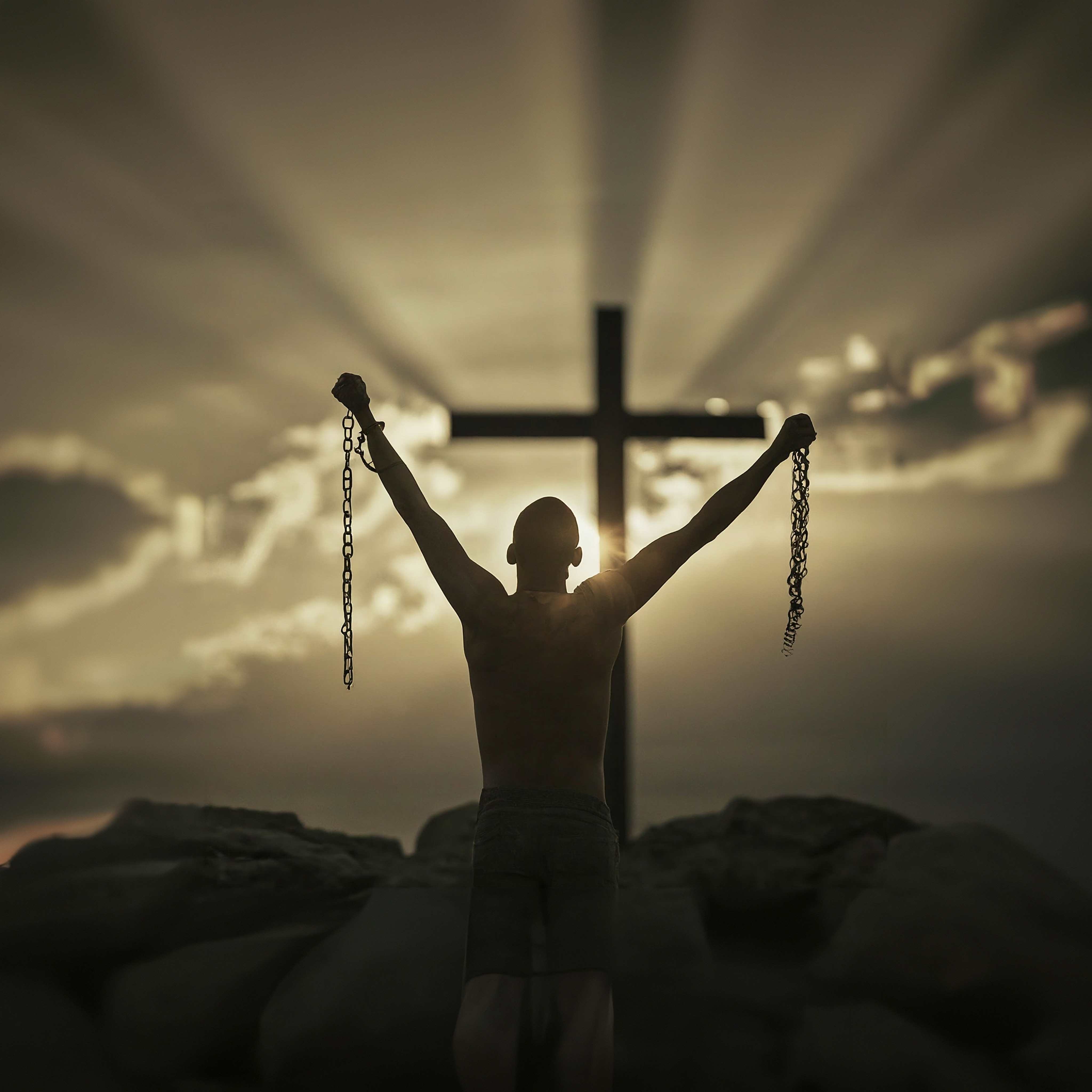
“For the law of the Spirit of life in Christ
Jesus has made me free from the law of sin and death.”
(Romans
8:2)
Noah –
Britannica
Noah
biblical figure
Also known as: Noe
Britannica
Editors History
Noah, the hero of the biblical Flood story in the Old
Testament book of Genesis, the originator of vineyard cultivation, and, as the
father of Shem, Ham, and Japheth, the representative head of a Semitic
genealogical line. A synthesis of at least three biblical source traditions,
Noah is the image of the righteous man made party to a covenant with Yahweh,
the God of Israel, in which nature’s future protection against catastrophe is
assured.
Noah appears in Genesis 5:29 as the son of Lamech and ninth
in descent from Adam. In the story of the Deluge (Genesis 6:11–9:19), he is
represented as the patriarch who, because of his blameless piety, was chosen by
God to perpetuate the human race after his wicked contemporaries had perished
in the Flood. A righteous man, Noah “found favour in the eyes of the Lord”
(Genesis 6:8). Thus, when God beheld the corruption of the earth and determined
to destroy it, he gave Noah divine warning of the impending disaster and made a
covenant with him, promising to save him and his family. Noah was instructed to
build an ark, and in accordance with God’s instructions he took into the ark
male and female specimens of all the world’s species of animals, from which the
stocks might be replenished. Consequently, according to this narrative, the
entire surviving human race descended from Noah’s three sons. Such a genealogy
sets a universal frame within which the subsequent role of Abraham, as the
father of Israel’s faith, could assume its proper dimensions.
The story of the Flood has close affinities with Babylonian
traditions of apocalyptic floods in which Utnapishtim plays the part
corresponding to that of Noah. These mythologies are the source of such
features of the biblical Flood story as the building and provisioning of the
ark, its flotation, and the subsidence of the waters, as well as the part
played by the human protagonist. Tablet XI of the Gilgamesh epic introduces
Utnapishtim, who, like Noah, survived cosmic destruction by heeding divine
instruction to build an ark.
The religious meaning of the Flood is conveyed after Noah’s
heroic survival. He then built an altar on which he offered burnt sacrifices to
God, who then bound himself to a pact never again to curse the earth on man’s
account. God then set a rainbow in the sky as a visible guarantee of his
promise in this covenant. God also renewed his commands given at creation but
with two changes: man could now kill animals and eat meat, and the murder of a
man would be punished by men.
Despite the tangible similarities of the Mesopotamian and
biblical myths of the flood, the biblical story has a unique Hebraic
perspective. In the Babylonian story the destruction of the flood was the
result of a disagreement among the gods; in Genesis it resulted from the moral
corruption of human history. The primitive polytheism of the Mesopotamian
versions is transformed in the biblical story into an affirmation of the
omnipotence and benevolence of the one righteous God. Again, following their
survival, Utnapishtim and his wife are admitted to the circle of the immortal
gods; but Noah and his family are commanded to undertake the renewal of
history.
The narrative concerning Noah in Genesis 9:20–27 belongs to
a different cycle, which seems to be unrelated to the Flood story. In the latter,
Noah’s sons are married and their wives accompany them in the ark; but in this
narrative they would seem to be unmarried, nor does the shameless drunkenness
of Noah accord well with the character of the pious hero of the Flood story.
Three different themes may be traced in Genesis 9:20–27: first, the passage
attributes the beginnings of agriculture, and in particular the cultivation of
the vine, to Noah; second, it attempts to provide, in the persons of Noah’s
three sons, Shem, Ham, and Japheth, ancestors for three of the races of mankind
and to account in some degree for their historic relations; and third, by its
censure of Canaan, it offers a veiled justification for the later Israelite
conquest and subjugation of the Canaanites. Noah’s drunkenness and the
disrespect it provokes in his son Ham result in Noah’s laying of a curse on
Ham’s son Canaan. This incident may symbolize the ethnic and social division of
Palestine: the Israelites (from the line of Shem) will separate from the
pre-Israelite population of Canaan (which is depicted as licentious), who will
live in subjection to the Hebrews.
Also spelled: Noe
The symbolic figure of Noah was known in ancient Israel,
before the compilation of the Pentateuch. Ezekiel (14:14, 20) speaks of him as
a prototype of the righteous man who, alone among the Israelites, would be
spared God’s vengeance. In the New Testament, Noah is mentioned in the
genealogy of the Gospel According to Luke (3:36) that delineates Jesus’ descent
from Adam. Jesus also uses the story of the Flood that came on a worldly
generation of men “in the days of Noah” as an example of Baptism, and Noah is
depicted as a preacher of repentance to the men of his time, itself a
predominant theme in Jewish apocryphal and rabbinical writings.