Home About Us Our Publications Make a
Donation Email: glenn.benson@yourbrotherglenn.org
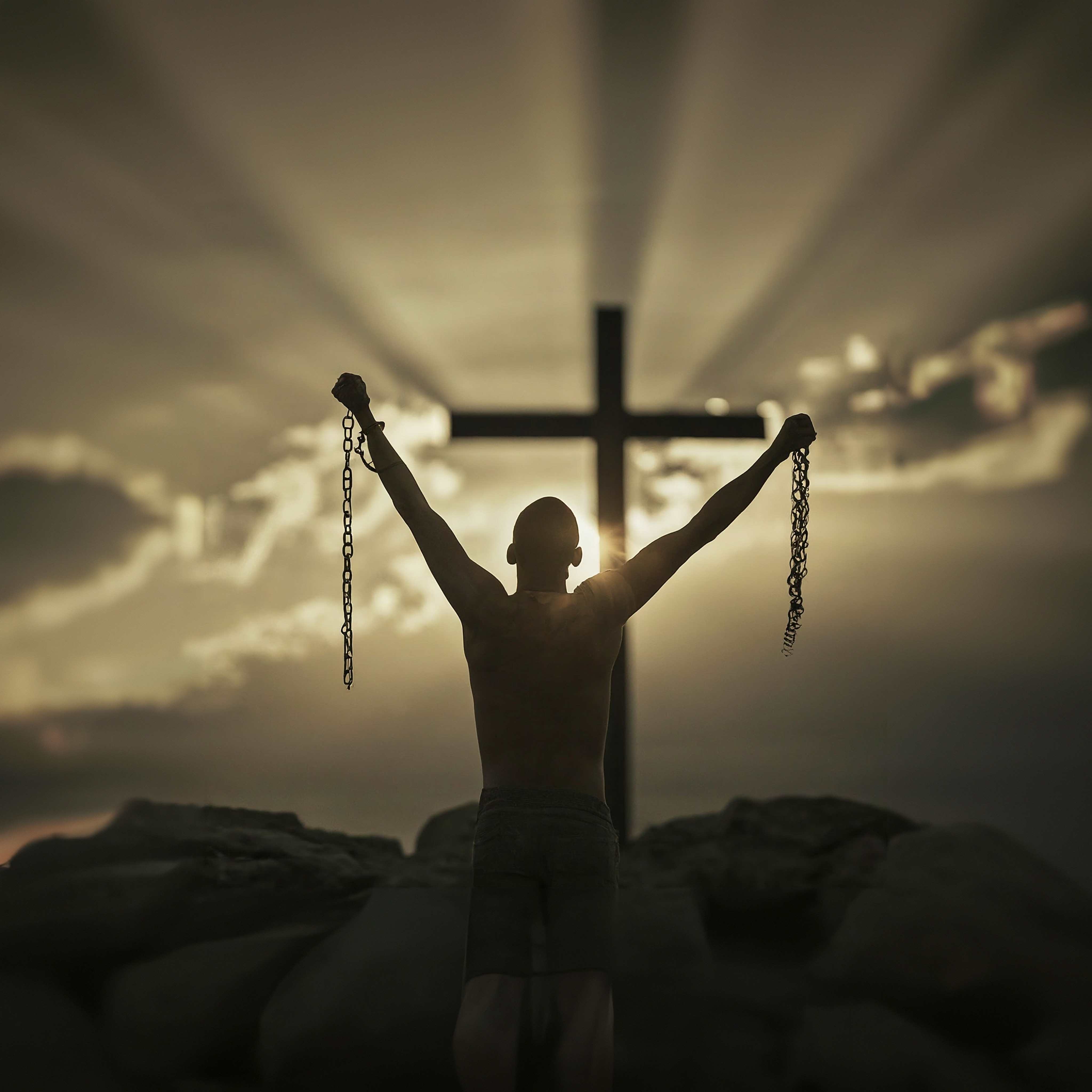
“For the law of the Spirit of life in Christ
Jesus has made me free from the law of sin and death.”
(Romans
8:2)
Moses –
Hebrew Prophet - Britannica
Moses
Hebrew prophet
Also known as: Moshe
Dewey M. Beegle
Britannica Editors
July 9, 2026 •History
Moses (flourished 14th–13th century BCE) was a Hebrew
prophet, teacher, and leader who, in the 13th century BCE (before the Common
Era, or BC), delivered his people from Egyptian slavery. In the Covenant
ceremony at Mt. Sinai, where the Ten Commandments were promulgated, he founded
the religious community known as Israel. As the interpreter of these Covenant
stipulations, he was the organizer of the community’s religious and civil
traditions. In the Judaic tradition, he is revered as the greatest prophet and
teacher, and Judaism has sometimes loosely been called Mosaism, or the Mosaic
faith, in Western Christendom. His influence continues to be felt in the
religious life, moral concerns, and social ethics of Western civilization, and
therein lies his undying significance.
The historical problem
Historical views of Moses
Few historical figures have engendered such disparate
interpretations as has Moses. Early Jewish and Christian traditions considered
him the author of the Torah (“Law,” or “Teaching”), also called the Pentateuch
(“Five Books”), comprising the first five books of the Bible, and some
conservative groups still believe in Mosaic authorship.
Opposing this is the theory of the German scholar Martin
Noth, who, while granting that Moses may have had something to do with the
preparations for the conquest of Canaan, was very skeptical of the roles
attributed to him by tradition. Although recognizing a historical core beneath
the Exodus and Sinai traditions, Noth believed that two different groups
experienced these events and transmitted the stories independently of each other.
He contended that the biblical story tracing the Hebrews from Egypt to Canaan
resulted from an editor’s weaving separate themes and traditions around a main
character Moses, actually an obscure person from Moab.
This article, following the lead of the biblical
archaeologist and historian W.F. Albright, presents a point of view that falls
somewhere between these two extremes. While the essence of the biblical story
(narrated between Exodus 1:8 and Deuteronomy 34:12) is accepted, it is
recognized that, during the centuries of oral and written transmission, the
account acquired layers of accretions. The reconstruction of the documentary
sources of the Pentateuch by literary critics is considered valid, but the
sources are viewed as varying versions of one series of events (see biblical
literature: The Torah [Law, Pentateuch, or Five Books of Moses]). Other
critical methods (studying the biblical text from the standpoint of literary
form, oral tradition, style, redaction, and archaeology) are equally valid. The
most accurate answer to a critical problem is therefore likely to come from the
convergence of various lines of evidence. The aid of critical scholarship
notwithstanding, the sources are so sketchy that the man Moses can be portrayed
only in broad outline.
The date of Moses
According to the biblical account, Moses’ parents were from
the tribe of Levi, one of the groups in Egypt called Hebrews. Originally the
term Hebrew had nothing to do with race or ethnic origin. It derived from
Habiru, a variant spelling of Ḫapiru (Apiru), a designation of a class of
people who made their living by hiring themselves out for various services. The
biblical Hebrews had been in Egypt for generations, but apparently they became
a threat, so one of the pharaohs enslaved them. Unfortunately, the personal
name of the king is not given, and scholars have disagreed as to his identity
and, hence, as to the date of the events of the narrative of Moses. One theory
takes literally the statement in I Kings 6:1 that the Exodus from Egypt
occurred 480 years before Solomon began building the Temple in Jerusalem. This
occurred in the fourth year of his reign, about 960 BCE; therefore, the Exodus
would date about 1440 BCE.
This conclusion, however, is at variance with most of the
biblical and archaeological evidence. The storage cities Pitḥom and
Rameses, built for the pharaoh by the Hebrews, were located in the northeastern
part of the Egyptian delta, not far from Goshen, the district in which the
Hebrews lived. It is implicit in the whole story that the pharaoh’s palace and
capital were in the area, but Thutmose III (the pharaoh in 1440) had his
capital at Thebes, far to the south, and never conducted major building
operations in the delta region. Moreover, Edom and Moab, petty kingdoms in
Transjordan that forced Moses to circle east of them, were not yet settled and
organized. Finally, as excavations have shown, the destruction of the cities
the Hebrews claimed to have captured occurred about 1250, not 1400.
Inasmuch as tradition figured about 12 generations from
Moses to Solomon, the reference to 480 years is most likely an editorial
comment allowing 40 years for each generation. Since an actual generation was
nearer 25 years, the most probable date for the Exodus is about 1290 BCE. If
this is true, then the oppressive pharaoh noted in Exodus (1:2–2:23) was Seti I
(reigned 1318–04), and the pharaoh during the Exodus was Ramses II (c. 1304–c.
1237). In short, Moses was probably born in the late 14th century BCE.
Years and deeds of Moses
The formative years
One of the measures taken by the Egyptians to restrict the
growth of the Hebrews was to order the death of all newborn Hebrew males.
According to tradition, Moses’ parents, Amram and Jochebed (whose other
children were Aaron and Miriam), hid him for three months and then set him
afloat on the Nile in a reed basket daubed with pitch. The child, found by the
pharaoh’s daughter while bathing, was reared in the Egyptian court. While many
doubt the authenticity of this tradition, the name Moses (Hebrew Moshe) is
derived from Egyptian mose (“is born”) and is found in such names as Thutmose
([The God] Thoth Is Born). Originally, it is inferred, Moses’ name was longer,
but the deity’s name was dropped. This could have happened when Moses returned
to his people or possibly even earlier, because the shortened form Mose was
very popular at that time.
Moses’ years in the court are passed over in silence, but
it is evident from his accomplishments later that he had instruction in
religious, civil, and military matters. Since Egypt controlled Canaan
(Palestine) and part of Syria and had contacts with other nations of the
Fertile Crescent, Moses undoubtedly had general knowledge of life in the
ancient Near East. During his education he learned somehow that he was a
Hebrew, and his sense of concern and curiosity impelled him to visit his
people. According to the biblical narrative, Moses lived 120 years and was 80
when he confronted Pharaoh, but there is no indication how old he was when he
went to see the Hebrews. Later Jewish and Christian tradition assumed 40-year
periods for his stay in the Egyptian court, his sojourn in Midian, and his
wilderness wanderings.
Most likely Moses was about 25 when he took the inspection
tour among his people. There he saw the oppressive measures under which they
laboured. When he found an Egyptian taskmaster beating a Hebrew, probably to
death, he could control his sense of justice no longer. After checking to make
sure that no one was in sight, he killed the tough Egyptian overlord. As a
prince in the court, Moses was probably in excellent physical condition, and
apparently he knew the latest methods of combat.
The flush of victory pulled Moses back the next day. He had
removed one threat to his people and was determined to assist them again. This
time, however, he found two Hebrews fighting. After parting them, he questioned
the offender in an attempt to mediate the disagreement. Two questions jolted
him: “Who made you a prince and a judge over us? Do you intend to kill me as
you killed the Egyptian?” The confidence of the self-appointed deliverer turned
into fear. One of his own knew his “secret” and soon Pharaoh would, too.
Realizing that he would have to flee, he went to Midian (mainly in northwest
Arabia).
Moses in Midian
In noting the flight to Midian the narrative says nothing
of the difficulties involved. Like Sinuhe, the Egyptian court official whose
flight in about 1960 BCE was narrated in a famous story, Moses undoubtedly had
to filter through the “Wall of the Ruler,” a series of forts at the eastern
border, approximately where the Suez Canal is now located. From there he made
his way southeast through very desolate country. Unfortunately, the Bible does
not specify the part of Midian in which Moses resided. Midian proper was east
of the Gulf of Aqaba, in the northern section of Hejaz in Arabia, but there is
evidence that some of the Midianite clans crossed over the Arabah (the great
valley south of the Dead Sea) and settled in the eastern and southern sections
of the Sinai Peninsula.
While Moses was resting at a well, according to the
biblical account, seven daughters of the Midianite priest Jethro came to water
their father’s flocks. Other shepherds arrived and drove the girls away in
order to water their own flocks. Again Moses showed his courage and prowess as
a warrior because he took on the shepherds (perhaps with the girls’ help) and
routed them. Moses stayed on with Jethro and eventually married Zipporah, one
of the daughters. In assuming the responsibility for Jethro’s flocks, Moses
roamed the wilderness looking for pasture.
One day at the base of a mountain, his attention was
attracted by a flaming bush, but, oddly, it was not consumed. He had seen
bushes brilliant with flamelike blossoms, but this phenomenon was different,
and so he turned aside to investigate it. Before he could do so, he was warned
to come no closer. Then he was ordered to remove his sandals because he was
standing on holy ground.
Regardless of how one interprets the burning bush, the
important fact is that Moses was conscious of an encounter with Deity. This
God, who claimed to be the God of Abraham, Isaac, and Jacob, was calling him to
deliver the Hebrews from Egypt. Although on his own he had previously been
zealous to help his own people, now that he was being commissioned to deliver
them he expressed doubt concerning his qualifications. The underlying reason
was probably fear—he had fled from Seti I, and he did not relish confrontation
with Ramses II. God reassured Moses that in the future he and the Hebrews would
worship at this mountain. Then Moses asked to know the name of the Deity
commissioning him. The God of the fathers had been known mostly as El
ʿElyon (God Most High) or El Shaddai (God of the Mountain or Almighty
God), but he identified himself to Moses as Yahweh and gave instructions that
he was to be called by his new name from then on. As the causative form of the
verb “to be,” Yahweh means He Who Creates (Brings Into Being). This revelation
enabled Moses to understand the God of the Hebrews as the sovereign Lord over
nature and the nations of the world.
Even after further assurances, Moses was still reluctant to
accept Yahweh’s call; therefore, he pleaded for release because he was a
stammerer. Yahweh acknowledged the defect but promised to help him express
himself. Awed by his assignment, Moses made a final desperate plea, “Oh, my
Lord, send, I pray, some other person.” Although angry at Moses, Yahweh would
not yield. Moses would still be Yahweh’s representative, but his golden-tongued
brother Aaron would be the spokesman. Apparently Moses was ready to play the
role of God to Pharaoh providing Aaron would serve as his prophet. He returned
to Jethro and requested permission to visit his people in Egypt, but he did not
disclose that he had been commissioned by Yahweh.
Moses and Pharaoh
Ramses II became king as a teenager and reigned for 67
years. He aspired to defeat the Hittites and control all of Syria, but in the
fifth year of his reign Ramses walked into a Hittite trap laid for him at
Kadesh, on the Orontes River in Syria. By sheer determination he fought his way
out, but in the light of his purpose the battle was an utter failure. Yet
Ramses, like all the pharaohs, claimed to be divine; therefore, the defeat had
to be interpreted as a marvellous victory in which he alone subdued the
Hittites. His wounded ego expressed itself in massive building operations
throughout Egypt, and before his reign ended the boast of his success literally
filled acres of wall space.
It was probably only a few years after the Kadesh incident
that Moses and Aaron confronted Ramses with their demand, “Thus says the Lord,
the God of Israel, ‘Let my people go.’ ” As a god in human form Ramses was not
accustomed to taking orders from lesser gods, let alone an unknown like Yahweh.
“Who is the Lord,” he inquired, “that I should heed his voice and let Israel
go? I do not know the Lord, and moreover I will not let Israel go.” Thus the
stage was set for a long struggle between a distrustful ruler with an outsize
ego and a prophet with a new understanding of Yahweh and his power.
Ramses increased the oppression of the Hebrews by the
fiendish plan of requiring them to gather the straw binder for the bricks and
still produce the same quota each day. Some of the Hebrews rebuffed Moses, and
in frustration he asked Yahweh, “Why didst thou ever send me?” Moses’ doubt was
allayed by Yahweh’s promise to take action against Pharaoh. Scholars differ
widely concerning the narrative about the plagues. Some claim that three sources
have been combined, but more recent scholarship finds only the two traditions.
While granting that some of the plagues had a core of historicity, older
critics tended to discount the present accounts as fantastic stories with pious
decorations. A recent school of research suggests that, notwithstanding some
later additions, all the plagues probably had a historical core.
The basic cause, according to one interpretation, was an
unusually high flooding of the Nile. The White Nile originates in the lake
region of east central Africa, known today as Uganda. The flow is fairly even
throughout the year because of consistent equatorial rains. The Blue Nile, on
the other hand, originates in the headwaters of the Ethiopian highlands, and it
varies from a small stream to a raging torrent. At the time Moses was
bargaining with Ramses, excessively heavy summer rains in Ethiopia washed
powdery, carmine-red soil from the slopes of the hills. Around the Lake Tana
region the blood-red torrent picked up bright red algae (known as flagellates)
and their bacteria. Since there were no dams at that time, the Nile flowed
blood-red all the way to the Mediterranean. It probably reached the delta
region in August. Thus, this rare natural event, it is held, set in motion a series
of conditions that continued until the following March.
During these months Moses used the plagues of the frogs,
gnats, mosquitoes, cattle murrain, boils, hail, locusts, and thick darkness to
increase the pressure on Ramses. At first the King was adamant. The Hebrews
were not the only disgruntled slaves, and, if he agreed to let them go, then
other groups would want the same privilege. To protect his building program, he
had to suppress the slave rebellion at its outset. Yet he could not discount
the effect of the plagues, and grudgingly he began to acknowledge Yahweh’s
power. As an expedient attempt to restore order, he offered to let the Hebrews
sacrifice in Goshen. When this failed, he suggested that they make offerings to
Yahweh at the edge of the Egyptian border. Moses, however, insisted on a
three-day journey into the wilderness. Pharaoh countered by allowing the Hebrew
men to make the journey, but this, too, was rejected. As his final offer
Pharaoh agreed to let the people go. He would keep the livestock, however, as
the guarantee of their return. Moses spurned the condition, and in anger
Pharaoh drove him out. After nine rounds with Pharaoh it appeared that the
deliverance of the Hebrews was no nearer, but, in contrast to his earlier
periods of doubt and frustration, Moses showed no despair. Apparently he had an
inner assurance that Pharaoh would not have the last word.
From Goshen to Sinai
Chapters 11–14 of Exodus comprise an exceedingly complex
section, and at times the traditions have contradictory statements. The drama
is more blurred than usual, and scholars vary tremendously in their
interpretation of the material. One tradition notes that Pharaoh was shaken
when death took his son and that he ordered the Hebrews to leave. Another
source indicates that Moses used the period of mourning for the first-born son
as the occasion for fleeing secretly from the country. In either case, it is
clear that Pharaoh finally had his forces pursue the Hebrews. Although
tradition interpreted the Hebrew text to claim that about 2,000,000 people left
Egypt, interpretation by critical methods reduces the number to 15,000 or so.
The Egyptian army cornered them at the Sea of Reeds
(papyrus), which barred their exit to the east. Later Jewish tradition
understood the body of water to be the Red Sea, and this erroneous
interpretation persists today, even in some of the most recent English
translations of the Bible. Scholars disagree as to the precise location of the
Reed Sea, but, since papyrus grows only in freshwater, it was most probably a
shallow lake in the far northeastern corner of Egypt.
Hemmed in by the Egyptians, the people vented their
complaints on Moses. According to one tradition, Moses shared their uneasiness,
and he called to Yahweh for help. Another account claims that Moses confidently
challenged them to be calm and watch for Yahweh’s deliverance. A strong east
wind blew all night, creating a dry corridor through the lake and permitting
the Hebrews to cross. The pursuing Egyptians were destroyed when the waters
returned. The timing of this natural event gave the final answer to Pharaoh’s
arrogant question, “Who is Yahweh?” Safely on the other side, Moses and his
sister Miriam led the people in a victory song of praise to Yahweh (Ex.
15:1–21). The style of the poetry is similar to that of 14th-century Canaanite
literature, and there is every reason to believe that the poem virtually
preserves the original form of the song, with its refrain, “Sing to the Lord,
for he has triumphed gloriously; the horse and his rider he has thrown into the
sea.”
The route of the Hebrews is contested by scholars, but the
most likely possibility is the southern route to Jabal Mūsā, the
traditional location of Mt. Sinai (Horeb), in the granite range at the southern
tip of the Sinai Peninsula. The journey there traversed some very desolate
country, and Moses had to contend with bitter complaints about the lack of
water and food. Finally, however, he brought the people to “the mountain of
God,” where Yahweh had appeared to him in the burning bush.
The Covenant at Sinai of Moses
During the 14th century BCE the Hittites of Asia Minor made
a number of treaties with neighbouring rulers who came under their control. The
agreement was not between equals, but between the Hittite king (the suzerain)
and a subordinate ruler (the vassal). In the prologue the Hittite ruler
described himself as “the great king,” the one granting the treaty. Then
followed a historical survey of relationships between the Hittite suzerain and
his vassal. Special attention to the kindnesses shown the underling by the
overlord was intended to remind the vassal of his obligation to abide by the
treaty stipulations. The basic requirement was an oath of loyalty. Since Egypt
was involved with the Hittites in the international politics of the time, Moses
probably learned about the Hittite treaty form during his years in the Egyptian
court.
The appearance of Yahweh in a terrific storm at Mt. Sinai,
narrated in chapters 19 and 20 of Exodus, was a revelatory experience for
Moses, just as the burning bush had been. Somehow he realized that the Hittite
treaty was an accurate analogy of the relationship between Yahweh and the
Hebrews. Yahweh had a claim upon them because he had delivered them. The only
proper response to his love and care would be a pledge of obedience to his
will. Scholars have tended to date the Ten Commandments, or Decalogue
(contained in the revelation at Sinai), after the conquest of Canaan, but there
is absolutely nothing in these guidelines to indicate their origin in an
agricultural context. More likely they were the stipulations in the covenant
ceremony at Mt. Sinai.
Because Yahweh was proclaimed the only true God, one of the
first commands was appropriately a ban against all other gods. Authorities have
debated whether or not this understanding was interpreted as monotheism. Most
certainly it was not the philosophical monotheism of later periods, but it was
a practical monotheism in that any gods recognized by other nations were under
Yahweh’s control. Inasmuch as he had brought them into being and authorized
their presence in his council, he was Lord over all gods and nations.
Another early command has been taken to mean a ban on
making images of other gods, but originally the prohibition applied to
representations of Yahweh himself. Worship in the ancient world was unthinkable
without some idol or image; therefore, the uniqueness of Moses’ restriction is
all the more evident. Yahweh is the unimageable Deity who cannot be represented
in material forms. Since Yahweh had revealed the meaning of his name to Moses,
it was fitting that the Decalogue should also prohibit any magical or unethical
use of his name. Undoubtedly the ideas underlying the other commands came from
the religious culture of his day, but they were raised to a significantly higher
level because of the holy, righteous character of Yahweh. Moses realized that,
if the Covenant people were to have a stable, just society, they would have to
emulate their God. Concern for his creatures would mean respect for them as
persons. Murder, adultery, theft, lying, and covetousness would never be
legitimate because they lead to chaos and breakdown of the community. Moreover,
inasmuch as Yahweh had been concerned to protect the powerless Hebrews in
Egypt, they in turn would have to guarantee justice for the orphans, widows,
resident aliens, and any other disadvantaged persons under their jurisdiction.
On confirmation of the Covenant, Moses and the people faced
the task of living by the stipulations. This called for interpretations of the
commands, and so Moses began issuing ordinances for specific situations. Many
of these he drew from the case law of his day, but insight as to their
selection and application probably came in the “tent of meeting” (a simple
sanctuary tent pitched outside the camp), where Yahweh spoke to Moses “face to
face, as a man speaks to his friend.” Breaches of the Covenant necessitated
means of atonement, which in turn meant provision of a priesthood to function
at sacrifices and in worship. In short, the rudiments of the whole Hebrew cult,
according to tradition, originated at Sinai. At Jethro’s suggestion Moses
instituted a system of judges and hearings to regulate the civil aspects of the
community. It was at Sinai, perhaps, where the people were organized into 12
tribes.
One of Moses’ most remarkable characteristics was his
concern for the Hebrews, in spite of their stubborn, rebellious ways. When they
reverted to worshipping a golden calf, Yahweh was ready to disown them and
begin anew with Moses and his descendants. Moses rejected the offer, however,
and later, when pleading for the forgiveness of the people, he even asked to
have his own name blotted out of Yahweh’s book of remembrance if the Lord would
not forgive them.
From Sinai to Transjordan
After leaving Mt. Sinai, Moses faced increasing resistance
and frustration, according to the narrative in the book of Numbers. Apparently
his virility did not diminish during these years because he took a Cushite
woman as his second wife. But Miriam, with the support of Aaron, opposed the
marriage. At Kadesh-barnea the pessimistic majority report of the spies who had
been sent out to reconnoitre thwarted Moses’ desire to march north and conquer
the land of Canaan. When he urged the people to reconsider their action they
almost stoned him. But here again, according to tradition, Moses interceded for
the people with Yahweh, who threatened to destroy them and raise up another and
greater nation. In one instance, however, tradition recalled that Moses’ anger
overrode his compassion. At Meribah, probably in the area of Kadesh-barnea,
Moses addressed the complaining people as rebels and struck a rock twice in
anger, whereupon water flowed forth for the thirsty people. He had been angry
before in defense of Yahweh’s name, honour, and cause, but this time his anger
stemmed from utter frustration with his contentious people. Although tradition
interpreted this lapse as the reason why Yahweh would not permit Moses to enter
Canaan, the remarkable fact is that Moses was able to bear up under such
continuous pressure.
In Transjordan the new states of Edom and Moab, vassals of
the Midianites, rejected Moses’ request for passage. He wisely circled east of
them and moved north to conquer Sihon, king of the Amorites, and Og, king of
Bashan. Moses permitted some of the tribes to settle in Transjordan, a decision
that evoked opposition from the Moabites and their Midianite overlords. They
hired the Syrian diviner Balaam to put a curse on the Hebrews, but instead he
pronounced a blessing. Some scholars interpret this as proof that Balaam was a
convert to Yahwism. If this was indeed the case, he must have reverted later
on, because the biblical tradition implies that Balaam incited his former
employers to weaken the Hebrews by religious seduction. Moses responded to the
enmity of the Midianites with a successful holy war against them not long
before his death.
As his last official act Moses renewed the Sinai Covenant
with those who had survived the wilderness wanderings. From his camp in the
Jordan Valley, Moses climbed to a vantage point on Mt. Pisgah. There he viewed
the land of promise. The Hebrews never saw him again, and the circumstances of
his death and burial remain shrouded in mystery. Tradition claimed that Yahweh
buried him in the valley opposite Beth-peor, the shrine of the people’s
apostasy.
Moses the man
Although time undoubtedly enhanced the portrait of Moses, a
basic picture emerges from the sources. Five times the narratives claim that
Moses kept written records (Ex. 17:14; 24:4; 34:27–28; Num. 33:2; and Deut.
31:9, 24–26). Even with a generous interpretation of the extent of these
writings, they do not amount to more than a fifth of the total Pentateuch;
therefore, the traditional claim of Mosaic authorship of the whole Pentateuch
is untenable. Moses formulated the Decalogue, mediated the Covenant, and began
the process of rendering and codifying supplemental interpretations of the
Covenant stipulations. Undoubtedly he kept some records, and they served as the
core of the growing corpus of law and tradition. In a general sense, therefore,
the first five books of the Hebrew Bible can be described as Mosaic. Without
him there would have been no Israel and no collection known as Torah.
Moses was a gifted, well-trained person, but his true greatness
was probably due to his personal experience of and relationship with Yahweh.
This former stammering murderer understood his preservation and destiny as
coming from the grace of a merciful Lord who had given him another chance.
Moses had an understanding spirit and a forgiving heart because he knew how
much Yahweh had forgiven him. He was truly humble because he recognized that
his gifts and strength came from Yahweh.
Because of the uniqueness of his situation, Moses had to
function in a number of roles. As Yahweh’s agent in the deliverance of the
Hebrews, he was their prophet and leader. As mediator of the Covenant, he was
the founder of the community. As interpreter of the Covenant, he was an
organizer and legislator. As intercessor for the people, he was their priest.
Moses had a special combination of gifts and graces that made it impossible to
replace him. Although his successor, Joshua, and the priest Eleazar, the son of
Aaron, tried to do so, together they did not measure up to him. Later prophets
were great men who spoke out of the spirit that Moses had, but they were not
called to function in so many roles. As tradition claimed, he was indeed the
greatest of the prophets, and, as history shows, few of humanity’s great
personalities outrank him in influence.
Dewey M. Beegle