Home About Us Our Publications Make a
Donation Email: glenn.benson@yourbrotherglenn.org
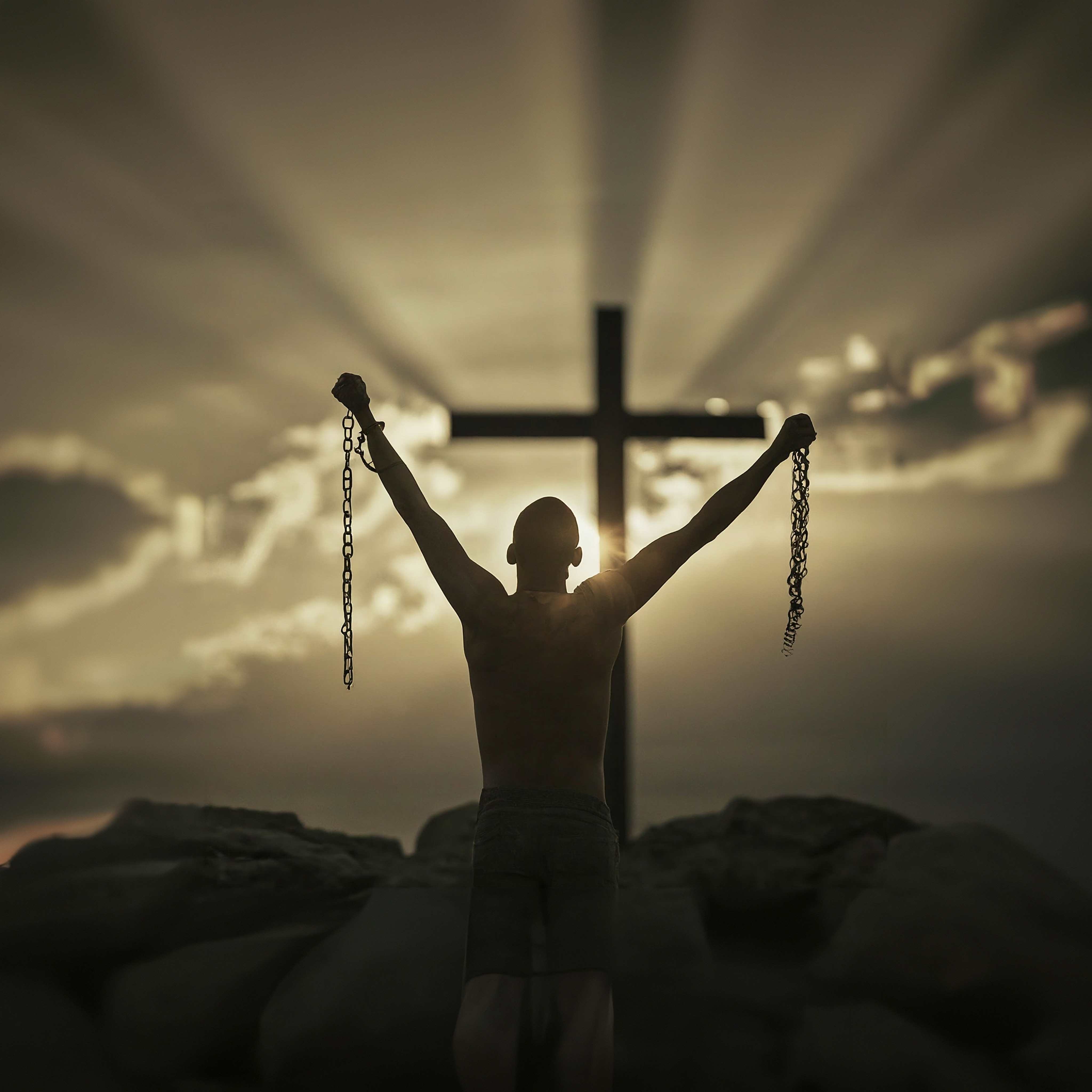
“For the law of the Spirit of life in Christ
Jesus has made me free from the law of sin and death.”
(Romans
8:2)
Micah
the Prophet – Wikipedia
From Wikipedia, the free encyclopedia
Micah
Prophet
Born Moresheth-Gath,
8th century BC
Venerated in Second
Temple Judaism (historically)
Rabbinic Judaism
Eastern Orthodox Church
Catholic Church
Oriental Orthodox Churches
Assyrian Church of the East
Ancient Church of the East
Feast August 14,
January 5 (Eastern Orthodox)
July 31, December 31 (Roman Catholic)
July 31 (Armenian Apostolic Church)
August 16 (Mesori 10) (Coptic Orthodox)
August 16 (Nähase 10) (Ethiopian Orthodox, Eritrean
Orthodox)
Major works Book of
Micah
According to the Hebrew Bible, Micah (Hebrew: מִיכָה
הַמֹּרַשְׁתִּי,
Mīḵā hamMōraštī—"Micah the Morashtite”;
Paleo-Hebrew: 𐤌𐤉𐤊𐤄, Mīkhāh; Koine Greek:
Μιχαίας, Michaías;[1] Biblical Aramaic: מִיכָא,
Mîḵā’;[2] Church Slavonic:
Михе́й, Mikhéy;[3] Latin: Michaeas,
Micheas)[4] was a prophet of Yahweh and is traditionally regarded as the author
of the Book of Micah. He is considered one of the Twelve Minor Prophets of the
Hebrew Bible and is depicted as a contemporary of the prophets Isaiah, Amos and
Hosea. Micah is described as having been from Moresheth-Gath, in southwest
Judah and prophesying during the reigns of kings Jotham, Ahaz, and Hezekiah of
the southern Kingdom of Judah in the 8th century BC.
Micah's messages were directed chiefly toward Jerusalem. He
prophesied the future destruction of Jerusalem and Samaria by the Neo-Assyrian
Empire, the destruction and then future restoration of the Judean state, and he
rebuked the people of Judah for dishonesty and idolatry.
The formation of the Book of Micah is debated, with a
consensus that its final stage occurred during the Persian period or
Hellenistic period, but uncertainty remains about whether it was formed at the
time or merely finalized.[5]
Micah 5:2 is interpreted by Christians as a prophecy that
Bethlehem, a small village just south of Jerusalem, would be the birthplace of
the Messiah.
Biblical narrative
Micah was active in the Kingdom of Judah from before the
fall of Israel in 722 BC and experienced the devastation brought by Sennacherib's
invasion of Judah in 701 BC. He prophesied from approximately 740 to 698 BC.[4]
Micah was from Moresheth, also called Moresheth-Gath, a small town in southwest
Judah. Micah lived in a rural area, and often rebuked the corruption of city
life in Israel and Judah.[6] Unlike prophets such as Isaiah and Hosea, no
record of his father's name has been retained by the scribes, but it is likely
that he was descended from the common people, as the target of his message was
towards the privileged classes. John Taylor comments that "To call a man a
rural prophet is not to say that he was ignorant."[7]
Micah prophesied during the reigns of kings Jotham, Ahaz,
and Hezekiah of Judah.[8][9] Jotham, the son of Uzziah, was king of Judah from
742 to 735 BC, and was succeeded by his own son Ahaz, who reigned over Judah
from 735 to 715 BC. Ahaz's son Hezekiah ruled from 715 to 696 BC.[10] Micah was
a contemporary of the prophets Isaiah, Amos, and Hosea.[11] Jeremiah, who
prophesied about thirty years after Micah, recognized Micah as a prophet from
Moresheth who prophesied during the reign of Hezekiah,[12] quoting text found
in Micah 3:12.[13]
The Hebrew name Micah (מִיכָה,
Mīḵā) is a theophoric name, meaning “Who is like Yah(weh)?” The
meaning is a rhetorical question following an interrogative structure, implying
that no one is like God. This name has the same etymological origin as the name
Micaiah (מִיכָיָהוּ,
Mīḵāyāhū), which another prophet—Micaiah, Son of
Imlah—bears in the books of 1 Kingdoms (1 Kings) and 2 Chronicles. This name
also shares a similar etymology to that of the name Michael (מִיכָאֵל,
Mīkhā’ēl), which means “Who is like El?” In the name Michael
(the name of a prominent archangel, the Archangel Michael), the Hebrew word
“El,” a generic term meaning “God,” is used, while the names Micah and Micaiah
utilize the Divine Name.[14]
Message
Micah’s messages were directed mainly towards Jerusalem,
and were a mixture of denunciations and prophecies. In his early prophecies, he
predicted the destruction of both Samaria and Jerusalem for their respective
sins. The people of Samaria were rebuked for worshipping idols, which were
bought with the income earned by prostitutes.[15] Micah was the first prophet
to predict the downfall of Jerusalem. According to him, the city was doomed
because its beautification was financed by dishonest business practices, which
impoverished the city's citizens.[16] He also called to account the prophets of
his day, whom he accused of accepting money for their oracles.[17]
Micah also anticipated the destruction of the Judean state
and promised its restoration more glorious than before.[18] He prophesied an
era of universal peace over which the Governor will rule from Jerusalem.[19]
Micah also declared that when the glory of Zion and Jacob is restored, the Lord
will force the Gentiles to abandon idolatry.[20]
Micah also rebuked Israel because of dishonesty in the
marketplace and corruption in government. He warned the people, on behalf f
God, of pending destruction if ways and hearts were not changed. He told them
what the Lord requires of them:
“He hath shewed thee, O man, what is good; and what doth
the Lord require of thee, but to do justly, and to love mercy, and to walk
humbly with thy God?”
— Micah
6:8
Israel's response to Micah's charges and threats consisted
of three parts: an admission of guilt,[21] a warning of adversaries that Israel
will rely on the Lord for deliverance and forgiveness,[22] and a prayer for
forgiveness and deliverance.[23]
Another prophecy given by Micah details the future
destruction of Jerusalem and the plowing of Zion (a part of Jerusalem). This
passage (Micah 3:11–12), is stated again in Jeremiah 26:18, Micah's only
prophecy repeated in the Old Testament. Since then Jerusalem has been destroyed
three times, the first one being the fulfillment of Micah's prophecy. The
Babylonians destroyed Jerusalem in 586 BC, about 150 years after Micah gave
this prophecy.[24][25]
Christian interpretation
Micah 5:2 is interpreted as a prophecy that Bethlehem, a
small village just south of Jerusalem, would be the birthplace of the Messiah.
Christians also interpret the latter portion of the verse to be an indication
of the divinity and eternality of the Messiah.[26][27][28][29][30]
“But thou, Bethlehem Ephratah, though thou be little among
the thousands of Judah, yet out of thee shall he come forth unto me that is to
be ruler in Israel; whose goings forth have been from of old, from everlasting.”
This passage is recalled in Matthew 2:6, and the
fulfillment of this prophecy in the birth of Jesus is further described in
Matthew 2:1–6.
“And thou Bethlehem, in the land of Juda, art not the least
among the princes of Juda: for out of thee shall come a Governor, that shall
rule my people Israel.”
In Matthew 10:35–36 Jesus adapts Micah 7:6 to his own
situation;
“For I am come to set a man at variance against his father,
and the daughter against her mother, and the daughter in law against her mother
in law. And a man's foes shall be they of his own household.”
Micah was referring to the division in Judah and Samaria,
the distrust that had arisen between all citizens, even within families.[25]
Jesus was using the same words to describe something different. Jesus said that
he did not come to bring peace, but to divide households. Men are commanded to love
Jesus Christ more than their own family members, and Jesus indicated that this
priority would lead to persecution from others and separation within
families.[31]
In Micah 7:20, Micah reminded Judah of God's covenant to be
merciful to Jacob and show love to Abraham and his descendants. This is
repeated in Luke 1:72–73 in the prophecy Zechariah at the circumcision and
naming of John the Baptist. This prophecy concerned the kingdom and salvation
through the Messiah. It is a step in the fulfillment of the blessing of the
descendants of Abraham.[31] When Micah restated this covenant promise, he was
comforting Judah with the promise of God's faithfulness and love.[32]
Micah's prophecy to King Hezekiah is mentioned in Jeremiah
26:17–19:
Then certain of the elders of the land rose up and spoke to
all the assembly of the people, saying: “Micah of Moresheth prophesied in the
days of Hezekiah king of Judah, and spoke to all the people of Judah, saying,
‘Thus says the Lord of hosts:
“Zion
shall be plowed like a field,
Jerusalem shall become heaps of ruins,
And the mountain of the temple
Like the bare hills of the forest.” ’
— Jeremiah
26:17–19, NKJV
Liturgical commemoration and historical reception
The prophet Micah is commemorated and venerated as a saint
by multiple Christian churches that historically claim Apostolic succession and
follow a liturgical calendar.
Eastern Christianity
In the Oriental Orthodox communion, Micah is commemorated
with the other eleven minor prophets in the Calendar of Saints of the Armenian
Apostolic Church on July 31. He is commemorated by the Coptic Orthodox Church,
Ethiopian Orthodox Tewahedo Church, and Eritrean Orthodox Tewahedo Church on
August 16 (Coptic calendar: Mesori 10; Ethiopian calendar: Nähase 10).
In the Eastern Orthodox Church he is commemorated on August
14 (the forefeast of the Great Feast of the Dormition of the Mother of God)[33]
and on January 5 alongside the other Minor Prophets during the Feast of the
Synaxis of the Holy Seventy Apostles. According to the tradition of the Church,
Micah’s holy relics were discovered by a monk near Eleutheropolis (modern-day
Beit Guvrin) during the reign of Roman emperor Theodosius the Great in the 4th
century AD. The Orthodox Synaxarion commemorates the translation (uncovering)
of his relics on his feast day, August 14. In Byzantine iconography, Micah is
often depicted holding a scroll that features either Micah 5:2 or Micah 6:8
while wearing a tunic and himation.
Troparion of the prophet Micah — Tone 2:
We celebrate the memory of Your prophet Micah, O Lord;
through him, we entreat You: save our souls. [34]
Kontakion to the prophet Micah — Tone 4:
You were enriched with the gift of prophecy, O Micah, and
announced the revelation of Christ’s coming in the flesh. Now you have become a
bright torch, shining in the world by the brilliance of your words. [35]
Micah and his writings were also referenced by notable
eastern Church Fathers, such as St. John Chrysostom and St. Cyril of Jerusalem.
St. John Chrysostom, quoting Micah 6:8 in Homily 19 on
Matthew (pg. 57:63):
“Even
before the coming of Christ, the prophets taught this: ‘What does the Lord
require of you but to do justice, to love mercy, and to walk humbly with your
God?’ You see how nothing burdensome is imposed, nothing difficult, nothing
involving the offering of sacrifices or burnt offerings.” [36]
Micah, along with the other Minor Prophets, does not have a
specific feast day on the liturgical calendar of the Assyrian Church of the East
or the Ancient Church of the East—two branches of the historical Church of the
East—however, he has been historically revered and the Book of Micah is read
during the Nativity liturgy.[37]
Theodore of Mopsuestia, a prominent theologian of the
Antiochene school in the late fourth and early fifth centuries, composed a
commentary on the Book of Micah as part of his larger exegetical work on the
Twelve Prophets. Though the original Greek text is largely lost, his
interpretation survives in part through Syriac translations, particularly in
the preserved in Eastern Christian traditions. Theodore approached Micah with a
historical-literal method, emphasizing the prophet’s immediate context and
downplaying allegorical interpretations. His exegesis influenced later
theologians in the East, especially within the Church of the East, where his
works were held in high esteem and often transmitted in the biblical
commentaries of later figures such as Isho’dad of Merv.[38]
Western Christianity
He is commemorated by the Roman Catholic Church on July 31
alongside other prophets of the Old Testament, as well as on December 31.
Micah and his writings were often referenced by early Latin
Church Fathers, such as St. Jerome, who wrote:
“…Micah…which
is translated humility. On Micah of Moresheth…Moresheth…means heir.
Beautifully, thus, humility…is born in the hope of the Lord’s inheritance.”
[39]
Rabbinic Judaism
Unlike in Christianity, Judaism does not have a fixed
liturgical day of commemoration for Micah or the other Minor Prophets. However,
the Book of Micah is often read during the Jewish liturgical cycle as Haftarot,
along with other books of the Nevi’im.
He is referenced several times in the Talmud, where he and
the other prophets are discussed along with their writings. Micah is praised in
Makkot 24a (Talmud Bavli) for distilling the essence of the Torah into three
principles: justice (mishpat), loving-kindness (chesed), and humilty before God
(hatznea lekhet).
Makkot 24a:
“Micah
came and established [the Torah] upon three [principles], as it is stated: ‘It
has been told you, O man, what is good, and what the Lord requires of you: only
to do justice, to love mercy, and to walk humbly with your God.’ (Micah 6:8)”
[40]