Home About Us Our Publications Make a
Donation Email: glenn.benson@yourbrotherglenn.org
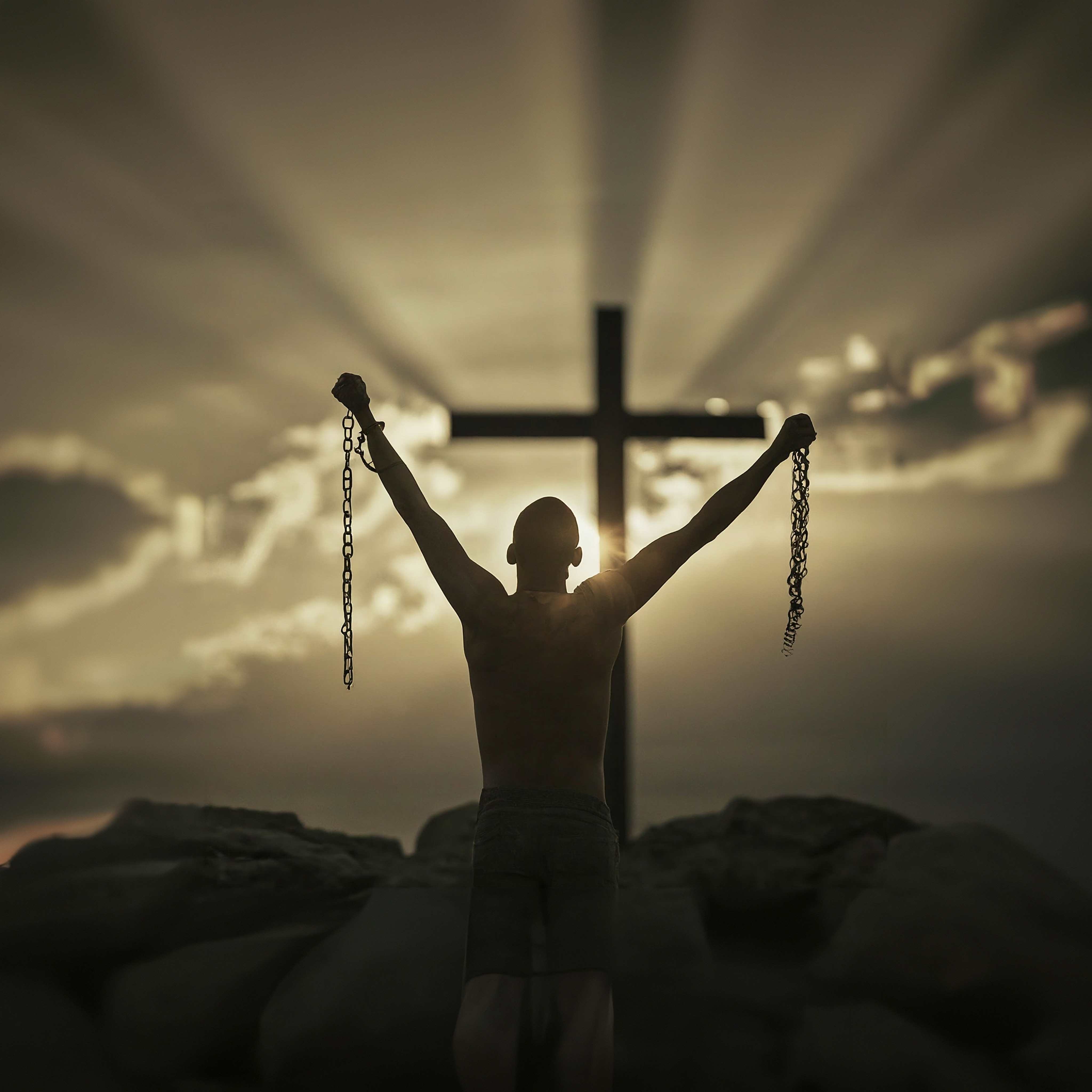
“For the law of the Spirit of life in Christ
Jesus has made me free from the law of sin and death.”
(Romans
8:2)
Mary
of Bethany – Wikipedia
Mary of Bethany
From Wikipedia, the free encyclopedia
Saint
Mary of Bethany
Disciple of Jesus; Righteous Mary;
Sister of Lazarus and Martha;
The Anointer; Myrrhbearer
Born Bethany,
Judaea, Roman Empire[1]
Died 1st century AD
Venerated in Catholic
Church
Eastern Orthodoxy
Oriental Orthodoxy
Lutheran Churches
Anglican Communion
Canonized Pre-congregation
Major shrine The Holy
Monastery of Martha and Mary in Al-Eizariya (Bethany), Palestine[2]
Feast June 4
(Eastern), July 29 (Western)
Attributes Woman
holding an alabaster jar of myrrh perfume and holding her hair
Patronage Patroness
of Spiritual Studies, Lectors and Commentators in the Philippines[3]
Mary of Bethany[a] is a biblical figure mentioned by name
in the Gospel of John and probably the Gospel of Luke in the Christian New
Testament. Together with her siblings Lazarus and Martha, she is described as
living in the village of Bethany, a small village in Judaea to the south of the
Mount of Olives near Jerusalem.[4]
Western Christianity initially identified Mary of Bethany
with Mary Magdalene and the sinful woman of Luke 7 (Luke 7:36–50). This
influenced the Roman Rite liturgy of the feast of Mary Magdalene, with a Gospel
reading about the sinful woman and a collect referring to Mary of Bethany.
After the liturgical revision in 1969 and 2021, the feast of Mary Magdalene
continues to be on 22 July, while Mary of Bethany is celebrated as a separate
saint, along with her siblings Lazarus and Martha on 29 July.[5][6] In Eastern
Christianity and some Protestant traditions, Mary of Bethany and Mary Magdalene
are also considered separate persons.[7] The Eastern Orthodox Church has its
own traditions regarding Mary of Bethany's life beyond the gospel accounts.
Biblical references
Gospel of John
Martha preparing the meal while (in the background) Mary of
Bethany sitting at Jesus' feet; painting (1566) by Joachim Beuckelaer
In the Gospel of John, a Mary appears in connection to two
incidents: the raising from the dead of her brother Lazarus[8] and the
anointing of Jesus.[9] The identification of this being the same Mary in both
incidents is given explicitly by the author: "Now a man named Lazarus was
sick. He was from Bethany, the village of Mary and her sister Martha. This
Mary, whose brother Lazarus now lay sick, was the same one who poured perfume
on the Lord and wiped his feet with her hair."[10] The mention of her sister
Martha suggests a connection with the woman named Mary in Luke 10:38–42.
In the account of the raising of Lazarus, Jesus meets with
the sisters in turn: Martha followed by Mary. Martha goes immediately to meet
Jesus as he arrives, while Mary waits until she is called. As one commentator
notes, "Martha, the more aggressive sister, went to meet Jesus, while
quiet and contemplative Mary stayed home. This portrayal of the sisters agrees
with that found in Luke 10:38–42."[11] When Mary meets Jesus, she falls at
his feet. In speaking with Jesus, both sisters lament that he did not arrive in
time to prevent their brother's death: "Lord, if you had been here, my
brother would not have died."[12] But where Jesus' response to Martha is
one of teaching, calling her to hope and faith, his response to Mary is more
emotional: "When Jesus saw her weeping, and the Jews who had come along
with her also weeping, he was deeply moved in spirit and troubled."[13] As
the 17th-century Welsh commentator Matthew Henry notes, "Mary added no
more, as Martha did; but it appears, by what follows, that what she fell short
in words she made up in tears; she said less than Martha, but wept
more."[14] The Greek word used for Jesus' 'love' towards the two sisters
in the Gospel of John account of the raising of Lazarus, is agapaō meaning
divine or self-sacrificial love.[15]
Anointing of Jesus
Main article: Anointing of Jesus
A narrative in which Mary of Bethany plays a central role
is the anointing of Jesus, an event reported in the Gospel of John in which a
woman pours the entire contents of an alabastron of very expensive perfume over
the feet[16] of Jesus. Only in this account[17] is the woman identified as
Mary, with the earlier reference in John 11:1–2 establishing her as the sister
of Martha and Lazarus.
Six days before the Passover, Jesus arrived at Bethany,
where Lazarus lived, whom Jesus had raised from the dead. Here a dinner was
given in Jesus' honor. Martha served, while Lazarus was among those reclining
at the table with him. Then Mary took about a pint of pure nard, an expensive
perfume; she poured it on Jesus' feet and wiped his feet with her hair. And the
house was filled with the fragrance of the perfume.
But one of his disciples, Judas Iscariot, who was later to
betray him, objected, "Why wasn't this perfume sold and the money given to
the poor? It was worth a year's wages." He did not say this because he
cared about the poor but because he was a thief; as keeper of the money bag, he
used to help himself to what was put into it.
"Leave her alone", Jesus replied. "It was
intended that she should save this perfume for the day of my burial. You will
always have the poor among you, but you will not always have me."
— John 12:1–8, New International Version
The woman's name is not given in the Gospels of Matthew[18]
and Mark,[19] but the event is likewise placed in Bethany, specifically at the
home of one Simon the Leper, a man whose significance is not explained
elsewhere in the gospels.
According to the Markan account, the perfume was the purest
of spikenard. Some of the onlookers were angered because this expensive perfume
could have been sold for a year's wages, which Mark enumerates as 300 denarii, and
the money given to the poor. The Gospel of Matthew states that the
"disciples were indignant" and John's gospel states that it was Judas
Iscariot who was most offended (which is explained by the narrator as being
because Judas was a thief and desired the money for himself). In the accounts,
Jesus justifies Mary's action by stating that they would always have the poor
among them and would be able to help them whenever they desired, but that he
would not always be with them and says that her anointing was done to prepare
him for his burial. As one commentator notes, "Mary seems to have been the
only one who was sensitive to the impending death of Jesus and who was willing
to give a material expression of her esteem for him. Jesus' reply shows his appreciation
of her act of devotion."[11] The accounts in Matthew and Mark adds these
words of Jesus, "I tell you the truth, wherever this gospel is preached
throughout the world, what she has done will also be told, in memory of
her".[20]
Easton (1897) noted that it would appear from the
circumstances that the family of Lazarus possessed a family vault[21] and that
a large number of Jews from Jerusalem came to console them on the death of
Lazarus,[22] that this family at Bethany belonged to the wealthier class of the
people. This would help explain how Mary of Bethany could afford to possess
quantities of expensive perfume.[23]
A similar anointing is described in the Gospel of Luke[24]
as occurring at the home of one Simon the Pharisee in which a woman who had been
sinful all her life, and who was crying, anointed Jesus' feet and, when her
tears started to fall on his feet, she wiped them with her hair. Luke's account
(as well as John's) differs from that of Matthew and Mark by relating that the
anointing is to the feet rather than the head. Although it is a subject of
considerable debate, many scholars hold that these actually describe two
separate events.[25]
Jesus' response to the anointing in Luke is completely
different from that recorded in the other gospels to the anointing in their
accounts. Rather than Jesus' above-mentioned comments on the "poor you
will always have with you", in Luke he tells his host the Parable of the
Two Debtors. As one commentator notes, "Luke is the only one to record the
parable of the two debtors, and he chooses to preserve it in this setting. ...
If one considers the other gospel accounts as a variation of the same event, it
is likely that the parable is not authentically set. Otherwise, the powerful
message from the parable located in this setting would likely be preserved
elsewhere, too. However, if one considers the story historically accurate,
happening in Jesus' life apart from the similar incidents recorded in the other
gospels, the question of the authenticity of the parable receives a different
answer. ... John Nolland, following Wilckens' ideas, writes: 'There can hardly
be a prior form of the episode not containing the present parable, since this
would leave the Pharisee's concerns of v 39 with no adequate response'."[26]
Luke 10
Further information: Jesus at the home of Martha and Mary
In chapter 10 of the Gospel of Luke, Jesus visits the home
of two sisters named Mary and Martha, living in an unnamed village. Mary is
contrasted with her sister Martha, who was "cumbered about many
things"[27] while Jesus was their guest, while Mary had chosen "the
better part", that of listening to the master's discourse.[23]
As Jesus and his disciples were on their way, He came to a
village where a woman named Martha opened her home to him. She had a sister
called Mary, who sat at the Lord's feet listening to what he said. But Martha
was distracted by all the preparations that had to be made. She came to him and
asked, "Lord, don't you care that my sister has left me to do the work by
myself? Tell her to help me!" "Martha, Martha," the Lord
answered, "you are worried and upset about many things, but only one thing
is needed. Mary has chosen what is better, and it will not be taken away from
her."
— Luke 10:38–42, New International Version
For Mary to sit at Jesus' feet, and for him to allow her to
do so, was itself controversial. In doing so, as one commentator notes, Mary
took "the place of a disciple by sitting at the feet of the teacher. It
was unusual for a woman in first-century Judaism to be accepted by a teacher as
a disciple."[28]
Most Christian commentators have been ready to assume that
the two occurrences of sisters named as Mary and Martha refer the same pair of
sisters.
Medieval Western identification with Mary Magdalene
In medieval Western Christian tradition, Mary of Bethany
was identified as Mary Magdalene perhaps in large part because of a homily
given by Pope Gregory the Great in which he taught about several women in the
New Testament as though they were the same person.[29] This led to a conflation
of Mary of Bethany with Mary Magdalene as well as with another woman (beside
Mary of Bethany who anointed Jesus), and the woman caught in adultery. Eastern
Christianity never adopted this identification. In his article in the 1910
Catholic Encyclopedia, Hugh Pope stated, "The Greek Fathers, as a whole,
distinguish the three persons: the 'sinner' of Luke 7:36–50; the sister of
Martha and Lazarus, Luke 10:38–42 and John 11; and Mary Magdalen."[30]
Father Hugh Pope enumerated the accounts of each of these
three persons (the unnamed "sinner", Mary Magdalene, and Mary of
Bethany) in the Gospel of Luke and concluded that, based on these accounts,
"there is no suggestion of an identification of the three persons, and if
we had only Luke to guide us we should certainly have no grounds for so identifying
them [as the same person]." He then explains first the position, at that
time general among Catholics, equating Mary of Bethany with the sinful woman of
Luke by referring to John 11:2, where Mary is identified as the woman who
anointed Jesus, and noting that this reference is given before John's account
of the anointing in Bethany:
John, however, clearly identifies Mary of Bethany with the
woman who anointed Christ's feet (12; cf. Matthew 26 and Mark 14). It is
remarkable that already in John 11:2, John has spoken of Mary as "she that
anointed the Lord's feet", he aleipsasa. It is commonly said that he
refers to the subsequent anointing which he himself describes in 12:3–8; but it
may be questioned whether he would have used he aleipsasa if another woman, and
she a "sinner" in the city, had done the same. It is conceivable that
John, just because he is writing so long after the event and at a time when
Mary was dead, wishes to point out to us that she was really the same as the
"sinner". In the same way Luke may have veiled her identity precisely
because he did not wish to defame one who was yet living; he certainly does
something similar in the case of St. Matthew whose identity with Levi the
publican (5:27) he conceals. If the foregoing argument holds good, Mary of
Bethany and the "sinner" are one and the same.[30]
Hugh Pope then explained the identification of Mary of
Bethany with Mary Magdalene by the presumption that, because of Jesus' high
praise of her deed of anointing him, it would be incredible that she should
also not have been at his crucifixion and resurrection. Since Mary Magdalene is
reported to have been present on those occasions, by this reasoning, she must
therefore be the same person as Mary of Bethany:
An examination of John's Gospel makes it almost impossible
to deny the identity of Mary of Bethany with Mary Magdalen. From John we learn
the name of the "woman" who anointed Christ's feet previous to the
last supper. We may remark here that it seems unnecessary to hold that because
Matthew and Mark say "two days before the Passover", while John says
"six days" there were, therefore, two distinct anointings following
one another. John does not necessarily mean that the supper and the anointing
took place six days before, but only that Christ came to Bethany six days
before the Passover. At that supper, then, Mary received the glorious encomium,
"she hath wrought a good work upon Me. ... In pouring this ointment upon
My body she hath done it for My burial. ... Wheresoever this Gospel shall be
preached ... that also which she hath done shall be told for a memory of
her." Is it credible, in view of all this, that this Mary should have no
place at the foot of the cross, nor at the tomb of Christ? Yet it is Mary
Magdalen who, according to all the Evangelists, stood at the foot of the cross
and assisted at the entombment and was the first recorded witness of the
Resurrection. And while John calls her "Mary Magdalen" in 19:25,
20:1, and 20:18, he calls her simply "Mary" in 20:11 and 20:16.[30]
French scholar Victor Saxer dates the identification of
Mary Magdalene as a prostitute, and as Mary of Bethany, to a sermon by Pope
Gregory the Great on 21 September 591 AD, where he seemed to combine the
actions of three women mentioned in the New Testament and also identified an
unnamed woman as Mary Magdalene. In another sermon, Gregory specifically
identified Mary Magdalene as the sister of Martha mentioned in Luke 10.[31] But
according to a view expressed more recently by theologian Jane Schaberg, Gregory
only put the final touch to a legend that already existed before him.[32]
Western Christianity's identification of Mary Magdalene and
Mary of Bethany was reflected in the arrangement of the General Roman Calendar,
until this was altered in 1969,[33] reflecting the fact that by then the common
interpretation in the Catholic Church was that Mary of Bethany, Mary Magdalene
and the sinful woman who anointed the feet of Jesus were three distinct
women.[34]
Eastern Orthodox tradition
In Orthodox Church tradition, Mary of Bethany is honored as
a separate individual from Mary Magdalene. Though they are not specifically
named as such in the gospels, the Orthodox Church counts Mary and Martha among
the Myrrh-bearing Women. These faithful followers of Jesus stood at Golgotha
during the Crucifixion of Jesus and later came to his tomb early on the morning
following the Sabbath with myrrh (expensive oil), according to the Jewish
tradition, to anoint their Lord's body. The Myrrhbearers became the first
witnesses to the Resurrection of Jesus, finding the empty tomb and hearing the
joyful news from an angel.[35]
Orthodox tradition also relates that Mary's brother Lazarus
was cast out of Jerusalem in the persecution against the Jerusalem Church
following the martyrdom of St. Stephen. His sisters Mary and Martha fled Judea
with him, assisting him in the proclaiming of the Gospel in various lands.[36]
According to Cyprian tradition, the three later moved to Cyprus, where Lazarus
became the first Bishop of Kition (modern Larnaca).[37]
Later life
There are several traditions surrounding the later life of
Mary of Bethany. One tradition holds that she traveled to Ephesus with the
Apostle John and lived there until her death. Another tradition suggests that
she went to Gaul with Lazarus and Martha, and may have settled in the town of
Tarascon, where she is still venerated as a saint.
Commemoration as a saint
In the Roman Rite of the Catholic Church, Mary of Bethany
is celebrated, together with her brother Lazarus, on 29 July, the memorial of
their sister Martha.[5] In 2021, the Congregation for Divine Worship and the
Discipline of the Sacraments added their names to the memorial, making it a
liturgical celebration of all three family members.[38]
Also in the Calendar of Saints of the Lutheran Church, 29
July is the date of the commemoration of Mary (together with Martha and
Lazarus), as is the case in the Calendar of saints of the Episcopal Church and
the Church of England (together with Martha).[39]
She is commemorated in the Eastern Orthodox and Byzantine
Rite Eastern Catholic Churches with her sister Martha on 4 June, as well as on
the Sunday of the Myrrhbearers (the Third Sunday of Pascha). She also figures
prominently in the commemorations on Lazarus Saturday (the day before Palm
Sunday).
Mary is remembered (with Martha and Lazarus) in the Church
of England with a Lesser Festival on 29 July.[40]