Home About Us Our Publications Make a
Donation Email: glenn.benson@yourbrotherglenn.org
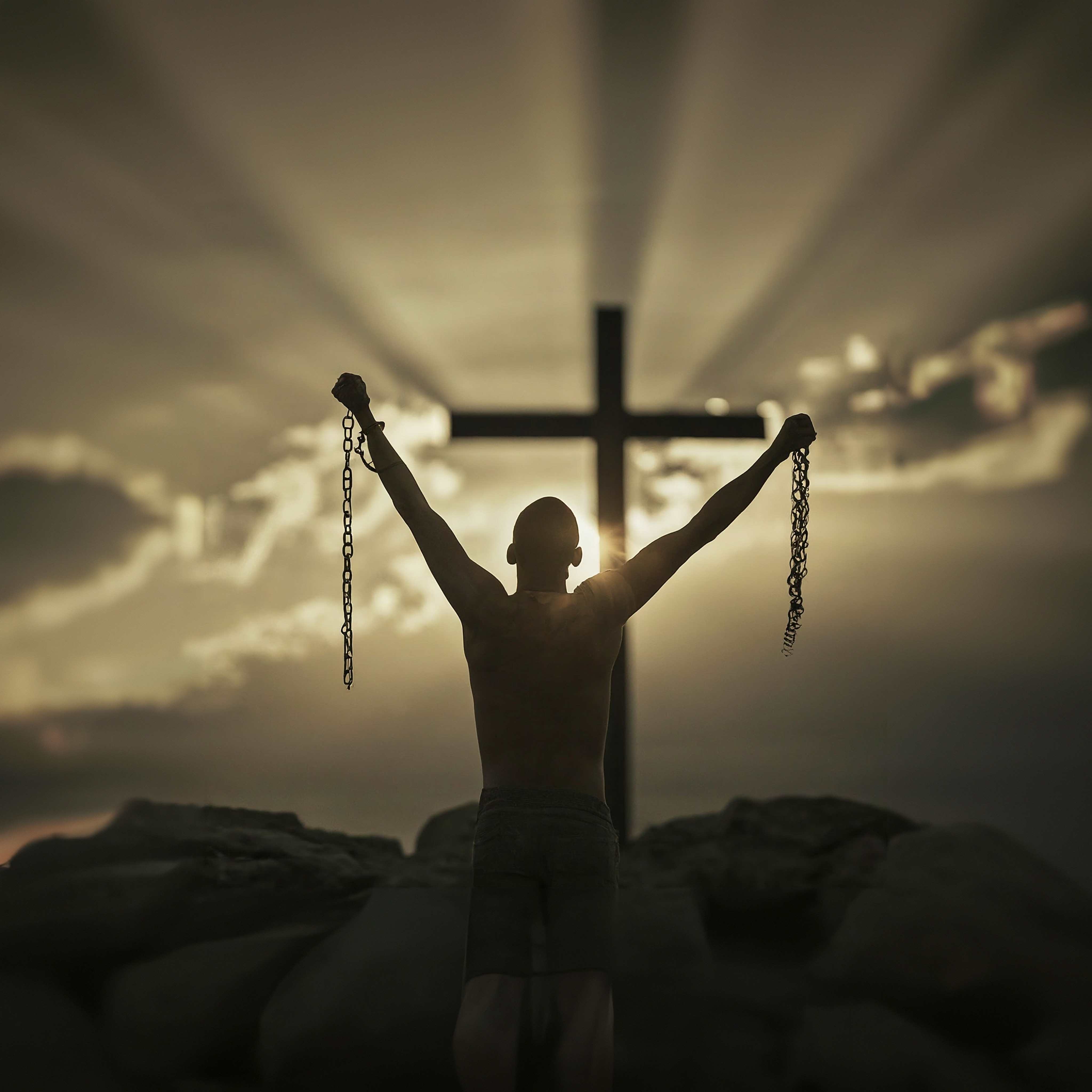
“For the law of the Spirit of life in Christ
Jesus has made me free from the law of sin and death.”
(Romans
8:2)
Mary
Magdalene – Wikipedia
Mary Magdalene
From Wikipedia, the free encyclopedia
Saint
Mary Magdalene
Apostle to the Apostles, Equal-to-the-Apostles, Myrrhbearer
Born Possibly
Magdala, Roman Judea
Venerated in
Catholic Church
Eastern Orthodox Church
Oriental Orthodox Church
Anglican Communion
Lutheranism
other Protestant churches
Baháʼí Faith
Canonized Pre-Congregation
Feast 22 July
Attributes
Western: alabaster box of ointment
Eastern: container of ointment (as a myrrhbearer), or
holding a red egg (symbol of the resurrection); embracing the feet of Christ
after the Resurrection
Patronage ApothecariesArahal,
SpainAtrani, ItalyCasamicciola Terme, Ischiacontemplative lifeconvertsDiocese
of Salt Lake CityglovershairdressersKawit, CaviteAmadeo, CaviteMagdalena,
LagunaSanta Magdalena, SorsogonSanta Maria Magdalena, Hinigaran, Negros
OccidentalOrder of Preachersperfumeriespeople ridiculed for their pietypharmacistsPililla,
RizalProvenceMaribor, Sloveniapenitent sinnerstannerssexual temptationwomen
Mary Magdalene[a] (sometimes called Mary of Magdala, or
simply the Magdalene or the Madeleine) was a woman who, according to the four
canonical gospels, travelled with Jesus as one of his followers and was a
witness to his crucifixion and resurrection.[1]
Mary Magdalene is accepted by scholars, secular and
religious, as a historical figure.[2] Her epithet is usually taken to mean that
she came from Magdala, though Elizabeth Schrader Polczer and Joan Taylor have
argued that Magdalene ("tower") may instead have been an honorific
nickname.[3] She is seen as a prominent follower of Jesus who was believed to
have been healed by him, supported his ministry financially, and was present at
his crucifixion and burial. She played a key role among his female disciples.
Overall, there is limited information about her life.
During the Patristic era, Mary Magdalene was mentioned only
briefly by early Church Fathers, with her image evolving from a minor gospel
figure to being conflated with other women in the Bible. Eventually she became
viewed in Western Christianity, largely due to Pope Gregory I's influential 591
sermon, as a repentant prostitute, despite there being no biblical basis for
this portrayal.
Gnostic writings often portray Mary Magdalene as a
prominent, spiritually insightful figure favoured by Jesus, challenging
traditional patriarchal norms.
The Eastern Orthodox Church has always viewed Mary
Magdalene as a virtuous Myrrhbearer and "Equal to the Apostles",
distinct from other biblical women. The Catholic Church historically conflated
her with the repentant sinner in Luke 7 but later emphasized her role as the
first witness to the resurrection and honoured her as the "Apostle to the
Apostles". Many alleged relics of Mary Magdalene, including her skull, a
piece of forehead flesh, a tibia, and her left hand, are preserved in Catholic
sites in France and Mount Athos, with notable displays and annual processions
honouring them.
Life
Historians, secular and religious alike agree that, like
Jesus, Mary Magdalene was a real historical figure[2]. Nonetheless, very little
is known about her life.[4] Unlike Paul the Apostle, Mary Magdalene left behind
no known writings of her own.[5] She was never mentioned in any of the Pauline
epistles or in any of the general epistles.[6][7] The earliest and most
reliable sources about her life are the three Synoptic Gospels of Mark,
Matthew, and Luke, which were all written during the first century AD.[8][9]
During Jesus' ministry
Mary Magdalene's epithet Magdalene (ἡ
Μαγδαληνή; lit. 'the
Magdalene') probably means that she came from Magdala,[10][11][b] a village on
the western shore of the Sea of Galilee which was primarily known in antiquity
as a fishing town.[10][13][14] Mary was, by far, the most common Jewish given
name for girls and women during the first century,[10][c][15] so it was
necessary for the authors of the gospels to call her Magdalene in order to
distinguish her from the other women named Mary who followed Jesus.[10]
Although the Gospel of Mark, reputed by scholars to be the earliest surviving
gospel, does not mention Mary Magdalene until Jesus' crucifixion,[16] the
Gospel of Luke 8:2–3[17] provides a brief summary of her role during his
ministry:[18]
Soon afterwards he went on through cities and villages,
proclaiming and bringing the good news of the kingdom of God. The twelve were
with him, as well as some women who had been cured of evil spirits and
infirmities: Mary, called Magdalene, from whom seven demons had gone out, and
Joanna, the wife of Herod's steward Chuza, and Susanna, and many others, who
provided for them out of their resources.
— Luke 8:1–3[19]
According to the Gospel of Luke,[20] Jesus exorcised
"seven demons" from Mary Magdalene. That seven demons had possessed
Mary is repeated in Mark 16:9,[21] part of the "longer ending" of
that gospel – this is not found in the earliest manuscripts and is possibly a
second-century addition to the original text.[22] In the first century, demons
were believed widely to cause physical and psychological illness.[23][24][25]
Bruce Chilton, a scholar of early Christianity, states that the reference to
the number of demons being "seven" may mean that Mary had to undergo
seven exorcisms, probably over a long period of time, due to the first six
being partially or wholly unsuccessful.[26]
The number seven may be merely symbolic,[25] since, in
Jewish tradition, seven was the number of completion,[25] so that Mary was
possessed by seven demons may simply mean she was completely overwhelmed by
their power.[25] In either case, Mary must have suffered from severe emotional
or psychological trauma for an exorcism of this kind to have been perceived as
necessary.[24][25] Consequently, her devotion to Jesus resulting from this
healing must have been very strong.[10][27][28]
Because Mary is listed as one of the women who supported
Jesus' ministry financially, she must have been relatively wealthy.[10][29] The
places where she and the other women are mentioned throughout the gospels
indicate strongly that they were vital to Jesus' ministry[30][31][32][33] and
that Mary Magdalene always appears first, whenever she is listed in the
Synoptic Gospels as a member of a group of women, indicates that she was seen
as the most important out of all of them.[34][35][36] Carla Ricci notes that,
in lists of the disciples, Mary Magdalene occupies a similar position among
Jesus' female followers as Simon Peter does among the male apostles.[36]
Witness to Jesus's crucifixion and burial
All four canonical gospels agree that several women watched
Jesus's crucifixion from a distance, with three explicitly naming Mary
Magdalene as present.[38] Mark 15:40 lists the names of these women as Mary
Magdalene; Mary, mother of James; and Salome.[38] Matthew 27:55–56 lists Mary
Magdalene, Mary mother of James and Joseph, and the unnamed mother of the sons
of Zebedee (who may be the same person Mark calls Salome).[38] Luke 23:49
mentioned a group of women watching the crucifixion, but did not give any of
their names.[38] John 19:25 lists Mary, mother of Jesus, her sister, Mary, wife
of Clopas, and Mary Magdalene as witnesses to the crucifixion.[38]
Virtually all reputable historians agree that Jesus was
crucified by the Romans under the orders of Pontius Pilate.[39][40][41][42]
James Dunn states of baptism and crucifixion that these "two facts in the
life of Jesus command almost universal assent".[43] Nonetheless, the gospels'
accounts of Jesus's crucifixion differ.[44] Ehrman states that the presence of
Mary Magdalene and the other women at the cross is probably historical because
Christians would have been unlikely to make up that the main witnesses to the
crucifixion were women[45] and also because their presence is attested in both
the Synoptic Gospels and in the Gospel of John independently.[46] Maurice Casey
concurs that the presence of Mary Magdalene and the other women at the
crucifixion of Jesus may be recorded as a historical fact.[47] According to E.
P. Sanders, the reason why the women watched the crucifixion even after the
male disciples had fled may have been because they were less likely to be
arrested, they were braver than the men, or some combination thereof.[48]
All four canonical gospels agree that Jesus's body was
taken down from the cross and buried by a man named Joseph of Arimathea.[38]
Mark 15:47 lists Mary Magdalene and Mary, mother of Jesus as witnesses to the
burial of Jesus.[38] Matthew 27:61 lists Mary Magdalene and "the other
Mary" as witnesses.[38] Luke 23:55 mentions "the women who had
followed him from Galilee", but does not list any of their names.[38] John
19:39–42 does not mention any women present during Joseph's burial of
Jesus,[38] but does mention the presence of Nicodemus, a Pharisee with whom Jesus
had a conversation near the beginning of the gospel.[38] Ehrman, who previously
accepted the story of Jesus's burial as historical, now rejects it as a later
invention on the basis that Roman governors almost never allowed for executed
criminals to be given any kind of burial[50] and Pontius Pilate in particular
was not "the sort of ruler who would break with tradition and policy when
kindly asked by a member of the Jewish council to provide a decent burial for a
crucified victim". Casey argues that Jesus was given a proper burial by
Joseph of Arimathea,[51] noting that, on some very rare occasions, Roman
governors did release the bodies of executed prisoners for burial.[52]
Nonetheless, he rejects that Jesus could have been interred in an expensive
tomb with a stone rolled in front of it like the one described in the
gospels,[53] leading him to conclude that Mary and the other women must not
have seen the tomb.[53] Sanders affirms Jesus's burial by Joseph of Arimathea
in the presence of Mary Magdalene and the other female followers as completely
historical.[54]
Resurrection of Jesus
The earliest description of Jesus's post-resurrection
appearances is a quotation of a pre-Pauline creed preserved by Paul the Apostle
in 1 Corinthians 15:3–8, which was written roughly 20 years before any of the
gospels.[58] This passage made no mention of Mary Magdalene, the other women,
or the story of the empty tomb,[59][60] but rather credits Simon Peter with
having been the first to see the risen Jesus.[59][61][62] Despite this, all
four canonical gospels agreed that Mary Magdalene, either alone or as a member
of a group, was the first person to discover that Jesus's tomb was
empty.[46][63] Nonetheless, the details of the accounts differ drastically.[56]
According to Mark 16:1–8, the earliest account of the
discovery of the empty tomb, Mary Magdalene, Mary the mother of James, and
Salome went to the tomb just after sunrise, a day and half after Jesus's burial
and found that the stone had already been rolled away.[56][57][64] They went
inside and saw a young man dressed in white, who told them that Jesus had risen
from the dead and instructed them to tell the disciples that he would meet them
in Galilee.[55][56][57] Instead, the women ran away and told no one, because
they were too afraid.[55][56][57] The original text of the gospel ends here,
without the resurrected Jesus making an appearance to anyone.[55][57][65] Casey
argues that the reason for this abrupt ending may be because the Gospel of Mark
is an unfinished first draft.[55]
According to Matthew 28:1–10, Mary Magdalene and "the
other Mary" went to the tomb.[55][56][57] An earthquake occurred and an
angel dressed in white descended from Heaven and rolled aside the stone as the
women were watching.[55][56][57] The angel told them that Jesus had risen from
the dead.[56][57][55] Then the risen Jesus himself appeared to the women as
they were leaving the tomb and told them to tell the other disciples that he
would meet them in Galilee.[55][56][57]
According to Luke 24:1–12 Mary Magdalene, Joanna, and Mary
the mother of James went to the tomb and found the stone already rolled away,
as in Mark.[56][57][66] They went inside and saw two young men dressed in white
who told them that Jesus had risen from the dead.[56][57][66] Then they went
and told the eleven remaining apostles, who dismissed their story as
nonsense.[56][57][66] In Luke's account, Jesus never appears to the
women,[56][57][67] but instead makes his first appearance to Cleopas and an
unnamed "disciple" on the road to Emmaus.[56][57][67] Luke's
narrative also removes the injunction for the women to tell the disciples to
return to Galilee and instead has Jesus tell the disciples not to return to
Galilee, but rather to stay in the precincts of Jerusalem.[67][68]
Christ's Appearance to Mary Magdalene after the
Resurrection (1835) by Alexander Andreyevich Ivanov. In John 20:1–13, Mary
Magdalene sees the risen Jesus alone[69][65] and he tells her "Don't touch
me, for I have not yet ascended to my father."[65]
Mary Magdalene's role in the resurrection narrative is
greatly increased in the account from the Gospel of John.[63][70] According to
John 20:1–10, Mary Magdalene went to the tomb when it was still dark and saw
that the stone had already been rolled away.[63][69][71] She did not see
anyone, but immediately ran to tell Peter and the "beloved
disciple",[63][71] who came with her to the tomb and confirmed that it was
empty,[63][70] but returned home without seeing the risen Jesus.[70][63]
According to John 20:11–18, Mary, now alone in the garden outside the tomb, saw
two angels sitting where Jesus's body had been.[63] Then the risen Jesus
approached her.[63][72] She at first mistook him for the gardener,[70][63] but,
after she heard him say her name, she recognized him and cried out
"Rabbouni!" (which is Aramaic for 'teacher').[63][70] His next words
may be translated as "Don't touch me, for I have not yet ascended to my
Father" or "Stop clinging to me, [etc.]". D. A. Carson argues
for the second rendering becuase the Greek present-tense prohibition does not
by itself settle the question, but the context suggests that Mary is already
grasping Jesus, and the words stand in deliberate contrast to Jesus's
invitation to Thomas to touch him a week later (see John 20:24–29).[73][65]
Jesus then sent her to tell the other apostles the good news of his
resurrection.[70][63] The Gospel of John therefore, portrays Mary Magdalene as
the first apostle, the apostle sent to the apostles.[70][63] Because she was
the first to witness Jesus's resurrection, Mary Magdalene is known in some
Christian traditions as the "apostle to the apostles".
Because scribes were unsatisfied with the abrupt ending of
the Gospel of Mark, they wrote several different alternative endings for
it.[74] In the "shorter ending", which is found in very few
manuscripts, the women go to "those around Peter" and tell them what
they had seen at the tomb, followed by a brief declaration of the gospel being
preached from east to west.[74] This "very forced" ending contradicts
the last verse of the original gospel, stating that the women "told no
one".[74] The "longer ending", which is found in most surviving
manuscripts, is an "amalgam of traditions" containing episodes
derived from the other gospels.[74] First, it describes an appearance by Jesus
to Mary Magdalene alone (as in the Gospel of John),[74] followed by brief
descriptions of him appearing to the two disciples on the road to Emmaus (as in
the Gospel of Luke) and to the eleven remaining disciples (as in the Gospel of
Matthew).[74]
In his book published in 2006, Ehrman states that "it
appears virtually certain" that the stories of the empty tomb, regardless
of whether or not they are accurate, can definitely be traced back to the
historical Mary Magdalene,[75] saying that, in Jewish society, women were
regarded as unreliable witnesses and were forbidden from giving testimony in
court,[76] so early Christians would have had no motive to make up a story
about a woman being the first to discover the empty tomb.[76] In fact, if they
had made the story up, they would have had strong motivation to make Peter,
Jesus's closest disciple while he was alive, the discoverer of the tomb
instead.[76] He also says that the story of Mary Magdalene discovering the
empty tomb is independently attested in the Synoptics, the Gospel of John, and
in the Gospel of Peter.[77] N. T. Wright states that, "it is, frankly,
impossible to imagine that [the women at the tomb] were inserted into the
tradition after Paul's day."[78][47]
Casey challenges this argument, contending that the women
at the tomb are not legal witnesses, but rather heroines in line with a long
Jewish tradition.[47] He contends that the story of the empty tomb was invented
by either the author of the Gospel of Mark or by one of his sources, based on
the historically genuine fact that the women really had been present at Jesus's
crucifixion and burial.[47] In his book published in 2014, Ehrman rejects his
own previous argument,[79] stating that the story of the empty tomb can only be
a later invention because there is virtually no possibility that Jesus's body
could have been placed in any kind of tomb[79] and, if Jesus was never buried,
then no one alive at the time could have said that his non-existent tomb had
been found empty.[79] He concludes that the idea that early Christians would
have had "no motive" to make up the story simply "suffers from a
poverty of imagination"[80] and that they would have had all kinds of
possible motives,[81] especially since women were overrepresented in early
Christian communities and women themselves would have had strong motivation to
make up a story about other women being the first to find the tomb.[82] He does
conclude later, however, that Mary Magdalene must have been one of the people
who had an experience in which she thought she saw the risen Jesus,[83] citing
her prominence in the gospel resurrection narratives and her absence everywhere
else in the gospels as evidence.[83]
Legacy
Patristic era
This fresco from the nave of the Dura-Europos church dates
to c. 240[84] and contains the oldest surviving depiction of Mary
Magdalene.[85] She is shown alongside two other women (the third now almost
completely missing due to extensive damage),[84] each holding a lit torch and a
bowl of myrrh, as they approach Jesus's tomb, which is still sealed.[86]
Most of the earliest Church Fathers do not mention Mary
Magdalene,[87][6][88] and those who do mention her usually only discuss her
very briefly.[87][6][88] In his anti-Christian polemic The True Word, written
between 170 and 180, the pagan philosopher Celsus declared that Mary Magdalene
was nothing more than "a hysterical female... who either dreamt in a
certain state of mind and through wishful thinking had a hallucination due to
some mistaken notion (an experience which has happened to thousands), or, which
is more likely, wanted to impress others by telling this fantastic tale, and so
by this cock-and-bull story to provide a chance for other beggars".[89]
The Church Father Origen (c. 184 – c. 253) defended Christianity against this
accusation in his apologetic treatise Against Celsus, mentioning Matthew 28:1,
which lists Mary Magdalene and "the other Mary" both seeing the
resurrected Jesus, thus providing a second witness.[90] Origen also preserves a
statement from Celsus that some Christians in his day followed the teachings of
a woman named "Mariamme", who is almost certainly Mary
Magdalene.[91][92] Origen merely dismisses this, remarking that Celsus
"pours on us a heap of names".[91]
A sermon attributed to Hippolytus of Rome (c. 170 – 235)
refers to Mary of Bethany and her sister Martha seeking Jesus in the garden
like Mary Magdalene in John 20, indicating a conflation between Mary of Bethany
and Mary Magdalene.[93] The sermon describes the conflated woman as a
"second Eve" who compensates for the disobedience of the first Eve
through her obedience.[87][88] The sermon also explicitly identifies Mary
Magdalene and the other women as "apostles".[70][94] The first clear
identification of Mary Magdalene as a redeemed sinner comes from Ephrem the
Syrian (c. 306 – 373).[95][96] Part of the reason for the identification of
Mary Magdalene as a sinner may derive from the reputation of her birthplace,
Magdala,[97] which, by the late first century, was infamous for its
inhabitants' alleged vice and licentiousness.[97]
In one of his preserved sayings, Gregory of Nyssa (c. 330 –
395) identifies Mary Magdalene as "the first witness to the resurrection,
that she might set straight again by her faith in the resurrection, what was
turned over in her transgression".[98] Ambrose (c. 340 – 397), by
contrast, not only rejected the conflation of Mary Magdalene, Mary of Bethany,
and the anointing sinner,[99] but even proposed that the authentic Mary
Magdalene was, in fact, two separate people:[99][100] one woman named Mary
Magdalene who discovered the empty tomb and a different Mary Magdalene who saw
the risen Christ.[99] Augustine of Hippo (354–430) entertained the possibility
that Mary of Bethany and the unnamed sinner from Luke might be the same
person,[101] but did not associate Mary Magdalene with either of them.[102]
Instead, Augustine praised Mary Magdalene as "unquestionably...
surpassingly more ardent in her love than these other women who had administered
to the Lord".[102]
Portrayal as a prostitute
The portrayal of Mary Magdalene as a prostitute began in
591, when Pope Gregory I identified Mary Magdalene, who was introduced in Luke
8:2, with Mary of Bethany (Luke 10:39) and the unnamed "sinful woman"
who anointed Jesus's feet in Luke 7:36–50.[103] Pope Gregory's Easter sermon
resulted in a widespread belief that Mary Magdalene was a repentant prostitute
or promiscuous woman.[1][104]
Her reputation in Western Christianity as being a repentant
prostitute or loose woman do not appear in the canonical gospels, which do not
imply that she had been a prostitute or notable for a sinful way of
life.[1][105][106] The belief probably arose due to a conflation between Mary
Magdalene, Mary of Bethany (who anoints Jesus's feet in John 12:1–8), and the
unnamed "sinful woman" who anoints Jesus's feet in Luke
7:36–50.[1][105][107] As early as the third century, the Church Father
Tertullian (c. 160 – 225) references the touch of "the woman which was a
sinner" in effort to prove that Jesus "was not a phantom, but really
a solid body".[90] This may indicate that Mary Magdalene was already being
conflated with the "sinful woman" in Luke 7:36–50, though Tertullian
never identifies the woman of whom he speaks as Mary Magdalene.[90]
Elaborate medieval legends from Western Europe then
emerged, which told exaggerated tales of Mary Magdalene's wealth and beauty, as
well as of her alleged journey to southern Gaul (modern-day France). The
identification of Mary Magdalene with Mary of Bethany and the unnamed
"sinful woman" was a major controversy in the years leading up to the
Reformation, and some Protestant leaders rejected it. During the
Counter-Reformation, the Catholic Church emphasized Mary Magdalene as a symbol
of penance. In 1969, Pope Paul VI removed the identification of Mary Magdalene
with Mary of Bethany and the "sinful woman" from the General Roman
Calendar, but the view of her as a former prostitute has persisted in popular
culture.
Early Middle Ages
The unnamed "sinful woman" in Luke 7:36–50 is
never identified as a prostitute[108] and, in Jewish society at the time the
gospel was written, "sinful" could have meant that she "did not
assiduously observe the law of Moses".[108] The motif of Mary Magdalene
specifically being a former prostitute or loose woman dates to a narrative in
an influential homily by Pope Gregory I ("Gregory the Great") in
around 591,[95][109][106] in which he identifies Magdalene with the anonymous
sinner with the perfume in Luke's gospel and with Mary of Bethany, the sister
of Martha and Lazarus,[106] and for the first time, explicitly identifies her sins
as ones of a sexual nature:[106]
She whom Luke calls the sinful woman, whom John calls Mary,
we believe to be the Mary from whom seven devils were ejected according to
Mark. What did these seven devils signify, if not all the vices? It is clear,
that the woman previously used the unguent to perfume her flesh in forbidden
acts. What she therefore displayed more scandalously, she was now offering to
God in a more praiseworthy manner. She had coveted with earthly eyes, but now
through penitence these are consumed with tears. She displayed her hair to set
off her face, but now her hair dries her tears. She had spoken proud things
with her mouth, but in kissing the Lord's feet, she now planted her mouth on
the Redeemer's feet. For every delight, therefore, she had had in herself, she
now immolated herself. She turned the mass of her crimes to virtues, in order
to serve God entirely in penance.
— Pope Gregory I (homily XXXIII), Carroll 2006
In Pope Gregory's interpretation, the seven demons expelled
from Mary Magdalene by Jesus are transformed into the seven deadly sins of
medieval Catholicism,[107][110] leading Mary "to be condemned not only for
lust, but for pride and covetousness as well".[107] The aspect of the
repentant sinner became almost equally significant as the disciple in her
persona as depicted in Western art and religious literature, fitting well with
the great importance of penitence in medieval theology. In subsequent religious
legend, Mary's story became conflated with that of Mary of Egypt, a repentant
prostitute who then lived as a hermit. With that, Mary's image was, according
to Susan Haskins, author of Mary Magdalene: Myth and Metaphor, "finally
settled...for nearly fourteen hundred years",[111] although in
fact[clarification needed] the most important late medieval popular accounts of
her life[according to whom?] describe her as a rich woman whose life of sexual
freedom is for pleasure.[112][full citation needed] This composite depiction of
Mary Magdalene was carried into the Mass texts for her feast day: in the
Tridentine Mass, the collect identifies her as Mary of Bethany by describing
Lazarus as her brother, and the Gospel is the story of the penitent woman
anointing Jesus's feet.[113]
Eastern Orthodox churches believed Mary was a disciple, and
believed that after the Resurrection she lived as a companion to Mary the
mother of Jesus. The Benedictine Order always celebrated Mary of Bethany
together with Martha and Lazarus of Bethany on July 29, while Mary Magdalene
was celebrated on July 22.[114] John Chrysostom in the East (Matthew, Homily
88), and Ambrose (De virginitate 3,14; 4,15) in the West, when speaking of Mary
Magdalene after the resurrection of Jesus Christ, suggest she was a
virgin.[115] Starting in around the eighth century, Christian sources record
mention of a church in Magdala purported to have been built on the site of Mary
Magdalene's house, where Jesus exorcized her of the seven demons.[116]
In an eastern tradition supported by the western bishop and
historian Gregory of Tours (c. 538 – 594), Mary Magdalene is said to have
retired to Ephesus in Asia Minor with Mary the mother of Jesus, where they both
lived out the rest of their lives.[117][118] Gregory states that Mary Magdalene
was buried in the city of Ephesus.[118] Modestus, the Greek Orthodox Patriarch
of Jerusalem from 630 until 634, describes a tradition that Mary Magdalene had
come to Ephesus to live with the apostle John following the death of Mary the
mother of Jesus.[118]
High Middle Ages
Fictional biographies
Starting in early High Middle Ages, writers in western
Europe began developing elaborate fictional biographies of Mary Magdalene's
life.[119][120] Stories about noble saints were popular during this time
period;[119] accordingly, tales of Mary Magdalene's wealth and social status
became exaggerated.[121][120] In the tenth century, Odo of Cluny (c. 880 – 942)
wrote a sermon in which he described Mary as an extraordinarily wealthy
noblewoman of royal descent.[122][clarification needed] Some manuscripts of the
sermon record that Mary's parents were named Syrus and Eucharia[123] and one
manuscript goes into detail, portraying her family as having land holdings in
Bethany, Jerusalem, and Magdala.[123]
The theologian Honorius Augustodunensis (c. 1080 – c. 1151)
wrote that Mary was a wealthy noblewoman who was married in
"Magdalum",[123] but that she committed adultery, so she fled to
Jerusalem and became a "public sinner" (vulgaris meretrix).[123]
Honorius said that, out of love for Jesus, Mary repented and withdrew into a
life of quiet isolation.[123] Under the influence of stories about other female
saints, such as Mary of Egypt and Pelagia,[123] painters in Italy during the
ninth and tenth centuries gradually began to develop the image of Mary
Magdalene living alone in the desert as a penitent ascetic.[123][124] This
portrayal became popular and quickly spread to Germany and England.[123] From
the twelfth century, Abbot Hugh of Semur (died 1109), Peter Abelard (died
1142), and Geoffrey of Vendôme (died 1132) all referred to Mary Magdalene as
the sinner who merited the title apostolorum apostola (Apostle to the
Apostles), with the title becoming commonplace during the twelfth and
thirteenth centuries.[125]
Belief of burial in France
In western Europe, elaborate and conflicting legends began
to develop, which said that Mary Magdalene had travelled to southern France and
died there.[126] Starting in around 1050, the monks of the Vézelay Abbey of la
Madaleine in Burgundy said they discovered Mary Magdalene's actual skeleton.[127][128]
At first, the existence of the skeleton was asserted,[128] but, in 1265, the
monks publicly announced that they had discovered it[128] and, in 1267, the
bones were brought before the king of France, who venerated them.[128] On
December 9, 1279, an excavation ordered by Charles II, King of Naples at
Saint-Maximin-la-Sainte-Baume, Provence, led to the discovery of another
burial, said by them to be of Mary Magdalene.[129][128] According to them, the
shrine was found intact, with an explanatory inscription stating why the relics
had been hidden.[130] Charles II commissioned the building of a new gothic
basilica on the site and, in return for providing accommodation for pilgrims,
the town's residents were exempt from taxes.[131] Saint-Maximin-la-Sainte-Baume
gradually displaced Vézelay in popularity and acceptance.[130]
In 1279, the monks of Saint-Maximin-la-Sainte-Baume said
they discovered Mary Magdalene's skeleton.[129][128] The reliquary at St.
Maximin, created in the nineteenth century, contains her purported skull.
The Golden Legend
The most famous account of Mary Magdalene's legendary life
comes from The Golden Legend, a collection of medieval saints' stories compiled
circa 1260 by the Italian writer and Dominican friar Jacobus de Voragine (c.
1230 – 1298).[132][128][133] In this account, Mary Magdalene is, in Ehrman's
words, "fabulously rich, insanely beautiful, and outrageously sensual",[132]
but she gives up her life of wealth and sin to become a devoted follower of
Jesus.[132][134] Fourteen years after Jesus's crucifixion, some pagans throw
Mary, Martha, Lazarus who, in this account, is their brother due to a
conflation with Mary of Bethany, and two other Christians named Maximin and
Cedonius onto a rudderless boat in the Mediterranean to die.[132][133]
Miraculously, however, the boat washes ashore at Marseille in southern
France.[132][133] Mary persuades the governor of the city not to offer
sacrifices to a pagan god[132] and later persuades him to convert to
Christianity after she proves the Christian God's power by successfully praying
to Him to make the governor's wife pregnant.[132][133] The governor and his
wife sail for Rome to meet the apostle Peter in person,[132] but their ship is
struck by a storm, which causes the wife to go into labor.[132] The wife dies
in childbirth and the governor leaves her on an island with the still-living
infant at her breast.[132] The governor spends two years with Peter in
Rome[132] and, on his way home, he stops at the same island to discover that,
due to Mary Magdalene's miraculous long-distance intercession, his child has
survived for two years on his dead mother's breast milk.[135] Then the governor's
wife rises from the dead and tells him that Mary Magdalene has brought her
back.[6] The whole family returns to Marseille, where they meet Mary again in
person.[6] Mary herself spends the last thirty years of her life alone as a
penitent ascetic in a cave in a desert in the French region of
Provence.[133][136][137][138][139] At every canonical hour, the angels come and
lift her up to hear their songs in Heaven.[133] On the last day of her life,
Maximin, now the bishop of Aix, comes to her and gives her the Eucharist.[133]
Mary cries tears of joy[133] and, after taking it, she lies down and dies.[133]
De Voragine gives the common account of the transfer of Mary Magdalene's relics
from her sepulchre in the oratory of Saint Maximin at Aix-en-Provence to the newly
founded Vézelay;[140] the transportation of the relics is entered as undertaken
in 771 by the founder of the abbey, identified as Gerard, Duke of
Burgundy.[141]
Spouse of John the Evangelist
The monk and historian Domenico Cavalca (c. 1270 – 1342),
citing Jerome, suggested that Mary Magdalene was betrothed to John the
Evangelist: "I like to think that the Magdalene was the spouse of John,
not affirming it... I am glad and blythe that St Jerome should say
so."[142] They were sometimes thought to be the couple at the Wedding at
Cana, though the Gospel accounts say nothing of the ceremony being abandoned.
In the Golden Legend, De Voragine dismisses talk of John and Mary being
betrothed and John leaving his bride at the altar to follow Jesus as
nonsense.[141]
Late Middle Ages and Renaissance
Mary Magdalene (c. 1515), traditionally attributed to
Leonardo da Vinci's student Giampietrino.[145] This painting shows a very
different image of Mary Magdalene as "a woman who repents of nothing, who
feels no shame or guilt".[146]
The thirteenth-century Cistercian monk and chronicler Peter
of Vaux de Cernay said it was part of Catharist belief that the earthly Jesus
Christ had a relationship with Mary Magdalene, described as his concubine:
"Further, in their secret meetings they said that the Christ who was born
in the earthly and visible Bethlehem and crucified at Jerusalem was 'evil', and
that Mary Magdalene was his concubine – and that she was the woman taken in
adultery who is referred to in the Scriptures."[147] A document, possibly
written by Ermengaud of Béziers, undated and anonymous, attached to his
Treatise against Heretics,[148] makes a similar statement:[149]
Also they [the Cathars] teach in their secret meetings that
Mary Magdalene was the wife of Christ. She was the Samaritan woman to whom He
said, "Call thy husband". She was the woman taken into adultery, whom
Christ set free lest the Jews stone her, and she was with Him in three places,
in the temple, at the well, and in the garden. After the Resurrection, He
appeared first to her.[150]
In the middle of the fourteenth century, a Dominican friar
wrote a biography of Mary Magdalene in which he described her brutally
mutilating herself after giving up prostitution,[144] clawing at her legs until
they bled, tearing out clumps of her hair, and beating her face with her fists
and her breasts with stones.[144] This portrayal of her inspired the sculptor
Donatello (c. 1386 – 1466) to portray her as a gaunt and beaten ascetic in his
wooden sculpture Penitent Magdalene (c. 1454) for the Florence Baptistery.[144]
In 1449, King René d'Anjou gave to Angers Cathedral the amphora from Cana in
which Jesus changed water to wine, acquiring it from the nuns of Marseilles,
who told him that Mary Magdalene had brought it with her from Judea, relating
to the legend where she was the jilted bride at the wedding after which John
the Evangelist received his calling from Jesus.[d]
Reformation and Counter-Reformation
Christ and the Penitent Sinners (1617) by Peter Paul Rubens
is a typical example of how Mary Magdalene was portrayed during the Baroque
era, emphasizing her erotic allure and blurring the lines between religious and
erotic art.[151]
In 1517, on the brink of the Protestant Reformation, the
leading French Renaissance humanist Jacques Lefèvre d'Étaples published his
book De Maria Magdalena et triduo Christi disceptatio (Disputation on Mary
Magdalene and the Three Days of Christ), in which he argued against the
conflation of Mary Magdalene, Mary of Bethany, and the unnamed sinner in
Luke.[115][152] Various authors published a flurry of books and pamphlets in
response, the vast majority of which opposed Lefèvre d'Étaples.[115][153] In
1521, the theology faculty of the Sorbonne formally condemned the idea that the
three women were separate people as heretical,[115][153] and debate died down,
overtaken by the larger issues raised by Martin Luther.[115][153] Luther and
Huldrych Zwingli (1484–1531) both supported the composite Magdalene.[154]
Luther, whose views on sexuality were much more liberal than those of his
fellow reformers,[155] reportedly once joked to a group of friends that
"even pious Christ himself" had committed adultery three times: once
with Mary Magdalene, once with the Samaritan woman at the well, and once with
woman taken in adultery.[156] Because the cult of Mary Magdalene was
inextricably associated with the Catholic teaching of the intercession of
saints,[157] it came under particularly harsh criticism by Protestant
leaders.[157] Zwingli demanded for the cult of Mary Magdalene to be abolished
and all images of her to be destroyed.[157] John Calvin (1509–1564) not only
rejected the composite Magdalene,[157][154] but criticized Catholics as ignorant
for having ever believed in it.[157]
During the Counter-Reformation, Catholicism began to
strongly emphasize Mary Magdalene's role as a penitent sinner.[158][159][160]
Her medieval role as a patron and advocate became minimized[158] and her
penitence became regarded as her most important aspect, especially in France
and in the Catholic portions of southern Germany.[158] A large number of
Baroque paintings and sculptures depict the penitent Magdalene,[158][161] often
showing her nude or partially nude, with a strong emphasis on her erotic
beauty.[151] Poems about Mary Magdalene's repentance were also popular.[162]
Anton Giulio Brignole-Sale's Maria Maddalena peccatrice convertita (1636) is
considered one of the masterpieces of the 17th-century religious novel,
depicting the Magdalene's tormented journey to repentance convincingly and with
psychological subtlety.[163][peacock prose] Estates of nobles and royalty in
southern Germany were equipped with small, modest hermitages called
"Magdalene cells" that functioned as both chapels and dwellings,
where the nobility could retreat to find religious solace.[164] They were
usually located in wild areas away from the rest of the property[165] and their
exteriors were designed to suggest vulnerability.[165]
Modern era
Because of the legends saying that Mary Magdalene had been
a prostitute, she became the patroness of "wayward women", and, in
the eighteenth century, moral reformers established Magdalene asylums to help
save women from prostitution.[166] Edgar Saltus's historical fiction novel Mary
Magdalene: A Chronicle (1891) depicts her as a heroine living in a castle at
Magdala, who moves to Rome becoming the "toast of the tetrarchy",
telling John the Baptist she will "drink pearls... sup on peacock's
tongues". Peter Julian Eymard, a Catholic priest and saint, called her
"the patroness and model of a life spent in the adoration and service of
Jesus in the sacrament of His Love".[167][168]
The common identification of Mary Magdalene with other New
Testament figures was omitted in the 1969 revision of the General Roman
Calendar, with the comment regarding her liturgical celebration on July 22:
"No change has been made in the title of today's memorial, but it concerns
only Saint Mary Magdalene, to whom Christ appeared after his resurrection. It
is not about the sister of Saint Martha, nor about the sinful woman whose sins
the Lord forgave."[169][170] Elsewhere it said of the Roman liturgy of July
22 that "it will make mention neither of Mary of Bethany nor of the sinful
woman of Luke 7:36–50, but only of Mary Magdalene, the first person to whom
Christ appeared after his resurrection".[171][full citation needed]
According to historian Michael Haag, these changes were an admission from the
Vatican that the Church's previous teaching of Mary Magdalene as a repentant
prostitute had been wrong.[172] Mary of Bethany's feast day and that of her
brother Lazarus is now on July 29, the memorial of their sister Martha.[173]
The view of Mary as a repentant prostitute grew more
prevalent in popular culture.[174][175][176][needs update?] She is portrayed as
one in Martin Scorsese's 1988 film adaptation of The Last Temptation of
Christ,[175] in which Jesus, as he is dying on the cross, has a vision from
Satan of what it would be like if he married Mary Magdalene and raised a family
with her instead of dying for humanity's sins.[175][importance of example(s)?]
Mary is likewise portrayed as a reformed prostitute in Andrew Lloyd Webber and
Tim Rice's 1971 rock opera Jesus Christ Superstar.[177][174][178] In Superstar,
Mary describes her sexual attraction to Jesus in the song "I Don't Know
How to Love Him", which shocked many of the play's original viewers.[179][174]
Ki Longfellow's novel The Secret Magdalene (2005) draws on the Gnostic gospels
and other sources to portray Mary as a brilliant and dynamic woman who studies
at the fabled library of Alexandria, and shares her knowledge with
Jesus.[180][importance of example(s)?] Lady Gaga's song "Judas"
(2011) is sung from Mary's perspective, portraying her as a prostitute who is
"beyond repentance".[181]
The 2018 film Mary Magdalene, starring Rooney Mara as the
eponymous character, sought to reverse the portrayal of Mary Magdalene as a
repentant prostitute, while also arguing against statements of her being
Jesus's wife or sexual partner.[182][183][184] Instead, the film portrays her
as Jesus's closest disciple[182][183][184] and the only one who truly
understands his teachings.[182][183][184] This portrayal is partially based on
the Gnostic Gospel of Mary Magdalene.[184] The film, which has been described
as having a "strongly feminist bent",[183] was praised for its music
score and cinematography,[185] its faithfulness to the Biblical narrative,[183]
and its acting,[183][182] but was criticized as slow-moving,[182][183][185]
overwritten,[185] and too solemn to be believable.[182][185] It was also
criticized by many Christians, who were offended by the film's use of extracanonical
source material.[184][additional citation(s) needed]
In Western art
The early belief of Mary Magdalene as a sinner and
adulteress was reflected in Western medieval Christian art, where she was the
most commonly depicted female figure after the Virgin Mary. She may be shown
either as extravagantly and fashionably dressed, unlike other female figures
wearing contemporary styles of clothes, or alternatively as completely naked
but covered by very long blonde or reddish-blonde hair. The latter depictions
represent the "Penitent Magdalene" motif, according to the medieval
legend that she had spent a period of repentance as a desert hermit after
leaving her life as a follower of Jesus.[126][187] Her story became conflated
in the West with that of Mary of Egypt, a fourth-century prostitute turned
hermit, whose clothes wore out and fell off in the desert.[126] The widespread
artistic representations of Mary Magdalene in tears are the source of the
modern English word maudlin,[188][189][190] meaning "sickeningly
sentimental or emotional".[188]
In medieval depictions Mary's long hair entirely covers her
body and preserves her modesty, supplemented in some German versions such as
one by Tilman Riemenschneider by thick body hair,[191][192] but, from the
sixteenth century, some depictions, like those by Titian, show part of her
naked body, the amount of nudity tending to increase in successive periods.
When covered, she often wears a drape pulled around her, or an undergarment. In
particular, Mary is often shown nude in the legendary scene of her
"Elevation", where she is sustained in the desert by angels who raise
her up and feed her heavenly manna, as recounted in the Golden Legend.[191]
Mary Magdalene at the foot of the cross during the
Crucifixion appears in an eleventh-century English manuscript "as an
expressional device rather than a historical motif", intended as "the
expression of an emotional assimilation of the event, that leads the spectator
to identify himself with the mourners".[193] Other isolated depictions
occur, but, from the thirteenth century, additions to the Virgin Mary and John
as the spectators at the Crucifixion become more common, with Mary Magdalene as
the most frequently found, either kneeling at the foot of the cross clutching
the shaft, sometimes kissing Christ's feet, or standing, usually at the left
and behind Mary and John, with her arms stretched upwards towards Christ in a
gesture of grief, as in a damaged painting by Cimabue in the Basilica of Saint
Francis of Assisi of c. 1290. A kneeling Magdalene by Giotto in the Scrovegni
Chapel, c. 1305 was especially influential.[194] As Gothic painted crucifixions
became complex compositions, the Magdalene became a prominent figure, with a
halo and identifiable by her long blonde hair, and usually a bright red dress.
As the swooning Virgin Mary became more common, generally occupying the
attention of John, the unrestrained gestures of Magdalene increasingly represented
the main display of the grief of the spectators.[195]
According to Robert Kiely, "No figure in the Christian
Pantheon except Jesus, the Virgin Mary, and John the Baptist has inspired,
provoked, or confounded the imagination of painters more than the Magdalene."[196]
Apart from the Crucifixion, Mary was often shown in scenes of the Passion of
Jesus, when mentioned in the Gospels, such as the Crucifixion, Christ Carrying
the Cross and Noli me Tangere, but usually omitted in other scenes showing the
Twelve Apostles, such as the Last Supper, in which she did not appear in the
biblical accounts. As Mary of Bethany, she is shown as present at the
Resurrection of Lazarus, her brother, and in the scene with Jesus and her
sister Martha, which began to be depicted often in the seventeenth century, as
in Christ in the House of Martha and Mary by Velázquez.[197]