Home About Us Our Publications Make a
Donation Email: glenn.benson@yourbrotherglenn.org
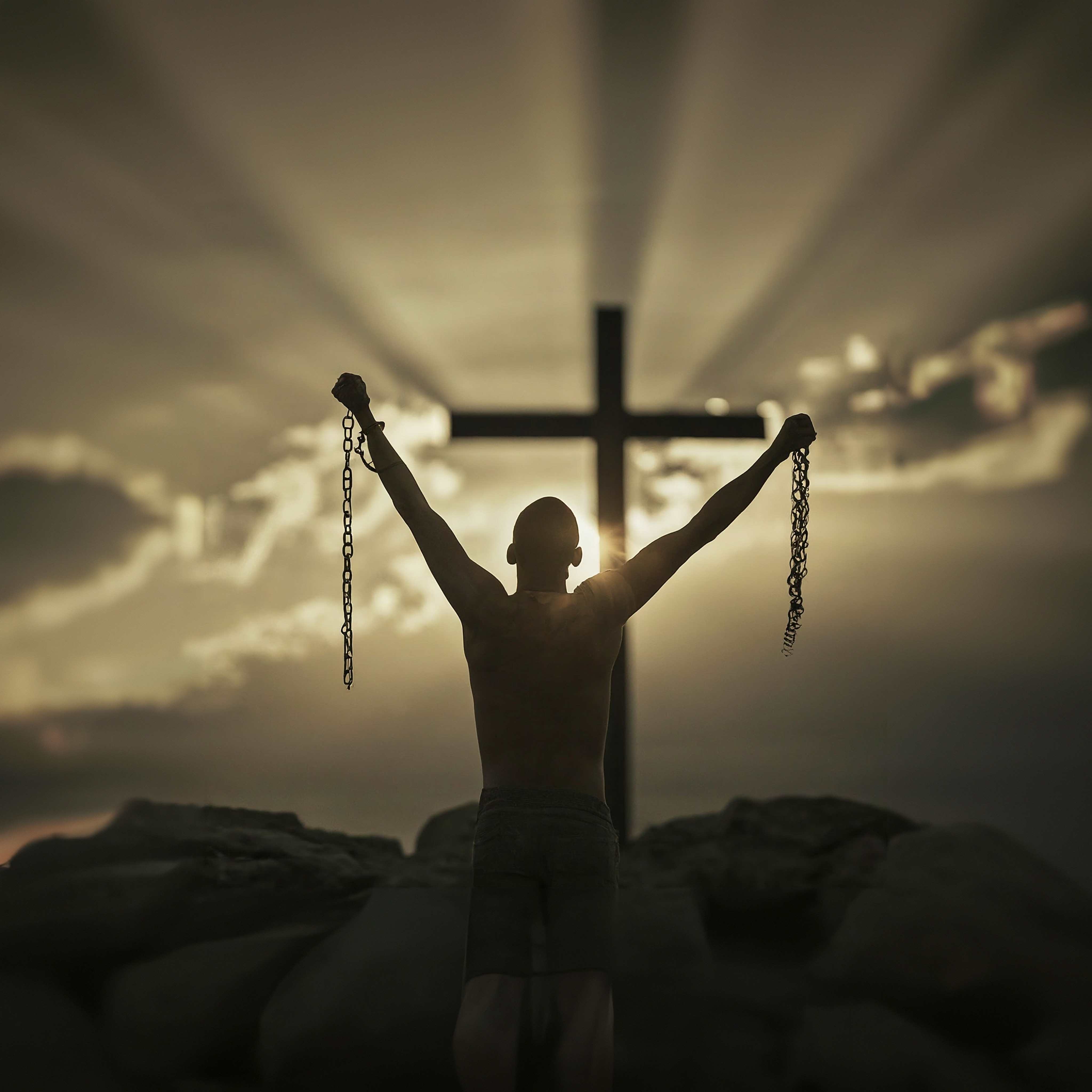
“For the law of the Spirit of life in Christ
Jesus has made me free from the law of sin and death.”
(Romans
8:2)
Martha
of Bethany – Wikipedia
Martha
From Wikipedia, the free encyclopedia
Saint
Martha of Bethany
Virgin
Born probably Iudaea
Province, Roman Empire
Died traditionally
Larnaca, Cyprus, Roman Empire
or
Tarascon, Gallia Narbonensis, Roman Empire
Venerated in Catholic
Church
Eastern Christianity
Anglican Communion
Lutheran Church
Canonized Pre-congregation
Feast 29 July
(Catholic, Anglican, Lutheran), 4 June (Eastern Orthodox)
Attributes broom;
keys; Tarasque;[1]
Patronage butlers;
cooks; dieticians; domestic servants; homemakers; hotel-keepers; housemaids;
housewives; innkeepers; laundry workers; maids; servants; servers; single
laywomen; travellers; Tarascon; Villajoyosa, Spain; Pateros, Philippines;
Malagasang II, Imus, Philippines
Martha (Aramaic: מָרְתָא)
is a biblical figure described in the Gospels of Luke and John. Together with
her siblings Lazarus and Mary of Bethany, she is described as living in the
village of Bethany near Jerusalem and witnessing Jesus resurrecting her
brother, Lazarus.
Etymology of the name
The name Martha is a Latin transliteration of the Koine
Greek Μάρθα, itself a transliteration of the Aramaic מָרְתָא
Mârtâ, "the mistress" or "the lady", from מרה
"mistress", feminine of מר "master." The
Aramaic form occurs in a Nabatean inscription found at Puteoli, and now in the
Naples Museum; it is dated AD 5 (Corpus Inscr. Semit., 158); also in a
Palmyrene inscription, where the Greek translation has the form Marthein.[2]
Biblical references
In an episode from the Gospel of Luke, Jesus visits the
home of two sisters named Mary and Martha. While Martha is "encumbered
about many things" as she worriedly attends to their home and guest, Mary
had chosen "the better part" by sitting at Jesus's feet and receiving
his teachings with attention.[3] The name of their village is not recorded, nor
(unlike in John 11:18) is there any mention of whether Jesus was near
Jerusalem. Biblical commentator Heinrich Meyer notes that "Jesus cannot
yet be in Bethany,[4][5] where Martha and Mary dwelt [according to the Gospel
of John]".[6] However, the Cambridge Bible for Schools and Colleges claims
that it was "undoubtedly Bethany".[7]
As Jesus and his disciples were on their way, he came to a
village where a woman named Martha opened her home to him. She had a sister
called Mary, who sat at the Lord's feet listening to what he said. But Martha
was distracted by all the preparations that had to be made. She came to him and
asked, "Lord, don't you care that my sister has left me to do the work by
myself? Tell her to help me!" "Martha, Martha", the Lord
answered, "you are worried and upset about many things, but only one thing
is needed. Mary has chosen what is better, and it will not be taken away from
her."[8]
In the Gospel of John, Martha and Mary appear in connection
with two incidents: the raising from the dead of their brother Lazarus (John
11) and the anointing of Jesus in Bethany (John 12:3).
In the account of the raising of Lazarus, when Jesus hears
of the death it is noted that "Jesus loved Martha, and her sister, and
Lazarus" (John 11:5). Upon arrival, Jesus meets with the sisters in turn:
Martha followed by Mary. Martha goes immediately to meet Jesus as he arrives,
while Mary waits until she is called. As one commentator notes, "Martha,
the more aggressive sister, went to meet Jesus, while quiet and contemplative
Mary stayed home. This portrayal of the sisters agrees with that found in Luke
10:38–42."[9] In speaking with Jesus, both sisters lament that he did not
arrive in time to prevent their brother's death: "Lord, if you had been
here, my brother would not have died".[10] But where Jesus' response to
Mary is more emotional, his response to Martha is one of teaching, calling her
to hope and faith:
When Martha heard that Jesus was coming, she went out to
meet him, but Mary stayed at home. "Lord", Martha said to Jesus,
"if you had been here, my brother would not have died. But I know that
even now God will give you whatever you ask."
Jesus said to her, "Your brother will rise
again." Martha answered, "I know he will rise again in the
resurrection at the last day." Jesus said to her, "I am the
resurrection and the life. He who believes in me will live, even though he
dies; and whoever lives and believes in me will never die. Do you believe
this?"
"Yes, Lord", she told him, "I believe that
you are the Christ, the Son of God, who was to come into the world."[11]
As the narrative continues, Martha calls her sister Mary to
see Jesus. Jesus has Mary bring him to Lazarus' tomb where he commands the
stone to be removed from its entrance. Martha objects, "But, Lord, by this
time there is a bad odor, for he has been there four days." Jesus replies,
"Did I not tell you that if you believed, you would see the glory of
God?"[12] They then take away the stone and Jesus prays and calls Lazarus
forth alive from the tomb.
Martha appears again in John 12:1–8, where she serves at a
meal held in Jesus' honor at which her brother is also a guest. The narrator
only mentions that the meal takes place in Bethany, while the apparently
parallel accounts in the Gospels of Matthew[13] and Mark[14] specify that it
takes place at the home of one Simon the Leper. As the Catholic Encyclopedia
notes, "We are surely justified in arguing that, since Matthew and Mark
place the scene in the house of Simon, St. John must be understood to say the
same; it remains to be proven that Martha could not 'serve' in Simon's house."[2]
It is at this meal that a woman (Martha's sister Mary, according to John)
anoints Jesus with expensive perfume.
Western traditions
Christ in the House of Martha and Mary, Diego Velázquez,
1618
In medieval Western Christianity, Martha's sister Mary was
often equated with Mary Magdalene. This identification led to additional
information being attributed to Martha as well:
Mary, Martha, and Lazarus are represented by St. John as
living at Bethania, but St. Luke would seem to imply that they were, at least
at one time, living in Galilee; he does not mention the name of the town, but
it may have been Magdala, and we should thus, supposing Mary of Bethania and
Mary Magdalene to be the same person, understand the appellative
"Magdalene". The words of St. John (11:1) seem to imply a change of
residence for the family. It is possible, too, that St. Luke has displaced the
incident referred to in Chapter 10. The likeness between the pictures of Martha
presented by Luke and John is very remarkable. The familiar intercourse between
the Saviour of the world and the humble family which St. Luke depicts is dwelt
on by St. John when he tells us that "Jesus loved Martha, and her sister
Mary, and Lazarus" (11:5). Again the picture of Martha's anxiety (John
11:20–21, 39) accords with the picture of her who was "busy about much
serving" (Luke 10:40); so also in John 12:2: "They made him a supper
there: and Martha served." But St. John has given us a glimpse of the
other and deeper side of her character when he depicts her growing faith in
Christ's Divinity (11:20–27), a faith which was the occasion of the words:
"I am the resurrection and the life." The Evangelist has beautifully
indicated the change that came over Martha after that interview: "When she
had said these things, she went and called her sister Mary secretly, saying:
The Master is come, and calleth for thee."[2]
The Greek word used for Jesus' 'love' towards the two
sisters in the Gospel of John account of the raising of Lazarus, is agapaō
meaning divine or self-sacrificial love.[15]
Eastern Orthodox tradition
In Eastern Orthodox Church tradition, though not
specifically named as such in the gospels, Martha and Mary were among the
Myrrh-bearing Women. These faithful followers of Jesus stood at Golgotha during
the Crucifixion of Jesus and later came to his tomb early on the morning
following Sabbath with myrrh (expensive oil), according to the Jewish
tradition, to anoint their Lord's body. The Myrrhbearers became the first
witnesses to the Resurrection of Jesus, finding the empty tomb and hearing the
joyful news from an angel.[16]
Orthodox tradition also relates that Martha's brother
Lazarus was cast out of Jerusalem in the persecution against the Jerusalem
Church following the martyrdom of St. Stephen. His sister Martha fled Judea
with him, assisting him in the proclaiming of the Gospel in various lands,[17]
while Mary Magdalene remained with John the Apostle and assisted him with the
Church of Jerusalem. According to Cyprian tradition, Lazarus and Martha later
came to Cyprus, where Lazarus became the first Bishop of Kittim (modern
Larnaca).[18] All three died in Cyprus.
Veneration
Martha is venerated as a saint in the Roman Catholic Church
and the Eastern Orthodox Church, and commemorated by the Lutheran Church and
the Anglican Communion. Through time, as the reverence for St. Martha
developed, the images of maturity, strength, common sense, and concern for
others predominated.[19]
Feast days
Roman Catholic
The Latin Church celebrates the feast day of Martha, Mary
of Bethany and their brother Lazarus on 29 July.[20]
The feast of Martha, classified as a
"semi-double" in the Tridentine calendar, became a "simple"
one in the General Roman Calendar of Pope Pius XII, a "third class
feast" in the General Roman Calendar of 1960, and a memorial in the
present General Roman Calendar. Until 2021, the liturgical celebration had been
solely of Martha, except among the Benedictines. In that year, Pope Francis
changed it to commemorate all three siblings. He further pointed out that Mary
of Bethany was not to be confused with Mary Magdalene, which tradition
"resulted in the inclusion of Martha alone on 29 July in the Roman
Calendar".[21]
Orthodoxy
The Eastern Orthodox and Byzantine Rite Eastern Catholic
Churches commemorate Martha and her sister Mary on 4 June. They also
commemorate them collectively among the Myrrh-bearing Women on the Sunday of
the Myrrhbearers (the Third Sunday of Pascha – i.e., the second Sunday after
Easter Sunday). Martha also figures in the commemorations of Lazarus Saturday
(the day before Palm Sunday).
Lutheran
Martha is commemorated on 29 July in the Calendar of Saints
of the Lutheran Church, together with Mary and Lazarus.
Anglican
Martha is also commemorated on 29 July in the Calendar of
saints of the Episcopal Church.[22]
Martha is remembered (with Mary and Lazarus) in the Church
of England with a Lesser Festival on 29 July.[23]
Patronages
Diocesan Shrine of St. Martha and Parish of St. Roch in
Pateros, Metro Manila, Philippines. The only shrine in southeast Asia dedicated
to St. Martha.
The Sisters of Saint Martha are a religious congregation
founded in Antigonish, Nova Scotia, in 1894.[24]
Churches
A number of churches are dedicated to St. Martha including:
Roman Catholic churches
The Parish of Saint Martha in Imus, Cavite. The only parish
in the Diocese of Imus dedicated to Saint Martha.
Europe:
Église Sainte-Marthe de Tarascon in Tarascon, France;
United States:
St. Martha Catholic Church in Morton Grove, Illinois, and
others in East Providence, Rhode Island; Valinda, California; Kingwood, Texas;
Harvey, Louisiana; Plainville, Massachusetts; Sarasota, Florida; and
Prestonsburg, Kentucky
Asia
Roman Catholic Diocese of Pasig: Diocesan Shrine of St.
Martha and Parish of St. Roch, Pateros, Philippines, and St. Martha Parish of
Kalawaan Pasig.
Roman Catholic Diocese of Imus: Saint Martha Parish,
Greengate Homes, Malagasang II-A, City of Imus, Province of Cavite.
Australia:
Strathfield, New South Wales
Anglican Communion:
Canada:
St Mary and St Martha in Toronto
England:
St Martha-on-the-Hill in Surrey
Broxtowe, Nottinghamshire
United States: St. Martha's Episcopal Church in:
Papillion, Nebraska
Bethany Beach, Delaware
Lexington, Kentucky
Saints Martha & Mary, Eagan, Minnesota
Saints Mary & Martha, Buford, GA
Methodist:
St Martha's Methodist Church in Tring, Hertfordshire,
England, United Kingdom
Lutheran:
St. Mary and St. Martha Lutheran Church, San Francisco,
United States
Legends and myths
The Golden Legend
According to legend, St. Martha left Judea after Jesus'
resurrection, around AD 48, and went to Provence with her sister Mary
(conflated with Mary Magdalene) and her brother Lazarus. With them, Martha
first settled in Avignon (now in France). The Golden Legend, compiled in the
13th century, records the Provençal tradition:
Saint Martha, hostess of our Lord Jesus Christ, was born of
a royal kindred. Her father was named Syro and her mother Encharia. The father
of her was duke of Syria and places maritime, and Martha with her sister
possessed by the heritage of their mother three places, that was, the castle
Magdalen, and Bethany and a part of Jerusalem. It is nowhere read that Martha
had ever any husband nor fellowship of man, but she as a noble hostess
ministered and served our Lord, and would also that her sister should serve him
and help her, for she thought that all the world was not sufficient to serve
such a guest. After the ascension of our Lord, when the disciples were
departed, she with her brother Lazarus and her sister Mary, also Saint Maximin
[actually a 3rd-century figure] which baptized them, and to whom they were
committed of the Holy Ghost, and many others, were put into a ship without
sail, oars, or rudder governail, of the paynims, which by the conduct of our
Lord they came all to Marseille, and after came to the territory of Aquense or
Aix, and there converted the people to the faith. Martha was right facound of
speech, and courteous and gracious to the sight of the people.[25]
The Golden Legend also records the grand lifestyle imagined
for Martha and her siblings in its entry on Mary Magdalene:
Mary Magdalene had her surname of Magdala, a castle, and
was born of right noble lineage and parents, which were descended of the
lineage of kings. And her father was named Cyrus, and her mother Eucharis. She
with her brother Lazarus, and her sister Martha, possessed the castle of
Magdala, which is two miles from Nazareth, and Bethany, the castle which is
nigh to Jerusalem, and also a great part of Jerusalem, which, all these things
they departed among them. In such wise that Mary had the castle Magdala,
whereof she had her name Magdalene. And Lazarus had the part of the city of
Jerusalem, and Martha had to her part Bethany. And when Mary gave herself to
all delights of the body, and Lazarus entended all to knighthood, Martha, which
was wise, governed nobly her brother's part and also her sister's, and also her
own, and administered to knights, and her servants, and to poor men, such
necessities as they needed. Nevertheless, after the ascension of our Lord, they
sold all these things.[26]
St. Martha in Tarascon
Martha with the Tarasque, from the Hours of Henry VIII
A further legend relates that Martha then went to Tarascon,
France, where a monster, the Tarasque, was a constant threat to the population.
The Golden Legend describes it as a beast from Galatia; a great dragon, half
beast and half fish, greater than an ox, longer than a horse, having teeth
sharp as a sword, and horned on either side, head like a lion, tail like a
serpent, that dwelt in a certain wood between Arles and Avignon. Holding a
cross in her hand, Martha sprinkled the beast with holy water. Placing her sash
around its neck, she led the tamed dragon through the village.[19]
Gothic Tomb of Saint Martha in Tarascon
There Martha lived, daily occupied in prayers and in
fastings. Martha eventually died in Tarascon, where she was buried. Her tomb is
located in the crypt of the local Collegiate Church.
St Martha's Collegiate Church in Tarascon
The dedication of the Collegiate Church at Tarascon to St.
Martha is believed to date from the 9th century or earlier. Relics found in the
church during a reconstruction in 1187 were identified as hers, and reburied in
a new shrine at that time.[27] In the Collegiate Church crypt is a late
15th-century cenotaph, also known as the Gothic Tomb of Saint Martha. It is the
work of Francesco Laurana, a Croatian sculptor of the Italian School,
commissioned by King René. At its base are two openings through which the
relics could be touched. It bears three low reliefs separated by fluted
pilasters representing: on the left, Saint Martha and the Tarasque; in the
center, Saint Mary Magdalene borne aloft by the angels; on the right, Lazarus
as Bishop of Marseille with his mitre and staff. There are two figures on
either side: on the left, Saint Front, Bishop of Perrigueux, present at the
funeral of Saint Martha, and on the right, Saint Marcelle, Martha's
servant.[28]
St. Martha and Villajoyosa
The town of Villajoyosa, Spain, honors St. Martha as its
patron saint and celebrates The Festival of Moors and Christians annually in
her honor. The 250-year-old festival commemorates the attack on Villajoyosa by
Berber pirates led by Zalé-Arraez in 1538, when, according to legend, St.
Martha came to the rescue of the townsfolk by causing a flash flood which wiped
out the enemy fleet, thus preventing the corsairs from reaching the coast.[29]
St. Martha and Pateros
St. Martha, who is usually depicted taming the Tarasque,
is, instead, depicted taming a giant crocodile that is believed to have plagued
the duck farms of Pateros.
Tradition recounts that in the 1800s, Saint Martha (who
legendarily subdued the Tarasque), was invoked by the people of Pateros, a town
in Metro Manila, Philippines, to vanquish a crocodile in the Pateros River that
ate their ducks. These animals were the main source of the townspeople's
livelihood as their eggs are the main ingredient of the delicacy, Balút
(fertilised duck egg), which is what the town is known for.
One evening, under a full moon, an unnamed female bayani
(hero) went to the river to tame the creature. At the river banks, the
crocodile saw a light surrounding the figure, who was actually Saint Martha. At
the sight of the glowing figure, the creature disappeared and the local duck
industry once again flourished. The people of Pateros attributed this event to
Saint Martha and a grand fluvial procession in honor of her has been held
yearly since, in remembrance of the event.
Gnostic tradition
Martha appears in the sacred gnostic text Pistis Sophia.
She is instructed by the risen Christ on several of the repentances that must
be made in order to have salvation. She also makes several prophetic
interpretations of different Psalms.[30]
Depictions in art and literature
Caravaggio, Martha and Mary Magdalene, c. 1598. Martha
(left) reproaches Mary Magdalen for her lifestyle.
The subject of Martha is mostly found in art from the
Counter-Reformation onwards, especially in the 17th century, when the domestic
setting is usually given a realistic depiction. Typically, Martha, the elder
sister, is preparing or serving, while Mary is listening to Christ. However, it
appears in some Ottonian cycles of the Life of Christ.
Christ in the House of Martha and Mary (Velázquez), a 1618
oil-on-canvas painting by the Spanish painter Velázquez
Christ in the House of Martha and Mary (Vermeer), a 1655
painting by Johannes Vermeer
Martha and Mary Magdalene (Caravaggio), a 1598–99 painting
by the Italian Baroque master Michelangelo Merisi da Caravaggio
Literary works about Martha include:
Martha and Mary, a story in Karel Čapek's Apocryphal
Tales (1932)[31][32]
"Saint Martha and the Dragon", a poem by Charles
Causley in his collected works.[33]
The Sons of Martha (1907), a poem by Rudyard Kipling
In The Handmaid's Tale, the dystopian novel of Margaret
Atwood, infertile women forced to be servants for the ruling class are called
"Marthas", as their service is considered imitating Martha.