Home About Us Our Publications Make a
Donation Email: glenn.benson@yourbrotherglenn.org
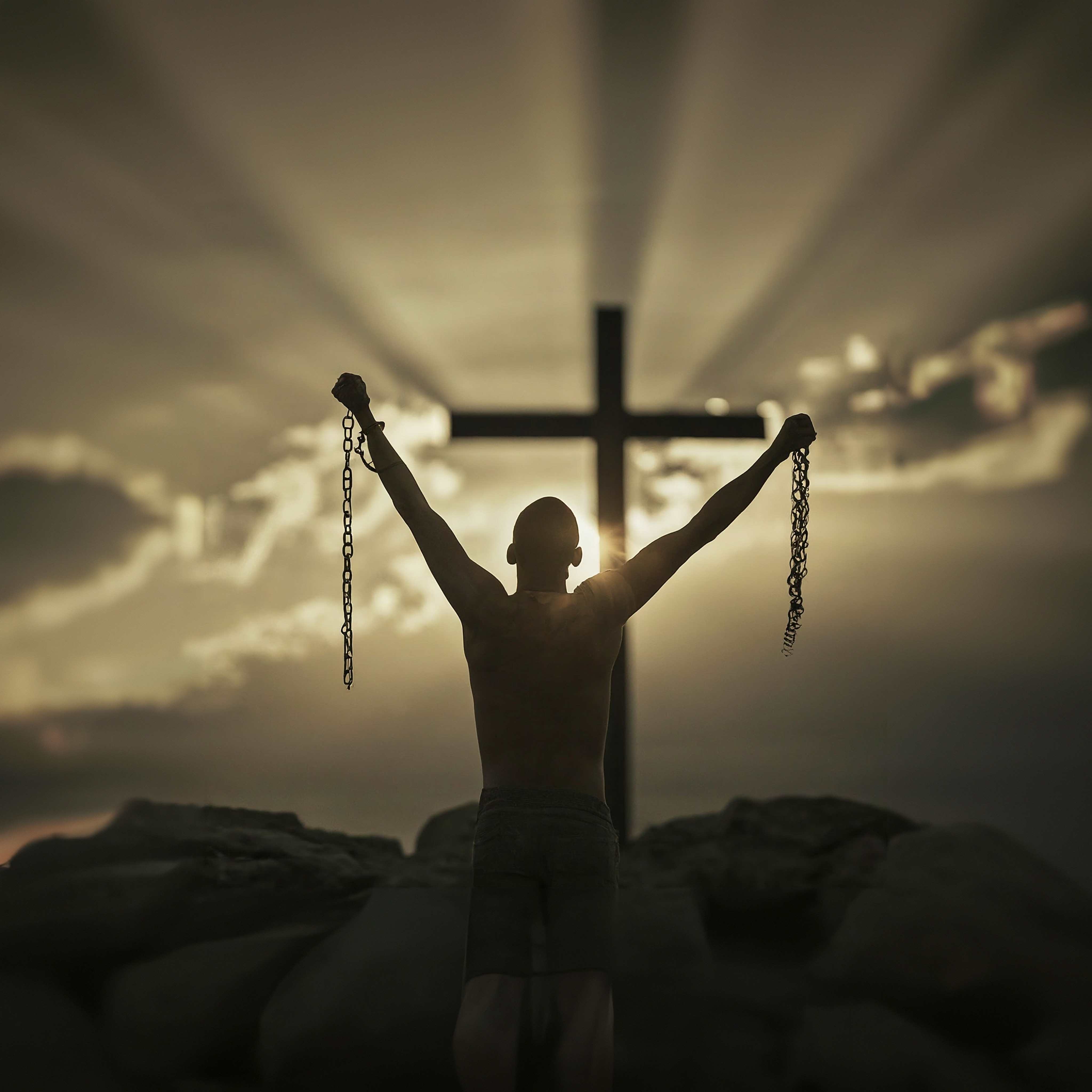
“For the law of the Spirit of life in Christ
Jesus has made me free from the law of sin and death.”
(Romans
8:2)
Malachi
the Prophet – Wikipedia
From Wikipedia, the free encyclopedia
Prophet
Malachi
מַלְאָכִי
Burial place Tomb of
the Prophets Haggai, Zechariah and Malachi, Jerusalem
Malachi or Malachias (/ˈmæləkaɪ/ ⓘ; Hebrew: מַלְאָכִי,
Modern: Malʾaḵī, Tiberian: Malʾāḵī, 'my
messenger') is the name used by the author of the Book of Malachi, the last
book of the Nevi'im (Prophets) section of the Tanakh. It is possible that
Malachi is not a proper name, because it means "messenger"; it has been
assumed to be a pseudonym. According to Jewish tradition, Malachi's true
identity is Ezra the scribe.
Some scholars[who?] argue that the Book of Malachi is the
result of multiple stages of redaction;[1] most of its text originated in the
Persian period, with the oldest stratum from around 500 BCE and redactions into
the Hellenistic period.[2]
According to Jewish tradition, Malachi was the last of the
prophets.
Identity
The editors of the 1906 Jewish Encyclopedia implied that
Malachi, also known as Malachias,[3] prophesied after Haggai and Zechariah and
speculated that he delivered his prophecies about 420 BC, after the second
return of Nehemiah from Persia,[4] or possibly before his return. The Talmud
and the Aramaic Targum of Yonathan ben Uzziel identify Ezra as the same person
as Malachi. This is the traditional view held by most Jews and some Christians,
including Jerome.[5][6][7] This identification is plausible, because
"Malachi" reprimands the people for the same things Ezra did, such as
marrying foreign pagan women. Malachi also focuses extensively on corrupt
priests who Ezra, a priest himself who exhorted the people to follow the law,
despised. According to Josephus, Ezra died and was buried "in a
magnificent manner in Jerusalem".[8] If the tradition that Ezra wrote
under the name "Malachi" is correct, then Josephus meant that he was
buried in the Tomb of the Prophets, the traditional resting place of Malachi.
This would also explain why Ezra does not refer to a prophet named Malachi,
while he did refer to other prophets such as Haggai and Zechariah.
Other potential identities includes Zerubbabel and
Nehemiah; others suggest that Malachi was a separate person altogether,
possibly a Levite and a member of the Great Assembly.[9]
Name
Because the name Malachi does not occur elsewhere in the
Hebrew Bible, some scholars doubt whether it is intended to be the personal
name of the prophet. The form mal'akhi (literally "my malakh")
signifies "my messenger"; it occurs in Malachi 3:1[10] (compare to
Malachi 2:7, but this form would hardly be appropriate as a proper name without
some additional syllable such as Yah, whence mal'akhiah, i.e. "messenger
of Yah".[11] In the Book of Haggai, Haggai is designated the
"messenger of the Lord."[12] The non-canonical superscriptions
prefixed to the book, in both the Septuagint and the Vulgate, warrant the
supposition that Malachi's full name ended with the syllable -yah.[11] The
Septuagint translates the last clause of Malachi 1:1, "by the hand of his
messenger",[13][better source needed] and the Targum reads, "by the
hand of my angel, whose name is called Ezra the scribe".[11] G.G. Cameron
suggests that the termination of the word "Malachi" is adjectival,
and equivalent to the Latin angelicus, signifying "one charged with a
message or mission" (a missionary).[14][better source needed]
Date
Opinions vary as to the prophet's exact date, but nearly
all scholars agree that Malachi prophesied during the Persian period, and after
the reconstruction and dedication of the Second Temple in 516 BC.[15] More
specifically, Malachi probably lived and labored during the times of Ezra and
Nehemiah.[15] The abuses which Malachi mentions in his writings correspond so
exactly with those which Nehemiah found on his second visit to Jerusalem in 432
BC[16] that it seems reasonably certain that he prophesied concurrently with
Nehemiah or shortly after. Bergstein suggests that he died in 312 BC.[9]
From Wikipedia, the free encyclopedia
Book of Malachi
מַלְאָכִי
The Book of Malachi (Hebrew: סֵפֶר
מַלְאָכִי, romanized:
Sēfer Malʾākhî) is the last book of the Nevi'im in the Tanakh
(Hebrew Bible) and canonically the final book of the Twelve Minor Prophets. In
most Christian traditions, the prophetic books form the last section of the Old
Testament, making Malachi the last book before the New Testament. The book is
divided into three chapters in the Hebrew Bible and Septuagint, and four in the
Latin Vulgate. The fourth chapter in the Vulgate consists of the remainder of
the third chapter, starting at verse 3:19.[1]
The author of the text may or may not have been an
eponymous figure named Malachi. While often regarded as a proper name, the
meaning of the word is simply "my messenger" in the Hebrew
language,[2] and the Septuagint translation renders it as "his
messenger." During the time the text was written, it was not used as a
personal name.[citation needed] In tractate Megillah 15a of the Talmud,[3]
Rabbi Joshua ben Karha and Rav Nachman—both Tannaim—taught that the book was
authored by Ezra the Scribe, a prominent scholar and kohen who played a
significant role in shaping Jewish religious law (Halakha) and tradition.[4]
Most scholars believe the book underwent multiple stages of
redaction.[5] The majority of its text originates in the Persian period; the
oldest portions dating to c. 500 BCE. Later modifications occurred during
the Hellenistic period.[6]
Oldest surviving manuscripts
The oldest surviving Hebrew manuscripts, containing some or
all of this book, are found in the Masoretic Text tradition, which includes the
Codex Cairensis (895), the Petersburg Codex of the Prophets (916), the Aleppo
Codex (tenth century), and Codex Leningradensis (1008).[7]: 35–37
Fragments containing parts of this book were also found among the Dead Sea
Scrolls 4Q76 (150–125 BCE) and 4Q78 (75–50 BCE).[8][9][10]
A translation of the Hebrew Bible into Koine Greek, known
as the Septuagint, was made in the last few centuries BCE. Extant ancient
manuscripts of the Septuagint version include Codex Vaticanus (fourth century),
Codex Sinaiticus (fourth century), Codex Alexandrinus (fifth century), and
Codex Marchalianus (sixth century).[7]: 73–74
Authorship
The identity of the author of the Book of Malachi is
uncertain, although it has been suggested that the author may have been
Levitical. Due to the similarities between Malachi and Ezra's emphasis on
forbidding marriage to foreign pagan women, the Talmud and certain Targums,
such as Targum Jonathan, identify Ezra as the author of Malachi. This is the
traditional view held by most Jews and some Christians.[11][12] The Catholic
priest and historian Jerome suggests that this may be because Ezra was seen as
an intermediary between the prophets and the "great synagogue."
According to Josephus, Ezra died and was buried "in a magnificent manner
in Jerusalem".[13] If the tradition that Ezra wrote under the name
"Malachi" is correct, then he was likely buried in the Tomb of the
Prophets, the traditional resting place of Malachi, Haggai, and Zechariah.
The name "Malachi" occurs in the superscription
at 1:1 and 3:1, although most consider it unlikely that the word refers to the
same character in both references. According to the editors of the 1897
Easton's Bible Dictionary, some scholars believe the name "Malachi"
is not a proper noun, but an abbreviation of "messenger of Yah."[14]
This reading could be based on Malachi 3:1, "Behold, I will send my messenger...",
if "my messenger" is taken literally as the name Malachi.[15] Thus,
many believe that "Malachi" is an anonymous pseudonym. Other
scholars, including the editors of the Catholic Encyclopedia, argue that the
grammatical evidence leads to the conclusion that Malachi is a name, asserting:
"We are no doubt in presence of an abbreviation of the name Mál'akhîyah,
that is Messenger of Yah."[16]
Some scholars consider the authorship of Zechariah 9–14 and
Malachi to be anonymous which explains their placement at the end of the Twelve
Minor Prophets.[15] Julius Wellhausen, Abraham Kuenen, and Wilhelm Gustav
Hermann Nowack argue that Malachi 1:1 is a late addition, pointing to Zechariah
9:1 and Zechariah 12:1 as evidence.[citation needed] Another interpretation of
the authorship comes from the Septuagint superscription ὲν
χειρὶ ἀγγήλου
αὐτοῦ, which can be read as either "by the hand
of his messenger" or as "by the hand of his angel." The
"angel" reading found an echo among the ancient Church Fathers and ecclesiastical
writers. It even gave rise to the "strangest fancies," especially
among the disciples of Origen.[16][17]
Period
The Book of Malachi contains a few historical details. A
clue as to its dating lies in the author's use of a loaned form of the Imperial
Aramaic term for 'governor' (פחה, paḥā) to refer
to the contemporary governor of Judah (Biblical Hebrew: לְפֶחָתֶךָ,
romanized: lefeḥāthekha, lit. 'to your governor') in chapter
1:8.[18] This indicates a post-Babylonian exile date of composition (i.e.,
after 538 BCE), based on the use of this term and the fact that Judah had a
king before the exile. Additionally, since the same verse references the
rebuilt Temple in Jerusalem, the book must have been written after 515 BCE
during the Second Temple period.[19] The author of the Book of Sirach, written
early in the second century BCE, apparently knew of Malachi. Because of the
development of themes in the book of Malachi, most scholars assign it to a
position after the Book of Haggai and the Book of Zechariah,[20][21] close to
the time when Ezra and Nehemiah[21] came to Jerusalem in 445 BCE.[22]
Aim
The Book of Malachi was written to correct what the author
saw as the lax religious and social behavior of the Israelites—particularly the
priests—in post-exilic Jerusalem. Although the prophets urged the people of
Judah and Israel to see their exile as punishment for failing to uphold their
covenant with God, it was not long after they had been returned to the land,
the Second Temple built, and proper worship restored, that the people's
commitment to their God began to wane once again. It was in this context that
the prophet, commonly referred to as Malachi, delivered his prophecy.[citation
needed]
In 1:2, Malachi portrays the people of Israel as
questioning God's love for them. This introduction to the book illustrates the
severity of the situation that Malachi addresses, as does dialectical style
with which Malachi confronts his audience. Malachi accuses his audience of
failing to respect God as God deserves. One way this disrespect manifests is
through the substandard sacrifices that Malachi claims the priests offer. While
God demands animals that are "without blemish" (Leviticus 1:3, NRSV),
the priests, who were "to determine whether the animal was
acceptable"[23] were offering blind, lame, and sick animals for sacrifice
because they thought nobody would notice.
In 2:1, Malachi states that Yahweh Sabaoth is sending a
curse on the priests who have not honoured him with appropriate animal
sacrifices: "Now, watch how I am going to paralyze your arm and throw dung
in your face—the dung from your very solemnities—and sweep you away with it.
Then you shall learn that it is I who have given you this warning of my
intention to abolish my covenant with Levi, says Yahweh Sabaoth."
In 2:10–11, Malachi addresses the issue of divorce. On this
topic, Malachi deals with divorce both as a social problem ("Why then are
we faithless to one another ... ?") and as a religious problem
("Judah...has married the daughter of a foreign god"). In contrast to
the Book of Ezra, Malachi urges each to remain steadfast to the wife of his
youth.
Malachi also criticizes his audience for questioning God's
justice. He reminds them that God is just and exhorts them to be faithful as
they await that justice. Malachi states that the people have not been faithful
and have not given God all that God deserves. Just as the priests have been
offering unacceptable sacrifices, so the people have been neglecting to offer
their full tithe to God.
Interpretations
Judaism
In Judaism the book is known as "the seal of the
prophets" because it brings the books of biblical prophecy to a close.[24]
Christianity
The New Revised Standard Version of the Bible supplies
headings for the book as follows:
Verse/Chapter Headings in the NRSV
Verse Reference Heading
1:1 (Superscription)
1:2–2:9 Israel
Preferred to Edom
2:10–17 The
Covenant Profaned by Judah
3:1–7 The Coming
Messenger
3:8–18 Do
Not Rob God
4:1–5 (3:19–24 in Hebrew) The
Great Day of the Lord
The majority of scholars consider the book to be made up of
six distinct oracles.[25][26] According to this scheme, the Book of Malachi
consists of a series of disputes between Yahweh and the various groups within
the Israelite community. In the book's three or four chapters, Yahweh is
vindicated, while those who do not adhere to the Mosaic Law are condemned. Some
scholars have suggested that the book, as a whole, is structured along the
lines of a judicial trial, a suzerain treaty, or a covenant—one of the major
themes throughout the Hebrew Bible. Implicit in the prophet's condemnation of
Israel's religious practices is a call to keep Yahweh's statutes.
The Book of Malachi draws upon various themes found in
other books of the Hebrew Bible. Malachi appeals to the rivalry between Jacob
and Esau and Yahweh's preference for Jacob contained in the Book of Genesis
25–28. Malachi reminds his audience that, as descendants of Jacob (Israel),
they have been and continue to be favoured by God as God's chosen people. In
the second dispute, Malachi draws upon the Levitical Code (e.g., Leviticus 1:3)
in condemning the priest for offering unacceptable sacrifices.
In the third dispute (concerning divorce), the author of
the Book of Malachi likely intends his argument to be understood on two levels.
Malachi appears to be attacking either the practice of divorcing Jewish wives
in favour of foreign ones (a practice which Ezra vehemently condemns) or,
alternatively, Malachi could be condemning the practice of divorcing foreign
wives in favour of Jewish wives (a practice which Ezra promoted). Malachi
appears adamant that nationality is not a valid reason to terminate a marriage,
"For I hate divorce, says the Lord..." (2:16).
In many places throughout the Hebrew Bible, particularly in
the Book of Hosea, Israel is figured as Yahweh's wife or bride. Malachi's
discussion of divorce may also be understood to conform to this metaphor.
Malachi could be urging his audience not to break faith in Yahweh (the God of
Israel) by adopting new gods or idols. It is quite likely that since the people
of Judah were questioning Yahweh's love and justice (1:2, 2:17), they might
have been tempted to adopt foreign gods. William Sanford LaSor, an American
Christian pastor, suggests that because the restoration to the land of Judah
had not resulted in anything like the prophesied splendour of the Messianic
Age, which had been foretold, the people were becoming quite disillusioned with
their religion.[27]
Indeed, the fourth dispute asserts that judgment is coming
in the form of a messenger who "is like refiner's fire and like fullers'
soap..." (3:2).
Following this, the prophet provides another example of
wrongdoing in the fifth dispute: failing to offer full tithes. In this
discussion, Malachi has Yahweh request that the people "Bring the full
tithe ... [and] see if I will not open the windows of heaven for you and pour
down on you an overflowing blessing" (3:10). This request offers the
opportunity for the people to amend their ways. It also stresses that keeping
the Lord's statutes will allow the people to avoid God's wrath and lead to
God's blessing. It is this portion of Malachi that supports the view that
tithing remains one of the Hebrew Biblical commandments Christians must
observe.[citation needed]
In the sixth dispute, the people of Israel illustrate the
extent of their disillusionment. According to Malachi, they say, "'It is
vain to serve God ... Now we count the arrogant happy; evildoers not only
prosper, but when they put God to the test they escape'" (3:14–15). Once
again, Yahweh assures the people that the wicked will be punished and the
faithful will be rewarded.
In the light of what Malachi understands to be an imminent
judgment, he exhorts his audience to "Remember the teaching of my servant
Moses, that statutes and ordinances that I commanded him at Horeb for all
Israel" (4:4; 3:22, MT). Before the Day of the Lord, Malachi declares that
Elijah (who "ascended in a whirlwind into heaven..." 2 Kings 2:11)
will return to earth so that people might follow in God's ways.
The Book of Malachi is frequently cited in the Christian
New Testament, primarily due to its messianic themes. The following is a brief
comparison between the Book of Malachi and the New Testament passages that
reference it.[28]
Quotation from Malachi 3:1 in an Austrian church: "The
Lord shall come to his temple."
References to the Book of Malachi in the New Testament
(NRSV)
Malachi New
Testament
"Yet I have loved Jacob, but I have hated Esau."
(1:2–3) "'I have loved Jacob,
but I have hated Esau.'" (Romans 9:13)
"And if I am a master, where is the respect due
me?" (1:6) "Why do you call
me, 'Lord, Lord,' and do not do what I tell you?" (Luke 6:46)
"the table of YHWH" (1:7,12) "the table of the Lord" (1
Corinthians 10:21)
"For from the rising of the sun to its setting my name
is great among the nations," (1:11) "so
that the name of our Lord Jesus may be glorified in you" (2 Thessalonians
1:12)
"Lord, who will not fear and glorify your name?"
(Revelation 15:4)
"For the lips of a priest should guard knowledge, and
people should seek instruction from his mouth, for he is the messenger of the
Lord of hosts. But you have turned aside from the way; you have caused many to
stumble by your instruction; you have corrupted the covenant of Levi, says the
Lord of hosts," (2:7–8) "therefore,
do whatever they teach you and follow it; but do not do as they do, for they do
not practice what they teach" (Matthew 23:3)
"Have we not all one father?" (2:10) "yet for us there is one God, the
Father" (1 Corinthians 8:6)
"See, I am sending my messenger to prepare the way before
me" (3:1) "See, I am
sending my messenger ahead of you, who will prepare your way" (Mark 1:2)
"See, I am sending my messenger ahead of you, who will
prepare your way before you" (Matthew 11:10†, Luke 7:27)
"But who can endure the day of his coming, and who can
stand when he appears?" (3:2) "for
the great day of their wrath has come, and who is able to stand?"
(Revelation 6:17)
"and he will purify the descendants of Levi and refine
them like gold and silver" (3:3) "so
that the genuineness of your faith . . . being more precious than gold that,
though perishable, is tested by fire . . ." (1 Peter 1:7)
"against those who oppress the hired workers in their
wages" (3:5) "Listen! The
wages of the laborers who mowed your fields, which you kept back by fraud"
(James 5:4)
"For I, Jehovah, change not;" (3:6) "Jesus Christ is the same
yesterday and today and forever." (Hebrews 13:8)
"Return to me, and I will return to you," (3:7) "Draw near to God, and he will draw
near to you" (James 4:8)
"But for you who revere my name the sun of
righteousness shall rise," (4:2) "By
the tender mercy of our God, the dawn from on high will break upon us,"
(Luke 1:78)
"Behold, I will send you Elijah the prophet before the
great and terrible day of Jehovah come." (4:5) "he is Elijah who is to come." (Matthew 11:14)
"Elijah has already come," (Matthew 17:12)
"Elijah has come," (Mark 9:13)
"Behold, I will send you Elijah the prophet before the
great and terrible day of Jehovah comes. And he shall turn the heart of the
fathers to the children, and the heart of the children to their fathers; lest I
come and smite the earth with a curse." (4:5–6) "With the spirit and power of Elijah he will go before him,
to turn the hearts of parents to their children, and the disobedient to the
wisdom of the righteous," (Luke 1:17)
Although many Christians believe that the messianic
prophecies of the Book of Malachi have been fulfilled in Jesus's life,
religious Jews, who do not share that belief with Christians, continue to await
the coming of the prophet Elijah, who will prepare the way for the Messiah.