Home About Us Our Publications Make a
Donation Email: glenn.benson@yourbrotherglenn.org
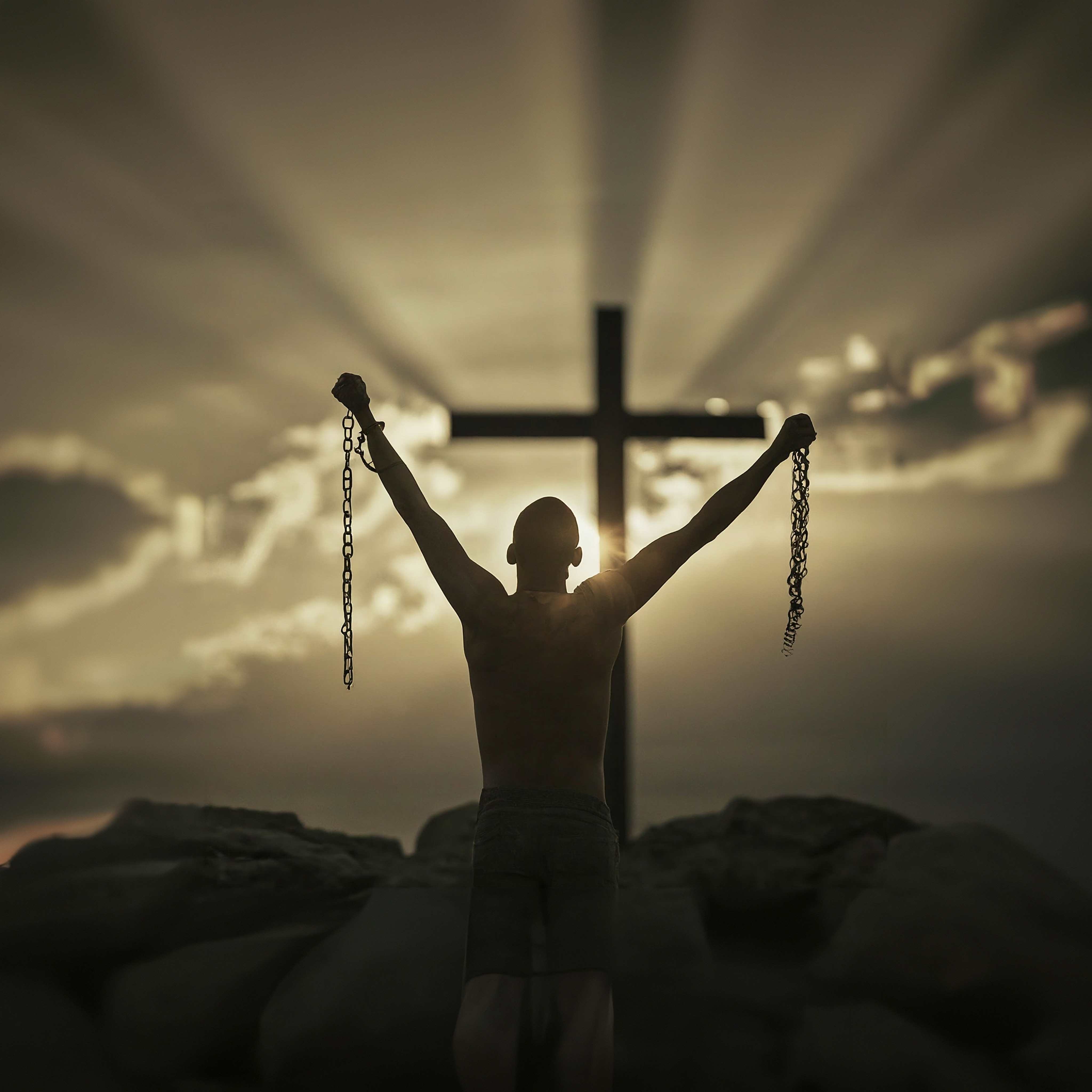
“For the law of the Spirit of life in Christ
Jesus has made me free from the law of sin and death.”
(Romans
8:2)
King Saul
- Britannica
King Saul
King Saul
King of Israel
Also known as: Shaʾul
Saul (flourished 11th century BCE, Israel) was the first
king of Israel (c. 1021–1000 BCE). According to the biblical account found
mainly in 1 Samuel, Saul was chosen king both by the judge Samuel and by public
acclamation. Saul was similar to the charismatic judges who preceded him in the
role of governing. His chief contribution, however, was to defend Israel
against its many enemies, especially the Philistines.
Biblical account of his life
The account of Saul’s life comes from the Hebrew Bible (Old
Testament) book of 1 Samuel. The son of Kish, a well-to-do member of the tribe
of Benjamin, he was made king by the league of 12 Israelite tribes in a
desperate effort to strengthen Hebrew resistance to the growing Philistine
threat. For roughly two centuries, Israel had existed as a loose confederation
of tribes, dependent for their unity upon bonds of religious faith and covenant
that were renewed periodically in cultic ceremonies at the central shrine at
Shiloh. By Saul’s day, however, the tribal rallies were no match for the
superior iron weapons and chariots of the Philistines, who were pressing ever
deeper into the central highlands.
Two literary strands are discernible in the accounts in 1
Samuel involving Saul. One of these (9:1–10:16), reflecting a favourable
attitude toward the monarchy, relates how the tall, handsome son of Kish was
initially selected by Samuel, the seer, in a private encounter between the two
men. From this same circle of tradition (chapter 11) comes the account of
Saul’s heroic deliverance of the town of Jabesh-Gilead from oppression by the
Ammonites, which brought him to the attention of all Israel and resulted in his
acclamation as king in a public ceremony at Gilgal. A second body of tradition
(1 Samuel 8, 10:17–27, and 12) is at pains to record Samuel’s misgivings about
the kingship. Although in this account he anoints Saul as a concession to
popular pressure, Samuel warns of the loss of personal and tribal freedom that
will follow and interprets the action as tantamount to a rejection of God.
Saul’s reign
In many respects, Saul’s reign bears a closer resemblance
to the judges who preceded him than to the succession of kings who followed.
His chief service to Israel, like that of the judges, lay in the sphere of
military defense. Together with his stalwart son Jonathan and an army composed
largely of volunteers, he won significant victories over the Philistines and
succeeded in driving them out of the central hills. A successful campaign against
the Amalekites in the south is also recorded (1 Samuel 15). There is no
evidence, however, that Saul made any appreciable changes in the nation’s
internal structures. The only royal official named in the accounts is the
military commander Abner, Saul’s cousin. In effect, Saul’s reign was marked by
few of the trappings of the typical Eastern monarchies, with no court
bureaucracy, splendid palace, or harem. His capital at Gibeah is revealed by
archaeology as a simple, rustic fortress.
The two men who significantly influenced Saul’s career were
Samuel and David. Even as Samuel’s endorsement proved crucial in assuring Saul
the kingship, probably nothing contributed so much to the king’s subsequent
disintegration as his break with the powerful and respected Samuel. Separate
accounts attributed this to Saul’s failure in religious duties—presumption in
offering unauthorized sacrifice before battle and a reluctance to devote Amalek
to destruction according to the principle of holy war. Samuel’s rejection of
Saul, which was complete and irrevocable, withdrew from the king the religious
sanctions essential for popular support and Saul’s own mental well-being.
David, who came into Saul’s court because of either his
military prowess or his skill as a harpist, according to varying accounts in 1
Samuel, is named both as the one who soothed the king with his sweet music and
as the object of a fierce jealousy resulting from the young warrior’s successes
in battle. When secret attempts to take David’s life proved no more successful
than Saul’s efforts to turn the hearts of his daughter Michal (David’s wife)
and his son Jonathan away from their winsome husband and friend, Saul declared
openly his intention to slay David. Only David’s flight to Philistia, which was
beyond Saul’s reach, saved him from the king’s unprovoked and manic attacks.
These accounts, though written from a perspective favourable to David, portray
dramatically and convincingly the mental deterioration of Saul. Nothing is more
revealing of the extent of the king’s derangement than the story of his
senseless slaughter of the 85 priests at Nob, noted in 1 Samuel 22.
Adding to the problems of Saul’s final days, the
Philistines mounted new attacks on the Israelite heartland. At no time strong
enough to deliver a final blow to the persistent enemy, Saul gathered his
forces at Mount Gilboa in an effort to cut off their drive into the Valley of
Jezreel. A vivid story in 1 Samuel 28 relates how, on the eve of the fateful
battle, Saul sought, through a necromancer at Endor, some word of encouragement
from the dead Samuel. The oracle of Samuel’s ghost, however, could only
foretell the doom awaiting on the following day—the defeat of the Israelite
forces and the death of Saul and his sons. The Israelites, once again confronted
by the desperate conditions prevailing at Saul’s accession to the throne, had
to look to a new deliverer. The man best fitted for the job was David.
Legacy
Any fair evaluation of Saul’s stormy career must look beyond
the antimonarchal tendencies of his biographers and the implicit comparisons
with the more successful David. Best described as a tragic hero, Saul displayed
a strength in battle and an ability to inspire his followers that place him
high in the ranks of the military great. If unable finally to solve the
Philistine problem, he nevertheless prevented their complete subjugation of the
land. So enduring was the devotion of the men of Jabesh-Gilead that they risked
their lives to remove Saul’s exposed body from the Philistine fortress at
Beth-shan and give it proper burial (1 Samuel 31:11–13). The finest tribute
paid the fallen leader is found in the immortal words of David’s magnificent
elegy in 2 Samuel 1, which begins, “Thy glory, O Israel, is slain upon thy high
places! How are the mighty fallen!”
James King West