Home About Us Our Publications Make a Donation Email: glenn.benson@yourbrotherglenn.org
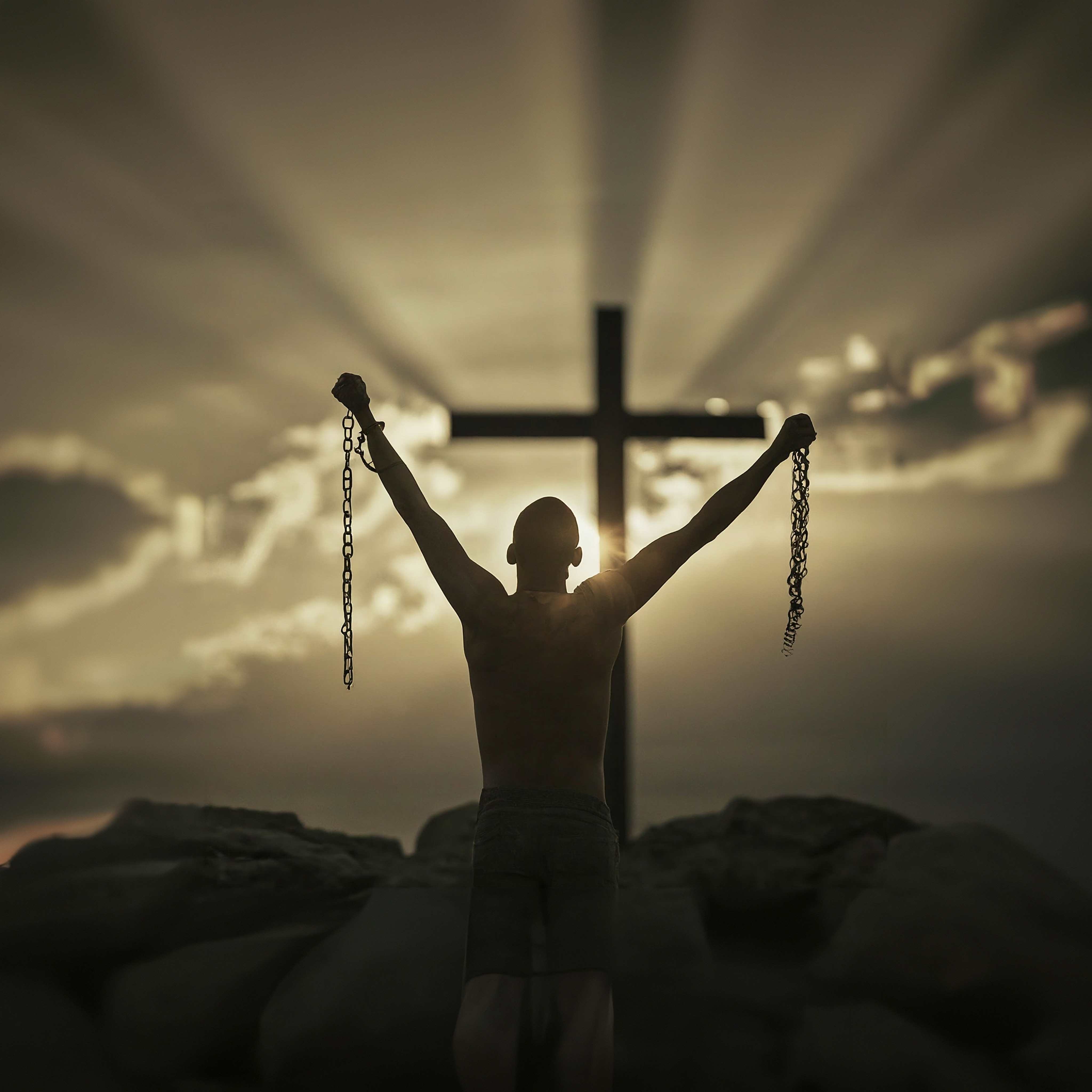
“For the law of the Spirit of life in Christ
Jesus has made me free from the law of sin and death.”
(Romans
8:2)
Joshua
– Hebrew Leader – Britannica
Joshua
Hebrew leader
Also known as: Josue, Yehoshuaʿ
Charles Preston
Britannica Editors
History
Joshua, the leader of the Israelites after the death of
Moses in the Hebrew Bible. His story continues the narrative of the Israelites
from wandering in the desert to reaching and conquering the Promised Land of
Canaan. Joshua appears prominently as Moses’ assistant in the Torah (Pentateuch).
According to the Book of Joshua, the sixth book of the Hebrew Bible, it is
under Joshua’s leadership that the Israelites overtake the land of Canaan,
beginning most famously with the miraculous fall of Jericho. Once occupied, the
land is divided among the Twelve Tribes of Israel under his direction. Joshua
is regarded as the epitome of leadership and obedience in subsequent religious
interpretations. Modern historiographical and biblical criticism scholarship
question the accuracy of the text’s narrative of the calculated and
comprehensive conquest of Canaan under Joshua’s command.
Successor of Moses
Joshua is identified in the Hebrew Bible as the son of Nun
and a member of the tribe of Ephraim. His name at first is Hoshea
(“salvation”), but Moses changes it to Joshua in the Book of Numbers. He first
appears in the Book of Exodus, while the Israelites are wandering in the
desert, when Moses requests him to battle with the Amalekites (Exodus 17:9–13).
With God’s help, as mediated by Moses, Joshua succeeds in defeating the
Amalekites. He also has a role as Moses’ assistant in divine matters: He
accompanies Moses to Mount Sinai as his assistant (Exodus 24) and stays in the
“tent of meeting,” where Moses speaks with God (Exodus 33). Already in Exodus
Joshua’s dual identities as military and religious leader are outlined.
In the Book of Numbers, Joshua is one of the 12 spies that
Moses sends to Canaan to scope out the situation for eventual military conquest
(Numbers 13). Prior to the spies’ departure, Moses changes Joshua’s name from
Hoshea. Later in the narrative, in Numbers 27:12–23, Moses appoints Joshua as
his successor. God tells Moses that he will die before reaching the Promised
Land of Canaan. Moses asks that a successor be appointed, and God selects
Joshua, who he describes as “a man in whom is the spirit.” The formal transfer
of leadership from Moses to Joshua appears in Deuteronomy 31:23, at which
moment God offers encouragement and promise to Joshua:
Conquest of Canaan
Deuteronomy concludes with Moses’ death, and then in the
Book of Joshua, the sixth book of the Hebrew Bible, God commissions Joshua to
continue Moses’ efforts (Joshua 1:2–5):
My servant Moses is dead. Now proceed to cross the Jordan,
you and all this people, into the land that I am giving to them, to the
Israelites. Every place that the sole of your foot will tread upon I have given
to you, as I promised to Moses. From the wilderness and the Lebanon [mountains]
as far as the great river, the River Euphrates, all the land of the Hittites,
to the Great Sea in the west shall be your territory. No one shall be able to
stand against you all the days of your life.
Joshua sends two spies into Canaan, with instructions to
focus on Jericho (Joshua 2). They take up residence in the home of the
prostitute named Rahab, who hides them from the king of Jericho. Rahab tells
them that she has heard news of the Israelites’ deeds from the Exodus onward,
and she assures them that the locals accept Israelite claims to the land and
have lost courage, and that the God of the Israelites is the supreme deity. In
return the spies promise to protect her and her family. The Israelites then
cross the Jordan River bearing the Ark of the Covenant. By divine command, and
in echo of the crossing of the Red Sea, the river’s waters are said to be
stacked in a heap by the town of Adam, allowing the Israelites to cross on dry
ground (Joshua 3–4).
The first significant military victory of Joshua’s Canaan
career is the defeat of Jericho in Joshua 6. The Israelites lay siege to
Jericho, and, as instructed by God, the warriors, along with seven priests
bearing seven ram’s-horn trumpets, march around the city in front of the Ark of
the Covenant for six days. On the seventh day they march around the city seven
times in this fashion as the priests blow the trumpets. After the last lap, the
priests blow the trumpets, the people all shout, and the walls of Jericho
tumble down. The Israelites destroy the city and annihilate its inhabitants,
sparing only Rahab and her family.
The city of Ai is next in Joshua 7–8, but the initial
attempt is thwarted, and about 36 Israelite warriors are killed. Joshua grieves
this turn of events and questions God, who replies that one of the Israelites
had sinned by taking some of the precious metal items from Jericho, which were
to be devoted to God’s treasury. The covetous troublemaker is discovered and
stoned to death. The Israelite warriors soon thereafter quickly destroy Ai by
means of an ambush.
The Gibeonites make peace with the Israelites and become
temple servants (Joshua 9), but the king of Jerusalem and four other nearby
kings attempt to conquer Gibeon (Joshua 10). Joshua marches against these
kings, described as Amorites. Amid the great battle, Joshua prays to God to
make the Sun and Moon stand still in Gibeon. The two celestial objects do so,
allowing more time in the day for the utter defeat of Israel’s enemies. This
miraculous moment is celebrated as evidence of Joshua’s relationship with God
and God’s support of the Israelite cause.
Joshua and his warriors continue their conquest, taking
lands from Hazor in northern Canaan to the Negev in the south (Joshua 11). All
were killed except the Gibeonites and some Anakim (descendants of the
Nephilim). Most of the cities conquered are described as being razed and
completely destroyed, not reused or reoccupied.
God informs Joshua that there is land left to be conquered,
but his advanced age requires a new approach (Joshua 13). So Joshua apportions
the land among the tribes of Israel and tasks them with completing the project.
The tribes of Reuben, Gad, and half of Manasseh had been promised their land
east of the Jordan River by Moses, but all the other tribes west of the Jordan
River receive their portions by drawing lots. Only the Levites do not receive
an allotment of land since they are to be the priests in the temple, but they
are given some cities by the other tribes. The Israelites, at God’s instruction
to Joshua, also establish special cities of refuge for those who kill another
person unintentionally.
Punctuated throughout the Book of Joshua’s narrative of
occupying Canaan are moments when God renews the covenant with Joshua in the
Promised Land—the covenant with Abraham that had guaranteed the land of Canaan
to Abraham’s descendants (Genesis 15:18–21). In Joshua 5:2–7 all the Israelites
of the new generation are circumcised since they had not been during the years
in the desert. In Joshua 8:30–35 Joshua builds an altar on Mount Ebal, copies
on stone the laws of Moses, and reads the laws to all assembled: Israelites,
including women and children, and the foreigners who lived among them. Just
prior to Joshua’s death, at the end of the Book of Joshua (Joshua 24), he
assembles the tribes of Israel at Shechem, where Abraham had first come to
Canaan and God appeared to him and said, “To your offspring I will give this
land.” Joshua again renews the covenant with the Israelite tribes and recounts
their history from Abraham to Moses and the Exodus to the conquering of Canaan.
He implores the people to not worship other gods and to serve and obey God.
Joshua dies soon after, at age 110.
Religious significance
In Jewish interpretive traditions, Joshua’s military and
religious roles are alternately amplified, depending on the circumstance. In
the deuterocanonical Ecclesiasticus, written in the 2nd century BCE, Joshua is
described as “mighty in war” and “the successor of Moses in the prophetic
office” (46:1). In 1 Maccabees, Joshua’s obedience is emphasized in the context
of maintaining the commandments. Following Mattathias’s refusal to partake in
non-Jewish rituals, he exhorts his followers to maintain the commandments with
zeal and cites ancestors who did so, including Abraham and Joshua (1 Maccabees
2:55). In later rabbinic tradition, after the destruction of the Second Temple
of Jerusalem, Joshua’s role as successor to Moses and in the maintenance and
protection of the tradition are the main focus, as in Pirkei Avot 1:1:
Moses received the Torah at Sinai and transmitted it to
Joshua, Joshua to the elders, and the elders to the prophets, and the prophets
to the Men of the Great Assembly. They said three things: Be patient in [the
administration of] justice, raise many disciples and make a fence round the
Torah.
In Christianity the significance of Joshua is heightened by
the fact that he shares a name with Jesus, albeit in different languages. The
name Jesus comes from the Greek Iesous, which in turn is a translation of the
Hebrew name Yeshuaʿ, a shortened form of Yehoshuaʿ (Joshua). St.
Justin Martyr (c. 100–165 CE) in Dialogue with Trypho mentions the prophecy in
Exodus 23:20–21 that God will send ahead to Canaan an angel described with the
line “my name is in him,” which the author interprets as indicating a
connection between Joshua, who takes over Canaan, and Jesus as a name of God.
The connection is made more explicit by Origen (c. 185–254) in Homilies on Joshua,
who exhorts his readers to understand the Book of Joshua not literally in terms
of warfare but allegorically as a spiritual struggle. The leadership of Joshua
prefigures the leadership of Jesus and the journey of the individual’s
struggles. In Origen’s interpretation, physical warfare is de-emphasized in
favor of a spiritual journey.
Historical interpretations
Through most of the 20th century, the account of Joshua’s
swift conquest of Canaan was understood by scholars as a factual rendering of
historical events. However, archaeological evidence since unearthed has led to
a general scholarly consensus that there was no single, quick, comprehensive,
and calculated conquest of this region by the Israelites. Some scholars suggest
that there was a gradual process of settlement in the region, whereas other
scholars propose that the Israelites originated in Canaan and that the venture
from Egypt combines some truth with subsequent literary reinterpretation.
According to some historical arguments within biblical
criticism, the Book of Joshua was composed in the late 7th century BCE during
the time of King Josiah of Judah (c. 640–609 BCE), and the story reflects
political concerns at that time. After the northern kingdom of Israel was
destroyed in 722/21, Judah remained as the only kingdom led by Israelite
tribes, while the Neo-Babylonian empire threatened from the east. King Josiah
sought to recreate a unified Israel, particularly by hoping to retake the
northern kingdom’s land. Scholars see that context reflected in Joshua’s story,
interpreting the conquest as a wishful version of Josiah’s political efforts.
The Book of Joshua thus reflects not past history but history its authors hoped
would come to pass.
In addition, prophets in this time period condemned the
Israelites, first of the northern and then of the southern kingdom, for failing
to maintain the covenant and laws. Joshua often emphasizes the covenant, which,
together with his connection to God, is implied as accounting for his military
success. On that reading Joshua’s religious leadership and obedience to law are
advanced as the condition of the text’s hoped-for political success. The
further implication is that failure to uphold the commandments might, as the
prophets warned, spell disaster.
Role In: Exodus
In contrast to this optimistic narrative, the southern
kingdom of Judah was destroyed in 586 BCE, setting off the Babylonian Captivity.
Some biblical scholars propose that the Book of Joshua and parts of the Torah
were redacted during the exile in Babylon and upon the return to Jerusalem. Per
that reading, the story of Joshua reflects the hopes and dreams of a displaced
people, and Joshua’s capturing of Canaan mirrors postexilic Jewish efforts to
retake the land and rebuild.
Charles Preston