Home About Us Our Publications Make a
Donation Email: glenn.benson@yourbrotherglenn.org
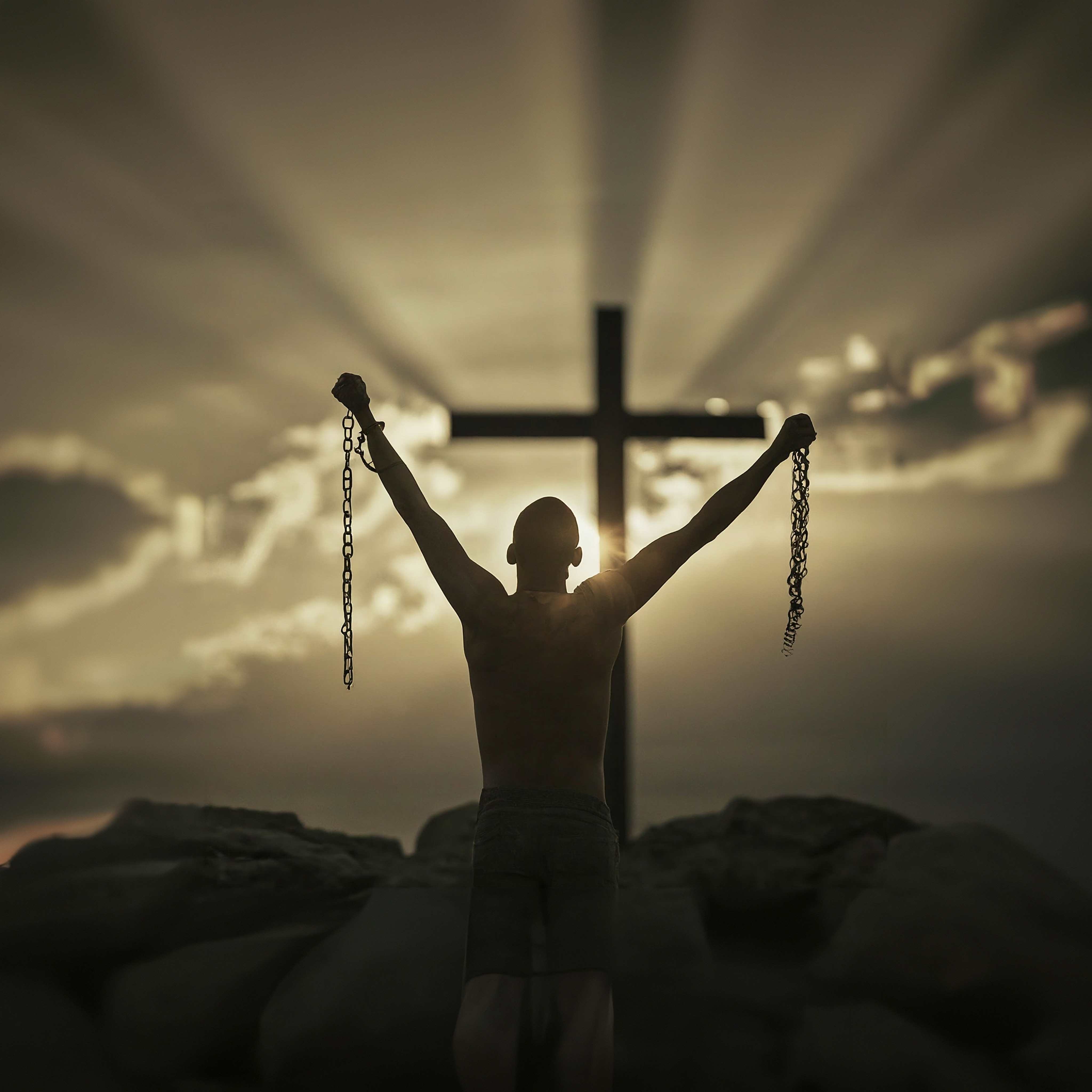
“For the law of the Spirit of life in Christ
Jesus has made me free from the law of sin and death.”
(Romans
8:2)
John
the Baptist – Britannica
St. John the Baptist
Jewish prophet and Christian saint
Also known as: Yaḥyā
John Strugnell
Britannica Editors
Aug. 1, 2026 •History
St. John the Baptist (born 1st decade BCE, Judaea,
Palestine, near Jerusalem—died 28–36 CE; feast day June 24) was a Jewish
prophet of priestly origin who preached the imminence of God’s Final Judgment
and baptized those who repented in self-preparation for it; he is revered in
the Christian church as the forerunner of Jesus Christ. After a period of desert
solitude, John the Baptist emerged as a prophet in the region of the lower
Jordan River valley. He had a circle of disciples, and Jesus was among the
recipients of his rite of baptism. In Roman Catholicism, John the Baptist is
invoked as the patron saint of baptism, monastics, hermits, converts, tailors,
prisoners, and many other occupations and causes.
The primary sources for information about John’s life and
activity are the four Gospels (Matthew, Mark, Luke, and John), The Acts of the
Apostles, and the Jewish historian Flavius Josephus’s The Antiquities of the
Jews. In using these works for historical reconstruction, allowances must be
made for the known tendencies of each writer. All four Gospels recognize in
John the start of the Christian era, and each in its own way tries to reconcile
John’s precedence in time and Jesus’ acceptance of his message and of a baptism
of repentance from his hands (elements suggesting subordination to John) with
the author’s belief in Jesus as the Messiah and Son of God. The Gospel According
to Mark presents Jesus as the hidden Messiah, known only to a narrow circle,
and John as the one who had to “come first to restore all things” but who also
remained hidden and suffered death with little acknowledgment of his true
status (Mark 9).
Matthew and Luke are thought to further develop Mark’s
narrative. The Gospel According to Matthew emphatically identifies John as a
new or returning Elijah, herald of the kingdom of God (Matthew 3). For Matthew,
John’s death, like that of Jesus, illustrates the old Israel’s hostility to
God’s offer of salvation. In The Gospel According to Luke and in The Acts of
the Apostles, Luke neglects the identification with Elijah but describes John
as Jesus’ forerunner and as inaugurator of the time of fulfillment of prophecy.
Luke’s account of the infancy of John and of Jesus uses material perhaps
transmitted by former disciples of the Baptist. It depicts the coming of Jesus
and John in two parallel series of scenes, each with an angelic annunciation, a
conception, a marvelous birth, a circumcision, hymns greeting the child and
predicting his destiny, and an infancy. Even in his mother’s womb John
recognizes Jesus—also still in his mother’s womb—as his Lord (see also the
Visitation).
The Gospel According to John reduces the Baptist from an
Elijah to a model Christian preacher, a mere voice; it omits any description of
Jesus’ baptism. Its tendency has often been labeled a polemic against a
continuing group of disciples of John, but it is more plausibly explained by
the evangelist’s desire that this ideal witness recognize the full character of
the Christ and as a necessary consequence of the tension between the highly
developed understanding of Christ in this Gospel and those details in early
Christian tradition that suggested Jesus’ subordination to John. The Gospels
are thus primarily interested in the relations between John and Jesus.
Compared with the Christian accounts, that of Josephus
sought to present Jewish religious phenomena in Hellenistic categories and to
deemphasize any political elements unfavorable to Roman imperial control.
In 27/28 or 28/29 John attained prominence, not as a priest
but as a prophet. He was active in the region of the lower Jordan valley, from
“Aenon near Salim” (near modern Nāblus) to a point east of Jericho. His
austere camel’s hair garment was the traditional garb of the prophets, and his
diet of locusts and wild honey represented either strict adherence to Jewish
purity laws or the ascetic conduct of a Nazirite (a Jew especially vowed to
God’s service). His mission was addressed to all ranks and stations of Jewish
society. His message was that God’s judgment on the world was imminent and
that, to prepare for this judgment, the people should repent their sins, be
baptized, and produce appropriate fruits of repentance.
Certain problems about the meaning of John’s message
continue to be debated: In Matthew 3, John says, “He who is coming after me is
mightier than I”; this might refer to God himself, a human messiah, or a
transcendent divine being. He also says, “I baptize you with water…; he will
baptize you with the Holy Spirit and with fire”; this second baptism might
symbolize the judgment the one coming would carry out.
John’s followers were characterized by penitent fasting,
beyond the demands of Jewish Law, and special prayers. John’s ethical call for
justice and charity in Luke 3 requires righteousness from everyone.
Although, like earlier prophets, John had an inner circle
of disciples, baptism was not an admission rite into this group. It was a rite
(immersion in running water) that symbolized repentance in preparation for the
coming world judgment and was to be accompanied, before and afterward, by a
righteous life. It was hardly conceived as a sacrament, in the Christian sense,
conveying forgiveness, or as superseding Judaism and marking off a new people,
including both Jews and Gentiles, prepared for God’s final kingdom. Nor is a
hypothesis that it symbolized a new Israel’s crossing of the Red Sea toward a
new national deliverance demonstrable. Equally unprovable is that it was a rite
symbolizing man’s reunion with divinity and return to his heavenly home—a
sacrament of salvation and rebirth. The Jewish rite of baptism of converts
differs fundamentally and is not its source. There were several other baptizing
groups found about the same time and place, but none of these various and
little-known baptisms can be shown to have inspired John’s. His may have
resembled in parts the initiatory baptism of the Essenes, though their other
baptisms were more concerned with maintaining their community’s ritual purity.
John’s baptism probably symbolized not so much anticipated entrance into the
kingdom of God as an anticipatory submission to the coming world judgment,
which was represented as a coming second “baptism” by the Holy Spirit in a
river of fire.
Quick Facts
Born: 1st decade BCE, Judaea, Palestine, near Jerusalem
Died: 28–36 CE
Notable Family Members: mother St. Elizabeth
Sometime after baptizing Jesus, John was imprisoned by
Herod Antipas, ruler of Galilee and central Transjordan. His crime was hardly
the innocuous moral message Josephus presents, nor would his message, as found
in the Gospels, have had much more immediate political bite. Herod had married
(illegally, by Jewish Law) Herodias, the divorced wife of his half brother,
after divorcing his first wife, the daughter of King Aretas IV of the
Nabataeans, an adjacent Arab people. John’s denunciation of this marriage
doubtless presented Herod with the danger that his Jewish subjects would
combine with his semi-Arab subjects in opposition to him. John’s execution
certainly preceded Aretas’s victory over Herod in 35–36, a defeat popularly
considered to have been divine vengeance on Herod for killing John. According
to the Gospels, John’s death preceded Jesus’; any greater chronological
precision depends on the dates of Jesus’ ministry and death. It is probable
that John’s followers recovered and buried his body and revered his tomb. The
traditional burial site, at Sebaste (originally Samaria), near “Aenon by
Salim,” is attested from 360 onward.
Possible relationship with the Essenes of St. John the
Baptist
The discovery of the Dead Sea Scrolls drew attention to the
numerous parallels between John’s mission and that of the Essenes, with whom
John may have received some of his religious training. Both were priestly in
origin, were ascetic, and had intense and, in many respects, similar
expectations about the end of the world. But John neither belonged to nor
intended to found any organized community, he did not stress study of the
Mosaic Law, and his message was more widely directed (to the poor, to sinners)
than was that of the Essenes.
Jesus, who was baptized by John, saw in John the last and
greatest of the prophets, the one who prepared for the coming of God’s kingdom
(Mark 9, Matthew 11, Luke 7), and in many ways his ministry continued and
developed John’s. Whether John, who probably expected a divine Son of Man,
recognized him in Jesus is not clear, but many of his disciples later followed
Jesus.
John Strugnell