Home About Us Our Publications Make a
Donation Email: glenn.benson@yourbrotherglenn.org
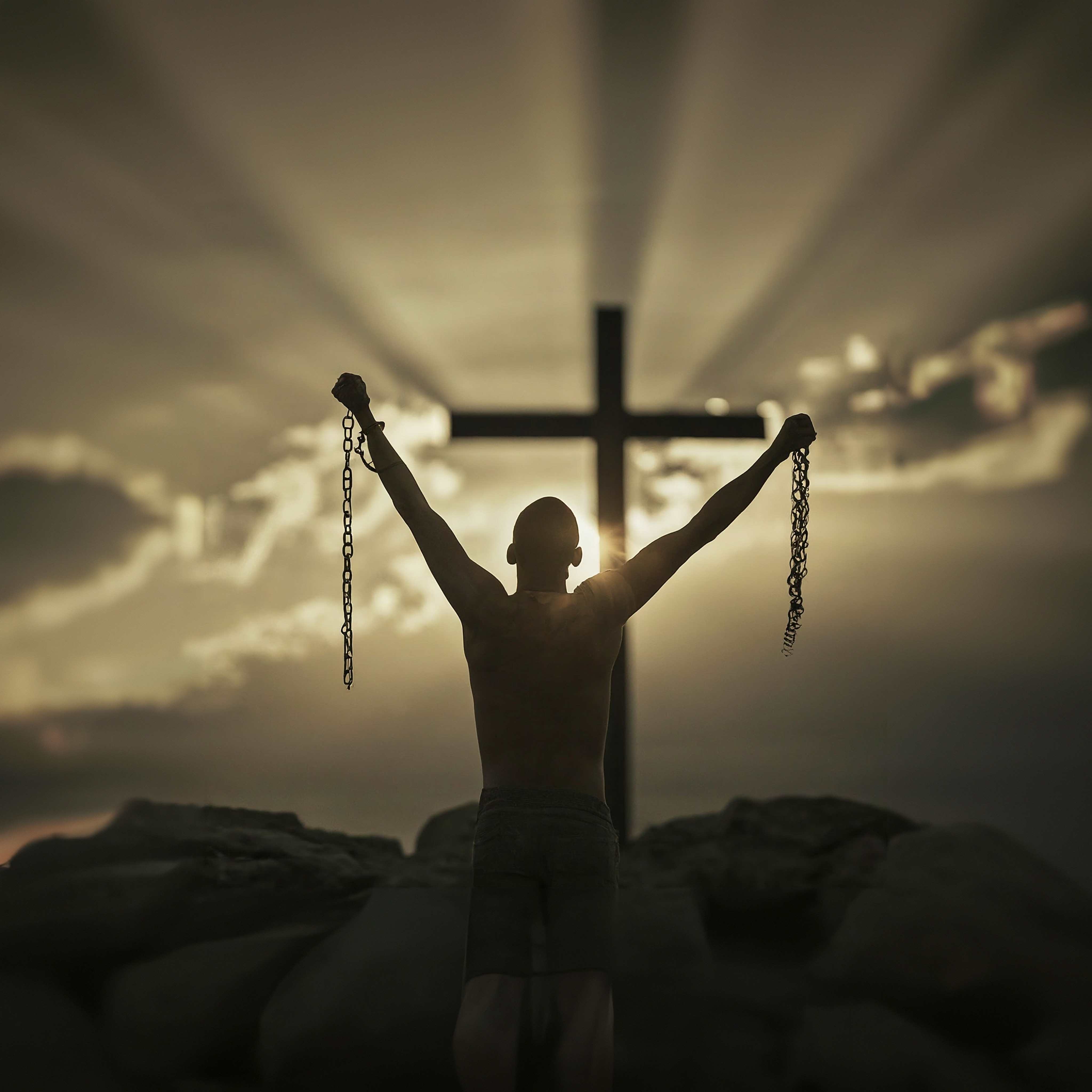
“For the law of the Spirit of life in Christ
Jesus has made me free from the law of sin and death.”
(Romans
8:2)
Jeremiah
– Hebrew Prophet – Britannica
Jeremiah
TABLE OF CONTENTS
Introduction
Life and times
Prophetic vocation and message
Jeremiah (born probably after 650 BCE, Anathoth, Judah—died
c. 570 BCE, Egypt) was a Hebrew prophet, reformer, and author of a biblical
book that bears his name. He was closely involved in the political and
religious events of a crucial era in the history of the ancient Near East; his
spiritual leadership helped his fellow countrymen survive disasters that
included the capture of Jerusalem by the Babylonians in 586 BCE and the exile
of many Judaeans to Babylonia.
Life and times
Jeremiah was born and grew up in the village of Anathoth, a
few miles northeast of Jerusalem, in a priestly family. In his childhood he
must have learned some of the traditions of his people, particularly the
prophecies of Hosea, whose influence can be seen in his early messages.
The era in which Jeremiah lived was one of transition for
the ancient Near East. The Assyrian empire, which had been dominant for two
centuries, declined and fell. Its capital, Nineveh, was captured in 612 by the
Babylonians and Medes. Egypt had a brief period of resurgence under the 26th
dynasty (664–525) but did not prove strong enough to establish an empire. The
new world power was the Neo-Babylonian empire, ruled by a Chaldean dynasty
whose best known king was Nebuchadrezzar. The small and comparatively
insignificant state of Judah had been a vassal of Assyria and, when Assyria
declined, asserted its independence for a short time. Subsequently Judah
vacillated in its allegiance between Babylonia and Egypt and ultimately became
a province of the Neo-Babylonian empire.
According to the biblical Book of Jeremiah, he began his
prophetic career in 627/626—the 13th year of King Josiah’s reign. It is told
there that he responded to Yahweh’s (God’s) call to prophesy by protesting “I
do not know how to speak, for I am only a youth,” but he received Yahweh’s
assurance that he would put his own words into Jeremiah’s mouth and make him a
“prophet to the nations.” A few scholars believe that after his call Jeremiah
served as an official prophet in the Temple, but most believe that this is
unlikely in view of his sharp criticism of priests, prophets, and the Temple
cult.
Jeremiah’s early messages to the people were condemnations
of them for their false worship and social injustice, with summons to
repentance. He proclaimed the coming of a foe from the north, symbolized by a
boiling pot facing from the north in one of his visions, that would cause great
destruction. This foe has often been identified with the Scythians, nomads from
southern Russia who supposedly descended into western Asia in the 7th century
and attacked Palestine. Some scholars have identified the northern foe with the
Medes, the Assyrians, or the Chaldeans (Babylonians); others have interpreted
his message as vague eschatological predictions, not concerning a specific
people.
In 621 King Josiah instituted far-reaching reforms based
upon a book discovered in the Temple of Jerusalem in the course of building
repairs, which was probably Deuteronomy or some part of it. Josiah’s reforms
included the purification of worship from pagan practices, the centralization
of all sacrificial rites in the Temple of Jerusalem, and perhaps an effort to
establish social justice following principles of earlier prophets (this program
constituted what has been called “the Deuteronomic reforms”).
Jeremiah’s attitude toward these reforms is difficult to
assess. Clearly, he would have found much in them with which to agree; a
passage in chapter 11 of Jeremiah, in which he is called on by Yahweh to urge
adherence to the ancient Covenant upon “the men of Judah and the inhabitants of
Jerusalem,” is frequently interpreted as indicating that the prophet traveled
around Jerusalem and the villages of Judah exhorting the people to follow the
reforms. If this was the case, Jeremiah later became disillusioned with the
reforms because they dealt too largely with the externals of religion and not
with the inner spirit and ethical conduct of the people. He may have lapsed
into a period of silence for several years because of the indifferent success
of the reforms and the failure of his prophecies concerning the foe from the
north to materialize.
Some scholars doubt that Jeremiah’s career actually began
as early as 627/626 BCE and question the accuracy of the dates in the biblical
account. This view arises from the difficulty of identifying the foe from the
north, which seems likely to have been the Babylonians of a later time, as well
as the difficulty of determining the prophet’s attitude toward the Deuteronomic
reforms and of assigning messages of Jeremiah to the reign of Josiah. In the
opinion of such scholars, Jeremiah began to prophesy toward the end of the
reign of Josiah or at the beginning of the reign of Jehoiakim (609–598).
Early in the reign of Jehoiakim, Jeremiah delivered his
famous “Temple sermon,” of which there are two versions, one in Jeremiah 7:1–15
and the other in Jeremiah 26:1–24. He denounced the people for their dependence
on the Temple for security and called on them to effect genuine ethical reform.
He predicted that God would destroy the Temple of Jerusalem, as he had earlier
destroyed that of Shiloh, if they continued in their present path. Jeremiah was
immediately arrested and tried on a capital charge. He was acquitted but may
have been forbidden to preach again in the Temple.
The reign of Jehoiakim was an active and difficult period
in Jeremiah’s life. That king was very different from his father, the reforming
Josiah, whom Jeremiah commended for doing justice and righteousness. Jeremiah
denounced Jehoiakim harshly for his selfishness, materialism, and practice of
social injustice.
Near the time of the Battle of Carchemish, in 605, when the
Babylonians decisively defeated the Egyptians and the remnant of the Assyrians,
Jeremiah delivered an oracle against Egypt. Realizing that this battle made a
great difference in the world situation, Jeremiah soon dictated to his scribe,
Baruch, a scroll containing all of the messages he had delivered to this time.
The scroll was read by Baruch in the Temple. Subsequently it was read before King
Jehoiakim, who cut it into pieces and burned it. Jeremiah went into hiding and
dictated another scroll, with additions.
When Jehoiakim withheld tribute from the Babylonians (about
601), Jeremiah began to warn the Judaeans that they would be destroyed at the
hands of those who had previously been their friends. When the king persisted
in resisting Babylonia, Nebuchadrezzar sent an army to besiege Jerusalem. King
Jehoiakim died before the siege began and was succeeded by his son, Jehoiachin,
who surrendered the capital to the Babylonians on March 16, 597, and was taken
to Babylonia with many of his subjects.
The Babylonians placed on the throne of Judah a king
favourable to them, Zedekiah (597–586 BCE), who was more inclined to follow
Jeremiah’s counsel than Jehoiakim had been but was weak and vacillating and
whose court was torn by conflict between pro-Babylonian and pro-Egyptian
parties. After paying Babylonia tribute for nearly 10 years, the king made an
alliance with Egypt. A second time Nebuchadrezzar sent an army to Jerusalem,
which he captured in August 586.
Early in Zedekiah’s reign, Jeremiah wrote a letter to the
exiles in Babylonia, advising them not to expect to return immediately to their
homeland, as false prophets were encouraging them to believe, but to settle
peaceably in their place of exile and seek the welfare of their captors. When
emissaries from surrounding states came to Judah in 594 to enlist Judah’s
support in rebellion against Babylonia, Jeremiah put a yoke upon his neck and
went around proclaiming that Judah and the surrounding states should submit to
the yoke of Babylonia, for it was Yahweh who had given them into the hand of
the king of Babylonia. Even to the time of the fall of Jerusalem, Jeremiah’s
message remained the same: submit to the yoke of Babylonia.
When the siege of Jerusalem was temporarily lifted at the
approach of an Egyptian force, Jeremiah started to leave Jerusalem to go to the
land of the tribe of Benjamin. He was arrested on a charge of desertion and
placed in prison. Subsequently he was placed in an abandoned cistern, where he
would have died had it not been for the prompt action of an Ethiopian eunuch,
Ebed-melech, who rescued the prophet with the king’s permission and put him in
a less confining place. King Zedekiah summoned him from prison twice for secret
interviews, and both times Jeremiah advised him to surrender to Babylonia.
When Jerusalem finally fell, Jeremiah was released from
prison by the Babylonians and offered safe conduct to Babylonia, but he preferred
to remain with his own people. So he was entrusted to Gedaliah, a Judaean from
a prominent family whom the Babylonians appointed as governor of the province
of Judah. The prophet continued to oppose those who wanted to rebel against
Babylonia and promised the people a bright and joyful future.
After Gedaliah was assassinated, Jeremiah was taken against
his will to Egypt by some of the Jews who feared reprisal from the Babylonians.
Even in Egypt he continued to rebuke his fellow exiles. Jeremiah probably died
about 570 BCE. According to a tradition that is preserved in extrabiblical
sources, he was stoned to death by his exasperated fellow countrymen in Egypt.
Prophetic vocation and message
This sketch of Jeremiah’s life portrays him as a courageous
and persistent prophet who often had to endure physical suffering for his
fidelity to the prophetic call. He also suffered inner doubts and conflicts, as
his own words reveal, especially those passages that are usually called his
“confessions” (Jeremiah 11:18–12:6; 15:10–21; 17:9–10, 14–18; 18:18–23;
20:7–12, 14–18). They reveal a strong conflict between Jeremiah’s natural
inclinations and his deep sense of vocation to deliver Yahweh’s message to the
people. Jeremiah was by nature sensitive, introspective, and perhaps shy. He
was denied participation in the ordinary joys and sorrows of his fellowmen and
did not marry. He thus could say, “I sat alone,” with God’s hand upon him.
Jeremiah had periods of despondency when he expressed the wish that he had never
been born or that he might run away and live alone in the desert. He reached
the point of calling God “a deceitful brook,…waters that fail” and even accused
God of deceiving and overpowering him. Yet there were times of exaltation when
he could say to God, “Thy words became to me a joy and the delight of my
heart,” and he could speak of Yahweh as “a dread warrior” fighting by his side.
As a prophet, Jeremiah pronounced God’s judgment upon the
people of his time for their wickedness. He was concerned especially with false
and insincere worship and failure to trust Yahweh in national affairs. He
denounced social injustices but not so much as some previous prophets, such as
Amos and Micah. He found the source of sin to be in the weakness and corruption
of the hearts of men—in what he often called “the stubbornness of the evil
heart.” He considered sin to be unnatural; he emphasized that some foreign
nations were more loyal to their pagan (false) deities than Judah was to Yahweh
(the real God), and he often contrasted nature’s obedience to law with man’s
disobedience to God.
Jeremiah had more to say about repentance than any other
prophet. He called upon men to turn away from their wicked ways and dependence
upon idols and false gods and return to their early covenantal loyalty to
Yahweh. Repentance thus had a strong ethical colouring, since it meant living
in obedience to Yahweh’s will for the individual and the nation.
In the latter part of his career, Jeremiah had to struggle
against the despair of his people and give them hope for the future. He
expressed his own hope vividly by an action that he undertook when the
Babylonians were besieging Jerusalem and he was in prison. He bought, from a
cousin, a field in Anathoth, his native town. In the presence of witnesses, he
weighed out the money and made the contracts and said, “Thus says the Lord of
hosts, the God of Israel: Houses and fields and vineyards shall again be bought
in this land.” In this and other ways he expressed his hope for a bright future
for Israel in its own land.
Jeremiah’s most important prophecy concerning the future is
one regarding the New Covenant (Jeremiah 31:31–34). While the present literary
form of the passage is probably not Jeremiah’s, the thought is essentially his.
He prophesied of a time when Yahweh would make a covenant with Israel,
superseding the old Mosaic Covenant; Yahweh would write his law upon the hearts
of men (rather than on tables of stone), and all would know God directly and
receive his forgiveness. This New Covenant prophecy was very influential in New
Testament times. It is quoted in the Letter to the Hebrews and lies behind
words attributed to Jesus at the Last Supper: “This cup is the new covenant in
my blood.”
J. Philip Hyatt The Editors of Encyclopaedia Britannica
CITATION INFORMATION
ARTICLE TITLE: Jeremiah
WEBSITE NAME: Encyclopaedia Britannica
PUBLISHER: Encyclopaedia Britannica, Inc.
DATE PUBLISHED: 22 May 2026
URL:
https://www.britannica.com/biography/Jeremiah-Hebrew-prophet
ACCESS DATE: August 11, 2026