Home About Us Our Publications Make a
Donation Email: glenn.benson@yourbrotherglenn.org
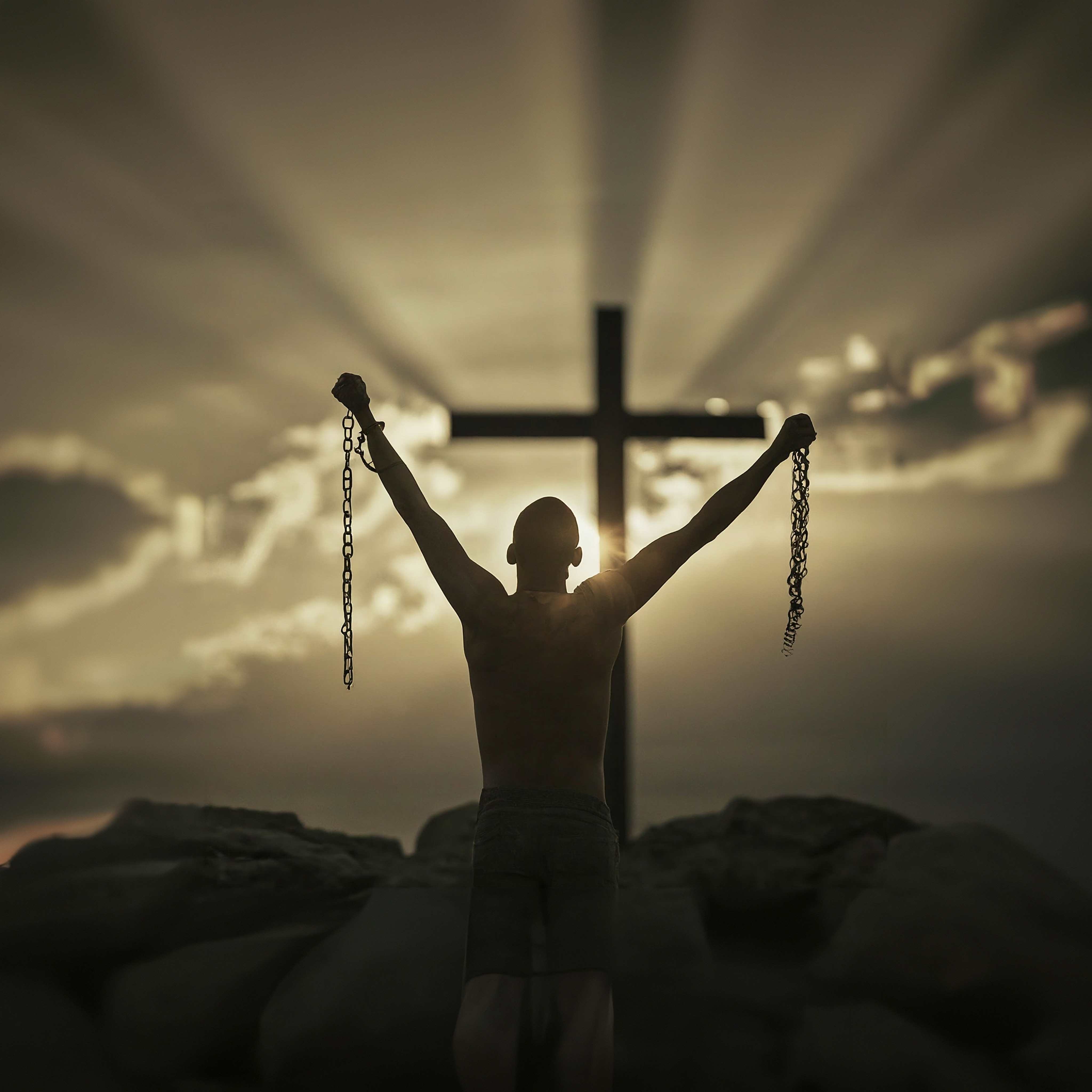
“For the law of the Spirit of life in Christ
Jesus has made me free from the law of sin and death.”
(Romans
8:2)
Jacob –
Hebrew Patriarch – Britannica
Jacob
Hebrew patriarch
Also known as: Isrāʾīl, Israel,
Yaʿaqov, Yaʿqūb, Yisraʾel
Charles Preston
Britannica Editors
History
Jacob, Hebrew patriarch who is considered the traditional
ancestor of the Twelve Tribes of Israel. He is renamed Israel after the pivotal
scene in which he wrestles with a divine being. In the genealogy recounted in
the Hebrew Bible, Jacob is the grandson of Abraham and Sarah and the son of
Isaac and Rebekah. The most noteworthy episodes in Jacob’s life include his
birth along with his twin Esau, his acquisition of the birthright from his
father, his vision in a dream of a ladder to heaven, his labors to obtain
marriages with Rachel and Leah, his supernatural wrestling encounter, and his
role in the story of his son Joseph.
Birth and birthright
Jacob’s story begins in Genesis 25. During Rebekah’s
pregnancy with the twins, Jacob and Esau, she notices that they are fighting in
her womb and she asks God why. God replies (Genesis 25:23):
“Two nations are in your womb,
and two peoples born of you shall be divided;
the one shall be stronger than the other;
the elder shall serve the younger.”
Esau is born first and is described as red and hairy, and
the latter quality is said to be the meaning of his name. Jacob is born second
but emerges holding the heel of his twin brother. The name Jacob means both
“holding the heel” and, foreshadowing his relationship with his brother,
“supplants.” Esau grows up to be a talented hunter and the favorite of his
father, whereas Jacob grows up to be a quiet, indoor-favoring child and the
beloved of his mother.
Unexpected Birthrights in the Hebrew Bible
The genealogical stories of the Hebrew Bible include many
instances in which the typical patriarchal pattern of primogeniture (preference
of inheritance going to the eldest son) gets turned on its head. In addition to
Jacob and Esau, other examples include Cain and Abel, Isaac and Ishmael, Joseph
and his brothers, Ephraim and Manasseh, David and his brothers, and Solomon and
Adonijah. Interpretations of this pattern vary. Some interpreters see in these
narratives a theological argument that God’s plan supersedes human conventions.
Other commentators perceive in these examples a trope of God championing the
underdog, though in Jacob’s case God predicted that “the elder shall serve the
younger.” Some scholars from literary or folkloric perspectives read a
trickster or comic sensibility that thwarts audience expectations.
Esau, as the older brother, would logically have the
birthright preference; however, he sells it to Jacob (Genesis 25:29–34). One
day while Jacob is making red stew, Esau, who had returned from the fields,
asks him for some. The text states that the alternative name of Esau as Edom,
meaning “red,” comes from this stew. Jacob agrees to give Esau some of the soup
on the condition that Esau sells him his birthright, which Esau agrees to out
of hunger and indifference to his birthright. Later, in Genesis 27, when Isaac
is old, blind, and dying, he promises to bless Esau. Rebekah overhears this
plan and urges Jacob to disguise himself as Esau. She puts animal hides on his
arms and neck so they would feel hairy should Isaac try to touch him. Jacob
goes to Isaac with this hairy disguise, deceitfully announces himself as Esau,
and obtains his father’s blessing—much to the chagrin of his brother. Esau
threatens to kill Jacob, but Rebekah sends her beloved son to the home of her
brother Laban in Harran in Mesopotamia.
Jacob’s ladder
On his way from Beersheba to Harran, Jacob stops for the
night to sleep. As described in Genesis 28:12–15, he dreams of a stairway,
sometimes interpreted as a ladder, reaching from heaven to earth and upon which
angels descend and ascend. God speaks to Jacob, affirming that he is the God of
Abraham and Isaac, promises him the land on which he lies, forecasts that his
offspring will be numerous and will spread in all directions, and vows to
protect him. This exchange reaffirms God’s covenant in the next generation. Upon
awakening, Jacob declares that where he sleeps must be the house of God, hence
he names it Bethel (Hebrew: “House of God”).
Other Varieties of “Jacob’s Ladder”
Jacob’s ladder is a vivid and enduring image that has lent
its name to various nonreligious ladderlike entities. Jacob’s ladder is another
name of a climbing arc, an entertaining and educational device for visualizing
electricity. Jacob’s ladder is also the name of about 25 species of garden and
wildflowers in the genus Polemonium. A children’s toy called a Jacob’s ladder,
which has been around for centuries, consists of flat wooden blocks connected
with ribbons that appear to cascade.
Marriage and children
After arriving at his uncle Laban’s home in Harran, Jacob
falls in love with his cousin Rachel, the younger of Laban’s two daughters. He
works for her father (his uncle) for seven years to obtain Rachel’s hand in
marriage. It is said that his labors seemed a trifle because of his love for
Rachel: “they seemed to him but a few days because of his love for her”
(Genesis 29:20). After the seven years elapse, Jacob demands that Laban bring
him the daughter for whose marriage he has been working. Laban holds a feast
and brings Leah in place of Rachel to Jacob. When Jacob awakens in the morning
to find Leah in his bed—another instance of disguised identity in Jacob’s
narrative—Jacob accuses Laban of deceiving him. Laban replies that it is
improper in his country to marry off the younger daughter before the elder—a
subtle counterargument to Jacob’s own usurpation of Esau’s role as elder son.
The two men make a deal that Jacob will work for another seven years to marry
Rachel, which Jacob does gladly.
Jacob’s Children
Reuben
Simeon
Levi
Judah
Dan
Naphtali
Gad
Asher
Issachar
Zebulun
Dinah
Joseph
Benjamin
Jacob then serves Laban for another six years, during which
he proves a successful herdsman, amasses a large amount of property, and has 12
children with Rachel, Leah, and their two maidservants during this period in
Harran. His progeny establish the Twelve Tribes of Israel. Because Jacob
prefers Rachel, God grants children to Leah but leaves Rachel barren, at least
at first. Leah gives birth to Reuben, Simeon, Levi, and Judah. Levi does not
found a tribe but is regarded as the ancestor of the Levites. From Judah
descend a tribe and the Davidic monarchy. Jealous of her sister but unable to
conceive, Rachel insists that Jacob have children with her maid Bilhah, who bears
Dan and Naphtali. Leah follows suit, gives her maid Zilpah to Jacob, and Zilpah
later gives birth to Gad and Asher. Leah then proceeds to give birth to two
more sons and a daughter: Issachar, Zebulun, and Dinah. Finally, God,
remembering Rachel, grants her a son: Joseph. Joseph does not directly found a
tribe, but his sons establish the tribes of Manasseh and Ephraim. Later, after
the family returns to Canaan, Rachel and Jacob’s son Benjamin is born.
Wrestling with a divine being
Laban makes numerous attempts to undercut Jacob’s success
in animal husbandry, but Jacob continuously prospers. Tiring of Laban’s
machinations, Jacob wishes to return to his homeland. He flees with his wives
and children to return to Canaan. On the way Jacob sends his wives and children
across the Jabbok River but himself stays back for the night. As described in
Genesis 32:24–29, all night long Jacob wrestles with a mysterious stranger, an
unidentified divine being. It is unclear in the text, and has since been much
debated, whether he wrestles with an angel (as suggested by Hosea 12:4) or with
God (the text at Genesis 32:28 specifies that he struggled with Elohim, a name
for God). When Jacob asks the unidentified divine wrestler for his name, he
responds only with the question of why Jacob asks. The divine wrestler strikes
Jacob on the hip socket, causing him to limp. The being asks Jacob to let go as
dawn nears, but Jacob refuses unless he receives a blessing. The being agrees
and gives Jacob a new name: Israel (Hebrew: ישראל),
meaning “he who struggles with God” or “God struggles.” Jacob names the place
where this transpired Peniel (Hebrew פניאל: “The
Face of God”).
Later years
The Reconciliation Between Jacob and Esau
Jacob then meets again with Esau, reconciles their
erstwhile differences, and settles in Shechem in Canaan with his family. They
later continue to Bethel and on to Ephrathah (Bethlehem), where Rachel dies
while giving birth to Benjamin.
Joseph, his many-colored coat, and his jealous brothers
Joseph, his many-colored coat, and his jealous
brothersJoseph Being Stripped of His Cloak, by Jan Rombouts, c. 1520–25,
stained glass, Flemish or Lower Rhineland; in the Metropolitan Museum of Art,
New York City.
The story of Jacob’s later years casts him as a secondary
figure within the story of Joseph, who in the next generation takes on the
mantle of the primary focus of the biblical narrative. Joseph is the favored
among Jacob’s sons because he is the firstborn to Rachel, Jacob’s beloved wife.
Jacob makes Joseph the multicolored coat for which he is well-known, but the
act incites jealousy in the other brothers. They sell him into slavery, fake
his death, and convince Jacob it is the act of a wild animal. Jacob grieves
over the news. Joseph is taken to Egypt, where he eventually arises to a
position of prominence. During a famine in Canaan, Jacob and Joseph’s brothers travel
to Egypt where they reconnect with Joseph and settle. Jacob dies in Egypt at
the age of 147, but he commands that his bones be taken back to Canaan. His
bones are carried with the Israelites during the Exodus from Egypt, and he is
then buried in Hebron in the cave of Machpelah.
Religious significance and beyond
Religious and cultural interpretations of the story of
Jacob have similarities and differences across the Abrahamic religions.
Scholars concerned with the meaning in its original ancient context suggest
that stories about Jacob’s birth and his acquisition of the birthright provide
an apology for the relationship between Edom (according to the Bible, a people
descended from Esau) and ancient Israel in Davidic times (c. 1020–922 BCE).
Edom, the older nation, was made subject to Israel by David (2 Samuel 8). The
Jacob stories assume and emphasize that all things occur by divine design. The
divine objective is of overriding significance; it is God’s will that Esau
(Edom) shall live in the desert and be subject to Israel. In this instance the
account of Jacob and Esau makes a statement about the identities of the
Israelites and Edomites couched in narrative and religious sensibilities.
Within later Judaism, Jacob is Israel, the father of the
Twelve Tribes, and a key patriarch of the Jewish people. Some rabbinic
authorities have interpreted his penchant for staying inside as indicative of
his scholarly predilection, reflecting an ideal of intensive Torah study that
is significant in Orthodox Judaism. For Muslims, Jacob (Yaʿqūb) is
regarded as a prophet (nabī), alongside figures such as Abraham, Isaac,
Adam, Moses, Jesus, and Muhammad.
Later Christians and Jews mined the story of Jacob for
moral and theological meaning. Many readers have wrestled with the scene of
Jacob’s wrestling with a divine being. Some Jewish commentators have argued
that it is Esau’s guardian angel, and some have further contended that the
episode marks Jacob’s shift from immoral to moral, from the deceiver to the
divinely blessed Israel. Others have wrested the theme of theological wrestling
from the physical to the metaphorical level: It is about inner conflict. From a
Christian perspective, Charles Wesley’s hymn “Wrestling Jacob” (“Come, O Thou
Traveler Unknown”), published in 1742, casts the stranger as Jesus, identified
as Love, and reimagines the classic tale of the Hebrew Bible as a path of
conversion to Christianity.
Many readers have been troubled by Jacob’s scheming in the
beginning of his story and try to make sense of it in the context of his
narrative arc and the biblical text in general. Christian commentators have
generally amplified Jacob’s righteousness but have wrestled with the seeming
contradiction. St. Paul in Romans 9 reads this early part of Jacob’s story as a
reminder of the primacy of God’s will and mercy: God’s will supersedes human
intentions and norms. St. Augustine, and, following him, St. Thomas Aquinas,
have insisted that Jacob is not lying but participating in a divine mystery
foreshadowed by God’s prophecy to Rebekah prior to his birth.
Quick Facts
Hebrew: יעקוב (Yaʿaqov)
Arabic: يعقوب
(Yaʿqūb)
Also called: Israel Hebrew: ישראל
(Yisraʾel) Arabic: إسرائيل
(Isrāʾīl)
Notable Family Members: spouse Rachel, spouse Leah, father
Isaac, mother Rebekah, son Joseph brother Esau
Charles Preston The Editors of Encyclopaedia Britannica