Home About Us Our Publications Make a
Donation Email: glenn.benson@yourbrotherglenn.org
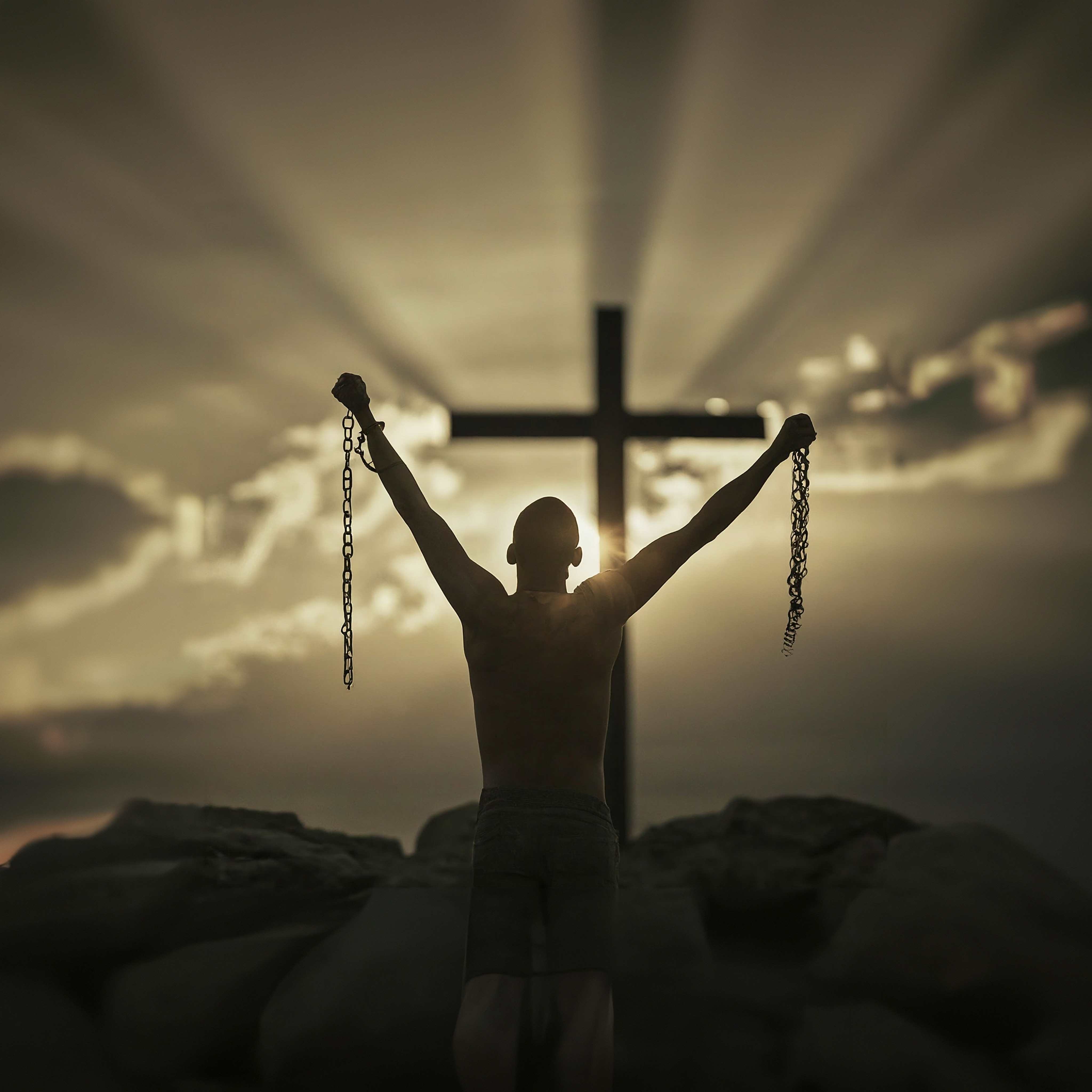
“For the law of the Spirit of life in Christ
Jesus has made me free from the law of sin and death.”
(Romans
8:2)
Isaiah
– Hebrew Prophet – Britannica
Isaiah
Hebrew prophet
Also known as: Yeshaʿyahu
Sheldon H. Blank
Britannica Editors
History
Isaiah (flourished 8th century BCE, Jerusalem) was a
prophet after whom the biblical Book of Isaiah is named (only some of the first
39 chapters are attributed to him), a significant contributor to Jewish and
Christian traditions. His call to prophecy about 742 BCE coincided with the
beginnings of the westward expansion of the Assyrian empire, which threatened
Israel and which Isaiah proclaimed to be a warning from God to a godless
people.
Isaiah’s vision
The earliest recorded event in his life is his call to
prophecy as now found in the sixth chapter of the Book of Isaiah; this occurred
about 742 BCE. The vision (probably in the Jerusalem Temple) that made him a
prophet is described in a first-person narrative. According to this account he
“saw” God and was overwhelmed by his contact with the divine glory and
holiness. He became agonizingly aware of God’s need for a messenger to the
people of Israel, and, despite his own sense of inadequacy, he offered himself
for God’s service: “Here am I! Send me.” He was thus commissioned to give voice
to the divine word. It was no light undertaking; he was to condemn his own
people and watch the nation crumble and perish. As he tells it, he was only too
aware that, coming with such a message, he would experience bitter opposition,
willful disbelief, and ridicule, to withstand which he would have to be
inwardly fortified. All this came to him in the form of a vision and ended as a
sudden, firm, and lifelong resolve.
Personal history
Presumably, Isaiah was already prepared to find meaning in
the vision before the arrival of that decisive moment. Information about that
period of his life is inconclusive, however, and consists mainly of inferences
drawn from the biblical text.
At times the prophet’s private life shows through the
record as an aspect of his public message. Once when he went to confront a
king, he took with him, to reenforce his prophetic word, a son with the
symbolic name Shear-yashuv (“A Remnant Shall Return”). Again, to memorialize a
message, he sired a son of the “prophetess” (his wife) and saddled the child
with his message as a name: Maher-shalal-hash-baz
(“Speed-spoil-hasten-plunder”), referring to the imminent spoliations by the
Assyrians. If the sons had not been wanted as walking witnesses to the
prophet’s forebodings, posterity would not know of this wife or these sons.
Of Isaiah’s parental home it is known only that his
father’s name was Amoz. Since he often spoke with kings, it is sometimes
suggested that Isaiah was an aristocrat, possibly even of royal stock. The same
reasoning, however, might apply to any number of prophets; from Nathan in
David’s time onward, prophets had dealings with kings and were, like Isaiah,
well informed about public affairs. Moreover, Isaiah’s sympathies were
emphatically with the victimized poor, not with the courtiers and well-to-do.
Also, it is sometimes argued that he was of a priestly family, but his
knowledge of cultic matters and the fact that his commissioning seemingly
occurred in the Temple in Jerusalem are slender evidence for his priestly
descent as against his unreserved condemnation of the priests and their domain:
“I am fed up with roasting rams and the grease of fattened beasts,” he has God
proclaim in a famous passage in the first chapter.
One could argue with equal force that Isaiah is descended
from a family of prophets (though his father, the otherwise unknown Amoz, is
not to be confused with the prophet Amos). He is thoroughly schooled in the
traditional forms and language of prophetic speech. It is an educated
speech—strong, vivid, the finest of classical Hebrew. Isaiah is particularly
well acquainted with the prophetic tradition known to his slightly older
contemporary, Amos. Four eminent Hebrew prophets addressed themselves to the
people of Israel and Judah in the latter half of the 8th pre-Christian century:
Amos, Hosea, Micah, and Isaiah. Strangely, no evidence suggests that any of
these knew in person any of the others. Seemingly, they were apart and alone,
yet Isaiah and Amos follow essentially the same lines of thought and differ
significantly only in that Amos had addressed the northern kingdom (Israel)
while Isaiah would emphatically include Judah and Jerusalem. The basic
similarities in style and substance strongly suggest influence, direct or
indirect, of the one on the other—and both invoke a recognizable Israelite
tradition.
Isaiah’s experience bridges the classes and occupations.
Whatever his family circumstances, still in his youth he came to know the face
of poverty—and the debauchery of the rich. He was at home with the unprotected,
the widowed and orphaned; with the dispossessed, homeless, landless; and with
the resourceless victims of the moneyed man’s court. He was also acquainted
with the rapacious authors of the prevailing misery: promulgators of
discriminatory laws, venal judges, greedy landgrabbers, fancy women, thieving
and carousing men of means, and irresponsible leaders, both civil and
religious. In other words, he was intimately aware of the inequities and evils
of human society—which may have been no worse in Israel in the 8th century BCE
than many critics believed they were almost everywhere in modern times.
Isaiah’s theology
It is in his theology that Isaiah leans most heavily on
Israelite tradition and shows an acquaintance with the thoughts of Amos. Isaiah
shared with him and with the people the long-standing tradition that a special
bond united Israel and its God. Since patriarchal times there had been an
agreement, a solemn “Covenant” between them: Israel was to be God’s people and
he their God. He had chosen them and cared for them. His solicitude for their
welfare had been clearly established. Such was the traditional message. Isaiah
knew and honoured this ancient tradition, but, more significantly, he also
shared the conviction of Amos that this arrangement was wholly conditional,
contingent on the people’s conduct. Behaviour such as Amos saw about him in
Samaria and Isaiah saw about him in Jerusalem could cancel that Covenant—had in
fact done so; that is the meaning of the vineyard parable in the fifth chapter
of Isaiah. There God is compared to the careful and industrious cultivator of a
vineyard—Israel—who, angry at the “wild grapes” of injustice and violence that
is his crop, threatens to take away his care and protection.
As Isaiah knew him, Israel’s God did not fit into the
picture of utter injustice and consequent misery rampant in 8th-century Israel.
To that people’s God, as Isaiah knew him, persons mattered. God was, in fact,
more concerned about people than about how his subjects performed for him their
oft-rehearsed rituals. A literal interpretation of the 13th verse of chapter 29
and verses 10 to 15 of chapter 1 would suggest that God finds the motions of
worship repugnant, and this may well have been Isaiah’s meaning. He was
overawed by the holiness—the otherness—of his God and must have thought that
the customary gifts of meat, grain, and flattery were unseemly or, at the
least, irrelevant. Although, like Amos, Isaiah appears most often to speak in
absolutes, it is indeed possible to interpret these two passages less strictly
(as some scholars do) and to say that he spoke in relative terms and that, in
his scale of religious values, he merely ranked moral conduct above ritual
conformity.
Isaiah’s theology included the sometimes comforting view
that God shapes history, traditionally entering the human scene to rescue his
people from national peril. But, according to Isaiah’s discomfiting surmise,
God could intervene quite as properly to chastise his own aberrant nation, and
he could employ a human agent (e.g., a conquering foe) to that end.
More readily than Amos, perhaps because a decade had
passed, Isaiah could identify the agent: Assyria. Isaiah’s call to prophecy
roughly coincides with the beginning—after a period of relative inactivity—of
the westward expansion of the Assyrian empire under the victorious generalship
of Tiglath-pileser III (reigned 745–727 BCE). Current events did not escape the
prophet’s attention. Isaiah appears to have read the omens, as Amos had done;
he could clearly see in Assyria the instrument of God’s wrath: “Ah, Assyria,
the rod of my anger, the staff of my fury! Against a godless nation I send
him…” (10:5–6).
Prophetic mission
If, then, Isaiah was prepared by schooling in tradition and
life for the vision that set him on his prophetic course, the preparation
involved the mingling in his nature of such elements as those sketched above.
In the year that King Uzziah died (742 BCE), according to chapter 6, Isaiah was
one of a crowd gathered for an occasion at the Jerusalem Temple when of a
sudden it occurred—and he became a prophet: “Go, and say to this people….” The
experiences that had gone into the shaping of his young life—his acquaintance
with the arrogant rich and the suffering poor; his seeming knowledge of Amos
and his heritage of tradition, ethnic and religious; his dismay at the threat
of Assyria; above all, perhaps, a new and overwhelming sense of the majestic
holiness of God—all merged, coalesced, and he knew that his God was sending him
with words for his people and that, reluctant or not, he was compelled to go.
From the start or retrospectively, he was aware of a frantic need—impossible to
satisfy—to call his people back from the brink of peril. His vision was his
moment of insight and resolve when, with complete clarity and instantaneously,
he knew what he must do and say.
In its present sophisticated form the record of this
experience is hardly contemporary with the event; he did not go home from the
Temple and write down chapter 6. The record is the reflection not of a
confident and eager youth but of a man buffeted by long experience, embittered
and despairing. Three times in other chapters the prophet says of his people
that they have “refused” to hear him; it was as though he, a messenger, had
been ordered irrationally to “close their minds, plug their ears, veil their
eyes,” as he says in chapter 6 of his errand to those to whom he was sent. The
message that he had to deliver was bad news—unwelcome tidings. And when he
spoke of it, as repeatedly he did, he chose such unambiguous language and spoke
with so much moral certainty that, as people normally do, his hearers tuned him
out; he was foredoomed to speak unheard. A great deal of anguished living
intervened between the vision itself and the writing of it. His words “How
long, O Lord?” are an expression of utter weariness.
If chapter 6 marks the beginning of his career as prophet,
the judgment oracle about the conquest of Jerusalem in chapter 22 probably
brings his grim story to a close. It is at any rate the latest Isaianic product
that can be dated with any degree of certainty. The last recorded words of
Isaiah, in chapter 22, do nothing to relieve the sombre tone of his message,
but they do shed further light on his mood and personality. After he had
exclaimed in the vision in chapter 6, “How long, O Lord?” he learned to his
dismay that even a last remaining 10th of the populace must in turn succumb;
just so here the oracle ends with assurance of total disaster: the nation’s
guilt can be purged by nothing short of death—“Surely this iniquity will not be
forgiven you until you die….” Chapters 6 and 22 set the tone of his message and
the hue of his mood, and from the first to the last the gloom has not lifted.
This 22nd chapter contains the most personally revealing of
all Isaiah’s words. Quite unexpectedly, the Assyrians have lifted the siege and
departed, and the amazed defenders of Jerusalem, flushed and jubilant, give way
to celebration; Isaiah cannot share the holiday spirit since for him there has
been only a postponement. Nothing has changed, and in his “valley of vision” he
sees the day of rout and confusion that God yet has in store for Zion. And so
it is that he lays bare his private grief:
Look away from me, let me weep bitter tears; do not try to
comfort me for the destruction of my beloved people.
Message to Israel
The historical allusions in the scattered chapters of
Isaiah’s work agree with the title verse, according to which he was a contemporary
of the Judaean kings Uzziah, Jotham, Ahaz, and Hezekiah. His prophetic call is
precisely dated by him “in the year that King Uzziah died.” At least a part of
chapter 7 refers to the event of the year 734 when Ephraim and Syria jointly
threatened King Ahaz of Judah. In 732 Tiglath-pileser conquered Damascus, the
fall of which Isaiah had anticipated. In 722 Samaria, the capital of Ephraim,
fell to King Sargon of Assyria, which event Isaiah had also foreseen. By the
end of the century (701) Sennacherib had laid siege to Jerusalem—and had
subsequently withdrawn. Chapters 1:4–8; 10:27–34; 28:14–22; 30:1–7; and 31:1–4
point to those difficult days when Jerusalem was beleaguered and King Hezekiah
feverishly sought help from Egypt. Isaiah brought sparse comfort to his
kings—even when the siege was lifted, as noted in the passage cited from
chapter 22.
It would be wrong to suppose that Isaiah came to Israel
simply to announce the approaching disaster. Painfully sensitive to the
rottenness of his society, Isaiah foresaw its consequent collapse. But he also
knew and offered an alternative to tragedy: his people’s survival depended on
their acceptance again of the ancient moral demands. By returning they might be
saved. To obtain their return was his program. Or, differently and more
properly stated, because he spoke for God and of God, his goal was to redirect
his people into the ways acceptable to the God whom by their conduct they had
alienated, and so to save them from catastrophe. He screamed dread warnings and
pleaded for amendment. He gave way to despair only because his program had no
success. His people seemed to him bent on self-destruction; that was the
sickening course of their destiny as he saw it unfolding.
His impossible program comes through in the crisis of 701,
during which he stands in violent opposition to the generals ready to go to
Egypt for help against the Assyrians laying siege to Zion. Isaiah looked
neither to allies nor to armaments for security. If it is God who decides the
destiny of nations, security is for God to grant and for humans to deserve.
Isaiah held the daring view that the best defense is no defense—none other than
the reconciling response to the moral demand. No one is secure when some are
denied security. “This,” he said, “is rest [i.e., security]: give rest to the
weary.”
A case can be made for a theory that Isaiah drew back at
the brink, incapable of conceiving a world wholly emptied of his people. What
supports this view is a paradox: the observation that, irrationally, he
entrusted his rejected message to his disciples and preserved it in a book for
the instruction of the survivors of a people doomed to leave no survivors.
There is no consensus as concerns the precise limits of the
words of the 8th-century Isaiah or the degree of consistency with which he
sustained his tragic monotone. Certainly in his book as it has come down, his
nature is elusive—both stern and tender. Magnificently hopeful passages
constantly mingle with the prevailing atmosphere of doom. Probably his son’s
name, Shear-yashuv, means something like “a mere fragment will survive,” but
possibly it has a hopeful ring: no total disaster—some shall survive. Possibly
the name Immanuel (God Is with Us), prophesied for the child who shall be a
sign from God that Judah will not be overcome by Israel and Syria, expresses
the confidence that God will never forsake his people. And possibly other such
assurances are in fact words of Isaiah himself, compelled by his love to
palliate the blow.
But there is an alternative solution. Although Isaiah was
far from popular in his day, he does appear to have attracted some followers:
“Seal the teaching among my disciples.” These may have been the circle that
kept alive his name and his words—in writing or learned “by heart”—the nucleus
of what was to become, through a developing tradition, the biblical Book of
Isaiah. And quite possibly successive generations of such Isaiah-men, piously
keeping his words alive through radically changing times, added the sustaining
messages of hope, well designed to seize the fancy of suffering humanity down
the centuries.
Later interpretations of Isaiah’s message
Great Isaiah Scroll
Great Isaiah ScrollThe Great Isaiah Scroll, the largest and
one of the oldest of the Dead Sea Scrolls. American physicist Willard Libby
dated this scroll's linen wrapper in his carbon-14 dating research and found a
date of between 167 BCE and 233 CE.
Ironically, perhaps, the Book of Isaiah is most widely
known and loved just for those comforting words—which may not be his. A passage
in the Babylonian Talmud (one of the two Talmud compilations, the other being
Palestinian) can say that from beginning to end the book is consolation. The
presence of Isaiah scrolls in the archives of the Qumrān (Dead Sea) community
is not surprising. By that time (c. 1st century BCE) it had become the fashion
to assume that prophets spoke not to their times only but of things to come,
and in times of stress men studied prophetic texts intent on learning when
redemption was to come.
The Greek translation of Isaiah by Jewish scholars (the
Septuagint), accomplished before the Christian Era, reflects a developing
tradition of interpretation; it renders the Hebrew ʿalma (“young woman”)
as parthenos (“virgin”) in the verse (7:14) about Immanuel, thus drawing Isaiah
further into the messianic ring. Now it is a virgin who “shall conceive and
bear a son.” The promise of a more than ordinary king, a “messiah,” was
enticing. According to the New Testament accounts, when Jesus entered a
synagogue in Nazareth and got up to read, they handed him a scroll of Isaiah.
He read the beginning of chapter 61, “The Spirit of the Lord God is upon me,
because the Lord has anointed me…,” and he said, “Today this scripture has been
fulfilled.”
The Gospels lean more heavily on the Book of Isaiah than on
any other prophetic text. Beyond any denominational differences is the utopian
dream, the “swords-into-plowshares” passage in Isaiah 2. These and many
gleaming words from the expanded Book of Isaiah live on in the present day and
today’s culture. The word “prophetic” has now become a value-term, closely
associated with the primacy of the moral demand and the bearing of justice on
the stability of nations, quite in accord with the emphasis of the early
Isaiah.
Sheldon H. Blank