Home About Us Our Publications Make a
Donation Email: glenn.benson@yourbrotherglenn.org
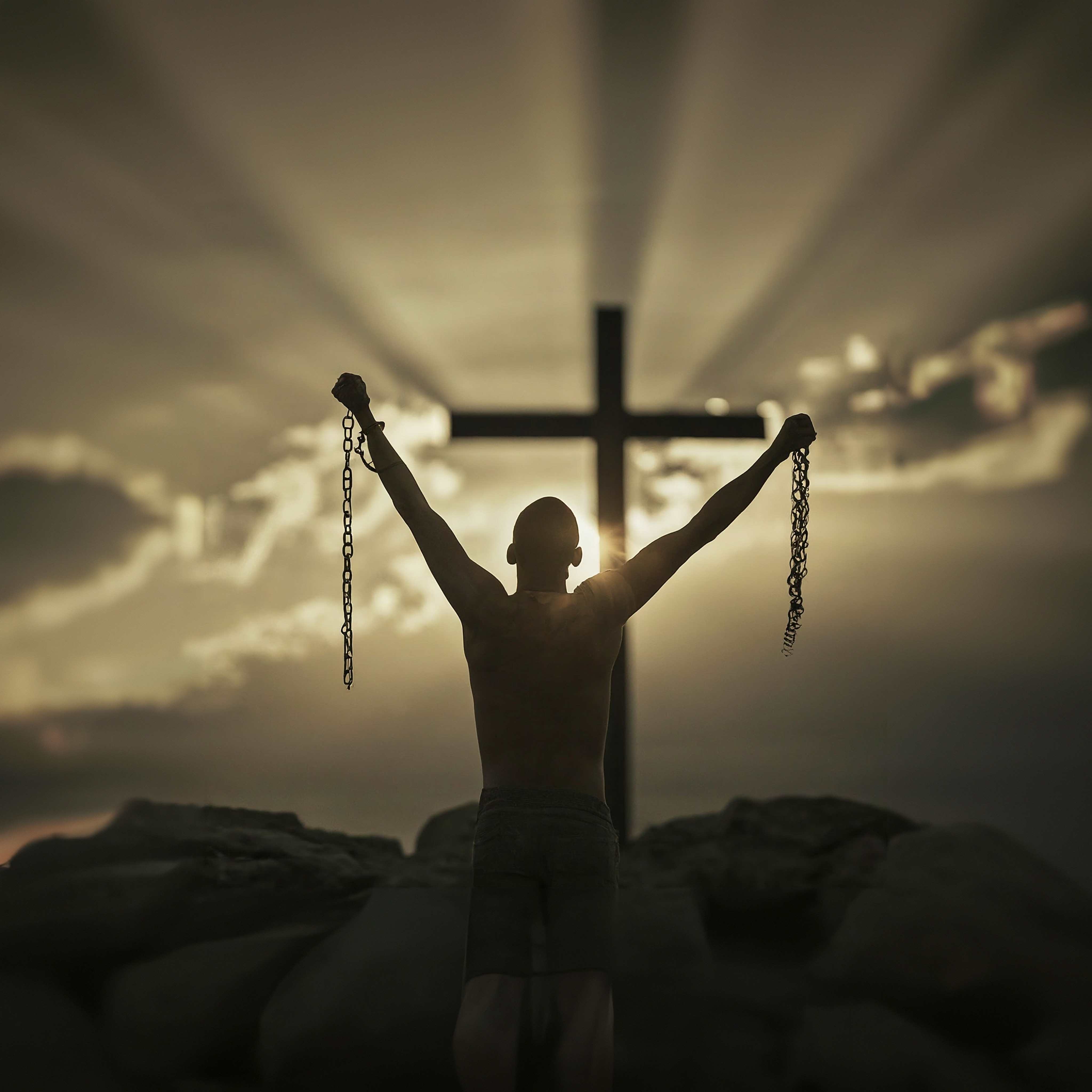
“For the law of the Spirit of life in Christ
Jesus has made me free from the law of sin and death.”
(Romans
8:2)
Hosea
the Prophet – Wikipedia
From Wikipedia, the free encyclopedia
This article is about the Biblical prophet and author of
the Book of Hosea. For other uses, see Hosea (disambiguation).
Hosea
Venerated in Judaism
Christianity
Islam
Rastafari
Major shrine Safed,
Israel
Feast October 17
(Orthodox Christianity)
Major works Book of
Hosea
In the Hebrew Bible, Hosea (/hoʊˈziːə/
hoh-ZEE-ə or /hoʊˈzeɪə/ hoh-ZAY-ə; Hebrew: הוֹשֵׁעַ,
romanized: Hōšēaʿ, lit. 'Salvation'), also known as
Osee[1] (Ancient Greek: Ὡσηέ, romanized: Hōsēé),
son of Beeri, was an 8th-century BC prophet in Israel and the nominal primary
author of the Book of Hosea. He is the first of the Twelve Minor Prophets,
whose collective writings were aggregated and organized into a single book in
the Jewish Tanakh by the Second Temple period (forming the last book of the
Nevi'im) but which are distinguished as individual books in Christianity.[2]
Hosea is often seen as a "prophet of doom", but underneath his
message of destruction is a promise of restoration. The Talmud claims that he
was the greatest prophet of his generation.[3] The period of Hosea's ministry
extended to some sixty years, and he was the only prophet of Israel of his time
who left any written prophecy.
Most scholars since the nineteenth and twentieth centuries
have agreed on the contemporaneous dating of Hosea and the Book of Hosea to the
time of Jeroboam II,[4] although some redaction-critical studies of Hosea since
the 1980s have postulated that the theological and literary unity was created
by editors, and scholars differ significantly in their interpretations of the
redaction process, stages, and the extent of the eighth-century prophet’s original
contributions.[5] Nevertheless, aspects of eighth-century history are generally
considered to be reflected in the text.[6][7][8]
Name meaning
The name Hosea seems to have been common, and is derived
from a related verb meaning 'salvation'. Numbers 13:16 states that Hosea was
the original name of Joshua, son of Nun until Moses gave him the longer,
theophoric name Yehoshua (Hebrew: יְהוֹשֻֽׁעַ,
romanized: Yēhōšūaʿ) incorporating an abbreviated form of
the Tetragrammaton. Rashi explains in Sotah 34b that Joshua is a compound name
of יה (Yah) and הושע
(hōšēaʿ), "God may save".[9]
Location
Although it is not expressly stated in the Book of Hosea,
it is apparent from the level of detail and familiarity focused on north-east
geography, that Hosea conducted his prophetic ministries in the northern
Kingdom of Israel, of which he was a native.[10] In Hosea 5:8 ff., there seems
to be a reference to the Syro-Ephraimite War which led to the capture of the
kingdom by the Assyrians (c. 734–732 BCE). Hosea's long ministry, from the
reign of Jeroboam II (787–747) to the reign of Hoshea (731–722),[11] seems to
have ended before the fall of Samaria in 722/721.[12]
Family
Little is known about the life or social status of Hosea.
According to the Book of Hosea, he married Gomer, the daughter of Diblaim,[2]
but she proved to be unfaithful. Hosea knew she would be unfaithful, as God
says this to him immediately in the opening statements of the book. This
marriage was arranged in order to serve to the prophet as a symbol of Israel's
unfaithfulness to the Lord.[10] His marriage will dramatize the breakdown in
the relationship between God and his people Israel.[13] Hosea's family life
reflected the "adulterous" relationship which Israel had built with
other gods.
Similarly, his children's names represent God's
estrangement from Israel.[13] They are prophetic of the fall of the ruling
dynasty and the severed covenant with God – much like the prophet Isaiah a
generation later. The name of Hosea's daughter, Lo-ruhamah, which translates as
'not pitied', is chosen as a sign of displeasure with the people of Israel for
following false gods.[14] The name of Hosea's son, Lo-ammi, which translates as
'not my people', is chosen as a sign of the Lord's displeasure with the people
of Israel for following those false gods.[15]
Rabbinic literature
The reign of Uzziah, who for a while occupied the throne
during his father Amaziah's lifetime, is notable particularly because it marks
the beginning of the activity of three of the prophets Hosea, Amos, and Isaiah.
The oldest of the three was Hosea, the son of the prophet and prince Beeri, the
Beeri who was later carried away captive by Tiglath-pileser, the King of
Assyria. Of Beeri's prophecies there are two verses preserved by Isaiah. The
peculiar marriage contracted by Hosea at the command of God was not without a
good reason. When God spoke to the prophet about the sins of Israel, expecting
him to defend or excuse his people, Hosea said severely: "O Lord of the
world! Thine is the universe. In place of Israel choose another as Thy
particular people from among the nations of the earth." To make the true
relation between God and Israel known to the prophet, he was commanded to take
to wife a woman with a dubious past. After she had several children born, God
suddenly put the question to him: "Why followest thou not the example of
thy teacher Moses, who denied himself the joys of family life after his call to
prophecy?" Hosea replied: "I can neither send my wife away nor
divorce her, for she has borne me children." "If, now," said God
to him, "thou who hast a wife of whose honesty thou art so uncertain that
thou canst not even be sure that her children are thine, and yet thou canst not
separate from her, how, then can I separate Myself from Israel, from My
children, the children of My elect, Abraham, Isaac, and Jacob!" Hosea
entreated God to pardon him. But God said: "Better were it that thou
shouldst pray for the welfare of Israel, for thou art the cause that I issued
three fateful decrees against them." Hosea prayed as he was bidden, and
his prayer averted the impending threefold doom. Hosea died at Babylon at a
time in which a journey thence to Palestine was beset with many perils.
Desirous of having his earthly remains rest in sacred ground, he requested
before his death that his bier be loaded upon a camel, and the animal permitted
to make its way as it would. Wherever it stopped, there his body was to be
buried. As it commanded, so it was done. Without a single mishap the camel
arrived at Safed. In the Jewish cemetery of the town it stood still, and there
Hosea was buried in the presence of a large concourse."[16]
Christian thought
One of the early writing prophets, Hosea used his own
experience as a symbolic representation of God and Israel. The relationship
between Hosea and Gomer parallels the relationship between God and Israel. Even
though Gomer runs away from Hosea and sleeps with another man, he loves her
anyway and forgives her. Likewise, even though the people of Israel worshipped
false gods, God continued to love them and did not abandon his covenant with
them.[12]
The Book of Hosea was a severe warning to the northern
kingdom against the growing idolatry being practiced there; the book was a
dramatic call to repentance. Christians extend the analogy of Hosea to Christ
and the church: Christ the husband, his church the bride. Christians see in
this book a comparable call to the church not to forsake the Lord Jesus Christ.
Christians also take the buying back of Gomer as the redemptive qualities of
Jesus Christ's sacrifice on the cross.
Other preachers, like Charles Spurgeon, saw Hosea as a
striking presentation of the mercy of God in his sermon on Hosea 1:7: "But
I will have mercy upon the house of Judah, and will save them by the Lord their
God, and will not save them by bow, nor by sword, nor by battle, by horses, nor
by horsemen." – Bible, Hosea 1:7[17][18]
In Islam
Prophet
In Islam, Ḥushayā ibn Bīrī (Arabic: حشايا
بن بيري) is considered to be an
Israʼiliyyat prophet sent to guide Bani-Israel after they turned away from
God. The Qur'an mentions only some prophets by name but makes it clear that
many were sent who are not mentioned.[19] Therefore, many Muslim scholars, such
as Ibn Ishaq, speak of Hosea as one of the true Hebrew prophets of Israel. The
Book of Hosea has also been used in Qur'anic exegesis by Abdullah Yusuf Ali,
especially in reference to Qur'anic verses which speak of the backsliding of
Israel.[20]
Observances
He is commemorated with the other Minor prophets in the
Calendar of saints of the Armenian Apostolic Church on July 31. He is
commemorated on the Eastern Orthodox liturgical calendar, with a feast day on
October 17 (for those churches which follow the Julian Calendar, October 17
currently falls on October 30 of the modern Gregorian Calendar). He is also
commemorated on the Sunday of the Holy Fathers (the Sunday before the Nativity
of the Lord).
Tomb
The structure at the cemetery in Safed known as the Tomb of
Hosea
Jewish tradition holds that the tomb of Hosea is a
structure located in the Jewish cemetery of Safed;[21] however, Emil G. Hirsch
and Victor Ryssel, writing in The Jewish Encyclopedia, say that this tradition
is "historically worthless".[10]
In popular culture
The character Hosea Matthews in the video game Red Dead
Redemption 2 is named after the prophet.
Norman Nicholson's play A Match for the Devil, first
performed in 1953, is based on the story of Hosea.
The story of Hosea is retold in a modern-day setting in the
film HOSEA (2020), directed by Ryan Daniel Dobson.[22]
Hosea is portrayed by Elijah Alexander in the film Amazing
Love: The Story of Hosea (2012).[23]
The novel Redeeming Love (1991) is based on the Book of
Hosea.
The book of Hosea is mentioned and paralleled in the
National Book Award for Fiction Finalist novel Pachinko by Min Jin Lee.[24]