Home About Us Our Publications Make a
Donation Email: glenn.benson@yourbrotherglenn.org
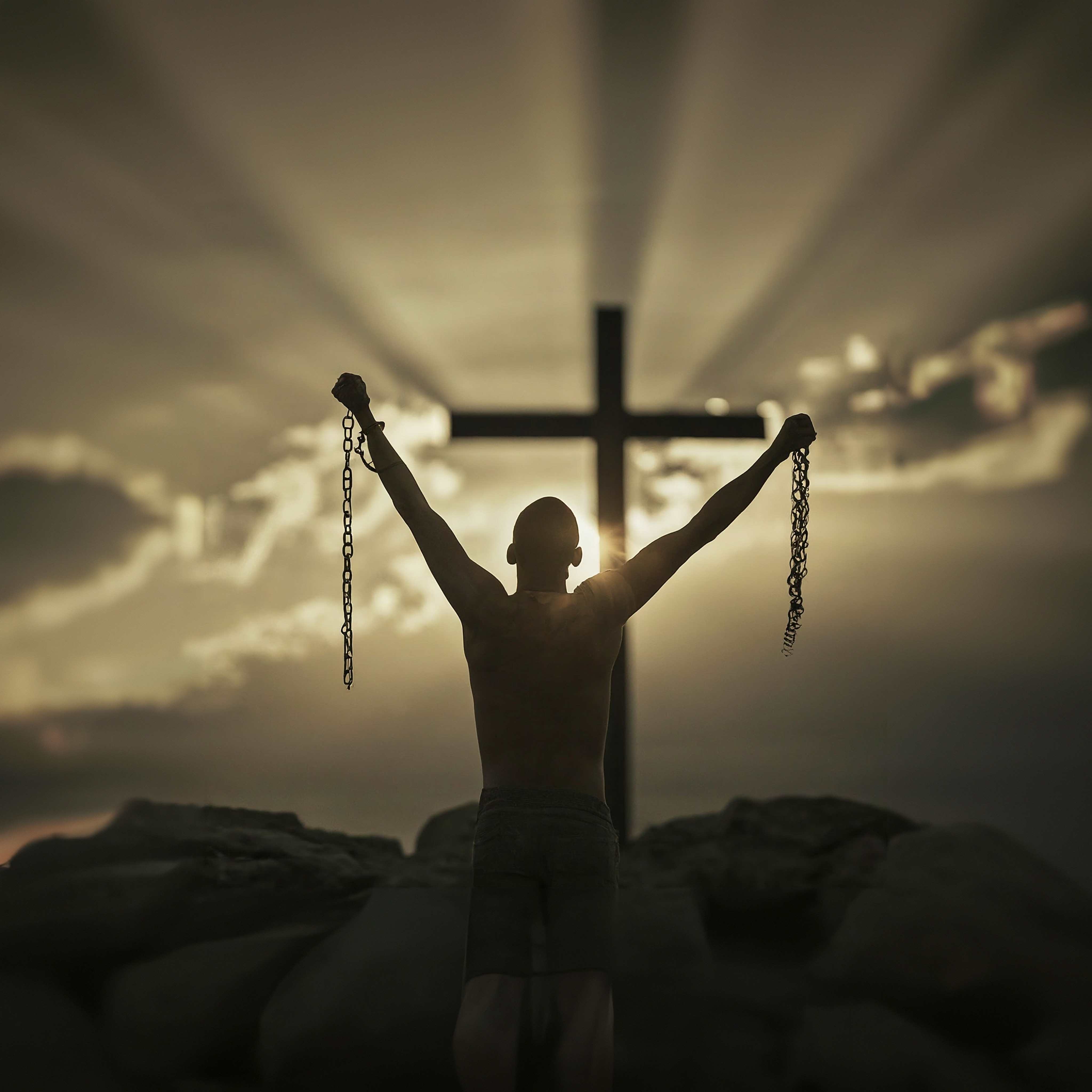
“For the law of the Spirit of life in Christ
Jesus has made me free from the law of sin and death.”
(Romans
8:2)
Haggai
the Prophet – Wikipedia
Haggai or Aggeus[1] (/ˈhæɡaɪ/; Hebrew: חַגַּי
– Ḥaggay; lit. 'One who celebrates'; Koine Greek: Ἀγγαῖος;
Latin: Aggaeus) was a Hebrew prophet active during the building of the Second
Temple in Jerusalem, one of the twelve minor prophets in the Hebrew Bible, and
the author or subject of the Book of Haggai. He is known for his prophecy in
520 BCE, commanding the Jews to rebuild the Temple.[2] He was the first of
three post-exilic prophets from the Neo-Babylonian Exile of the House of Judah
(with Zechariah, his contemporary, and Malachi, who lived about one hundred
years later), who belonged to the period of Jewish history which began after
the return from captivity in Babylon. His name means "my holidays".
Life
Scarcely anything is known of his personal history, with
the book of Haggai offering no biographical details about his ancestry or
anything else in his life outside the prophecies of 520 BCE. Haggai is only
mentioned in one other book of the Bible, the book of Ezra.[3] He may have been
one of the captives taken to Babylon by Nebuchadnezzar. Some commenters suggest
he may have been an old man, and seen the previous temple before its destruction
due to what he says about the former glory of the Temple in Haggai 2:3.[4] He
began God's prophecy about sixteen years after the return of the Jews to Judah
(ca. c. 520 BCE). The work of rebuilding the temple had been put to a
stop through the intrigues of the Samaritans. After having been suspended for
eighteen years, the work was resumed through the efforts of Haggai and
Zechariah.[5] They exhorted the people, which roused them from their lethargy,
and induced them to take advantage of a change in the policy of the Persian
government under Darius I.
Haggai prophecies
Haggai prophesied in late 520 BCE Jerusalem, about the
people needing to complete building the Temple. He has four messages, which
begin on August 29 and culminate on December 18.[4] The new Temple was bound to
exceed the awesomeness of the previous Temple. He claimed if the Temple was not
built there would be poverty, famine and drought affecting the Jewish nation.
There is a controversy regarding who edited Haggai's works.
According to scholars, they credit it to his students. However, Jewish
traditions state that the Men of the Great Assembly were responsible for the
edits. The Men of the Great Assembly are traditionally known for continuing the
work of Ezra and Nehemiah.[2]
Haggai and officials of his time
Haggai supported the officials of his time, specifically
Zerubbabel, the governor of Judah, and Joshua the High Priest. In the Book of
Haggai, God refers to Zerubbabel as "my servant" as King David was,
and says he will make him as a "signet ring", as King Jehoiachin
was.[6] The signet ring symbolized a ring worn on the hand of Yahweh, showing
that a king held divine favour. Thus, Haggai is implicitly, but not explicitly,
saying that Zerubbabel would preside over a restored Davidic kingdom.[7]
Jewish Persian diplomacy
The Persian Empire was growing weak, and Haggai saw time as
an opportunity to restore the Davidic Kingdom. He believed that the Kingdom of
David was able to rise and take back their part in Jewish issues. Haggai's
message was directed to the nobles and Zerubbabel, as he would be the first
Davidic monarch restored. He saw this as important because the Kingdom would be
an end to Jewish idol worship.[2]
Haggai in Jewish tradition
Haggai, in rabbinic writing, is often referred to as one of
the men of the Great Assembly. The Babylonian Talmud (5th century CE) mentions
a tradition concerning the prophet Haggai,[8] saying that he gave instruction
concerning three things: (a) that it is not lawful for a man whose brother
married his daughter (as a co-wife in a polygamous relationship) to consummate
a levirate marriage with one of his deceased brother's co-wives (a teaching
accepted by the School of Hillel, but rejected by the School of Shammai);[9]
(b) that Jews living in the regions of Ammon and Moab separate from their
produce the poor man's tithe during the Sabbatical year; (c) that they accept
of proselytes from the peoples of Tadmor (Palmyra) and from the people of Ḳardu.
Liturgical commemoration
On the Eastern Orthodox liturgical calendar, Haggai is
commemorated as a saint and prophet. His feast day is 16 December (for those
churches which follow the traditional Julian Calendar, 16 December currently
falls on 29 December of the modern Gregorian Calendar). He is also
commemorated, in common with the other righteous persons of the Old Testament,
on the Sunday of the Holy Fathers (the second Sunday before the Nativity of the
Lord).
Haggai is commemorated with the other Minor prophets in the
Calendar of saints of the Armenian Apostolic Church on 31 July.
Haggai in Freemasonry
In the Masonic degree of Holy Royal Arch Haggai is one of
the Three Principals of the Chapter. Named after Haggai the prophet and
accompanies Zerubbabel, Prince of the People, and Joshua, the son of Josedech,
the High Priest.[10]
From Wikipedia, the free encyclopedia
The Book of Haggai
The Book of Haggai (/ˈhæɡaɪ/; Hebrew: ספר
חגי, romanized: Sefer Ḥaggay) is a book of the Hebrew
Bible or Tanakh, and is the third-to-last of the Twelve Minor Prophets.[1][2]
It is a short book, consisting of only two chapters.[3] The historical setting
dates around 520 BC, before the Temple had been rebuilt.[4] The original text was
written in Biblical Hebrew.
Authorship
The Book of Haggai is named after the prophet Haggai whose
prophecies are recorded in the book. The authorship of the book is uncertain.
Some presume that Haggai wrote the book himself but he is repeatedly referred
to in the third person which makes it unlikely that he wrote the text: it is
more probable that the book was written by a disciple of Haggai who sought to
preserve the content of Haggai's spoken prophecies.[5]
There is no biographical information given about the
prophet in the Book of Haggai. Haggai's name is derived from the Hebrew verbal
root hgg, which means "to make a pilgrimage". W. Sibley Towner
suggests that Haggai's name might come "from his single-minded effort to
bring about the reconstruction of that destination of ancient Judean pilgrims,
the Temple in Jerusalem".[6]
Date
The Book of Haggai records events in 520 BC, some 18 years
after Cyrus had conquered Babylon and issued a decree in 538 BC, allowing the
captive Judahites to return to Judea. Cyrus saw the restoration of the temple
as necessary for the restoration of religious practices and a sense of
peoplehood, after the long exile.[7] The precise date of the written text is
uncertain but most likely dates to within a generation of Haggai himself.[7] A
traditional consensus dates the completion of the text to c. 515 BC.[8] Other
scholars consider the book to be completed around 417 BC, arguing that it did
not refer to Darius the Great (Darius I), but to Darius II (424-405 BC).[9]
Early surviving manuscripts
Some early manuscripts containing the text of this book in
Biblical Hebrew are of the Masoretic Text, which includes the Codex Cairensis
(895), the Petersburg Codex of the Prophets (916), and Codex Leningradensis
(1008).[10][a] Fragments of the Hebrew text of this book were found among the
Dead Sea Scrolls, including 4Q77 (4QXIIb; 150–125 BCE)[12][13][14] 4Q80
(4QXIIe; 75–50 BCE);[15][13][16] and Wadi Murabba'at Minor Prophets (Mur88;
MurXIIProph; 75-100 CE).[13][17]
There is also a translation into Koine Greek known as the
Septuagint, made in the last few centuries BCE. Extant ancient manuscripts of
the Septuagint version include Codex Vaticanus (B;
�
{\displaystyle {\mathfrak {G}}}B; 4th century), Codex
Sinaiticus (S; BHK:
�
{\displaystyle {\mathfrak {G}}}S; 4th century), Codex
Alexandrinus (A;
�
{\displaystyle {\mathfrak {G}}}A; 5th century) and Codex
Marchalianus (Q;
�
{\displaystyle {\mathfrak {G}}}Q; 6th century).[18]
Synopsis
Haggai's message is filled with an urgency for the people
to proceed with the rebuilding of the second Jerusalem temple. Haggai
attributes a recent drought to the people's refusal to rebuild the temple,
which he sees as key to Jerusalem’s glory. The book ends with the prediction of
the downfall of kingdoms, with one Zerubbabel, governor of Judah, as the Lord's
chosen leader.
The first chapter contains the first address (2–11) and its
effects (12–15). The second chapter contains the second prophecy (1–9),
delivered a month after the first; the third prophecy (10–19), delivered two
months and three days after the second; and the fourth prophecy (20–23),
delivered on the same day as the third.
These discourses are referred to in Ezra 5:1 and 6:14.
(Compare Haggai 2:7, 8 and 22)
Haggai reports that three weeks after his first prophecy
the rebuilding of the Temple began on September 7 521 BC. "They came and
began to work on the house of the LORD Almighty, their God, on the
twenty-fourth day of the sixth month in the second year of Darius the
King." (Haggai 1:14–15) and the Book of Ezra indicates that it was
finished on February 25 516 BC "The Temple was completed on the third day
of the month Adar, in the sixth year of the reign of King Darius." (Ezra
6:15)
Musical usage
The King James Version of Haggai 2:6–7 is used in the
libretto of the English-language oratorio Messiah by George Frideric Handel
(HWV 56).[19]