Home About Us Our Publications Make a
Donation Email: glenn.benson@yourbrotherglenn.org
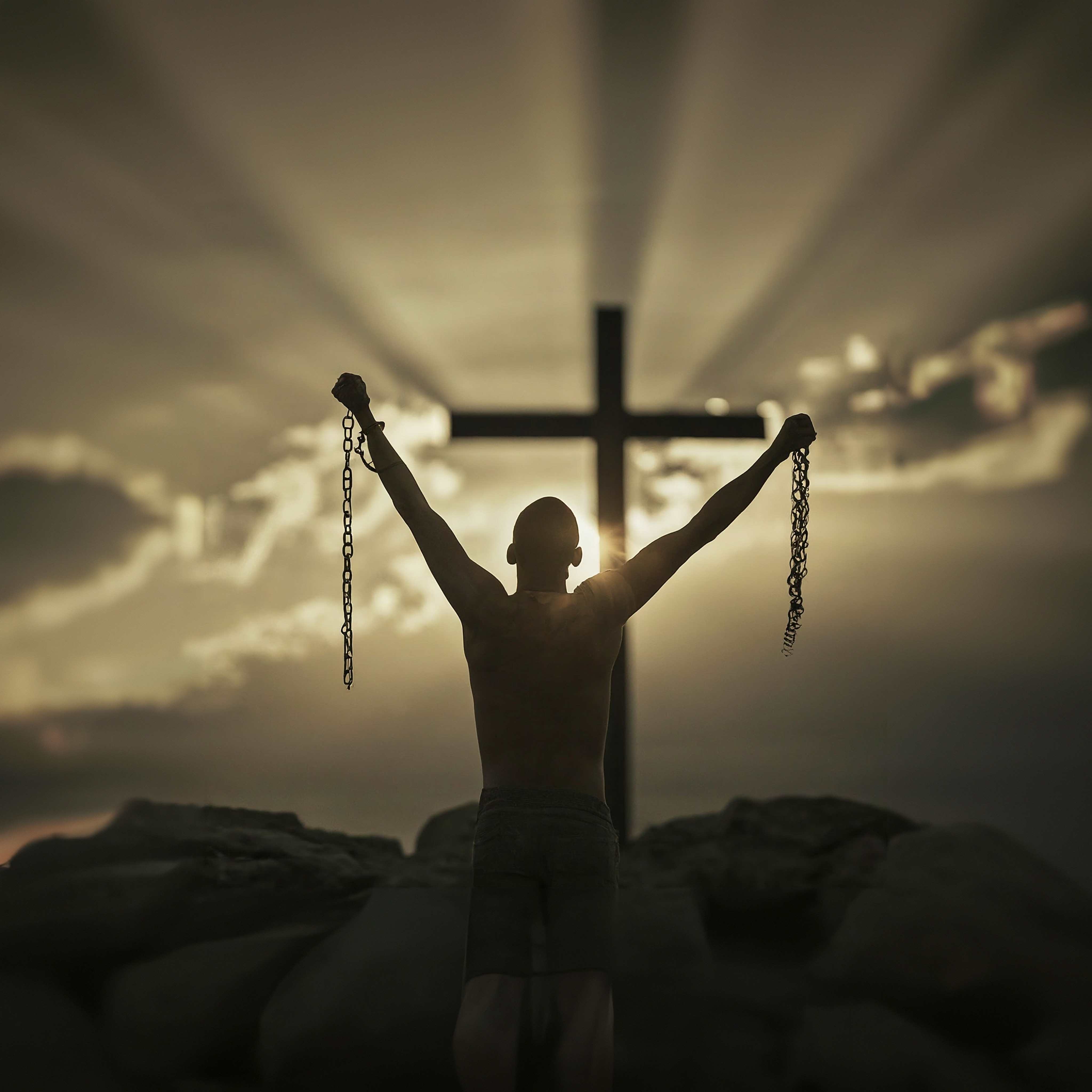
“For the law of the Spirit of life in Christ
Jesus has made me free from the law of sin and death.”
(Romans
8:2)
Habakkuk
the Prophet – Wikipedia
From Wikipedia, the free encyclopedia
This article is about Habakkuk, a biblical prophet. For
other uses, see Habakkuk (disambiguation).
"Saint Habakkuk" redirects here. For the Serbian
Orthodox saint, see Avakum.
"Chabakuk" redirects here. For the religious
movement, see Chabakuk (Judaism).
Habakkuk
חֲבַקּוּק
Prophet
Venerated in Judaism
Christianity
Islam
Rastafari
Major shrine Toyserkan,
Iran
Kadarim, Israel
Feast January 15
(Roman Catholic)
December 2 (Orthodox)
Attributes Prophet
Major works Book of
Habakkuk
Habakkuk,[a] or Habacuc,[1] who was active around 612 BC,
was a prophet whose oracles and prayer are recorded in the Book of Habakkuk,
the eighth of the collected twelve minor prophets in the Hebrew Bible.[2] He is
revered by Jews, Christians, and Muslims.
Almost all information about Habakkuk is drawn from the
book of the Bible bearing his name,[3] with no biographical details provided
other than his title, "the prophet".[4] He is mentioned in the
deuterocanonical Additions to Daniel, and outside the Bible, he is mentioned
over the centuries in the forms of Christian and Rabbinic tradition.[5][6]
Name
The name Habakkuk, or Habacuc,[b] appears in the Hebrew
Bible only in Habakkuk 1:1 and 3:1.[4] In the Masoretic Text, it is written in
Hebrew: חֲבַקּוּק
(Standard Ḥavaqquq Tiberian Ḥăḇaqqûq).[8] This name does
not occur elsewhere.[9] The Septuagint transcribes his name into Greek as Ἀμβακοὺμ
(Ambakoum),[10] and the Vulgate transcribes it into Latin as Abacuc.[11]
The etymology of the name is not clear,[2] and its form has
no parallel in Hebrew.[12] The name is possibly related to the Akkadian
khambbaququ (Akkadian: 𒄩𒄠𒁀𒄣𒄣, ḫâmbaququ),
the name of a fragrant plant,[2] or the Hebrew root Hebrew: חבק,
meaning "embrace".
Life
Almost nothing is known about Habakkuk, aside from what is
stated within the book of the Bible bearing his name, or those inferences that
may be drawn from that book.[3] No biographical details are provided other than
his title "the prophet".[4]
For almost every other prophet, more information is given,
such as the name of the prophet's hometown, his occupation, or information
concerning his parentage or tribe.[13] For Habakkuk, however, there is no
reliable account of any of these.[14] Although his home is not identified,
scholars conclude that Habakkuk lived in Jerusalem at the time he wrote his
prophecy.[15] Further analysis has provided an approximate date for his
prophecy and possibilities concerning his activities and background.
Beyond the Bible, considerable conjecture has been put
forward over the centuries in the form of Christian and Rabbinic tradition, but
such accounts are dismissed by modern scholars as speculative and
apocryphal.[5][6]
The Septuagint translation of Daniel in the Codex Chisianus
refers to him as "the son of Jesus of the tribe of Levi".[16]
Statue of Habakkuk by Donatello, in the Museo dell'Opera
del Duomo of Florence
Biblical account
Because the book of Habakkuk consists of five oracles about
the Chaldeans (Babylonians), and the Chaldean rise to power is dated circa 612
BC, it is assumed he was active about that time, making him an early
contemporary of Jeremiah and Zephaniah. Jewish sources, however, do not group
him with those two prophets, who are often placed together, so it is possible
that he was slightly earlier than these prophets.
Because the final chapter of his book is a song, it is
sometimes assumed that he was a member of the Tribe of Levi, who served as
musicians in Solomon's Temple.[9]
Tradition
A reference to "the prophet Habakkuk" appears in
Bel and the Dragon,[17] which is part of the deuterocanonical Additions to
Daniel. Verses 33–39 place Habakkuk in Judea; after making some stew, he is
instructed by an angel of the Lord to take the stew to Daniel, who is in the
lion's den in Babylon. After Habakkuk proclaims that he is unaware of either
the den or Babylon, the angel transports Habakkuk to the lion's den. Habakkuk
gives Daniel the food to sustain him, and he is immediately taken back to "his
place" or "his own country".[18]
Habakkuk is also mentioned in the Lives of the Prophets,
which also mentions his time in Babylon.[19]
According to the Zohar (Volume 1, page 8b),[clarification
needed] Habakkuk is the boy born to the Shunamite woman through Elisha's
blessing:
And he said, About this season, according to the time of
life, thou shalt embrace (חֹבֶקֶת – ḥōḇeqeṯ)
a son. And she said, Nay, my lord, [thou] man of God, do not lie unto thine
handmaid.
— Bible,
2 Kings 4:16[20]
Works
Main article: Book of Habakkuk
The only work attributed to Habakkuk is the short biblical
text which bears his name. The Book of Habakkuk consists of the taunting
riddle, which are five woes about the Chaldeans (Babylonians) in chapter 2, and
a song of praise to God in chapter 3.
The style of the book has been praised by many
scholars,[21] suggesting that its author was a man of great literary talent.
The entire book follows the structure of a chiasmus in which parallelism of
thought is used to bracket sections of the text.[22]
Habakkuk is unusual among the prophets in that he openly
questions the working of God.[23][24] In the first part of the first chapter,
the prophet sees the injustice among his people and asks why God does not take
action: "O LORD, how long shall I cry for help, and you will not hear? Or
cry to you "Violence!" and you will not save?"[25]
Tombs
The final resting place of Habakkuk has been claimed at
multiple locations. The fifth-century Christian historian Sozomen claimed that
the relics of Habakkuk were found at Cela near Bayt Jibrin, when God revealed
their location to Zebennus, bishop of Eleutheropolis, in a dream.[26][27]
Currently, one location in Israel and one in Iran lay claim to being the burial
site of the prophet.
Tomb in Israel
Tomb of Habakkuk near Kadarim, Israel
The burial place of Habakkuk is identified by Jewish
tradition as a hillside in the Upper Galilee region of northern Israel, close
to the villages Kadarim and Hukok, about six miles southwest of Safed and
twelve miles north of Mount Tabor.[28] A small stone building, erected during
the 20th century, protects the tomb.[29] Tradition dating as early as the 12th
century AD holds that Habakkuk's tomb is at this location,[30] but the tomb may
also be of a local sheikh of Yaquq, a name related to the biblical place named
"Hukkok",[31] whose pronunciation and spelling in Hebrew are close to
"Habakkuk".[32] Archaeological findings in this location include
several burial places dated to the Second Temple period.
Persian shrine
Shrine of Habakkuk in Tuyserkan, Iran
A mausoleum southeast of the city of Tuyserkan in the west
of Iran is also believed to be Habakkuk's burial place.[33] It is protected by
Iran's Cultural Heritage, Handcrafts and Tourism Organization. The Organization's
guide to the Hamadan province states that Habakkuk was believed to be a
guardian to Solomon's Temple, and that he was captured by the Babylonians and
remained in their prison for some years. After being freed by Cyrus the Great,
he went to Ecbatana and remained there until he died, and was buried somewhere
nearby, in what is today Tuyserkan. Habakkuk is called both Habaghugh and
Hayaghugh by the Muslim locals.
The surrounding shrine may date to the period of the Seljuq
Empire (11–12th century); it consists of an octagonal wall and conical dome.
Underneath the shrine is a hidden basement with three floors. In the center of
the shrine's courtyard is the grave where Habakkuk is said to be buried. A
stone upon the grave is inscribed in both Hebrew and Persian stating that the
prophet's father was Shioua Lovit, and his mother was Lesho Namit. Both Muslims
and Jews visit it to pay their respects.[34]
Commemoration
Christian
On the Eastern Orthodox liturgical calendar, his feast day
is December 2.[35] In the Roman Catholic Church, the twelve minor prophets are
read in the Roman Breviary during the fourth and fifth weeks of November,[36]
which are the last two weeks of the liturgical year, and his feast day is
January 15.[37][c] In 2011, he was commemorated with the other Minor Prophets
in the calendar of saints of the Armenian Apostolic Church on February 8.[40]
Habakkuk has also been commemorated in sculpture. In
1435,[41] the Florentine artist Donatello created a sculpture of the prophet
for the bell tower of Florence.[42] This statue, nicknamed Zuccone ("Big
Head") because of the shape of the head, now resides in the Museo
dell'Opera del Duomo. The Basilica of Santa Maria del Popolo in Rome contains a
Baroque sculpture of Habakkuk by the 17th-century artist Bernini.[43] Between
1800 and 1805, the Brazilian sculptor Aleijadinho completed a soapstone
sculpture of Habakkuk as part of his Twelve Prophets.[44] The figures are
arranged around the forecourt and monumental stairway in front of the Santuário
do Bom Jesus do Matosinhos at Congonhas.[45]
Islam
Ali al-Ridha debate at al-Ma'mun's court
Although not mentioned by name in the Qu'ran, Habakkuk
(Arabic: حبقوق, romanized: Hab'aqūq), is
recognized as an Islamic prophet because he is believed to herald the coming of
last prophet and divine scripture Muhammad and the Qu'ran in the Book of
Habakkuk.
In the court of Al-Ma'mun, Imam Ali al-Ridha, a descendant
of Muhammad and chief Islamic scholar in the time of the Abbasid Caliphs, was
asked by the Exilarch to prove that Muhammad was a prophet through the Torah.
Imam Ridha asks "Do you know the prophet Habakkuk?" He said,
"Yes. I know of him." al-Ridha said, "and this is narrated in
your book, 'Allah brought down speech on Mount Faran, and the heavens were
filled with the glorification of Muhammad and his community. His horse carries
him over water as it carries him over land. He will bring a new book to us
after the ruin of the holy house [the temple in Jerusalem].' What is meant by
this book is the Qur'an. Do you know this and believe in it?" The Exilarch
said, "Habakkuk the prophet has said this and we do not deny what he
said."[46]
Further evidence of prophethood
Although the Quran only mentions around twenty-five
prophets by name, and alludes to a few others, it has been a cardinal doctrine
of Islam that many more prophets were sent by God who are not mentioned in the
scripture.[47] Thus, Muslims have traditionally had no problem accepting those
other Hebrew prophets not mentioned in the Quran or hadith as legitimate
prophets of God, especially as the Quran itself states: "Surely We sent
down the Torah (to Moses), wherein is guidance and light; thereby the prophets
(who followed him), who had surrendered themselves, gave judgment for those who
were Jewish, as did the masters and the rabbis, following such portion of God's
Book as they were given to keep and were witnesses to,"[48] with this
passage having often been interpreted by Muslims to include within the phrase
"prophets" an allusion to all the prophetic figures of the Jewish
scriptural portion of the nevi'im, that is to say all the prophets of Israel
after Moses and Aaron. Thus, Islamic authors have often alluded to Habakkuk as
a prophet in their works,[49][50][51] and followed the pronunciation of his
name with the traditional salutations of peace bestowed by Muslims onto
prophets after the utterance of their names.[50]
Some medieval Muslim scholars even provided commentaries on
the biblical Book of Habakkuk, with the primary purpose of showing that the
prophet had predicted the coming of Muhammad in Habakkuk 3:2–6, in a manner
akin to the earlier Christian tradition of seeing in the book's prophecies
allusions to the advent of Christ.[52] For example, the medieval exegete Najm
al-Dīn al-Ṭūfī (d. 716 AH/1316 CE) provided a commentary
on select verses from the Book of Habakkuk, saying the prophet's words
"for his rays become light" (Habakkuk 3:4) alluded to the spread of
Islam; that his words "his glory comes to town, his power appears in his
courts" (Habakkuk 3:4) referred to Muhammad's stay in the town of Yathrib
and the help he received there from the ansar; and that his words "death
goes before him" (Habakkuk 3:5).[53] Likewise, Habakkuk 3:5–6 also
received similar commentaries from medieval Islamic thinkers.[53]
The famous and revered Persian Islamic scholar and polymath
Ibn Qutaybah, who served as a judge during the Abbasid Caliphate, said of the
prophet Habakkuk: "Among the words of Habakkuk, who prophesied in the days
of Daniel, Habakkuk says: 'God came from Teman, and the holy one from the
mountains of Paran and the earth was filled with the sanctification of the
praiseworthy one (aḥmad, which is a name of Muhammad in Islam), and with
his right hand he exercised power over the earth and the necks of the
nations,'"[54] which has been interpreted by scholars to be a clear
allusion to Habakkuk 3:3-4.[55] Elsewhere, the same scholar glossed Habakkuk
3:4, 15 as follows: "The earth shines with his light, and his horses
launched into the sea",[56] again interpreting the prophecy to be an
allusion to the coming of Muhammad.[57] One further prophecy of Habakkuk which
Ibn Qutaybah cited, from extra-canonical Hebraic literature, was "You
shall be exceedingly filled in your bows ... O Praised One
(Muhammad)."[56] This final prophecy attributed to Habakkuk was also
referred to by later scholars like Ibn al-Jawzi and Ibn Qayyim
al-Jawziyyah.[58][59]
From Wikipedia, the free encyclopedia
The Book of Habakkuk
The Book of Habakkuk is the eighth book of the Twelve Minor
Prophets of the Hebrew Bible.[1] The book has three chapters.[2] It is
attributed to the prophet Habakkuk. Most scholars agree that the book was
probably composed in the period during Jehoiakim's reign as king of Judah
(609–597 BC).[3] It is an important text in Judaism, and passages from the book
are quoted by authors of the New Testament. Its message has inspired modern
Christian hymn writers.
Of the three chapters in the book, the first two are a
dialogue between Yahweh and the prophet. Verse 4 in chapter 2, stating that
"the just shall live by his faith", plays an important role in
Christian thought. It is used in the Epistle to the Romans, Epistle to the
Galatians, and the Epistle to the Hebrews as the starting point of the concept
of faith.[1] A copy of these two chapters is included in the Habakkuk
Commentary, found among the Dead Sea Scrolls. Chapter 3 is now recognized as a
liturgical piece. It is debated whether chapter 3 and the first two chapters
were written by the same author.[1]
Background
The prophet Habakkuk is generally believed to have written
his book in the mid-to-late 7th century BC. It was likely written shortly after
the Battle of Nineveh (612 BC) established the Neo-Babylonian Empire but before
the Babylonian Siege of Jerusalem (587 BC) and subsequent Babylonian captivity.
Main article: Habakkuk
In the opening verse, Habakkuk identifies himself as a
prophet. Due to the liturgical nature of Habakkuk's book, some scholars think
that the author may have been a temple prophet. Temple prophets are described
in 1 Chronicles 25:1 as using lyres, harps and cymbals. Some feel that this is
echoed in Habakkuk 3:19b, and that Habakkuk may have been a Levite and cantor
in Solomon's Temple.[4]
There is no biographical information on the prophet
Habakkuk. The only canonical information that exists comes from the book that
is named for him.[5] His name comes either from the Hebrew word חבק
(ḥavaq) meaning "embrace", or else from an Akkadian word
hambakuku, for a kind of plant.[6][7]
Although his name does not appear in any other part of the
Bible, Rabbinic tradition holds Habakkuk to be the Shunammite woman's son, who
was restored to life by Elisha in 2 Kings 4:16.[6] The prophet Habakkuk is also
mentioned in the narrative of Bel and the Dragon, part of the deuterocanonical
additions to Daniel in a late section of that book. In the superscription of
the Old Greek version, Habakkuk is called the son of Joshua of the tribe of
Levi.[6] In this book, Habakkuk is lifted by an angel to Babylon to provide
Daniel with food while he is in the lion's den.
Historical context
The Neo-Babylonian Empire c. 600 BC
It is unknown when Habakkuk lived and preached, but the
reference to the rise and advance of the Neo-Babylonian Empire in 1:6–11 places
him in the middle to last quarter of the 7th century BC.[8][9] One possible
period might be during the reign of Jehoiakim, from 609 to 598 BC. The
Neo-Babylonian Empire was growing in power in this period. The Babylonians
marched against Jerusalem in 598 BC. Jehoiakim died while the Babylonians
marched towards Jerusalem, and Jehoiakim's eighteen-year-old son Jeconiah
assumed the throne. Upon the Babylonians' arrival, Jehoiachin and his advisors
quickly surrendered Jerusalem and Zedekiah was appointed as a puppet king. With
the transition of rulers and the young age and inexperience of Jehoiachin, they
could not stand against the Babylonian forces. There is a sense of an intimate
knowledge of the Babylonian brutality in 1:12–17.
Overview
The book of Habakkuk is a book of the Hebrew Bible and
stands eighth in a section known as the Twelve Minor Prophets in the Masoretic
Text and the Septuagint. In the Masoretic Text, it follows Nahum and precedes
Zephaniah, who are considered to be his contemporaries.
The book consists of three chapters and it is neatly
divided into three different genres:
A discussion between God and Habakkuk
An oracle of woe
A psalm, "Habakkuk's song".
Themes
The major theme of Habakkuk is trying to grow from a faith
of perplexity and doubt to the height of absolute trust in God. Habakkuk
addresses his concerns over the fact that God will use the Babylonian empire to
execute judgment on Judah for their sins.
– (Habakkuk 1:12)
Habakkuk openly questions the wisdom of God. In the first
part of the first chapter, the Prophet sees the injustice among his people and
asks why God does not take action. "Yahweh, how long will I cry, and you
will not hear? I cry out to you “Violence!” and will you not save?" –
(Habakkuk 1:2)
In the middle part of Chapter 1, God explains that he will
send the Chaldeans (also known as the Babylonians) to punish his people. In
1:5: "Look among the nations, watch, and wonder marvelously; for I am
working a work in your days, which you will not believe though it is told
you." In 1:6: "For, behold, I raise up the Chaldeans, that bitter and
hasty nation, that march through the breadth of the earth, to possess dwelling
places that are not theirs."
One of the "Eighteen Emendations to the Hebrew
Scriptures" appears at 1:12.[10] According to the professional Jewish
scribes, the Sopherim, the text of 1:12 was changed from "You [God] do not
die" to "We shall not die". The Sopherim considered it disrespectful
to say to God, "You do not die."
In the final part of the first chapter, the prophet
expresses shock at God's choice of instrument for judgment, in 1:13: "You
who have purer eyes than to see evil, and who cannot look on perversity, why do
you tolerate those who deal treacherously, and keep silent when the wicked
swallows up the man who is more righteous than he[...]?"[11][better source
needed]
In Chapter 2, he awaits God's response to his challenge.
God explains that He will also judge the Chaldeans, and much more harshly.
"Because you have plundered many nations, all the remnant of the peoples
will plunder you, because of men’s blood, and for the violence done to the
land, to the city and to all who dwell in it. Woe to him who gets an evil gain
for his house." (Habakkuk 2:8-9)[11]
Finally, in Chapter 3, Habakkuk expresses his ultimate
faith in God, even if he does not fully understand: "For though the fig
tree doesn’t flourish, nor fruit be in the vines; the labor of the olive fails,
the fields yield no food; the flocks are cut off from the fold, and there is no
herd in the stalls: 3:18 yet I will rejoice in Yahweh. I will be joyful in the
God of my salvation!"[11] Some scholars suggest that the final chapter may
be a later independent addition to the book,[12] in part because it is not
included among the Dead Sea Scrolls.
Surviving early manuscripts
The beginning of Habakkuk Commentary, 1QpHab, found among
the Dead Sea Scrolls from the 1st century BC.
Some early manuscripts containing the text of this book in
Hebrew language are found among the Dead Sea Scrolls, i.e., 1QpHab, known as
the "Habakkuk Commentary" (later half of the 1st century BC),[13] and
of the Masoretic Text tradition, which includes Codex Cairensis (895 CE), the
Petersburg Codex of the Prophets (916), Aleppo Codex (10th century), Codex
Leningradensis (1008).[14] Fragments containing parts of this book in Hebrew
were found among the Dead Sea Scrolls, including 4Q82 (4QXIIg; 25 BCE) with
extant verses 4?;[15][16][17] and Wadi Murabba'at Minor Prophets (Mur88;
MurXIIProph; 75-100 CE) with extant verses 1:3–13, 1:15, 2:2–3, 2:5–11,
2:18–20, and 3:1–19.[16][18]
There is also a translation into Koine Greek known as the
Septuagint, made in the last few centuries BC. Extant ancient manuscripts of
the Septuagint version include Codex Vaticanus (B;
�
{\displaystyle {\mathfrak {G}}}B; 4th century), Codex
Sinaiticus (S; BHK:
�
{\displaystyle {\mathfrak {G}}}S; 4th century), Codex
Alexandrinus (A;
�
{\displaystyle {\mathfrak {G}}}A; 5th century) and Codex
Marchalianus (Q;
�
{\displaystyle {\mathfrak {G}}}Q; 6th century).[19]
Fragments containing parts of this book in Greek were also found among the Dead
Sea Scrolls, that is, Naḥal Ḥever 8Ḥev1 (8ḤevXIIgr);
(late 1st century BCE) with extant verses 1:5–11, 1:14–17, 2:1–8, 2:13–20, and
3:8–15.[16][20]
Importance
The Book of Habakkuk is accepted as canonical by adherents
of the Jewish and Christian faiths.
Judaism
The Book of Habakkuk is the eighth book of the Twelve
Prophets of the Hebrew Bible,[1] and this collection appears in all copies of
texts of the Septuagint,[12] the Ancient Greek translation of the Hebrew Bible
completed by 132 BC. Likewise, the book of Sirach (or Ecclesiasticus), also
written in the 2nd century BC, mentions "The Twelve Prophets".[21]
A partial copy of Habakkuk itself is included in the
Habakkuk Commentary, a pesher found among the original seven Dead Sea Scrolls
discovered in 1947. The Commentary contains a copy of the first two chapters of
Habakkuk, but not of the third chapter.[22] The writer of the pesher draws a
comparison between the Babylonian invasion of the original text and the Roman
threat of the writer's own period.[22] What is even more significant than the
commentary in the pesher is the quoted text of Habakkuk itself. The divergences
between the Hebrew text of the scroll and the standard Masoretic Text are
startlingly minimal. The biggest differences are word order, small grammatical
variations, addition or omission of conjunctions, and spelling variations, but
these are small enough not to damage the meaning of the text.[23][24]
Some scholars suggest that Chapter 3 may be a later
independent addition to the book,[12] in part because it is not included among
the Dead Sea Scrolls. However, this chapter does appear in all copies of the
Septuagint, as well as in texts from as early as the 3rd century BC.[12] This
final chapter is a poetic praise of God, and has some similarities with Exodus
19,[25] and with texts found in the Book of Daniel. However, the fact that the
third chapter is written in a different style, as a liturgical piece, does not
necessarily mean that Habakkuk was not also its author.[1]
Qumran community
A commentary on the first two chapters of the book was
found among the Dead Sea Scrolls at Qumran. The omission of chapter 3 from the
version within the Dead Sea Scrolls has been attributed to incompatibilities
with the theology of the Qumran sect.[26]
Habakkuk 2:4
The Talmud (Makkot 24a) mentions that various Biblical
figures grouped the 613 commandments into categories that encapsulated all of
the 613. At the end of this discussion, the Talmud concludes, "Habakkuk
came and established [the 613 mitzvoth] upon one, as it is stated: 'But the
righteous person shall live by his faith' (Habakkuk 2:4)".
Habakkuk 2:4 is well known in Christianity. In the New
International Version of the bible it reads:
“See, the enemy is puffed up; his desires are not upright
but the righteous person will live by his faithfulness”.[27]
Although the second half of this passage is only three
words in the original Hebrew,[28][a] it is quoted three times in the New
Testament.[29]: 66 Paul the Apostle quotes it once in his Epistle
to the Romans,[30] and again in his Epistle to the Galatians;[31] its third use
is in the Epistle to the Hebrews.[32] It became one of the most important of
the verses that were used as foundations of the doctrines of the Protestant
reformation.[33][34]
There is controversy about the translation of the verse:
the word "emunah" is most often translated as
"faithfulness", though the word in this verse has been traditionally
translated as "faith".[35][34]
The word "emunah" is not translated as
"belief" other than in Habakkuk 2:4,[36] Clendenen, E. Ray defended
the translation of the word as "faith" on the basis of the context of
the verse, arguing that it refers to Genesis 15:6, which used the word
"he’ĕmin" 'believed' of which "’ĕmȗnāh"
is derived from, he also argued that the Essenes in the Qumran community likely
understood the verse as referring to faith in the Teacher of Righteousness
instead of faithfulness.[35][34][37]
Martin Luther believed that Habakkuk 2:4 taught the
doctrine of faith alone, commenting on the verse "For this is a general
saying applicable to all of God's words. These must be believed, whether spoken
at the beginning, middle, or end of the world".[38]
Rashi interpreted the verse to be about Jeconiah.[39]
The Targum interpreted the verse as "The wicked think
that all these things are not so, but the righteous live by the truth of
them".[40]
Pseudo-Ignatius understood the verse to be about faith.[41]
Habakkuk 2:6-20: the taunting riddle
The melitzah[42] ḥidah,[43] or the taunting riddle,
is the oracle revealed to Habakkuk the prophet. It is a mashal,[44] which is a
proverb and a parable. It is also known as a witty satire, a mocking and an
enigma. The riddle is 15 verses long, from verse 6 to verse 20, and is divided
into five woes which consist of three verses each.
Hebrew text
The following table shows the Hebrew text[45][46] of
Habakkuk 2:6-20[47] with vowels alongside an English translation based upon the
JPS 1917 translation (now in the public domain).
Verse Hebrew text English translation (JPS 1917)
6 הֲלוֹא־אֵ֣לֶּה
כֻלָּ֗ם עָלָיו֙
מָשָׁ֣ל יִשָּׂ֔אוּ
וּמְלִיצָ֖ה חִיד֣וֹת
ל֑וֹ וְיֹאמַ֗ר
ה֚וֹי הַמַּרְבֶּ֣ה
לֹּא־ל֔וֹ עַד־מָתַ֕י
וּמַכְבִּ֥יד
עָלָ֖יו עַבְטִֽיט׃ Shall not all these take up a
parable against him, And a taunting riddle against him, And say: ‘Woe to him
that increaseth that which is not his! How long? and that ladeth himself with
many pledges!
7 הֲל֣וֹא
פֶ֗תַע יָק֙וּמוּ֙
נֹֽשְׁכֶ֔יךָ
וְיִקְצ֖וּ מְזַעְזְעֶ֑יךָ
וְהָיִ֥יתָ לִמְשִׁסּ֖וֹת
לָֽמוֹ׃ Shall they not rise up suddenly that shall exact interest of
thee, And awake that shall violently shake thee, And thou shalt be for booties
unto them?
8 כִּֽי־אַתָּ֤ה
שַׁלּ֙וֹתָ֙ גּוֹיִ֣ם
רַבִּ֔ים יְשָׁלּ֖וּךָ
כׇּל־יֶ֣תֶר עַמִּ֑ים
מִדְּמֵ֤י אָדָם֙
וַֽחֲמַס־אֶ֔רֶץ
קִרְיָ֖ה וְכׇל־יֹ֥שְׁבֵי
בָֽהּ׃ {פ} Because thou hast spoiled many nations, All the remnant of the
peoples shall spoil thee; Because of men's blood, and for the violence done to
the land, To the city and to all that dwell therein.
9 ה֗וֹי
בֹּצֵ֛עַ בֶּ֥צַע
רָ֖ע לְבֵית֑וֹ
לָשׂ֤וּם בַּמָּרוֹם֙
קִנּ֔וֹ לְהִנָּצֵ֖ל
מִכַּף־רָֽע׃ Woe to him that gaineth evil gains
for his house, That he may set his nest on high, That he may be delivered from
the power of evil!
10 יָעַ֥צְתָּ
בֹּ֖שֶׁת לְבֵיתֶ֑ךָ
קְצוֹת־עַמִּ֥ים
רַבִּ֖ים וְחוֹטֵ֥א
נַפְשֶֽׁךָ׃ Thou hast devised shame to thy house,
By cutting off many peoples, And hast forfeited thy life.
11 כִּי־אֶ֖בֶן
מִקִּ֣יר תִּזְעָ֑ק
וְכָפִ֖יס מֵעֵ֥ץ
יַעֲנֶֽנָּה׃
{פ} For the stone shall
cry out of the wall, And the beam out of the timber shall answer it.
12 ה֛וֹי
בֹּנֶ֥ה עִ֖יר
בְּדָמִ֑ים וְכוֹנֵ֥ן
קִרְיָ֖ה בְּעַוְלָֽה׃ Woe to him that buildeth a town with blood,
And establisheth a city by iniquity!
13 הֲל֣וֹא
הִנֵּ֔ה מֵאֵ֖ת
יְהֹוָ֣ה צְבָא֑וֹת
וְיִֽיגְע֤וּ
עַמִּים֙ בְּדֵי־אֵ֔שׁ
וּלְאֻמִּ֖ים
בְּדֵי־רִ֥יק
יִעָֽפוּ׃ Behold, is it not of the LORD of hosts That the
peoples labour for the fire, And the nations weary themselves for vanity?
14 כִּ֚י
תִּמָּלֵ֣א הָאָ֔רֶץ
לָדַ֖עַת אֶת־כְּב֣וֹד
יְהֹוָ֑ה כַּמַּ֖יִם
יְכַסּ֥וּ עַל־יָֽם׃
{פ} For the earth shall be
filled With the knowledge of the glory of the LORD, As the waters cover the
sea.
15 ה֚וֹי
מַשְׁקֵ֣ה רֵעֵ֔הוּ
מְסַפֵּ֥חַ חֲמָתְךָ֖
וְאַ֣ף שַׁכֵּ֑ר
לְמַ֥עַן הַבִּ֖יט
עַל־מְעוֹרֵיהֶֽם׃ Woe unto him that giveth his neighbour
drink, That puttest thy venom thereto, and makest him drunken also, That thou
mayest look on their nakedness!
16 שָׂבַ֤עְתָּ
קָלוֹן֙ מִכָּב֔וֹד
שְׁתֵ֥ה גַם־אַ֖תָּה
וְהֵעָרֵ֑ל תִּסּ֣וֹב
עָלֶ֗יךָ כּ֚וֹס
יְמִ֣ין יְהֹוָ֔ה
וְקִיקָל֖וֹן
עַל־כְּבוֹדֶֽךָ׃ Thou art filled with shame instead of glory,
Drink thou also, and be uncovered; The cup of the LORD’S right hand shall be
turned unto thee, And filthiness shall be upon thy glory.
17 כִּ֣י
חֲמַ֤ס לְבָנוֹן֙
יְכַסֶּ֔ךָּ וְשֹׁ֥ד
בְּהֵמ֖וֹת יְחִיתַ֑ן
מִדְּמֵ֤י אָדָם֙
וַחֲמַס־אֶ֔רֶץ
קִרְיָ֖ה וְכׇל־יֹ֥שְׁבֵי
בָֽהּ׃ For
the violence done to Lebanon shall cover thee, And the destruction of the
beasts, which made them afraid; Because of men's blood, and for the violence
done to the land, To the city and to all that dwell therein.
18 מָה־הוֹעִ֣יל
פֶּ֗סֶל כִּ֤י
פְסָלוֹ֙ יֹֽצְר֔וֹ
מַסֵּכָ֖ה וּמ֣וֹרֶה
שָּׁ֑קֶר כִּ֣י
בָטַ֞ח יֹצֵ֤ר
יִצְרוֹ֙ עָלָ֔יו
לַעֲשׂ֖וֹת אֱלִילִ֥ים
אִלְּמִֽים׃ {ס} What profiteth the graven image,
That the maker thereof hath graven it, Even the molten image, and the teacher
of lies; That the maker of his work trusteth therein, To make dumb idols?
19 ה֣וֹי
אֹמֵ֤ר לָעֵץ֙
הָקִ֔יצָה ע֖וּרִי
לְאֶ֣בֶן דּוּמָ֑ם
ה֣וּא יוֹרֶ֔ה
הִנֵּה־ה֗וּא
תָּפוּשׂ֙ זָהָ֣ב
וָכֶ֔סֶף וְכׇל־ר֖וּחַ
אֵ֥ין בְּקִרְבּֽוֹ׃ Woe unto him that saith to the wood: ‘Awake’,
To the dumb stone: ‘Arise! ’ Can this teach? Behold, it is overlaid with gold
and silver, And there is no breath at all in the midst of it.
20 וַיהֹוָ֖ה
בְּהֵיכַ֣ל קׇדְשׁ֑וֹ
הַ֥ס מִפָּנָ֖יו
כׇּל־הָאָֽרֶץ׃
{ס} But the LORD is in His
holy temple; Let all the earth keep silence before Him.
Habakkuk 3:1
A prayer of Habakkuk the prophet, according to
Shigionoth.[48]
This verse is a heading for the final chapter. The exact
meaning of "Shigionoth" is not known.[49] The New Living Translation
treats the word as an addition in the Hebrew text which "probably"
indicates the prayer's musical setting,[50] and the Jerusalem Bible suggests
that the prayer adopts "the tone as for dirges".[51]
Musical uses
Modern Christian hymns have been inspired by the words of
the prophet Habakkuk:
the Christian hymn "The Lord is in His Holy
Temple", written in 1900 by William J. Kirkpatrick, is based on Habakkuk
2:20.[52]
the fourth verse of William Cowper's hymn "Sometimes a
Light Surprises", written in 1779, quotes Habakkuk 3:17–18:
Though vine nor fig-tree neither,
Their wonted fruit shall bear,
Though all the field should wither,
Nor flocks nor herds be there;
Yet God the same abiding,
His praise shall tune my voice,
For, while in Him confiding,
I cannot but rejoice.
— William
Cowper, 1779[53]
Irish composer Charles Villiers Stanford set slightly
revised portions of text from the first and second chapters of Habakkuk in his
choral composition for choir, soprano and tenor soloist and organ, "For
Lo, I Raise Up".