Home About Us Our Publications Make a
Donation Email: glenn.benson@yourbrotherglenn.org
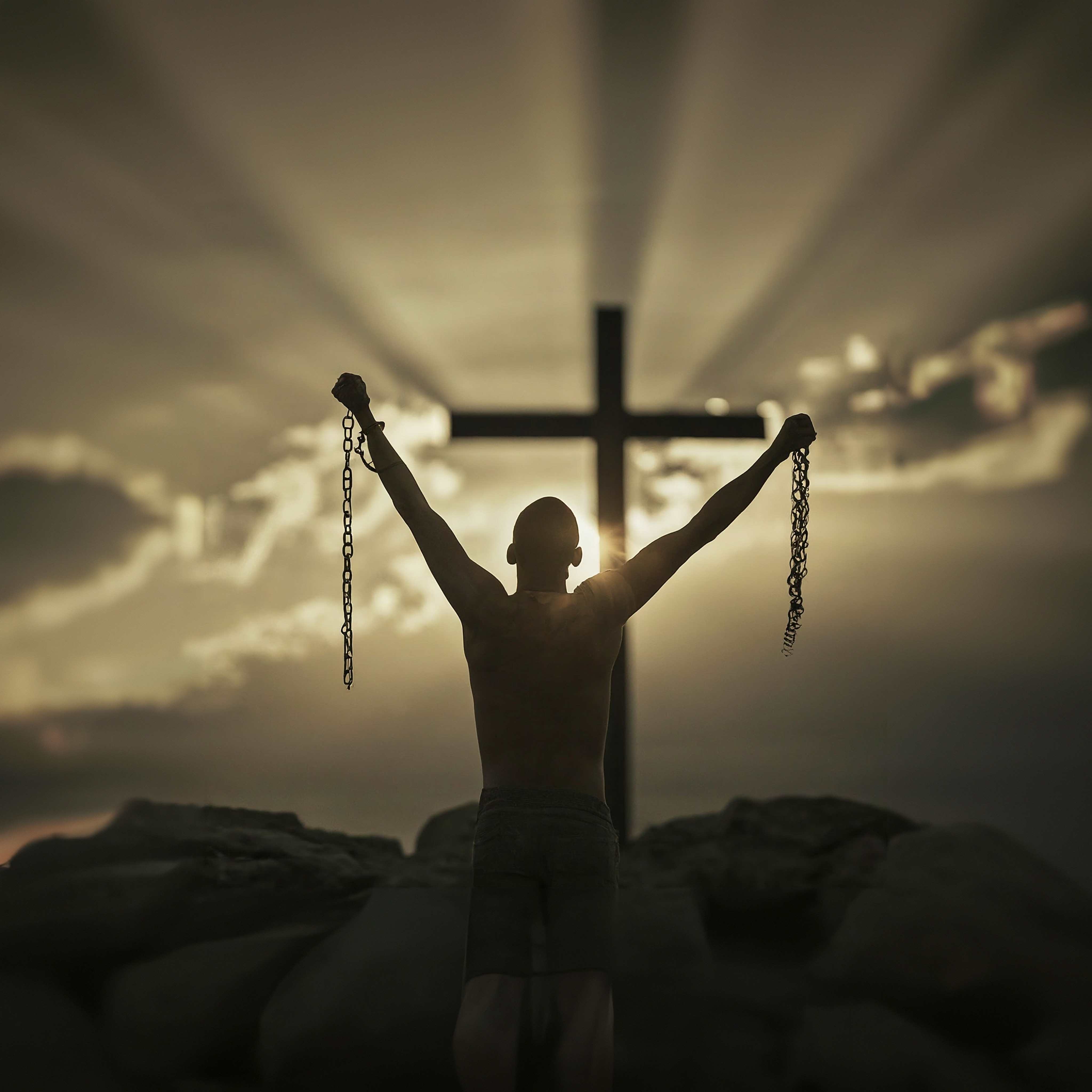
“For the law of the Spirit of life in Christ
Jesus has made me free from the law of sin and death.”
(Romans
8:2)
Esther
– Queen of Persia – Wikipedia
Esther
From Wikipedia, the free encyclopedia
This article is about the heroine of the Book of Esther.
For the book of Esther, see Book of Esther. For other uses, see Esther
(disambiguation).
Esther
אֶסְתֵּר
Born Hadassah (הֲדַסָּה)
Achaemenid Empire
Title Queen of
Persia and Medes
Spouse(s) Ahasuerus
of Persia (Either one among:
•
Xerxes I
•
Artaxerxes I
•
Artaxerxes II)
Parent
Abihail
(biological father)
Mordecai (adoptive father)
Esther (/ˈɛstər/;
Hebrew: אֶסְתֵּר,
romanized: ʾEstēr),
originally Hadassah (/həˈdɑːsə/;
Hebrew: הֲדַסָּה,
romanized: Hăḏassā),
is the eponymous heroine of the Book of Esther in the Hebrew Bible.
According to the biblical narrative, which is set in the
Achaemenid Empire, the Persian king Ahasuerus falls in love with Esther and
marries her.[1] His grand vizier Haman is offended by Esther's cousin and
guardian Mordecai because of his refusal to bow before him. When confronted,
Mordecai's excuse was simply that he was a Jew. Various interpretations have
been offered as to what Mordecai's concern was. Consequently, Haman plots to
have all of Persia's Jews killed, and eventually convinces Ahasuerus to permit
him to do so. However, Esther foils the plan by revealing and decrying Haman's
plans to Ahasuerus, who then has Haman executed and grants permission to the
Jews to take up arms against their enemies;[2] Esther is hailed for her courage
and for working to save the Jews of Persia from eradication.
The Book of Esther's story provides the traditional
explanation for Purim, a celebratory Jewish holiday that is observed on the
Hebrew date on which Haman's order was to go into effect, which is the day that
the Jews killed their enemies after Esther exposed Haman's intentions to her
husband; scholars have taken a mixed view as to the Book of Esther's
historicity, with debates over its genre and the origins of Purim.[3][a]
Two related forms of the Book of Esther exist: a shorter
Biblical Hebrew-sourced version found in Jewish and Protestant Bibles, and a
longer Koine Greek-sourced version found in Catholic
and Orthodox Bibles.[4]
When she is introduced, in Esther 2:7, she is first
referred to by the Hebrew name Hadassah,[5] which means 'myrtle tree'.[6] This
name is absent from the early Greek manuscripts, although present in the targumic texts, and was probably added to the Hebrew text
in the 2nd century CE at the earliest to stress the heroine's Jewishness.[7]
The name Esther probably derives from the name of the Babylonian goddess Ishtar
or from the Persian word cognate with the English word star (implying an
association with Ishtar) though some scholars contend it is related to the
Persian words for 'woman' or 'myrtle'.[8]
Narrative
Main article: Book of Esther
In the third year of the reign of King Ahasuerus of Persia,
the king banishes his queen, Vashti for refusing to appear before him as
summoned, and seeks a new queen. Beautiful maidens gather together at the harem
in the citadel of Susa under the authority of the eunuch Hegai.[1]
Esther, a cousin of Mordecai, was a member of the Jewish
community in the Exilic Period who claimed as an ancestor Kish, a Benjamite who
had been taken from Jerusalem into captivity. She was the orphaned daughter of
Mordecai's uncle, Abihail, from the tribe of Gad.
According to the biblical narrative, she had a lovely figure and was beautiful.
Upon the king's orders, Esther is taken to the palace where Hegai
prepares her to meet the king. Even as she advances to the highest position of
the harem, perfumed with gold and myrrh and allocated certain foods and
servants, she is under strict instructions from Mordecai, who meets with her
each day, to conceal her Jewish origins. The king falls in love with her and
makes her his Queen.[1]
Following Esther's coronation, Mordecai learns of an
assassination plot by Bigthan and Teresh
to kill King Ahasuerus. Mordecai tells Esther, who tells the king in the name
of Mordecai, and he is saved. This act of great service to the king is recorded
in the Annals of the Kingdom.
After Mordecai saves the king's life, Haman the Agagite is made Ahasuerus' highest adviser, and orders that
everyone bow down to him. When Mordecai (who had stationed himself in the
street to advise Esther) refuses to bow to him, Haman pays King Ahasuerus
10,000 silver talents for the right to exterminate all of the Jews in
Ahasuerus' kingdom. Haman casts lots, Purim, using supernatural means, and sees
that the thirteenth day of the Month of Adar is a fortunate day for the
genocide. Using the seal of the king, in the name of the king, Haman sends an
order to the provinces of the kingdom to allow the extermination of the Jews on
the thirteenth of Adar. When Mordecai learns of this, he tells Esther to reveal
to the king that she is Jewish and ask that he repeal the order. Esther
hesitates, saying that she could be put to death if she goes to the king
without being summoned; nevertheless, Mordecai urges her to try. Esther asks
that the entire Jewish community fast and pray for three days before she goes
to see the king; Mordecai agrees.
On the third day, Esther goes to the courtyard in front of
the king's palace, and she is welcomed by the king, who stretches out his
scepter for her to touch, and offers her anything she wants "up to half of
the kingdom". Esther invites the king and Haman to a banquet she has
prepared for the next day. She tells the king she will reveal her request at
the banquet. During the banquet, the king repeats his offer again, whereupon
Esther invites both the king and Haman to a banquet she is making on the
following day as well.
Seeing that he is in favor with the king and queen, Haman
takes counsel from his wife and friends to build a gallows
upon which to hang Mordecai; as he is in their good favors, he believes he will
be granted his wish to hang Mordecai the very next day. After building the
gallows, Haman goes to the palace in the middle of the night to wait for the
earliest moment he can see the king.
That evening, the king, unable to sleep, asks that the Annals
of the Kingdom be read to him so that he will become drowsy. The book
miraculously opens to the page telling of Mordecai's great service, and the
king asks if he had already received a reward. When his attendants answer in
the negative, Ahasuerus is suddenly distracted and demands to know who is
standing in the palace courtyard in the middle of the night. The attendants
answer that it is Haman. Ahasuerus invites Haman into his room. Haman, instead
of requesting that Mordecai be hanged, is ordered to take Mordecai through the
streets of the capital on the Royal Horse wearing the royal robes. Haman is
also instructed to yell, "This is what shall be done to the man whom the
king wishes to honor!"
After spending the entire day honoring Mordecai, Haman
rushes to Esther's second banquet, where Ahasuerus is already waiting.
Ahasuerus repeats his offer to Esther of anything "up to half of the
kingdom". Esther tells Ahasuerus that while she appreciates the offer, she
must put before him a more basic issue: she explains that there is a person
plotting to kill her and her entire people, and that this person's intentions
are to harm the king and the kingdom. When Ahasuerus asks who this person is,
Esther points to Haman and names him. Upon hearing this, an enraged Ahasuerus
goes out to the garden to calm down and consider the situation.
While Ahasuerus is in the garden, Haman throws himself at
Esther's feet asking for mercy. Upon returning from the garden, the king is
further enraged. As it was the custom to eat on reclining couches, it appears
to the king as if Haman is attacking Esther. He orders Haman to be removed from
his sight. While Haman is being led out, Harvona, a
civil servant, tells the king that Haman had built a gallows
for Mordecai, "who had saved the king's life". In response, the king
says "Hang him (Haman) on it".
After Haman is put to death, Ahasuerus gives Haman's estate
to Esther. Esther tells the king about Mordecai being her relative, and the
king makes Mordecai his adviser. When Esther asks the king to revoke the order
exterminating the Jews, the king is initially hesitant, saying that an order
issued by the king cannot be repealed. Ahasuerus allows Esther and Mordecai to
write another order, with the seal of the king and in the name of the king, to
allow the Jewish people to defend themselves and fight with their oppressors on
the thirteenth day of Adar.
On the thirteenth day of Adar, the same day that Haman had
set for them to be killed, the Jews defend themselves in all parts of the
kingdom and rest on the fourteenth day of Adar. The fourteenth day of Adar is
celebrated with the giving of charity, exchanging foodstuffs, and feasting. In
Susa, the Jews of the capital were given another day to kill their oppressors;
they rested and celebrated on the fifteenth day of Adar, again giving charity,
exchanging foodstuffs, and feasting as well.[9]
The Jews established an annual feast, the feast of Purim,
in memory of their deliverance. Haman having set the date of the thirteenth of
Adar to commence his campaign against the Jews, this determined the date of the
festival of Purim.[10]
Historicity
Although the story may have some basis in actual events,
there is general agreement among scholars that the book of Esther is a work of
fiction.[11][b] Persian kings did not marry outside of the seven Persian noble
families, making it unlikely that there was a Jewish queen Esther.[12][13][c]
Further, the name Ahasuerus can be translated to Xerxes, as both derive from
the Persian Khshayārsha.[14][15] Ahasuerus as
described in the Book of Esther is usually identified in modern sources to
refer to Xerxes I,[16][17] who ruled between 486 and 465 BCE,[14] as it is to
this monarch that the events described in Esther are thought to fit the most
closely.[15][18] However, Xerxes' first queen was Amestris,
further highlighting the fictitious nature of the story.[12][c]
Some scholars speculate that the story was created to
justify the Jewish appropriation of an originally non-Jewish feast.[19] The
festival which the book explains is Purim, which is explained as meaning
"lot", from the Babylonian word puru. One
popular theory says the festival has its origins in a historicized Babylonian
myth or ritual in which Mordecai and Esther represent the Babylonian gods Marduk and Ishtar, while others trace the ritual to the
Persian New Year, and scholars have surveyed other theories in their works.[20]
Some scholars have defended the story as real history,[21] but the attempt to
find a historical kernel to the narrative is considered "likely to be
futile" in a study by Sara Raup Johnson.[20]
Interpretations
Further information: Esther in rabbinic literature
The Book of Esther begins by portraying Esther as beautiful
and obedient, though a relatively passive figure.[citation needed] Throughout
the story, she evolves into a character who takes a decisive role in her own
future and that of her people.[22] According to Sidnie
White Crawford, "Esther's position in a male court mirrors that of the
Jews in a Gentile world, with the threat of danger ever present below the
seemingly calm surface."[23] Esther is compared to Daniel in that both
represent a "type" for Jews living in Diaspora, and hoping to live a
successful life in an alien environment.
According to Susan Zaeske, by
virtue of the fact that Esther used only rhetoric to convince the king to save
her people, the story of Esther is a "rhetoric of exile and empowerment
that, for millennia, has notably shaped the discourse of marginalized peoples
such as Jews, women, and African Americans", persuading those who have
power over them.[24]
Persian culture
Interior of the structure venerated as the tomb of Esther
and Mordechai
Modern day Persian Jews are called "Esther's
Children". A building venerated as being the Tomb of Esther and Mordechai
is located in Hamadan, Iran,[25] although the village of Kafr
Bir'im in northern Israel also claims to be the
burial place of Queen Esther.[26]
Artistic depictions of Esther
Throughout history, many artists have created paintings
depicting Esther. Notable early portrayals include the Heilspiegel
Altarpiece by Konrad Witz[1] and Esther Before Ahasuerus by Tintoretto (1546–47,
Royal Collection) which show Esther appearing before the king to beg mercy for
the Jews, despite the punishment for appearing without being summoned being
death. This scene became one of the most commonly depicted parts of the story.
Esther's faint had not often been depicted in art before
Tintoretto. It is shown in the series of cassone scenes of the Life of Esther
attributed variously to Sandro Botticelli and Filippino
Lippi from the 1470s. In other cassone depictions, for example by Filippino Lippi, Esther's readiness to show herself before
the court is contrasted to Vashti's refusal to expose herself to the public
assembly.[27][28]
Esther was regarded in Catholic theology as a typological
forerunner[29] of the Virgin Mary in her role as intercessor[30] Her regal
election parallels Mary's Assumption and as she becomes queen of Persia, Mary
becomes queen of heaven; Mary's epithet as 'stella maris' parallels Esther as a 'star' and both figure as
sponsors of the humble before the powerful.[31] Contemporary viewers would
likely have recognized a similarity between the faint and the common motif of
the Swoon of the Virgin, seen in many depictions of the Crucifixion of
Jesus.[32] Esther's fainting became a popular subject in the Baroque painting
of the following century. A notable Baroque example is Esther Before Ahasuerus
by Artemisia Gentileschi.[33]
In Christianity
Esther is commemorated as a matriarch in the Calendar of
Saints of the Lutheran Church – Missouri Synod on May 24.
Esther is recognized as a saint in the Eastern Orthodox
Church, commemorated on the Sunday before Christmas. The Septuagint edition of
Esther contains six parts (totaling 107 verses) not found in the Hebrew Bible.
Although these interpretations originally may have been composed in Hebrew,
they survive only in Greek texts. Because the Hebrew Bible's version of
Esther's story contains neither prayers nor even a single reference to God,
Greek redactors apparently felt compelled to give the tale a more explicit
religious orientation, alluding to "God" or the "Lord"
fifty times."[34] These additions to Esther in the Apocrypha were added
approximately in the second or first century BCE.[35]
The story of Esther is also referenced in chapter 28 of 1 Meqabyan, a book considered canonical in the Ethiopian
Orthodox Tewahedo Church.[36]
Music
Marc-Antoine Charpentier, Historia Esther, H.396, for
soloist, chorus, strings and continuo, 1677
Élisabeth Jacquet de La Guerre, "Esther", for soprano and
continuo, in Cantates françaises
sur des sujets tirés de l'Écriture, book I, 1708
George Frideric Handel, Esther,
with a libretto based on a play by Jean Racine, 1718 and 1732
Alessandro Stradella, Ester,
oratorio, 1673