Home About Us Our Publications Make a
Donation Email: glenn.benson@yourbrotherglenn.org
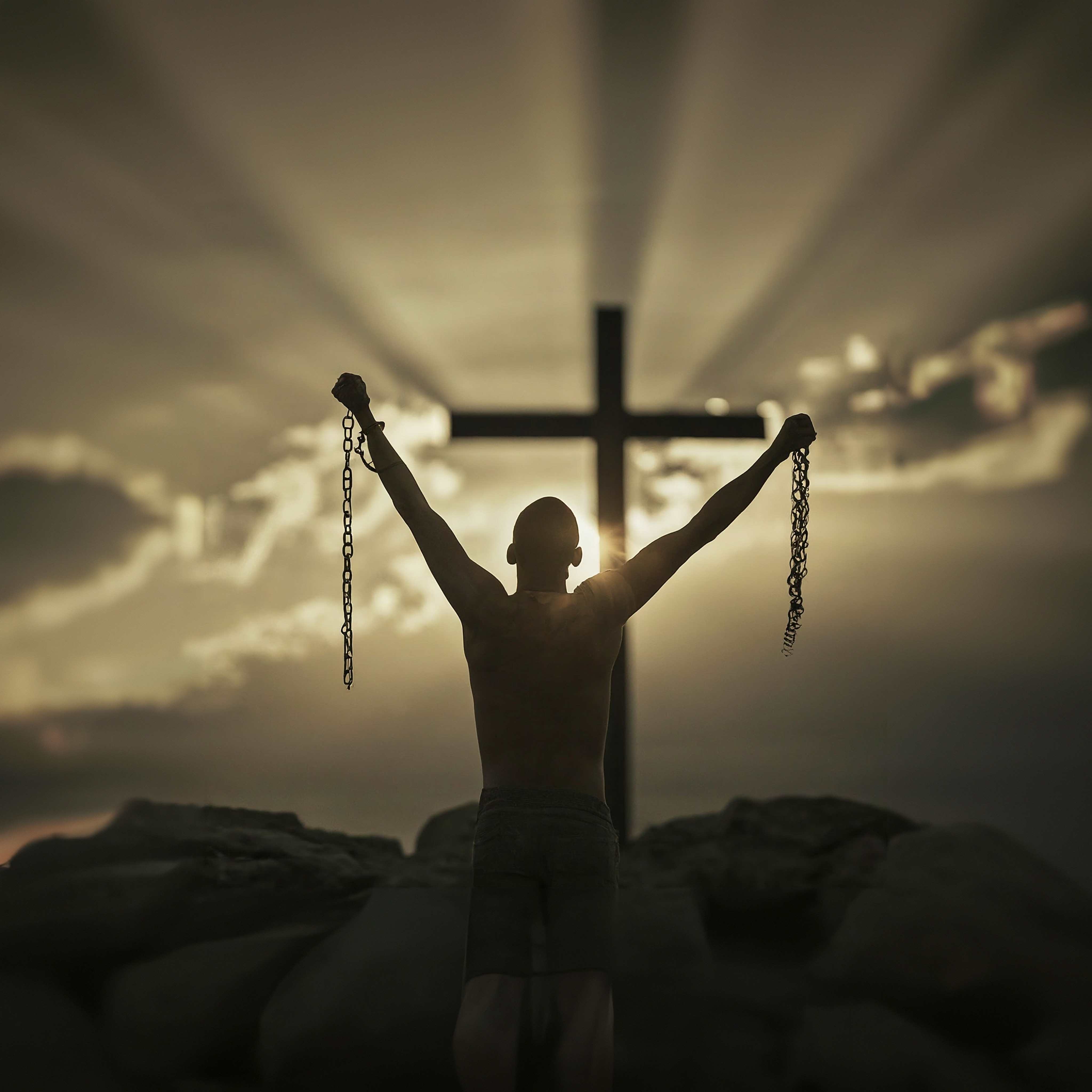
“For the law of the Spirit of life in Christ
Jesus has made me free from the law of sin and death.”
(Romans
8:2)
Elijah
– Hebrew Prophet – Britannica
Elijah
Hebrew prophet
Also known as: Elia, Elias, Eliyyahu
Kevin Smyth
Britannica Editors
Aug. 1, 2026 •History
Elijah (flourished 9th century BCE) was a Hebrew prophet
who ranks with Moses in saving the religion of Yahweh from being corrupted by
the nature worship of Baal. Elijah’s name means “Yahweh is my God” and is
spelled Elias in some versions of the Bible. The story of his prophetic career
in the northern kingdom of Israel during the reigns of Kings Ahab and Ahaziah
is told in 1 Kings 17–19 and 2 Kings 1–2 in the Bible. Elijah claimed that
there was no reality except the God of Israel, stressing monotheism to the
people with possibly unprecedented emphasis. He is commemorated by Christians
on July 20 and is recognized as a prophet in Islam.
Historical setting
The Israelite king Omri had allied himself with the
Phoenician cities of the coast, and his son Ahab was married to Jezebel,
daughter of Ethbaal, king of Tyre and Sidon. Jezebel, with her Tyrian courtiers
and a large contingent of pagan priests and prophets, propagated her native
religion in a sanctuary built for Baal in the royal city of Samaria. This meant
that the Israelites accepted Baal as well as Yahweh, putting Yahweh on a par
with a nature-god whose supreme manifestations were the elements and biological
fertility, celebrated often in an orgiastic cult. Jezebel’s policies
intensified the gradual contamination of the religion of Yahweh by the
Canaanite religion of Baal, a process made easier by the sapping of the Israelites’
faith in Yahweh.
Story
Elijah was from Tishbe in Gilead. The narrative in 1 Kings
relates how he suddenly appears during Ahab’s reign to proclaim a drought in
punishment of the cult of Baal that Jezebel was promoting in Israel at Yahweh’s
expense. Later Elijah meets 450 prophets of Baal in a contest of strength on
Mount Carmel to determine which deity is the true God of Israel. Sacrifices are
placed on an altar to Baal and one to Yahweh. The pagan prophets’ ecstatic
appeals to Baal to kindle the wood on his altar are unsuccessful, but Elijah’s
prayers to Yahweh are answered by a fire on his altar. This outcome is taken as
decisive by the Israelites, who slay the priests and prophets of Baal under
Elijah’s direction. The drought thereupon ends with the falling of rain.
Elijah flees the wrath of the vengeful Jezebel by
undertaking a pilgrimage to Mount Horeb (Sinai), where he is at first
disheartened in his struggle and then miraculously renewed. In a further
narrative, King Ahab has a man named Naboth condemned to death in order to gain
possession of his vineyard. Ahab’s judicial murder of Naboth and confiscation
of his vineyard arouse Elijah as the upholder of the moral law, as before he
had come forward as the champion of monotheism. Elijah denounces Ahab for his
crimes, asserting that all men are subject to the law of God and are therefore
equals. Later Ahab’s son, King Ahaziah, appeals to Baal to heal him of an
injury, and Elijah once more upholds the exclusive rights of Yahweh by bringing
down “fire from heaven.” After bestowing his mantle on his successor, Elisha,
the prophet Elijah is taken up to heaven in a whirlwind.
Theological significance
One of the most important moments in the history of
monotheism is the climax of Elijah’s struggle with Baalism. His momentous
words, “If Yahweh is God, follow him, but if Baal, then follow him”—especially
when taken with the prayer “Hear me, Yahweh, that this people may know that
you, Yahweh, are God”—show that more is at stake than simply allotting to
divinities their particular spheres of influence. The true question is whether
Yahweh or Baal is God, simply and universally. Elijah’s words proclaim that
there is no reality except the God of Israel, there are no other beings
entitled to the name of divinity. The acclamation of the people, “Yahweh, he is
God” expresses a fully conscious monotheism, never before perhaps brought home
to them so clearly.
Elijah’s deepest prophetic experience takes place on his
pilgrimage to Horeb, where he learns that God is not in the storm, the
earthquake, or the lightning. Nature, so far from being God’s embodiment, is
not even an adequate symbol. God is invisible and spiritual and is best known
in the intellectual word of revelation, “the still, small voice.” The
transcendence of God receives here one of its earliest expressions. Elijah’s
story also expresses for the first time a thought that was to dominate Hebrew
prophecy: in contrast to the bland hopes of the people, salvation is bestowed
only on a “remnant,” those purified by God’s judgment. The theme of the later prophets,
that morality must be at the heart of ritual worship, is also taught by Elijah,
who upholds the unity of law and religion against the despotic cruelty of a
king influenced by a pagan wife. Elijah’s work may also be regarded as a
protest against every effort to find religious experience in self-induced
ecstasy and sensual frenzy rather than in a faith linked with reason and
morality.
Kevin Smyth The Editors of Encyclopaedia Britannica