Home About Us Our Publications Make a
Donation Email:
glenn.benson@yourbrotherglenn.org
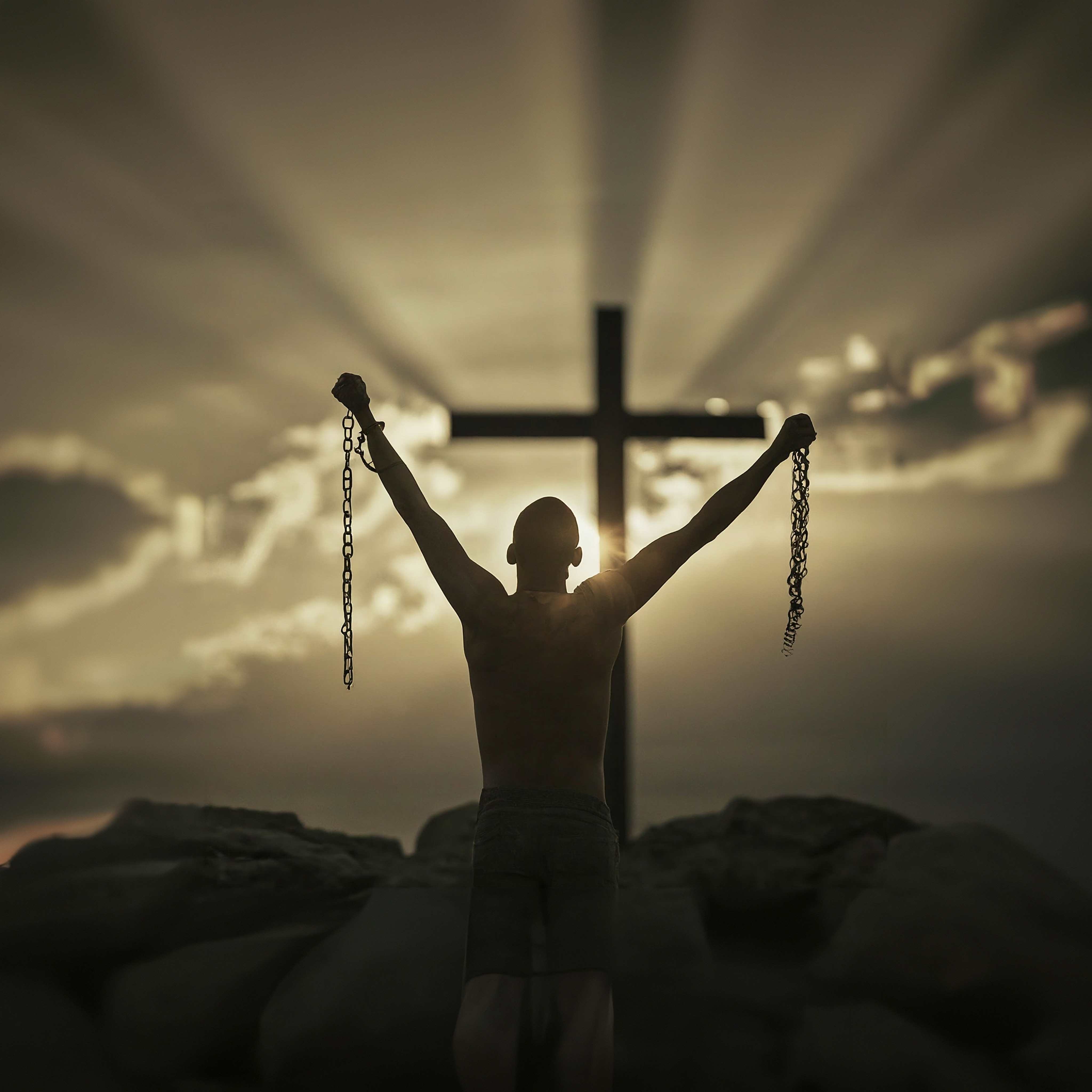
“For the law of the Spirit of life in Christ
Jesus has made me free from the law of sin and death.”
(Romans
8:2)
Denial
of Peter – Wikipedia
The following is an Article “Denial of Peter” from
Wikipedia:
Denial of Peter
The Denial of Saint Peter, an oil-on-canvas painting by
Gerard
Seghers, dating to around 1620–25 and now held by the North
Carolina Museum of Art
[1]
The Denial of Peter (or Peter's Denial) refers to three
acts of denial of Jesus by the Apostle
Peter as described in all four Gospels of the New
Testament.
[2] Most New Testament scholars
accept the historicity of the Denial of Peter.[3]
All four Canonical Gospels state that during Jesus's Last
Supper with his disciples, he predicted
that Peter would deny knowledge of him, stating that Peter
would disown him before the
rooster crowed the next morning.[a] Following the arrest of
Jesus, Peter denied knowing him
three times, but after the third denial, he heard the
rooster crow and recalled the prediction as
Jesus turned to look at him. Peter then began to cry
bitterly.[5][b] This final incident is known as
the Repentance of Peter.
[6]
The turbulent emotions behind Peter's denial and later
repentance have been the subject of
major works of art for centuries. Examples include
Caravaggio's Denial of Saint Peter, which is
now at the Metropolitan Museum of Art. The incidents have
also inspired segments in various
films related to the life and death of Jesus Christ (for
instance, when Francesco De Vito
performed as Peter in The Passion of the Christ) as well as
references in musical works, both
religious and secular.
The Denial of Saint Peter by Caravaggio
Flemish painting: Denial of Saint Peter by
Gerard Seghers
The Denial of St Peter by Gerard van
Honthorst (1622–24)
The prediction, made by Jesus during the Last Supper that
Peter would deny and disown him,
appears in the Gospel of Matthew 26:33–35 (https://www.biblica.com/bible/?osis=niv:Matthe
w%2026:33–35), the Gospel of Mark 14:29–31
(https://www.biblica.com/bible/?osis=niv:Mar
k%2014:29–31), the Gospel of Luke 22:33–34
(https://www.biblica.com/bible/?osis=niv:Luk
e%2022:33–34) and the Gospel of John 13:36–38 (https://www.biblica.com/bible/?osis=niv:J
ohn%2013:36–38). The denial accounts in the Gospels differ
from each other.
Biblical accounts
According to the Gospel of Matthew:
Peter replied, "Even if all fall away on account of
you, I never will." "I tell you the
truth," Jesus answered, "This very night, before
the rooster crows, you will disown me
three times." But Peter declared, "Even if I have
to die with you, I will never disown
you." And all the other disciples said the same.[7]
Later that night, Jesus was arrested. The first denial to a
servant girl in Luke 22:54–57 (https://
www.biblica.com/bible/?osis=niv:Luke%2022:54–57) is as
follows:
Then they seized him and led him away, bringing him into
the high priest's house.
Peter followed at a distance and when they had kindled a
fire in the middle of the
courtyard and had sat down together, Peter sat down with
them. A servant girl saw
him seated there in the firelight. She looked closely at
him and said, "This man was
with him." Panic stricken, he denied it. "Woman,
I don't know him," he said.[8]
The second denial to the same girl in Mark 14:69–70
(https://www.biblica.com/bible/?osis=ni
v:Mark%2014:69–70) is:
When the servant girl saw him there, she said again to
those standing around, "This
fellow is one of them." Again he denied it.
The third denial to a number of people, is emphatic as he
curses according to Matthew 26:73–
75 (https://www.biblica.com/bible/?osis=niv:Matthew%2026:73–75):
After a little while, those standing there went up to Peter
and said, "Surely you are one
of them, for your accent gives you away." Then he
began to call down curses on himself
and he swore to them, "I don't know the man!" Immediately
a rooster crowed. Then
Peter remembered the word Jesus had spoken: "Before
the rooster crows, you will
disown me three times." And he went outside and wept
bitterly.
The Gospel of Luke 22:59–62
(https://www.biblica.com/bible/?osis=niv:Luke%2022:59–62)
describes the moment of the last denial as follows:
About an hour later another asserted, "Certainly this
fellow was with him, for he is a
Galilean." Peter replied, "Man, I don't know what
you're talking about!" Just as he was
speaking, the rooster crowed. The Lord turned and looked
straight at Peter. Then Peter
remembered the word the Lord had spoken to him:
"Before the rooster crows today,
you will disown me three times." And he went outside
and wept bitterly.
The Gospel of John 18:15–27 (https://www.biblica.com/bible/?osis=niv:John%2018:15–27)
describes the account of the three denials as follows:
Simon Peter and another disciple were following Jesus.
Because this disciple was
known to the high priest, he went with Jesus into the high
priest's courtyard, but Peter
had to wait outside at the door. The other disciple, who
was known to the high priest,
came back, spoke to the girl on duty there and brought
Peter in. "You are not one of his
disciples, are you?" the girl at the door asked Peter.
He replied, "I am not." ... As Simon
Peter stood warming himself, he was asked, "You are
not one of his disciples, are you?"
He denied it, saying, "I am not." One of the high
priest's servants, a relative of the man
whose ear Peter had cut off, challenged him, "Didn't I
see you with him in the olive
grove?" Again Peter denied it, and at that moment a
rooster began to crow.
Following the resurrection of Jesus, the Gospel of John
21:15–17 (https://www.biblica.com/bibl
e/?osis=niv:John%2021:15–17) narrates how Jesus asked Peter
three times if Peter loved him,
pointing to the rehabilitation of Peter following his
repentance.[9]
Karel Dujardin, Denial of Peter
For much of the period of three years that Jesus spent in
ministry, gathering and teaching
disciples, he had been observed, criticised and harassed by
scholars and priests. His teachings
were sometimes seen as heretical and his actions in
gathering a group of disciples as possibly
having political motivation. Jesus's capture and trials
were the culmination of this antipathy.
Context and traditions
Context
Peter was one of the twelve disciples most closely
associated with Jesus. His denials are made in
the face of accusation that he was "with Jesus",
the term indicating the bond of discipleship.
The Gospel of Matthew states that Peter denied Jesus
"in front of everyone", thus making a
public witness, affirming this with an oath.[10] Throughout
his Gospel, Matthew stresses the
importance of public witness as an essential element of
discipleship, stating in Matthew 10:32–
33
(https://www.biblica.com/bible/?osis=niv:Matthew%2010:32–33): "Whoever
acknowledges
me before men, I will also acknowledge him before my Father
in heaven. But whoever disowns
me before men, I will disown him before my Father in
heaven." Peter's denial is in direct
conflict with the nature of discipleship, as described by
Matthew.[11] Matthew has also
previously reported Jesus's teaching forbidding the use of
an oath:
"Again you have heard that it was said to those of
old, 'You shall not swear falsely, but
shall perform your oaths to the Lord'. But I say to you, do
not swear at all: neither by
heaven, for it is God's throne; nor by the earth, for it is
His footstool; nor by Jerusalem,
for it is the city of the great King. Nor shall you swear
by your head, because you
cannot make one hair white or black. But let your 'Yes' be
'Yes,' and your 'No,' 'No.' For
whatever is more than these is from the evil one.[12]
The New Testament descriptions of Peter's denial depict the
drama of the incident. Peter's
antagonists in the discussion of his discipleship progress
from a maid, to a maid plus a
bystander, to a whole crowd. His denial progresses from a
plea of ignorance, to a denial plus an
oath and then to cursing and swearing with a total denial
that he ever knew Jesus. The
significance of three denials lies in its superlative
force; it underscores the disciple's resolve to
deny Jesus (see Biblical numerology). The sound of the
rooster then brings a shock to Peter that
Jesus had predicted the three denials.[13]
This episode has been seen as an incident that sheds light
on the unique role of Peter and sets
him apart from the other disciples, just as in the Gospel
of Mark 16:7 (https://www.biblica.co
m/bible/?osis=niv:Mark%2016:7) in which the angel tells the
women to "go and tell his
disciples and Peter" about the resurrection of Jesus.
[14]
In this episode, as often elsewhere in
the Gospel of Mark, Peter acts as the focus of the
apostles, and an essential Christological image
is presented: the denials of Peter contrast with the frank
confessions of Jesus in his trial by the
Sanhedrin, portraying his faithfulness as prophet, Son and
Messiah.[15]
The triple denial of Peter is the impetus for the three
repetitive questions made by Jesus to
Peter at the Sea of Galilee after his resurrection,
"Simon, son of John, Do you love me?"
Although originally interpreted by Peter as a rebuke for
his three denials (also due to the use by
Jesus of his old name "Simon"), this event became
later viewed as a redemptive act by Jesus,
allowing Peter to publicly declare in front of his fellow
disciples that he truly did love his Lord
and thus become fully restored to his faith community.[16]
The three 'denials' are also present in a Gnostic source,
the Gnostic Apocalypse of Peter from
the Nag Hammadi library, but the roles are reversed in the
context of meditation and seeing
inner vision of the Master. In the Gnostic Apocalypse of
Peter, Jesus denies Peter "three times
in this night" as not ready for inner sight, 72,5.
Both details of "three times" denied and "in this
night" being present suggests a relationship to the
canonical portrayal of the Denial of Peter.[17]
Most New Testament scholars accept the historicity of the
Denial of Peter.[18] According to
Maurice Casey, the Gospel of Mark's narrative of Peter's
denial is largely historical, as the
church would not have created such an embarassing story.[19]
John P. Meier agreed that the
denial of Jesus by Peter after he was arrested is
historically accurate.[20]
Bishop Lancelot Andrewes composed the following prayer:
O Lord Jesus Christ, look upon us with those eyes of thine
where-with thou dist look
upon Peter in the hall; that with Peter we may repent and,
by the same love be
forgiven; for thine endless mercy's sake. Amen.
—Aitken 2006, p. 58
Referring to the tears shed by Peter during his repentance
in the context of the Sacrament of
Penance, Saint Ambrose said that "in the Church, there
are water and tears: the water of
Baptism and the tears of repentance".[21]
Traditionally, "tears of repentance", as exemplified by
Peter, have become a symbol both of mourning and comfort
and a sign at once of sins repented
and forgiveness sought.[22]
In the Scriptural Way of the Cross, introduced in 1991 by
Pope John Paul II as a version of the
Stations of the Cross and performed each Good Friday at the
Colosseum in Rome, the fourth
station is the Denial of Peter.
[23]
During Holy Week in Jerusalem, vigils at times stop at a
location traditionally considered the
location for the Repentance of Peter, not far from the
house of High Priest Caiaphas, involved
in the trial of Jesus.[24]
Justus Knecht comments on Peter's denial saying:
Historicity
Prayers and traditions
Commentary
The causes of Peter's fall were these: 1. He did not avoid
the proximate occasions of
sin; for at the time of his fall he was associating with
the enemies of Christ. If he had
left their company even after his first denial, he would
not have fallen so low. "He
that loves danger shall perish in it" (Ecclus. 3:27).
2. He had paid too little attention
to our Lord's warning words: "Satan hath desired to
sift you as wheat . . . This night
thou shalt deny Me thrice"; and he trusted too much in
himself: "Though all shall be
scandalized, yet not I. I will lay down my life for
Thee!" When he said those words he
meant them, for Peter had a very firm faith in our Lord,
and an ardent love for Him;
but he ought not to have forgotten that he was a weak man,
and that without God's
grace he could not remain faithful. Our Lord had said to
him but a very short time
before, as they were walking up the Mount of Olives:
"Without Me you can do
nothing!" 3. He fell, therefore, through over
self-confidence, and by neglecting our
Lord's exhortation: "Watch and pray, that ye enter not
into temptation!"[25]
Roger Baxter reflects on Peter's lack of faith in his
Meditations, writing:
A few hours before Peter had said, 'Though I should die
with Thee, I will not deny
Thee;' but now, alas! at the first word of a woman, from
shame and fear he denies
that he ever knew Him. How many are there now in existence
who, not from any
humility, but from mere apprehension of what the world will
say, are afraid to own
any Christian or virtuous action and to profess themselves
followers of Christ![26]
John P. Meier argues that the criterion of embarrassment
gives the story a strong claim to
authenticity, but it also could have been a substitute for
an even greater misdeed of Peter.[27]
Rembrandt: The Denial of Saint Peter,
1660
In art and music
The episode has been the subject of works of art for
centuries. It has also been dramatized in
musical settings of the Passion story. It has been depicted
in a varieties of mediums and
methods, ranging from 6th century mosaic at the Basilica of
Sant'Apollinare Nuovo to Russian
icons and oil paintings by many old masters. The subject
was sometimes included in cycles of
the Life of Christ or the Passion, often as the only scene
not to include the figure of Christ.
In Rembrandt's 1660 depiction of The Denial of Saint Peter,
now in the Rijksmuseum,
Amsterdam, influenced by engravings of the c.1623 version
by Gerard Seghers, he presents the
servant girl who recognizes Peter with a candle,
illuminating Peter's face. Two soldiers look with
suspicion as Peter speaks, while Jesus is shown in the
distance, his hands bound behind him,
turning to look at Peter. Peter's faces away from Jesus,
and he gestures with his left hand,
although his expression is free of defiance.[28]
Caravaggio's 1610 Denial of Saint Peter is now at the
Metropolitan Museum of Art in New York.
Author George Weatherhead admires Caravaggio's depiction,
the way Peter exhibits a wavering
trepidation in his unsteady features, conscious of the
unworthy falsehood he was telling. His
lips quiver and his eyes seek, yet can not find the
firmness of truth.[29]
In this painting,
Caravaggio portrayed the servant girl using the same head
of the woman that he used in his
depiction of The Beheading of Saint John the Baptist.
[30]
A related subject, the "Repentance of Peter",
showing the end of the episode, was not often seen
before Catholic Counter-Reformation art, where it became
popular as an assertion of the
sacrament of Confession against Protestant attacks. This
followed an influential book by the
Jesuit Cardinal Robert Bellarmine (1542–1621). The image
typically shows Peter in tears, as a
half-length portrait with no other figures, often with
hands clasped as at right, and sometimes
the cock in the background; it was often coupled with a
repentant Mary Magdalen, another
exemplar from Bellarmine's book.[31]
Georges de La Tour reprised this penitential iconography in
Saint Peter Repentant (1645) but
added a lantern by the saint's feet and a dangling vine
above the cock. These allusions to Peter's
denial as a lapse from his rightful path and break with the
bonds of discipleship are elaborated
in Georges de La Tour's Denial of Saint Peter (1650).[32]
The Passion story has been set in music by numerous
composers. The episode of Peter's denial
is conveyed with great poignancy by J.S. Bach in both the
St Matthew Passion and the St John
Passion. Gardiner 2013, p. 365 says "Inevitably we
suffer with Peter; but the uncomfortable
question Bach asks us to consider is, would any of us have
emerged from his ordeal with greater
credit?.
Denial of Saint Peter in art
Basilica of Sant'Apollinare
Nuovo, 6th century
Chludov
Psalter, 9th
century
Duccio, 1308–11 Our Lady of the
Fountains (La Brigue),
15th century
Simon
Bening,
1525–30 Jan van der
Venne : Denial of
Saint Peter
Repentance of
Peter, Petr Brandl,
1724
Knüpfer, Denial of Saint Peter
Adam de Coster, The Denial of Saint
Peter
Theodoor Rombouts, The Denial of Saint Peter,
1789
Gerard van Honthorst, The
Denial of Saint Peter, c.
1618–20
Nicolas Tournier, Denial of St
Peter, c. 1625
Mathieu Le Nain, The Denial of Saint
Peter, c. 1648
Christianity portal
Confession of Peter
Doubting Thomas
Gospel harmony
Jesus predicts his death
Life of Jesus in the New Testament
a. In some manuscripts of the Gospel of Mark, Jesus says
that by the time the rooster had
crowed twice, Peter would have denied him three times—the
rooster crows once when
Peter goes out to an entryway from the courtyard of the
high priest after his first denial to a
servant girl of the high priest and again as soon as he
denies Jesus to a small group, which
may have already heard him make his second denial to the
servant girl.[4]
b. In the Gospel of John, Peter does not react to the
rooster's crowing; unlike the Synoptics,
he is not said to recall Jesus' prediction nor to express
regret about his denials.
See also
References
Notes
1. "The Denial of St. Peter"
(https://ncartmuseum.org/art/detail/the_denial_of_st._peter). North
Carolina Museum of Art. Retrieved 15 April 2019.
2. Cullmann 1969, p. 105.
3. Winn, Adam (2010). Mark and the Elijah-Elisha Narrative:
Considering the Practice of
Greco-Roman Imitation in the Search for Markan Source
Material. Pickwick Publications.
ISBN 978-1608992010. "The historicity of Peter's
denial of Jesus is largely accepted by
New Testament interpreters"
4. "Mark 14 – New International Version"
(https://www.biblica.com/bible/niv/mark/14/).
Biblica.com. Retrieved 21 February 2024.
5. Perkins 2000, p. 85.
6. Lange 1865, p. 499.
7. Matthew 26:33–35
(https://www.biblica.com/bible/?osis=niv:Matthew%2026:33–35)
8. Luke 22:55–57
(https://www.biblica.com/bible/?osis=niv:Luke%2022:55–57)
9. Boda & Smith 2006, p. 110.
10. Matthew 26:72
(https://www.biblegateway.com/passage/?search=Matthew+26:72&version=
nkjv)
11. Binz 1989, p. 54.
12. Matthew 5:33–37
(https://www.biblegateway.com/passage/?search=Matthew+5:33–37&vers
ion=nkjv)
13. Herrington 1992, p. 900.
14. Perkins 2000, p. 65.
15. Broadhead 1994, p. 154.
16. John 21:15–17
(https://www.biblica.com/bible/?osis=niv:John%2021:15–17)
17. "The Apocalypse of Peter"
(http://gnosis.org/naghamm/apopet.html). The Nag Hammadi
Library. Gnosis. Retrieved 2018-04-19.
18. Winn, Adam (2010). Mark and the Elijah-Elisha
Narrative: Considering the Practice of
Greco-Roman Imitation in the Search for Markan Source
Material. Pickwick Publications.
ISBN 978-1608992010. "The historicity of Peter's
denial of Jesus is largely accepted by
New Testament interpreters"
19. Casey, Maurice (2010). Jesus of Nazareth: An
Independent Historian's Account of his Life
and Teaching. T&T Clark. p. 442. ISBN 978-0567645173.
20. Meier, John (2001). A Marginal Jew: Rethinking the
Historical Jesus, Volume III. Yale
University Press. p. 244. ISBN 978-0300140323.
21. "Catechism of the Catholic Church"
(https://www.vatican.va/archive/ccc_css/archive/catechi
sm/p2s2c2a4.htm). Vatican. 1429. Retrieved 2018-04-19.
22. Boda & Smith 2006, p. 223.
23. "Station 4, Jesus is denied by Peter"
(https://www.vatican.va/news_services/liturgy/2007/via
_crucis/en/station_04.html). Stations of the Cross.
Vatican. Retrieved 2018-04-19.
24. Monti 1993, p. 150.
25. Knecht, Friedrich Justus (1910). "LXXII. The
Denial and Repentance of Peter — The
Despair of Judas"
(https://en.wikisource.org/wiki/A_Practical_Commentary_on_Holy_Script
ure/LXXII._The_Denial_and_Repentance_of_Peter_%E2%80%94_The_Despair_of_Juda
s.). A Practical Commentary on Holy Scripture. B. Herder.
Citations
26. Baxter, Roger (1823). "St. Peter's Denying
Christ" (https://en.wikisource.org/wiki/Meditation
s_For_Every_Day_In_The_Year/From_Septuagesima_Sunday_To_Easter#196).
Meditations For Every Day In The Year. New York: Benziger
Brothers.
27. John P. Meier, A Marginal Jew, Yale University Press,
2009. p 170
28. Durham 2004, p. 162.
29. Weatherhead 1834, p. 232.
30. Varriano 2006, p. 110.
31. Hall 1983, pp. 10, 315.
32. Judovitz 2018, pp. 35, 37.
Aitken, Jonathan (2006), Prayers for People Under Pressure
(https://books.google.com/books?i
d=rW7smhYIV9kC), Bloomsbury Academic, ISBN
978-0-8264-8275-4
Binz, Stephen J. (1989), The Passion and Resurrection
Narratives of Jesus: A Commentary (htt
ps://books.google.com/books?id=kjUUMGiVE-kC&pg=PA54),
Liturgical Press, ISBN 978-0-
8146-1771-7
Boda, Mark J.; Smith, Gordon T. (2006), Repentance in
Christian Theology (https://books.googl
e.com/books?id=lseYbjrdXhAC&pg=PA110), Liturgical
Press, ISBN 978-0-8146-5175-9
Broadhead, Edwin Keith (1994), Prophet, Son, Messiah:
Narrative Form and Function in Mark
14-16
(https://books.google.com/books?id=EejUAwAAQBAJ&pg=PA154), A&C Black,
ISBN 978-1-85075-476-3
Cullmann, O. (1969), Gerhard Kittel; Gerhard Friedrich
(eds.), Theological Dictionary of the
New Testament
(https://books.google.com/books?id=eEITN4tLxtoC), vol. VI, translated by
Bromiley, Geoffrey William, Wm. B. Eerdmans, ISBN
978-0-8028-2248-2
Durham, John I. (2004), The Biblical Rembrandt: Human
Painter in a Landscape of Faith (http
s://books.google.com/books?id=o1V_saJPmlUC&pg=PA162),
Mercer University Press,
ISBN 978-0-86554-886-2
Gardiner, John Eliot (2013), Music in the Castle of Heaven:
A Portrait of Johann Sebastian
Bach
(https://books.google.com/books?id=lSBuAAAAQBAJ&pg=PA365), Penguin,
ISBN 978-1-84614-721-0
Hall, James (1983), A History of Ideas and Images in
Italian Art (https://books.google.com/book
s?id=m_vpAAAAMAAJ), Harper & Row, ISBN
978-0-06-433317-7
Herrington, Daniel J. (1992), Karris, Robert J. (ed.), The
Collegeville Bible Commentary (https://
books.google.com/books?id=fJR0wYP12ZEC&pg=PA900), vol.
New Testament, NAB,
Liturgical Press, ISBN 978-0-8146-2211-7
Judovitz, Dalia (2018), Georges de La Tour and the Enigma
of the Visible (https://books.google.
com/books?id=V7ySswEACAAJ), Fordham University Press, ISBN
978-0-8232-774-38
Lange, Johann Peter (1865), The Gospel According to Matthew
(https://books.google.com/book
s?id=ZqOwxQEACAAJ&pg=PA499), New York: C. Scribner
Monti, James (1993), The week of salvation: history and
traditions of Holy Week, Our Sunday
Visitor, ISBN 978-0-87973532-6
Perkins, Pheme (2000). Peter: Apostle For The Whole Church
(https://books.google.com/book
s?id=sre1Itvw4SIC). Bloomsbury. ISBN 978-0-567-08743-0.
Sources
Varriano, John L. (2006), Caravaggio: The Art of Realism
(https://books.google.com/books?id=
d1vSYBORursC), Pennsylvania State University Press, ISBN
978-0-271-02717-3
Weatherhead, George Hume (1834), A Pedestrian Tour Through
France and Italy (https://book
s.google.com/books?id=DXsZmwM59jAC&pg=PA232), Simpkin
& Marshall
Witherington, Ben (1998), The Acts of the Apostles
(https://books.google.com/books?id=2P7zS
nM9BjMC&pg=PA350), Wm. B. Eerdmans, ISBN
978-0-8028-4501-6
Knecht, Friedrich Justus (1910). "The Denial and
Repentance of Peter — The Despair of
Judas."
(https://en.wikisource.org/wiki/A_Practical_Commentary_on_Holy_Scripture/LXXII.
_The_Denial_and_Repentance_of_Peter_%E2%80%94_The_Despair_of_Judas.).
A
Practical Commentary on Holy Scripture. B. Herder.
Retrieved from
"https://en.wikipedia.org/w/index.php?title=Denial_of_Peter&oldid=1365998275"