Home About Us Our Publications Make a
Donation Email: glenn.benson@yourbrotherglenn.org
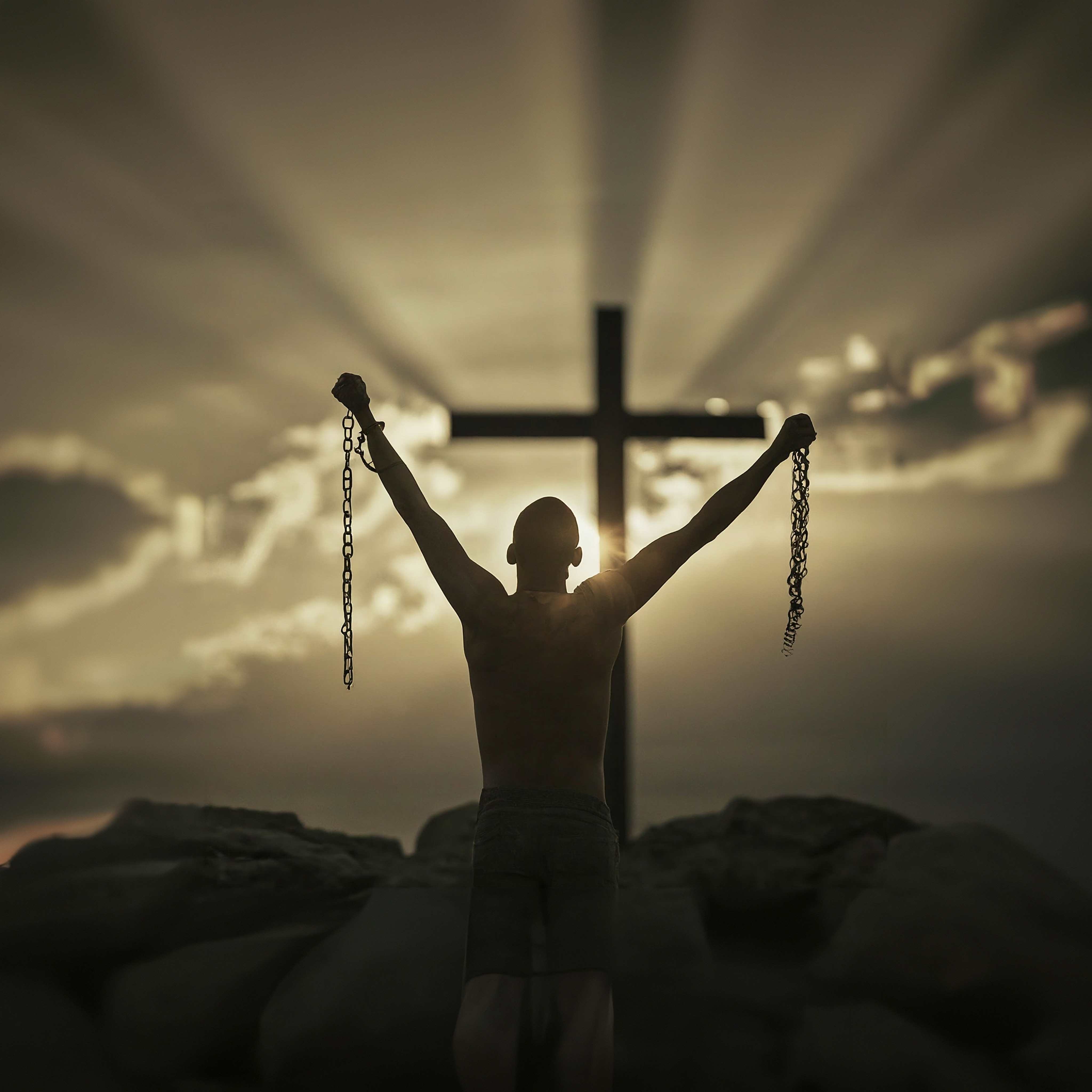
“For the law of the Spirit of life in Christ
Jesus has made me free from the law of sin and death.”
(Romans
8:2)
Daniel
– Biblical Figure – Wikipedia
Daniel (biblical figure)
Prophet
Venerated in
Judaism
Christianity
Islam
Baháʼí Faith
Major shrine Tomb of
Daniel, Susa, Iran
Feast July 21: Roman
Catholicism
December 17: Greek Orthodoxy
Tuesday after fourth Sunday of Pentecost: Armenian
Apostolic Church
Attributes Often
depicted in the den of the lions
Tradition or genre 6th
century BCE
Daniel (Aramaic and Hebrew: דָּנִיֵּאל,
romanized: Dānīyyēʾl, lit. 'God is my Judge';[a]
Greek: Δανιήλ, romanized: Daniḗl; Arabic: دانيال,
romanized: Dāniyāl) is the main character of the Book of Daniel.
According to the Hebrew Bible, Daniel was a noble Jewish youth of Jerusalem
taken into captivity by Nebuchadnezzar II of Babylon, serving the king and his
successors with loyalty and ability until the time of the Persian conqueror
Cyrus, all the while remaining true to the God of Israel.[1] While some
conservative scholars hold that Daniel existed and his book was written in the
6th century BCE,[2][3] most scholars agree that Daniel, as depicted in the Book
of Daniel, was not a historical figure, wherein the character was probably
based on a similar legendary Daniel from earlier traditions.[4] It follows that
much of the book is a cryptic allusion to the reign of the 2nd century BCE
Hellenistic king Antiochus IV Epiphanes.[5][6]
Six cities claim the Tomb of Daniel, the most famous being
that in Susa, in southern Iran, at a site known as Shush-e Daniyal.[7] He is
not a prophet in Judaism,[8] but the rabbis reckoned him to be the most
distinguished member of the Babylonian diaspora, unsurpassed in piety and good
deeds, firm in his adherence to the Law despite being surrounded by enemies who
sought his ruin, and in the first few centuries CE they wrote down the many
legends that had grown up around his name.[9] He is considered a prophet in
Christianity, and although he is not mentioned in the Quran, Muslim sources
describe him as a prophet.
Background
13th-century French depiction in stained glass of Daniel
interceding with Arioch, commander of the king's guard, who was ordered to
execute the Babylonian wise men after they were unable to interpret
Nebuchadnezzar's dream.
Daniel's name means "God (El) is my judge".[10]
While the best known Daniel is the hero of the Book of Daniel who interprets
dreams and receives apocalyptic visions, the Bible also briefly mentions three
other individuals of this name:
The Book of Ezekiel (14:14, 14:20 and 28:3) refers to a
legendary Daniel famed for wisdom and righteousness. In verse 14:14, Ezekiel
says of the sinful land of Israel that "even if these three, Noah, Daniel
and Job, were in it, they would deliver but their own lives by their
righteousness." In chapter 28, Ezekiel taunts the king of Tyre, asking
rhetorically, "art thou wiser than Daniel?"[5] The author of the Book
of Daniel appears to have taken this legendary figure, renowned for his wisdom,
to serve as his central human character.[11]
The Book of Ezra (8:2) mentions a priest named Daniel who
went from Babylon to Jerusalem with Ezra.[5]
The First Book of Chronicles (3:1) mentions a son of David
called Daniel.
Daniel (Dn'il, or Danel) is also the name of a figure in
the Aqhat legend from Ugarit.[5] (Ugarit was a Canaanite city destroyed around
1200 BCE – the tablet containing the story is dated c. 1360 BCE.)[12] This
legendary Daniel is known for his righteousness and wisdom and a follower of
the god El (hence his name), who made the god’s will known through dreams and
visions.[13] It is unlikely that Ezekiel knew the far older Canaanite legend,
but it seems reasonable to suppose that some connection exists between the
two.[14] The authors of the tales in the first half of the Book of Daniel were
likely also unaware of the Ugaritic Daniel and probably took the name of their
hero from Ezekiel; the author of the visions in the second half in turn took
his hero's name from the tales.[14] Some scholars have suggested identifying
the Daniel character in Ezekiel 28 with King David's son Daniel.[15]
Main article: Book of Daniel
The Book of Daniel begins with an introduction telling how
Daniel and his companions came to be in Babylon, followed by a set of tales set
in the Babylonian and Persian courts in the late 7th and early 6th centuries
BCE, followed in turn by a set of visions in which Daniel sees the remote future
of the world and of Israel.[16][17] The tales in chapters 1–6 can be dated to
the 3rd or early 2nd centuries BCE;[18] it is generally accepted that these
were expanded by the addition of the visions in chapters 8–12 between 167 and
164 BCE.[19]
In the third year of the reign of Jehoiakim, Daniel and his
friends Hananiah, Mishael, and Azariah are taken to Babylon by Nebuchadnezzar,
king of Babylon.[11] The four are chosen for their intellect and beauty to be
trained in the Babylonian court, and are given new names. Daniel is given the
Babylonian name Belteshazzar (Akkadian: 𒊩𒆪𒈗𒋀,
romanized: Beltu-šar-uṣur, written as NIN9.LUGAL.ŠEŠ), while his
companions are given the Babylonian names Shadrach, Meshach, and Abednego.
Daniel and his friends refuse the food and wine provided by the king of Babylon
to avoid becoming defiled. They receive wisdom from God and surpass "all
the magicians and enchanters of the kingdom." Nebuchadnezzar dreams of a
giant statue made of four metals with feet of mingled iron and clay, smashed by
a stone from heaven. Only Daniel is able to interpret it: the dream signifies
four kingdoms, of which Babylon is the first, but God will destroy them and
replace them with his own kingdom.
Nebuchadnezzar dreams of a great tree that shelters all the
world and of a heavenly figure who decrees that the tree will be destroyed;
again, only Daniel can interpret the dream, which concerns the sovereignty of
God over the kings of the earth. When Nebuchadnezzar's son Belshazzar uses
consecrated vessels from the Jewish temple as serving vessels for his
extravagant feast, a hand appears and writes a mysterious message on a wall,
which only Daniel can interpret; it tells the king that his kingdom will be
given to the Medes and Persians, because Belshazzar, unlike Nebuchadnezzar, has
not acknowledged the sovereignty of the God of Daniel. The Medes and Persians
overthrow Nebuchadnezzar and the new king, Darius the Mede, appoints Daniel to
high authority. Jealous rivals attempt to destroy Daniel with an accusation
that he worships God instead of the king, and Daniel is thrown into a den of
lions, but an angel saves him, his accusers are destroyed, and Daniel is
restored to his position.
In the third year of Darius, Daniel has a series of
visions. In the first, four beasts come out of the sea, the last with ten
horns, and an eleventh horn grows and achieves dominion over the Earth and the
"Ancient of Days" (God) gives dominion to "one like a son of
man". An angel interprets the vision. In the second, a ram with two horns
is attacked by a goat with one horn; the one horn breaks and is replaced by
four. A little horn arises and attacks the people of God and the temple, and
Daniel is informed how long the little horn's dominion will endure. In the
third, Daniel is troubled to read in holy scripture (the book is not named but
appears to be Jeremiah) that Jerusalem would be desolate for 70 years. Daniel
repents on behalf of the Jews and requests that Jerusalem and its people be
restored. An angel refers to a period of 70 sevens (or weeks) of years. In the
final vision, Daniel sees a period of history culminating in a struggle between
the "king of the north" and the "king of the south" in
which God's people suffer terribly; an angel explains that in the end the
righteous will be vindicated and God's kingdom will be established on Earth.
Additional tales (Greek text)
Susanna and the Elders, by Guido Reni
The Greek text of Daniel contains three additional tales,
two of which feature Daniel (the third is an expansion of the tale of the fiery
furnace).
The tale of Susanna tells how Daniel saves the reputation
of a young Jewish married woman when two lecherous Jewish elders condemn her to
death, supposedly for unchastity, but actually because she resisted their
advances. Daniel's clever cross-examination unmasks their evil and leads to
their deaths. The story is unique in that the villains are Jews instead of
heathens; it may have been written as a polemic by the Pharisees against the
Sadducees, who, according to their opponents, were abusing their control of the
courts.[20]
Bel and the Dragon consists of two episodes. In the first
Daniel exposes the deceptions of the heathen priests, who have been pretending
that their idols eat and drink (in fact it is the priests who have been
consuming the food set out for the false gods). In the second Daniel destroys a
giant serpent that Cyrus believes to be a god; the Babylonians revolt, Cyrus
imprisons Daniel without food, the prophet Habakkuk miraculously feeds him, and
Cyrus repents.[20]
Death and tomb of Daniel
Tomb of Daniel at Susa
Main article: Tomb of Daniel
The last mention of Daniel in the Book of Daniel is in the
third year of Cyrus (Daniel 10:1). Rabbinic sources suppose that he was still
alive during the reign of the Persian king Ahasuerus (better known as
Artaxerxes – Babylonian Talmud, Megillah 15a, based on the Book of Esther 4,
5), but he was killed by Haman, the wicked prime minister of Ahasuerus (Targum
Sheini on Esther, 4, 11).
The 1st century Jewish writer Josephus reported that
Daniel's body lay in a tower in Ecbatana in Parthia, alongside the bodies of
the kings of the Medes and Persians; later Jewish authorities said he was
buried in Susa, and that near his house were hidden the vessels from the Temple
of Solomon. Muslim sources reported that the Muslims had discovered his body,
or possibly only a box containing his nerves and veins, together with a book, a
jar of fat, and a signet ring engraved with the image of a man being licked by
two lions. The corpse was reburied, and those who buried it were decapitated to
prevent them from revealing the spot.[21]
Today six cities claim Daniel's Tomb: Babylon, Kirkuk and
Muqdadiyah in Iraq, Susa and Malamir in Iran, and Samarkand in Uzbekistan.[7]
The most famous is that in Susa, (Shush, in southern Iran), at a site known as
Shush-e Daniyal. According to Jewish tradition the rich and poor of the city
quarreled over possession of the body, and the bier was therefore suspended
from a chain over the centre of the river. A house of prayer open to all who
believed in God was built nearby, and fishing was prohibited for a certain
distance up and down the river; fish that swam in that section of the river had
heads that glinted like gold, and ungodly persons who entered the sacred
precinct would miraculously drown in the river.[22] To this day the tomb is a
popular site of pilgrimage.
Daniel in later tradition
Judaism
Main article: Daniel in rabbinic literature
Daniel's Answer to the King (1890) by Briton Rivière
Daniel is not a prophet in Judaism: prophecy is reckoned to
have ended with Haggai, Zechariah, and Malachi.[8] In the Hebrew Bible his book
is not included under the Prophets (the Hebrew Bible has three sections, Torah,
Prophets and Writings), but nevertheless the eight copies found among the Dead
Sea Scrolls and the additional tales of the Greek text are a testament to
Daniel's popularity in ancient times.[23]
The Jewish rabbis of the first millennium CE reckoned
Daniel to be the most distinguished member of the Babylonian diaspora,
unsurpassed in piety and good deeds, firm in his adherence to the Law despite
being surrounded by enemies who sought his ruin, and in the first few centuries
CE they wrote down the legends that had grown up around his name. His captivity
was foretold by the prophet Isaiah to King Hezekiah in these words, "they
(Hezekiah's descendants) shall be eunuchs in the palace of the king of
Babylon." This misfortune was turned to a blessing when Daniel and his
three companions were able to show their mutilated bodies to Nebuchadnezzar and
so prove their innocence of charges of leading an unchaste life.[9]
Daniel kept the welfare of Nebuchadnezzar in mind
continually, and when the king was condemned by God to live as a beast for a
certain period Daniel prayed that the period of punishment should be shortened,
and his prayer was granted.[24] When Nebuchadnezzar was dying he wished to
include Daniel among his heirs, but Daniel refused the honour, saying that he
could not leave the inheritance of his forefathers for that of the
uncircumcised.[25] Daniel also restored the sight of king Darius, who had
wrongly thrown the pious Daniel into prison on false charges, upon which many
converted to Judaism.[26]
Christianity
St. Daniel the prophet, c. 20th century. Orthodox
iconography.
The New Testament makes a reference to Daniel at Matthew
24:15, in reference to the abomination of desolation. He is commemorated in the
Coptic Church on the 23rd day of the Coptic month of Baramhat.[27] On the
Eastern Orthodox liturgical calendar, the feast days celebrating St. Daniel the
Prophet together with the Three Young Men, falls on December 17 (during the
Nativity Fast), on the Sunday of the Holy Forefathers[28] (the Sunday which
falls between December 11 and 17), and on the Sunday before Nativity.[29]
Daniel's prophecy regarding the stone which smashed the idol (Daniel 2:34–35)
is often used in Orthodox hymns as a metaphor for the Incarnation: the
"stone cut out" being symbolic of the Logos (Christ), and the fact
that it was cut "without hands" being symbolic of the virgin birth.
Thus the hymns will refer to the Theotokos (Virgin Mary) as the "uncut
mountain".
The Roman Catholic Church commemorates St. Daniel in the
Roman Martyrology on July 21.[30] Some local liturgical calendars of dioceses
also list his feast, sometimes on July 21 and sometimes on another day. For
example, the archdiocese of Gorizia celebrates the feast of St. Daniel, prophet
and confessor, on September 11. The reading of the Mass is taken from the Book
of Daniel, chapter 14; the Gradual from Psalm 91; the Alleluia verse from the
Epistle of James 1; and the Gospel from Matthew 24.[7] The Calendar of Saints
of the Lutheran Church–Missouri Synod commemorates Daniel, together with the
Three Young Men (Shadrach, Meshach, and Abednego), on December 17.[31]
Islam
Main article: Daniel in Islam
Illustration of a 1585–1590 Ottoman manuscript depicting
Danyal (right) speaking to king Nebuchadnezzar II as a dream interpreter.
Daniel (Arabic: دانيال,
Dānyāl) is not mentioned by name in the Qur'an and is generally not
considered by Sunnis to be a Prophet of Islam, unlike Shia Muslims and some
other denominations. However some literature by Muslims in later years contain
accounts of his prophet-hood, which tells how he was rescued from lions with
the aid of the prophet Jeremiah (in Bel and the Dragon it is the prophet
Habakkuk who plays this role) and interpreted the king's dream of a statue made
of four metals destroyed by a rock from heaven, as having interpreted the
writing on the wall, investigation, etc.[21] All sources, both classical and
modern, describe him as a saintly and righteous man, carrying on the common
tradition of accepting Jewish knowledge as long as it does not go against Quran
and hadith. Abdullah Yusuf Ali (1872–1953) in his Qur'anic commentary says:
Daniel was a righteous man of princely lineage and lived
about 620–538 B.C. He was carried off to Babylon in 605 B.C. by Nebuchadnezzar,
the Assyrian, but was still living when Assyria was overthrown by the Medes and
Persians. In spite of the "captivity" of the Jews, Daniel enjoyed the
highest offices of state at Babylon, but he was ever true to Jerusalem. His
enemies (under the Persian monarch) got a penal law passed against any one who
"asked a petition of any god or man for 30 days" except the Persian
King. But Daniel continued true to Jerusalem. "His windows being open in
his chambers towards Jerusalem, he kneeled upon his knees three times a day,
and prayed, and gave thanks before his God, as he did aforetime."
— Abdullah
Yusuf Ali, The Holy Qur'an: Text, Translation and Commentary[32]
In Kitab al-Kafi, Imam Ali ibn Husayn Zayn al-Abidin
asserts that Allah revealed to Daniel that, "The most hated among my
creatures are the ignorant ones who disrespect the scholars and do not follow
them. The Most beloved to Me in My servants are the pious ones who work hard to
become entitled for greater rewards, who always stay close to the scholars,
follow the fore-bearing people and accept (the advice of) people of
wisdom". Shiʾa hadith affirm Daniel as a prophet of God, and affirm
the events aligning to the biblical narrative of Daniel as well.[33]
Baháʼí
Daniel is considered a minor prophet in the teachings of
the Baháʼí Faith.[34] Some Baháʼí converts introduced the principle
of reincarnation, specifically that of Daniel and John.[who?][35]
This page was last edited on 15 June 2026, at 20:30 (UTC).
Page was rendered with Parsoid.