Home About Us Our Publications Make a
Donation Email: glenn.benson@yourbrotherglenn.org
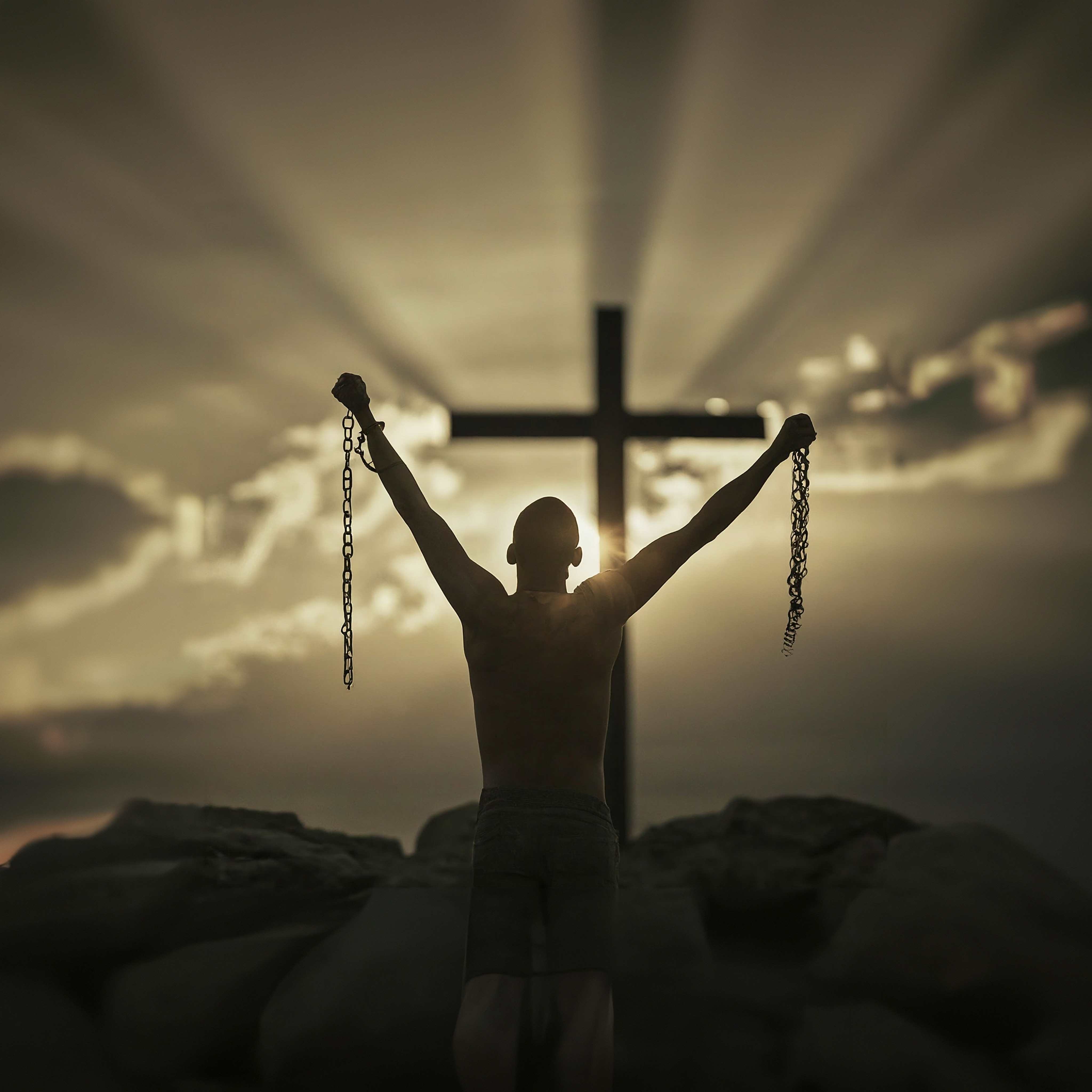
“For the law of the Spirit of life in Christ
Jesus has made me free from the law of sin and death.”
(Romans
8:2)
Cain –
Wikipedia
Cain
From Wikipedia, the free encyclopedia
Cain
Occupation Farmer
Spouse Aclima
Children Enoch
Parents
Adam (father)
Eve (mother)
Relatives In
Genesis:
Abel (brother)
Seth (brother)
Irad (grandson)
Mehujael (great-grandson)
Methushael (great-great-grandson)
Lamech (great-great-great-grandson)
Jabal (great-great-great-great-grandson)
Jubal (great-great-great-great-grandson)
Tubal-Cain (great-great-great-great-grandson)
Naamah (great-great-great-great-granddaughter)
According to later traditions:
Aclima (sibling)
Azura (sibling)
Cain[a] is a figure in the Book of Genesis within Abrahamic
religions. He is the elder brother of Abel, and the firstborn son of Adam and
Eve, the first couple within the Bible.[1] He was a farmer who gave an offering
of his crops to God. However, God was not pleased and favored Abel's offering
over Cain's. Out of jealousy, Cain killed his brother, for which he was
punished by God with the curse and mark of Cain. He had several descendants,
starting with his son Enoch and including Lamech.
Some deem the narrative unclear on God's reason for
rejecting Cain's sacrifice. However, in the Christian understanding, 1 John
3:12 explains it was "Because his own works were evil and his brother's
righteous", while Hebrews 11:4 teaches that Abel's was an offering of
faith.[2] His life represents a life of faith.
Some traditional interpretations within Abrahamic religions
consider Cain to be the originator of evil, violence, or greed.
Genesis narrative
Main article: Cain and Abel
According to the narrative in Genesis 4, Cain was the first
human born (as distinct from God's creation of Adam and Eve), and the first murderer.
When he and his brother made their offerings to God, the Lord "had regard
for Abel and his offering, but for Cain and his offering he had no regard. So
Cain was very angry".[3]
Interpretations
Jewish and Christian interpretations
A question arising early in the story is why God rejected
Cain's sacrifice. The text states, "In the course of time Cain brought
some of the fruits of the soil as an offering to the Lord. And Abel also
brought an offering: fat portions from some of the firstborn of his flock. The
Lord looked with favor on Abel and his offering, but on Cain and his offering
he did not look with favor."[4] Noteworthy is the difference in the type
of sacrifice: fruits of the soil are renewable and bloodless, while fat
portions are set apart for the Lord[5] and taken from the firstborn, pointing
to an act of faith, since it is not guaranteed there will be more. The Midrash
suggests that although Abel brought the best meat from his flock, Cain did not
set aside the best of his harvest for God.[6]
Similar to the internalized spiritual death, God warns Adam
and Eve off from eating the forbidden fruit—they do not physically die
immediately, but over time, their bodies age and die—the Lord warns Cain that
his inappropriate anger is waiting to consume him: "If you do what is
right, will you not be accepted? But if you do not do what is right, sin is
crouching at your door. It desires to have you, but you must rule over it.[7]
Curse and mark
According to Genesis 4:1–16, Cain treacherously murdered
his brother, Abel, and then lied about the murder to God. As a result, Cain was
cursed and marked for life. With the earth left cursed to drink Abel's blood,
Cain could no longer farm the land. He becomes a "fugitive and wanderer"
and receives a mark from God – commonly referred to as the mark of Cain – so
that no one can enact vengeance on him.[8]
Exegesis of the Septuagint's narrative, "groaning and
shaking upon the earth", has Cain suffering from body tremors.[9]
Interpretations extend Cain's curse to his descendants, where they all died in
the Great Deluge as retribution for the loss of Abel's potential offspring.[10]
Islamic interpretation
Main article: Cain and Abel in Islam
Cain's name in Islamic tradition is Qabil (Arabic: قابيل).
His story is mentioned in the Quran, though without a name, where he and his
brother Abel offer sacrifices; Abel's sacrifice was accepted while Cain's was
not. Cain gets angry and threatens to murder his brother, but Abel tries to
console him, saying that God only accepts sacrifices from the God-fearing and
that he would not try to harm Cain, and that killing Abel would damn Cain. In
the end, Cain kills Abel. God sends a crow searching in the ground to show Cain
how to hide the disgrace of his brother. In his shame, Cain began to curse
himself and became full of guilt. Cain's shame is stated not to be for killing Abel,
but for failing to cover up the body.[11]
Latter-day Saint interpretation
The Book of Moses in the Pearl of Great Price describes the
seed of Cain as "black" (Moses 7:22), without explicitly stating
whether this description is symbolic or literal. While some early church
leaders interpreted this to imply that all people of African descent were
descendants of Cain (for example, Brigham Young taught that The Mark of Cain
could be seen "on the countenance of every African" and used this
interpretation as part of the rationale to bar Black men from priesthood
ordination in the 19th and 20th centuries[12][13]), the modern leadership of
The Church of Jesus Christ of Latter-day Saints has formally disavowed such
teachings. An official Church statement on race declares that the Church
"disavows the theories advanced in the past that black skin is a sign of
divine disfavor or curse" and affirms that "all are alike unto
God" (2 Nephi 26:33).[14]
Etymology
The Body of Abel Found by Adam and Eve by William Blake, 1826
One popular theory regarding the name of Cain connects it
to the verb "kana" (קנה qnh), meaning "to
get" and used by Eve in Genesis 4:1 when she says after bearing Cain,
"I have gotten a man from the Lord." In this viewpoint, articulated
by Nachmanides in the thirteenth century, Cain's name presages his role of
mastery, power, and sin.[15] In one of the Legends of the Jews, Cain is the
fruit of a union between Eve and Satan, who is also the angel Samael and the
serpent in the Garden of Eden, and Eve exclaims at Cain's birth, "I have
gotten a man through an angel of the Lord."[16] According to the Life of
Adam and Eve (c. 1st century CE), Cain fetched his mother a reed (qaneh)
which is how he received his name Qayin (Cain). The symbolism of him fetching a
reed may be a nod to his occupation as a farmer, as well as a commentary to his
destructive nature. He is also described as "lustrous", which may
reflect the Gnostic association of Cain with the sun.[17]
Characteristics
Cain is described as a city-builder,[18] and the forefather
of tent-dwelling pastoralists, all lyre and pipe players, and bronze and iron
smiths.[19]
In an alternate translation of Genesis 4:17, endorsed by a
minority of modern commentators, Cain's son Enoch builds a city and names it after
his son, Irad. Such a city could correspond with Eridu, one of the most ancient
cities known.[20] Philo observes that it does not makes sense for Cain, the
third human on Earth, to have founded an actual city. Instead, he argues, the
city symbolizes an unrighteous philosophy.[21]
In the New Testament, Cain is cited as an example of
unrighteousness in 1 John 3:12 and Jude 1:11. The Targumim, rabbinic sources,
and later speculations supplemented background details for the daughters of
Adam and Eve.[22] Such exegesis of Genesis 4 introduced Cain's wife as being
his sister, a concept that has been accepted for at least 1,800 years.[23] This
can be seen with Jubilees 4 which narrates that Cain settled down and married
his sister Awan, who bore their first son, the first Enoch, approximately 196
years after the creation of Adam. Cain then establishes the first city, naming
it after his son, builds a house, and lives there until it collapses on him,
killing him[24] on the same year of Adam's death.[25]
Other stories
In Jewish tradition, Philo, Pirke De-Rabbi Eliezer, and the
Targum Pseudo-Jonathan asserted that Adam was not the father of Cain. Instead,
Eve was subject to adultery, having been seduced by Sammael,[26][27] the
serpent[28] (nahash, Hebrew: נחש) in the Garden of Eden,[29]
the devil himself.[22] Christian exegesis of the "evil one" in 1 John
3:10–12 has also led some commentators, such as Tertullian, to agree that Cain
was the son of the devil[30] or a fallen angel. Thus, according to some
interpreters, Cain was half-human and half-angel, one of the Nephilim (see
Genesis 6). Gnostic exposition in the Apocryphon of John has Eve seduced by
Yaldabaoth. However, in the Hypostasis of the Archons, Eve is raped by a pair
of Archons.[31]
Pseudo-Philo, a Jewish work of the first century CE,
relates that Cain murdered his brother at the age of 15. After escaping to the
Land of Nod, Cain had four sons: Enoch, Olad, Lizpha, and Fosal, as well as two
daughters, Citha and Maac. The latter five are not mentioned in the Bible. Cain
died at the age of 730, leaving his corrupt descendants to spread evil on
Earth.[32] According to the Book of Jubilees, Cain murdered his brother with a
stone. Afterward, Cain was killed by the same instrument he used against his
brother: his house fell in upon him, and its stones killed him.[33] A heavenly
law was cited after the narrative of Cain's death saying:
With the instrument with which a man kills his neighbour
with the same shall he be killed; after the manner that he wounded him, in like
manner shall they deal with him.[34]
A Talmudic tradition says that after Cain had murdered his
brother, God made a horn grow on his head. Later, Cain was killed at the hands
of his great-grandson, Lamech, who mistook him for a wild beast.[35] A Christian
version of this tradition from the time of the Crusades holds that the slaying
of Cain by Lamech took place on a mound called "Cain Mons" (i.e.,
Mount Cain), which is a corruption of "Caymont", a Crusader fort in
Tel Yokneam in modern-day Israel.[36]
The story of Cain and Abel is also referred to in chapter
19 of 1 Meqabyan, a book considered canonical in the Ethiopian Orthodox
Tewahedo Church.[37] In this text, Cain killed Abel because he desired Abel's
wife.
According to the Mandaean scriptures, including the
Qulasta, the Mandaean Book of John, and the Ginza Rabba, Abel is cognate with
the angelic soteriological figure Hibil Ziwa[38] who taught John the
Baptist.[39]
In the book Aradia, or the Gospel of the Witches by Charles
Godfrey Leland, Cain is a lunar figure.[40]
Family
Family tree
The following family tree of the line of Cain is compiled
from a variety of biblical and extra-biblical texts.
Adam[b] Eve[b]
Cain[b] Abel[c] Seth[d]
Enoch[e] Enos[f]
Irad[g] Kenan[h]
Mehujael[g] Mahalalel[i]
Methushael[g] Jared[j]
Adah[k] Lamech[g] Zillah[k] Enoch[l]
Jabal[m] Jubal[n] Tubal-Cain[o] Naamah[o] Methuselah[p]
Lamech[q]
Noah[r]
Shem[s] Ham[s] Japheth[s]
/keɪn/ kayn; Hebrew:
קַיִן Qáyin, pausa Hebrew: קָיִן
Qā́yin; Greek: Κάϊν Káïn; Arabic: قابيل/قايين,
romanized: Qābīl/Qāyīn
Genesis 4:1
Genesis 4:2
Genesis 4:25; 5:3
Genesis 4:17
Genesis 4:26; 5:6–7
Genesis 4:18
Genesis 5:9–10
Genesis 5:12–13
Genesis 5:15–16
Genesis 4:19
Genesis 5:18–19
Genesis 4:20
Genesis 4:21
Genesis 4:22
Genesis 5:21–22
Genesis 5:25–26
Genesis 5:28–30
Genesis 5:32
Sisters/wives
Various early commentators have said that Cain and Abel
have sisters, usually twin sisters. According to Rabbi Joshua ben Karha as
quoted in Genesis Rabbah, "Only two entered the bed, and seven left it:
Cain and his twin sister, Abel and his two twin sisters."[41][42]
Motives
The Book of Genesis does not give a specific reason for the
murder of Abel. Modern commentators typically assume that the motives were
jealousy and anger due to God rejecting Cain's offering, while accepting
Abel's.[43] The First Epistle of John says the following:
Do not be like Cain, who belonged to the evil one and
murdered his brother. And why did he murder him? Because his own actions were
evil and his brother's were righteous."
— 1
John 3:12
Ancient exegetes, such as the Midrash and the Conflict of
Adam and Eve with Satan, tell that the motive involved a desire for the most
beautiful woman. According to Midrashic tradition, Cain and Abel each had twin
sisters; each was to marry the other's. The Midrash states that Abel's promised
wife, Aclima, was more beautiful than Awan, Cain's promised wife. And so, after
Cain would not consent to this arrangement, Adam suggested seeking God's
blessing by means of a sacrifice. Whoever God blessed would marry Aclima. When
God openly rejected Cain's sacrifice, Cain slew his brother in a fit of
jealousy and anger.[43][44] Rabbinical exegetes have discussed whether Cain's
incestuous relationship with his sister was in violation of halakha.[45]
Legacy and symbolism
This statue in the Tuilleries Garden by the Louvre is
actually titled "Caïn venant de tuer son frère Abel" and shows Cain
after killing his brother Abel.
A millennia-old explanation for Cain being capable of
murder is that he may have been the offspring of a fallen angel or Satan
himself, rather than being the son of Adam.[29][22][31]
A medieval legend has Cain arriving at the Moon, where he
eternally settled with a bundle of twigs. This was originated by the popular
fantasy of interpreting the shadows on the Moon as a face. An example of this
belief can be found in Dante Alighieri's Inferno (XX, 126[46]) where the
expression "Cain and the twigs" is used as a kenning for
"moon".
In Latter-day Saint theology, Cain is considered to be the
quintessential Son of Perdition, the father of secret combinations (i.e. secret
societies and organized crime), as well as the first to hold the title Master
Mahan meaning master of [the] great secret, that [he] may murder and get
gain.[47]
In Mormon folklore a second-hand account relates that an
early Mormon leader, David W. Patten, encountered a very tall, hairy,
dark-skinned man in Tennessee who said that he was Cain. The account states
that Cain had earnestly sought death but was denied it, and that his mission
was to destroy the souls of men.[48][49] The recollection of Patten's story is
quoted in Spencer W. Kimball's The Miracle of Forgiveness, a popular book
within the Church of Jesus Christ of Latter-day Saints.[50] This widespread
Mormon belief is further emphasized by an account from Salt Lake City in 1963
which stated that "One superstition is based on the old Mormon belief that
Cain is a black man who wanders the earth begging people to kill him and take
his curse upon themselves (M, 24, SLC, 1963)."[51]
Freud's theory of fratricide is explained by the Oedipus or
Electra complex through Carl Jung's supplementation.[52]
There were other, minor traditions concerning Cain and
Abel, of both older and newer date. The apocryphal Life of Adam and Eve tells
of Eve having a dream in which Cain drank his brother's blood. In an attempt to
prevent the prophecy from happening, the two young men are separated and given
different jobs.[53]
The author Daniel Quinn, first in his book Ishmael and
later in The Story of B, proposes that the story of Cain and Abel is an account
of early Semitic herdsmen observing the beginnings of what he calls
totalitarian agriculture, with Cain representing the first 'modern'
agriculturists and Abel the pastoralists.[54]
Cultural portrayals and references
See also: Cain and Abel § Cultural references
In the Old English classic poem Beowulf (c. 1000 CE),
the monstrous Grendel and his mother are said to be descended from Cain.[55]
The expression "Cain-coloured beard" (Cain and
Judas were traditionally considered to have red or yellow hair)[56] is used in
Shakespeare's The Merry Wives of Windsor (1602).[55]
Lord Byron rewrote and dramatized the story in the play
Cain (1821), viewing Cain as symbolic of a sanguine temperament, provoked by
Abel's hypocrisy and sanctimony.[55]
Victor Hugo's poem "La Conscience" (1853, part of
the La Légende des siècles collection) tells of Cain and his family fleeing
from God's wrath.[57]
Fernand Cormon’s painting Cain, inspired by Victor Hugo’s
poem, was the sensation of the 1880 Paris salon.[58]
John Steinbeck's 1952 novel East of Eden (also a 1955 film)
refers in its title to Cain's exile and contains discussions of the Cain and
Abel story which then play out in the plot.[59]
The role-playing game Vampire: the Masquerade (1991) refers
to vampires as "Cainites" after Cain, who is referred to as the first
vampire.[60]
Country music group 4 Runner's song "Cain's
Blood" (1995) uses Cain and Abel as a metaphor for the struggle between
good and evil in the song's narrator.[61]
The song "Chapter Four" (2003) by American
heavy-metal band Avenged Sevenfold tells the story of Cain and Abel from Cain's
perspective. The song's name is also a reference to the Genesis chapter number
that Cain and Abel are described in.
A "Mark of Cain" is featured in the TV series
Supernatural (2005), and Cain appears as a character.[62][63]
Cain appears as the ultimate antagonist of the comic book
series The Strange Talent of Luther Strode (2011).[64]
Cain appears as a playable character in The Binding of
Isaac (2011), a roguelike action-adventure game.
In Darren Aronofsky's allegorical film Mother! (2017), the
characters "Oldest Son" and "Younger Brother" represent
Cain and Abel, respectively.[65]