Home About Us Our Publications Make a
Donation Email:
glenn.benson@yourbrotherglenn.org
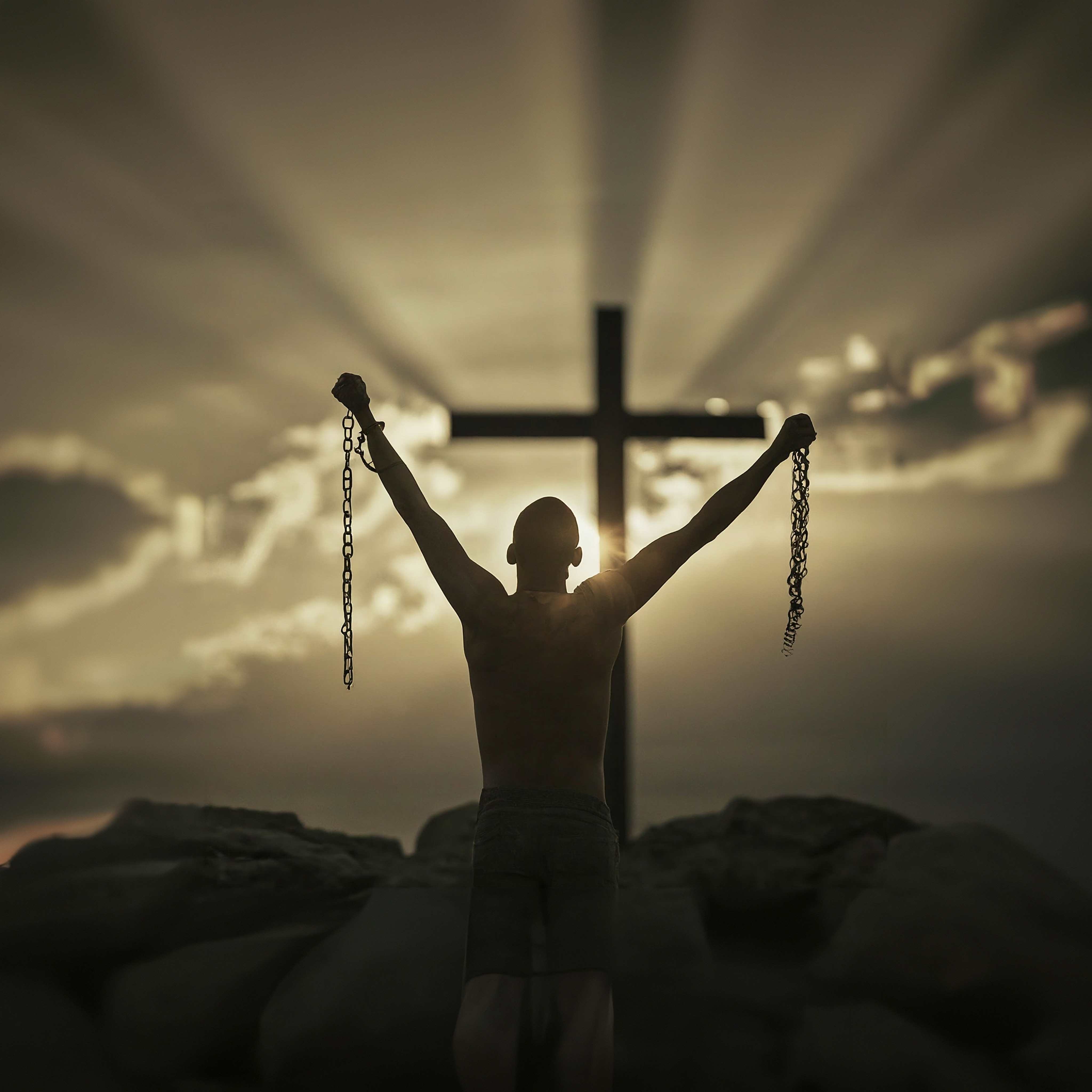
“For the law of the Spirit of life in Christ
Jesus has made me free from the law of sin and death.”
(Romans
8:2)
“Agony
in the Garden” – Wikipedia
The following is an article from Wikipedia about Jesus’
suffering and three prayers in the Garden of Gethsemane:
Agony in the Garden
St. Albans Psalter, English, ca. 1130,
Hildesheim cathedral library
The Agony in the Garden of Gethsemane is an episode in the
life of Jesus, which occurred
after the Last Supper and before his betrayal and arrest,
all part of the Passion of Jesus leading
to his crucifixion and death. This episode is described in
the three Synoptic Gospels in the New
Testament.
[1][2][3] According to these accounts, Jesus, accompanied
by three of his apostles,
Peter, John and James, enters the garden of Gethsemane on
the Mount of Olives where he
experiences great anguish and prays to be delivered from
his impending suffering, while also
accepting God's will.
This episode is a significant event in Christian tradition,
especially in Catholic devotional
practices. The agony of Jesus in the Garden is the first
(or second) station of the Scriptural Way
of the Cross (modern version of the Via Crucis) and the
first "sorrowful mystery" of the
Dominican Rosary, and it is the inspiration for the Holy
Hour devotion in the Eucharistic
adoration. It has been a frequent theme in Christian art
depicting the life of Jesus from the
beginning. It is part of the 6th-century mosaic cycle with
scenes from the Passion of Christ in
the Basilica of Sant'Apollinare Nuovo in Ravenna. The earliest
known surviving illuminated
manuscript of the New Testament, the Rossano Gospels,
probably from 6th-century Syria
written in Greek, comprises a depiction of Christ in the
Garden of Gethsemane.
Agony in the Garden by El Greco, c. 1590
According to the Synoptic Gospels, immediately after the
Last Supper, Jesus retreated to a
garden to pray. Each gospel offers a slightly different
account regarding narrative details. The
gospels of Matthew and Mark identify this place of prayer
as Gethsemane. Jesus was
accompanied by three Apostles: Peter, John and James, whom
he asked to stay awake and pray.
He moved "a stone's throw away" from them, where
he felt overwhelming sadness and anguish,
and said "My Father, if it is possible, let this cup
pass me by. Nevertheless, let it be as You, not I,
would have it." Then, a little while later, he said,
"If this cup cannot pass by, but I must drink it,
Your will be done!" (Matthew 26:42;[4]
in Latin Vulgate: fiat voluntas tua)
[5] He said this
prayer thrice, checking on the three apostles after each
prayer and finding them asleep. He
commented: "The spirit is willing, but the flesh is
weak". An angel came from heaven to
strengthen him. During his agony as he prayed, "His
sweat was, as it were, great drops of blood
falling down upon the ground" (Luke 22:44).[6]
At the conclusion of the narrative, Jesus accepts that the
hour has come for him to be
betrayed.
[7]
Gospel narratives
In Agony in the Garden, Jesus prays in
the garden after the Last Supper while
the disciples sleep and Judas leads the
mob, by Andrea Mantegna c. 1460.
In Roman Catholic tradition, the Agony in the Garden is the
first Sorrowful Mystery of the
Rosary[8] and the First Station of the Scriptural Way of
the Cross (second station in the
Philippine version). Catholic tradition includes specific
prayers and devotions. These Acts of
Reparation to Jesus Christ do not involve a petition for a
living or dead beneficiary, but aim to
"repair the sins" against Jesus. Traditionally,
prayers honoring the Agony in the Garden are
most influential during the Holy Hour. Some such prayers
are provided in the Raccolta Catholic
prayer book (approved by a Decree of 1854, and published by
the Holy See in 1898) which also
includes prayers as Acts of Reparation to the Virgin Mary.
[9][10][11] Furthermore, Passio
Domini, a central devotion in the spirituality of Opus
Angelorum, is strongly centered on the
Agony in the Garden.[12]
In his encyclical Miserentissimus Redemptor on reparations,
Pope Pius XI called Acts of
Reparation to Jesus Christ a duty for Catholics and
referred to them as "some sort of
compensation to be rendered for the injury" with
respect to the sufferings of Jesus.[13]
Catholic tradition holds that Jesus's sweating of blood was
literal and not figurative.[14]
In the Catholic tradition, Matthew 26:40[15]
is the basis of the Holy Hour devotion for
Eucharistic adoration.
[16]
In the Gospel of
Matthew:
Then He said to them, 'My soul is very sorrowful even to
death; remain here, and
watch with Me.'
Tradition
Holy Hour
—Matthew 26:38[17]
Coming to the disciples, Jesus found them sleeping and, in
Matthew 26:40, asked Peter: "So,
could you not watch with Me one hour?"[16]
The tradition of the Holy Hour devotion dates back to 1673
when Saint Margaret Mary
Alacoque stated that she had a vision of Jesus in which she
was instructed to spend an hour
every Thursday night to meditate on the suffering of Jesus
in the Garden of
Gethsemane.[18][19][20]
Martin Pable, OFM Cap suggests that Jesus experienced fear,
loneliness, and perhaps a sense of
failure.[21]
Justus Knecht gives three possible causes for Christ's
sadness and agony:
1. He saw before him the many and inhuman torments which
awaited him. He pictured all
these terrible sufferings, enduring them in anticipation.
2. Christ took the sins of men on himself, so as to offer
satisfaction to the divine justice in their
stead. Now that he was on the point of completing his work
of redemption, the horrible mass
of evil, abomination and guilt came before his soul and
filled it with abhorrence and
aversion.
3. He knew beforehand how many souls would be eternally
lost in spite of his bitter Passion
and death, because they would not believe in him and would
not love him.[22]
Roger Baxter in his Meditations reflects on the angel
comforting Christ, writing, "Good God! is
it possible that the eternal Son of God should borrow
comfort from His creatures? Observe how
the Father of lights at last sends comfort to those who
persevere in prayer. Imagine what
reasons the angel might use in comforting your agonizing
Saviour. He probably represented to
Him the necessity of His passion for the redemption of
mankind, and the glory that would
redound to His Father and Himself. All this Christ
understood infinitely better than the angel,
yet He did not refuse the proffer of consolation, in order
to teach you to respect the advice and
consolation of your inferiors."[23]
Commentary
Artistic depictions
Basilica di San Marco, Venice (13th ct.)
There are a number of different pictorial depictions of the
Agony in the Garden, including:
Codex purpureus Rossanensis, Byzantine illuminated
manuscript in Greek, Syria, 6th
century, Diocesan Museum Rossano (Calabria)
Book of Gelati, Georgian, 12th ct., in Georgian scripts,
Georgian National Centre of
Manuscripts, Tbilisi (Q908, 163v)
Agony in the Garden and Betrayal of Christ, Royal Psalter,
British Gothic, ca. 1270, MET,
New York (sf22-24-4s1)
Passional of Abbess Kunigunde, Bohemia, early Luxembourg
court workshop[?], 1312–21,
National Library of the Czech Republic, Prague (XIV A 17,
fol. 10r)
Jacquemart de Hesdin, Très Riches Heures du Duc de Berry,
1400–10, Bibliothèque
nationale de France, Paris (Latin 919, fol. 69)
Hours of Mary of Burgundy, 1477, Austrian National Library,
Vienna (Cod. 1857, 56v)
Zanobi Strozzi, Adimari Book of Hours, Renaissance Florence
1448, Walters Art Museum,
Baltimore (W767124R
(https://art.thewalters.org/object/W.767.124R/))
Agony in the Garden as part of an 13th-century altarpiece
with eight scenes from the Life of
Christ, Alana collection, Delaware
The Agony in the Garden, left panel of a Gothic winged
altarpiece with Scenes from the
Passion of Christ by Andrea Vanni, 1380s, National Gallery
of Art, Washington
Agony in the Garden by Sassetta of the Sienese school,
1437–44, Detroit Institute of Arts
Agony in the Garden by Italian Renaissance artist Andrea
Mantegna, 1455–1456, National
Gallery, London[24]
Agony in the Garden, an Early Netherlandish painting by
Gerard David (formerly attributed
to Adriaen Isenbrandt), ca. 1510s, Musée des Beaux-Arts de
Strasbourg
Agony in the Garden by High Renaissance artist Correggio,
1524, Apsley House, London
Christ on the Mount of Olives by Baroque painter
Caravaggio, c. 1605, destroyed, formerly
Gemäldegalerie, Berlin
The Agony of Christ in the Garden of Gethsemane by Flemish
Jacob Jordaens, ca. 1608–
40, private collection (Netherlands)
Agony in the Garden, a painting by romantic poet and artist
William Blake, c. 1800, Tate
Britain, London
Miniatures in illuminated manuscripts
Paintings
Christ on the Mount of Olives by Paul Gauguin, 1889, Norton
Museum of Art, West Palm
Beach, Florida
Christ in the Garden of Gethsemane Arkhyp Kuindzhi,
1901[25]
The Agony in the Garden in illuminated manuscripts
Rossano
Gospels,
6th ct.
Book of Gelati,
Georgian, 12th ct.
British,
ca. 1270
Passional of
Abbess
Kunigunde,
1312–21
Très Riches
Heures du
Duc de
Berry,
1400–10
Zanobi
Strozzi,
Florence
1448
Hours of
Mary of
Burgundy,
1477
The Agony in the Garden in painting
Italian,
ca. 1250~75
Andrea
Vanni,
1380s
Sassetta, 1437–44 Mantegna, 1457–59
[26] Corregio, 1524
Jacob
Jordaens,
ca. 1608–40
Adriaen van de Velde,
1665
Paul
Troger,
ca. 1750
William Blake, 1800 Paul Gauguin, 1889
Arkhyp Kuindzhi, 1901
Christ on the Mount of Olives – an oratorio by classical
composer Ludwig van Beethoven
"Gethsemane (I Only Want to Say)" – In the rock
opera Jesus Christ Superstar by Tim Rice
and Andrew Lloyd Webber, Jesus sings this song in which he
confronts God about his
coming fate, ultimately accepting it by the end of the
song. An orchestral reprise is heard
after the crucifixion in the form of "John Nineteen:
Forty-One".
Alfred de Vigny, "Le Mont des oliviers"
Gérard de Nerval, "Le Christ au Mont des
oliviers"
Silence by Masahiro Shinoda (Japan, 1971)
In music
In literature
In film
The Passion of Christ by Mel Gibson (US, 2004)
Silence by Martin Scorsese (US, 2016), remake of Shinoda's
film
Some in the medical field have hypothesized that Jesus's
great anguish caused him to
experience hematidrosis (a medical term for sweating
blood).
In the traditional viewpoint (that Luke wrote the Gospel of
Luke), it is believed that only Luke
described Jesus as sweating blood because Luke was a
physician.[27]
Life of Jesus in the New Testament
Christ in the Garden., a poem by Felicia Hemans published
in The Amulet annual for
1826.
Baxter, Roger (1823). "On Christ's Prayer in the
Garden." (https://en.wikisource.org/wiki/Me
ditations_For_Every_Day_In_The_Year/From_Septuagesima_Sunday_To_Easter#179).
Meditations For Every Day In The Year. New York: Benziger
Brothers.
Knecht, Friedrich Justus (1910). "The Agony of Jesus
in the Garden" (https://en.wikisource.
org/wiki/A_Practical_Commentary_on_Holy_Scripture/LXIX._The_Agony_of_Jesus_in_the_
Garden). A Practical Commentary on Holy Scripture. B.
Herder.
1. Matthew 26:36–46
(https://bible.oremus.org/?passage=Matthew%2026:36–46&version=nrs
v)
2. Mark 14:32–42
(https://bible.oremus.org/?passage=Mark%2014:32–42&version=nrsv)
3. Luke 22:39–46
(https://bible.oremus.org/?passage=Luke%2022:39–46&version=nrsv)
4. Matthew 26:42
(https://www.biblica.com/bible/?osis=niv:Matthew%2026:42)
5. Matthew 26:42
(https://www.biblegateway.com/passage/?search=Matthew+26:42&version=
vulgate)
6. Luke 22:44
(https://www.biblica.com/bible/?osis=niv:Luke%2022:44)
7. Matthew 26:46
(https://bible.oremus.org/?passage=Matthew%2026:46&version=nrsv); Mark
14:41
(https://bible.oremus.org/?passage=Mark%2014:41&version=nrsv); cf. John
18:4 (htt
ps://www.biblica.com/bible/?osis=niv:John%2018:4):
"Knowing all that was going to happen
to Him"
8. "The agony in the Garden: 1st Sorrowful
Mystery" (https://www.vatican.va/special/rosary/do
cuments/popup/popup01_dol_en.html). www.vatican.va.
Retrieved 17 July 2023.
Medical conjectures
See also
Further reading
References
9. Slater, Thomas (1911). "Reparation"
(https://en.wikisource.org/wiki/Catholic_Encyclopedia_
(1913)/Reparation). In Herbermann, Charles (ed.). Catholic
Encyclopedia. Vol. 12. New
York: Robert Appleton Company.
10. Delany, Francis Xavier (1911). "Raccolta" (https://en.wikisource.org/wiki/Catholic_Encyclop
edia_(1913)/Raccolta). In Herbermann, Charles (ed.).
Catholic Encyclopedia. Vol. 12. New
York: Robert Appleton Company.
11. Christopher, Joseph P. (2003). The Raccolta. St.
Athanasius Press. ISBN 978-0-9706526-6-
9.
12. "Passio Domini – Opus Angelorum"
(https://opusangelorum.com.br/passio-domini/) (in
Brazilian Portuguese). Retrieved 2026-02-21.
13. Pope Pius XI (8 May 1928). "Miserentissimus
Redemptor" (https://www.vatican.va/holy_fath
er/pius_xi/encyclicals/documents/hf_p-xi_enc_08051928_miserentissimus-redemptor_en.ht
ml).
14. Gillis, James Martin (1907). "Agony of
Christ" (https://en.wikisource.org/wiki/Catholic_Ency
clopedia_(1913)/Agony_of_Christ). In Herbermann, Charles
(ed.). Catholic Encyclopedia.
Vol. 1. New York: Robert Appleton Company.
15. Matthew 26:40
(https://bible.oremus.org/?passage=Matthew%2026:40&version=nrsv)
16. Stravinskas, Peter (1998). Our Sunday Visitor's
Catholic Encyclopedia. Huntingdon,
Indiana: OSV Press. p. 498. ISBN 978-0-87973-669-9.
17. Matthew 26:38
(https://www.biblica.com/bible/?osis=niv:Matthew%2026:38)
18. Ball, Ann (2003). Encyclopedia of Catholic Devotions
and Practices. Huntingdon, Indiana:
OSV Press. ISBN 978-0-87973-910-2.
19. Wakefield, Gordon S. (1983). The Westminster Dictionary
of Christian Spirituality. Louisville,
Kentucky: Westminster John Knox Press. p. 347. ISBN
978-0-664-22170-6.
20. Doll, Sister Mary Bernard (1910). "St. Margaret
Mary Alacoque" (https://en.wikisource.org/w
iki/Catholic_Encyclopedia_(1913)/St._Margaret_Mary_Alacoque).
In Herbermann, Charles
(ed.). Catholic Encyclopedia. Vol. 9. New York: Robert
Appleton Company.
21. "Lessons from Jesus' Agony in the Garden |
Franciscan Media" (https://www.franciscanmedi
a.org/st-anthony-messenger/march-2018/lessons-from-jesus-agony-in-the-garden/).
www.franciscanmedia.org. February 24, 2018.
22. Knecht, Friedrich Justus (1910). "LXIX. The Agony
of Jesus in the Garden" (https://en.wikis
ource.org/wiki/A_Practical_Commentary_on_Holy_Scripture/LXIX._The_Agony_of_Jesus_i
n_the_Garden). A Practical Commentary on Holy Scripture. B.
Herder.
23. Baxter, Roger (1823). "Christ's Bloody Sweat"
(https://en.wikisource.org/wiki/Meditations_F
or_Every_Day_In_The_Year/From_Septuagesima_Sunday_To_Easter#180).
Meditations
For Every Day In The Year. New York: Benziger Brothers.
24. There is another interpretation of Agony in the Garden
by Mantegna, dated shortly after the
first, Musée des Beaux-Arts de Tours. The National Gallery
also holds a painting of the
Agony in the Garden by Venetian master, and Mantegna's
father-in-law, Giovanni Bellini,
1459–1465.
25. "Christ in the Garden of Gethseman"
(https://www.wikiart.org/en/arkhip-kuindzhi/christ-in-the
-garden-of-gethsemane-1901).
26. There is a second interpretation by Mantegna, dated
shortly after the first, in the Musée des
Beaux-Arts de Tours. The National Gallery also holds a
painting of the theme by Venetian
master, and Mantegna's father-in-law, Giovanni Bellini,
1459–65.
27. Edwards, William D.; Gabel, Wesley J.; Hosmer, Floyd E.
(March 21, 1986). "On the
Physical Death of Jesus Christ"
(https://jamanetwork.com/journals/jama/article-abstract/403
315). JAMA. 255 (11): 1455–1463. CiteSeerX 10.1.1.621.365 (https://citeseerx.ist.psu.edu/v
iewdoc/summary?doi=10.1.1.621.365).
doi:10.1001/jama.1986.03370110077025 (https://do
i.org/10.1001%2Fjama.1986.03370110077025). PMID 3512867
(https://pubmed.ncbi.nlm.ni
h.gov/3512867).
Retrieved from https://en.wikipedia.org/w/index.php?title=Agony_in_the_Garden&oldid=1366832614