Home About Us Our Publications Make a
Donation Email: glenn.benson@yourbrotherglenn.org
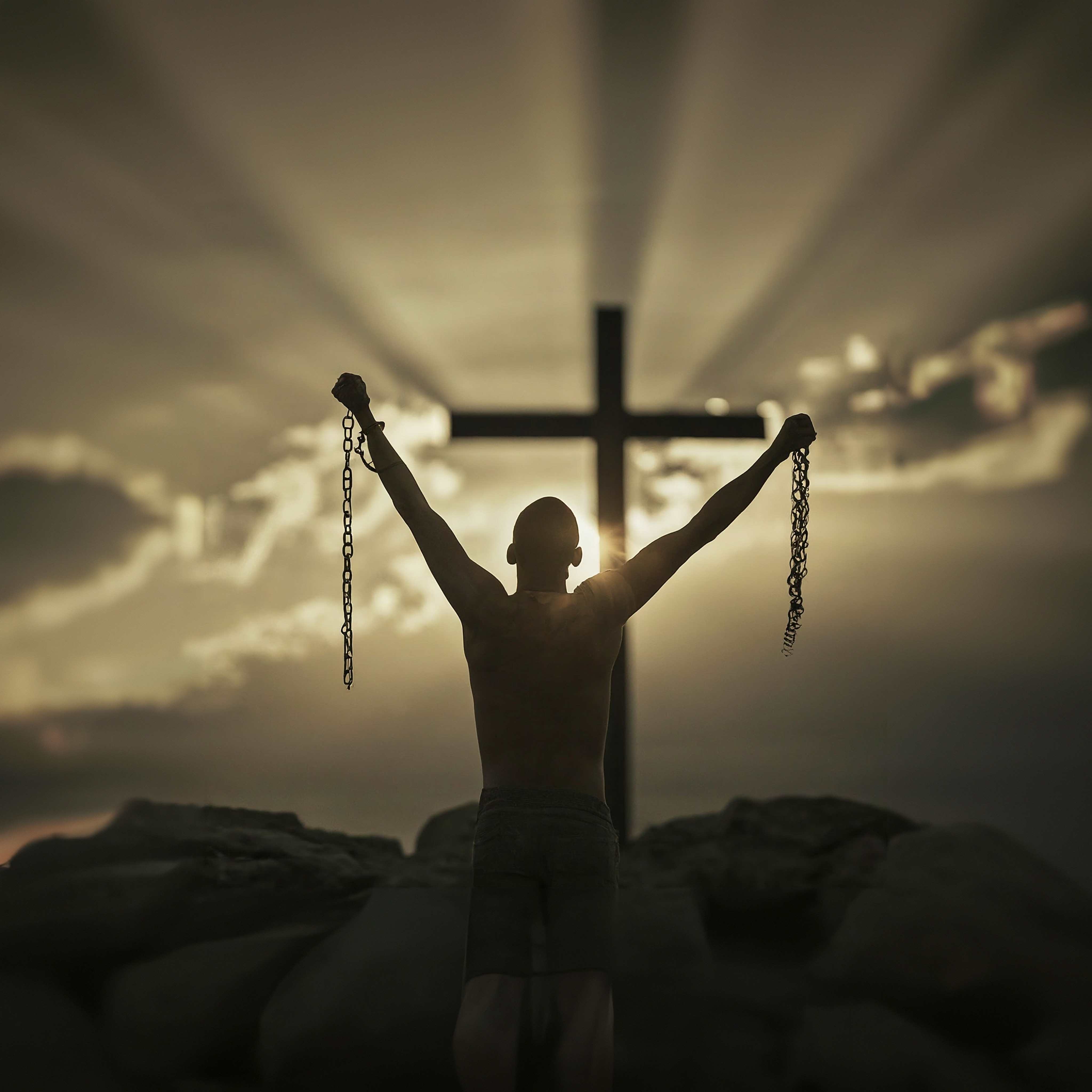
“For the law of the Spirit of life in Christ
Jesus has made me free from the law of sin and death.”
(Romans
8:2)
Abraham
– Hebrew Patriarch – Britannica
Abraham
Hebrew patriarch
Also known as: Abram, Avraham, Avram, Ibrāhīm
André Parrot
Britannica Editors
History
Abraham (flourished early 2nd millennium BCE) was the first
of the Hebrew patriarchs and a figure revered by the three great monotheistic
religions—Judaism, Christianity, and Islam. According to the biblical book of
Genesis, Abraham left Ur, in Mesopotamia, because God called him to found a new
nation in an undesignated land that he later learned was Canaan. He obeyed
unquestioningly the commands of God, from whom he received repeated promises
and a covenant that his “seed” would inherit the land. In Judaism the promised
offspring is understood to be the Jewish people descended from Abraham’s son,
Isaac, born of his wife Sarah. Similarly, in Christianity the genealogy of
Jesus is traced to Isaac, and Abraham’s near-sacrifice of Isaac is seen as a
foreshadowing of Jesus’ sacrifice on the cross. In Islam it is Ishmael,
Abraham’s firstborn son, born of Hagar, who is viewed as the fulfillment of
God’s promise, and the Prophet Muhammad is his descendant.
The critical problem of a “biography” of Abraham
There can be no biography of Abraham in the ordinary sense.
The most that can be done is to apply the interpretation of modern historical
finds to biblical materials so as to arrive at a probable judgment as to the
background and patterns of events in his life. This involves a reconstruction
of the patriarchal age (of Abraham, Isaac, Jacob, and Joseph; early 2nd
millennium BCE), which until the end of the 19th century was unknown and
considered virtually unknowable. It was assumed, based on a presumed dating of
hypothetical biblical sources, that the patriarchal narratives in the Bible
were only a projection of the situation and concerns of a much later period
(9th–5th century BCE) and of dubious historical value.
Several theses were advanced to explain the
narratives—e.g., that the patriarchs were mythical beings or the
personifications of tribes or folkloric or etiological (explanatory) figures
created to account for various social, juridical, or cultic patterns. However,
after World War I, archaeological research made enormous strides with the
discovery of monuments and documents, many of which date back to the period
assigned to the patriarchs in the traditional account. The excavation of a
royal palace at Mari, an ancient city on the Euphrates, for example, brought to
light thousands of cuneiform tablets (official archives and correspondence and
religious and juridical texts) and thereby offered exegesis a new basis, which
specialists utilized to show that, in the biblical book of Genesis, narratives
fit perfectly with what, from other sources, is known today of the early 2nd
millennium BCE but imperfectly with a later period. A biblical scholar in the
1940s aptly termed this result “the rediscovery of the Old Testament.”
Thus, there are two main sources for reconstructing the
figure of father Abraham: the book of Genesis—from the genealogy of Terah
(Abraham’s father) and his departure from Ur to Harran in chapter 11 to the
death of Abraham in chapter 25—and recent archaeological discoveries and
interpretations concerning the area and era in which the biblical narrative
takes place.
The biblical account
According to the biblical account, Abram (“The Father [or
God] Is Exalted”), who is later named Abraham (“The Father of Many Nations”), a
native of Ur in Mesopotamia, is called by God (Yahweh) to leave his own country
and people and journey to an undesignated land, where he will become the
founder of a new nation. He obeys the call unquestioningly and (at 75 years of
age) proceeds with his barren wife, Sarai, later named Sarah (“Princess”), his
nephew Lot, and other companions to the land of Canaan (between Syria and
Egypt).
There the childless septuagenarian receives repeated
promises and a covenant from God that his “seed” will inherit the land and
become a numerous nation. Eventually, he not only has a son, Ishmael, by his
wife’s maidservant Hagar but has, at 100 years of age, by Sarah, a legitimate
son, Isaac, who is to be the heir of the promise. Yet Abraham is ready to obey
God’s command to sacrifice Isaac, a test of his faith, which he is not required
to consummate in the end because God substitutes a ram. At Sarah’s death, he
purchases the cave of Machpelah near Hebron, together with the adjoining
ground, as a family burying place. It is the first clear ownership of a piece
of the promised land by Abraham and his posterity. Toward the end of his life,
he sees to it that his son Isaac marries a girl from his own people back in
Mesopotamia rather than a Canaanite woman. Abraham dies at the age of 175 and
is buried next to Sarah in the cave of Machpelah.
Quick Facts
Hebrew: Avraham
Originally called: Abram or, in Hebrew,: Avram
Flourished: early 2nd millennium BCE
Flourished: c.2000 BCE - c.1501 BCE Ur
Notable Family Members: spouse Sarah, son Ishmael, and son
Isaac
Abraham is pictured with various characteristics: a
righteous man, with wholehearted commitment to God; a man of peace (in settling
a boundary dispute with his nephew Lot), compassionate (he argues and bargains
with God to spare the people of Sodom and Gomorrah), and hospitable (he
welcomes three visiting angels); a quick-acting warrior (he rescues Lot and his
family from a raiding party); and an unscrupulous liar to save his own skin (he
passes off Sarah as his sister and lets her be picked by the Egyptian pharaoh
for his harem). He appears as both a man of great spiritual depth and strength
and a person with common human weaknesses and needs.
The Genesis narrative in the light of recent scholarship of
Abraham
The saga of Abraham unfolds between two landmarks, the
exodus from “Ur of the Chaldeans” (Ur Kasdim) of the family, or clan, of Terah
and “the purchase of” (or “the burials in”) the cave of Machpelah. Tradition
seems particularly firm on this point. The Hebrew text, in fact, locates the
departure specifically at Ur Kasdim, the Kasdim being none other than the Kaldu
of the cuneiform texts at Mari. It is manifestly a migration of which one tribe
is the centre. The leader of the movement is designated by name: Terah, who
“takes them out” from Ur, Abram his son, Lot the son of Haran, another son of
Terah, and their wives, the best known being Sarai, the wife of Abram. The
existence of another son of Terah, Nahor, who appears later, is noted.
Most scholars agree that Ur Kasdim was the Sumerian city of
Ur, today Tall al-Muqayyar (or Mughair), about 200 miles (300 km) southeast of
Baghdad in lower Mesopotamia, which was excavated from 1922 to 1934. It is
certain that the cradle of the ancestors was the seat of a vigorous polytheism
whose memory had not been lost and whose uncontested master in Ur was Nanna (or
Sin), the Sumero-Akkadian moon god. “They served other gods,” Joshua, Moses’
successor, recalled, speaking to their descendants at Shechem.
After the migration from Ur (c. 2000 BCE), the reasons for
which are unknown, the first important stopping place was Harran, where the
caravan remained for some time. The city has been definitely located in upper
Mesopotamia, between the Tigris and the Euphrates rivers, in the Balikh valley
and can be found on the site of the modern Harran in Turkey. It has been shown
that Harran was a pilgrimage city, for it was a centre of the Sin cult and
consequently closely related to the moon-god cult of Ur. The Mari tablets have
shed new light on the patriarchal period, specifically in terms of the city of
Harran.
There have been many surprising items in the thousands of
tablets found in the palace at Mari. Not only are the Ḫapiru (“Hebrews”)
mentioned but so also remarkably are the Banu Yamina (“Benjaminites”). It is
not that the latter are identical with the family of Benjamin, a son of Jacob,
but rather that a name with such a biblical ring appears in these extrabiblical
sources in the 18th century BCE. What seems beyond doubt is that these
Benjaminites (or Yaminites, meaning “Sons of the Right,” or “Sons of the
South,” according to their habits of orientation) are always indicated as being
north of Mari and in Harran, in the Temple of Sin.
The Bible provides no information on the itinerary followed
between Ur and Harran. Scholars think that the caravan went up the Euphrates,
then up the Balikh. After indicating a stay of indeterminate length in Harran,
the Bible says only that Terah died there, at the age of 205, and that Abraham
was 75 when he took up the journey again with his family and his goods. This
time the migration went from east to west, first as far as the Euphrates River,
which they may have crossed at Carchemish, since it can be forded during
low-water periods.
Here again, the Mari texts supply a reference, for they
indicate that there were Benjaminites on the right bank of the river, in the
lands of Yamhad (Aleppo), Qatanum (Qatna), and Amurru. Since the ancient trails
seem to have been marked with sanctuaries, it is noteworthy that Nayrab, near
Aleppo, was, like Harran and Ur, a centre of the Sin cult and that south of
Aleppo, on the road to Ḥamāh, there is still a village that bears
the name of Benjamin. The route is in the direction of the “land of Canaan,”
the goal of the journey.
If a stop in Damascus is assumed, the caravan must next
have crossed the land of Bashan (the Ḥawrān of today), first
crossing the Jabboq, then the Jordan River at the ford of Dāmiyā, and
arriving in the heart of the Samaritan country, to reach at last the plain of
Shechem, today Balāṭah, at the foot of the Gerizim and Ebal
mountains. Shechem was at the time a political and religious centre, the
importance of which has been perceived more clearly as a result of recent
archaeological excavations. From the mid-13th to the mid-11th century BCE,
Shechem was the site of the cult of the Canaanite god Baʿal-Berit (Lord of
the Covenant). The architecture uncovered on the site by archaeologists would
date to the 18th century BCE, in which the presence of the patriarchs in
Shechem is placed.
The next stopping place was in Bethel, identified with
present-day Baytīn, north of Jerusalem. Bethel was also a holy city, whose
cult was centred on El, the Canaanite god par excellence. Its name does not
lend itself to confusion, for it proclaims that the city is the bet, “house,”
or temple, of El (God). The Canaanite sanctuary was taken over without
hesitation by Abraham, who built an altar there and consecrated it to Yahweh,
at least if the Yahwistic tradition in Genesis is to be believed.
Abraham had not yet come to the end of his journey. Between
Shechem and Bethel he had gone about 31 miles (50 km). It was about as far
again from Bethel to Hebron, or more precisely to the oaks of Mamre, “which are
at Hebron” (according to the Genesis account). The location of Mamre has been
the subject of some indecision. At the present time, there is general agreement
in setting it 1.5 miles (3 km) northwest of Hebron at Rāmat
al-Khalīl, an Arabic name which means the “Heights of the Friend,” the
friend (of God) being Abraham.
Mamre marked the site of Abraham’s encampment, but this did
not at all exclude episodic travels in the direction of the Negeb, to Gerar and
Beersheba. Life was a function of the economic conditions of the moment, of
pastures to follow and to find, and thus the patriarchs moved back and forth
between the land of Canaan and the Nile River delta. They remained shepherds
and never became cultivators.
It was in Mamre that Abraham received the revelation that
his race would be perpetuated, and it was there that he learned that his nephew
Lot had been taken captive. The latter is an enigmatic episode, an “erratic
block” in a story in which nothing prepared the way for it. Suddenly, the life
of the patriarch was inserted into a slice of history in which several
important persons (“kings”) intervene: Amraphel of Shinar, Arioch of Ellasar,
Ched-or-laomer of Elam, and Tidal of Goiim. Scholars of previous generations
tried to identify these names with important historical figures—e.g., Amraphel
with Hammurabi of Babylon—but little remains today of these suppositions. The
whole of chapter 14 of Genesis, in which this event is narrated, differs completely
from what has preceded and what follows. It may be an extract from some
historical annals, belonging to an unknown secular source, for the meeting of
Melchizedek, king of Salem and priest of God Most High (El ʿElyon), and
Abraham is impressive. The king-priest greets him with bread and wine on his
victorious return and blesses him in the name of God Most High.
In this scene, the figure of the patriarch takes on a
singular aspect. How is his religious behaviour to be characterized? He swears
by “the Lord God Most High”—i.e., by both Yahweh and El ʿElyon. It is
known that, on the matter of the revelation of Yahweh to man, the biblical
traditions differ. According to what scholars call the Yahwistic source (J) in
the Pentateuch (the first five books of the Bible), Yahweh had been known and
worshipped since Adam’s time. According to the so-called Priestly source (P),
the name of Yahweh was revealed only to Moses. It may be concluded that it was
probably El whom the patriarchs, including Abraham, knew.
As noted before, in Mesopotamia the patriarchs worshipped
“other gods.” On Canaanite soil, they met the Canaanite supreme god, El, and
adopted him, but only partially and nominally, bestowing upon him qualities
destined to distinguish him and to assure his preeminence over all other gods.
He was thus to become El ʿOlam (God the Everlasting One), El ʿElyon
(God Most High), El Shaddai (God, the One of the Mountains), and El Roʾi
(God of Vision). In short, the god of Abraham possessed duration,
transcendence, power, and knowledge. This was not monotheism but monolatry (the
worship of one among many gods), with the bases laid for a true universalism.
He was a personal god too, with direct relations with the individual, but also
a family god and certainly still a tribal god. Here truly was the “God of our
fathers,” who in the course of time was to become the “God of Abraham, Isaac,
and Jacob.”
Sacrifice of Isaac
Sacrifice of IsaacThe painting Sacrifice of Isaac (1713) by
Italian artist Giambattista Pittoni depicts Abraham ready to obey God's command
to sacrifice his son Isaac.
It is not surprising that this bond of the flesh should
still manifest itself when it came to gathering together the great ancestors
into the family burial chamber, the cave of Machpelah. This place is venerated
today in Hebron, at the Ḥaram al-Khalīl (Holy Place of the Friend),
under the mosque. Abraham, “the friend of God,” was forevermore the depositary
of the promise, the beneficiary of the Covenant, sealed not by the death of
Isaac but by the sacrifice of the ram that was offered up in place of the child
on Mount Moriah.
André Parrot