Home About Us Our Publications Make a
Donation Email: glenn.benson@yourbrotherglenn.org
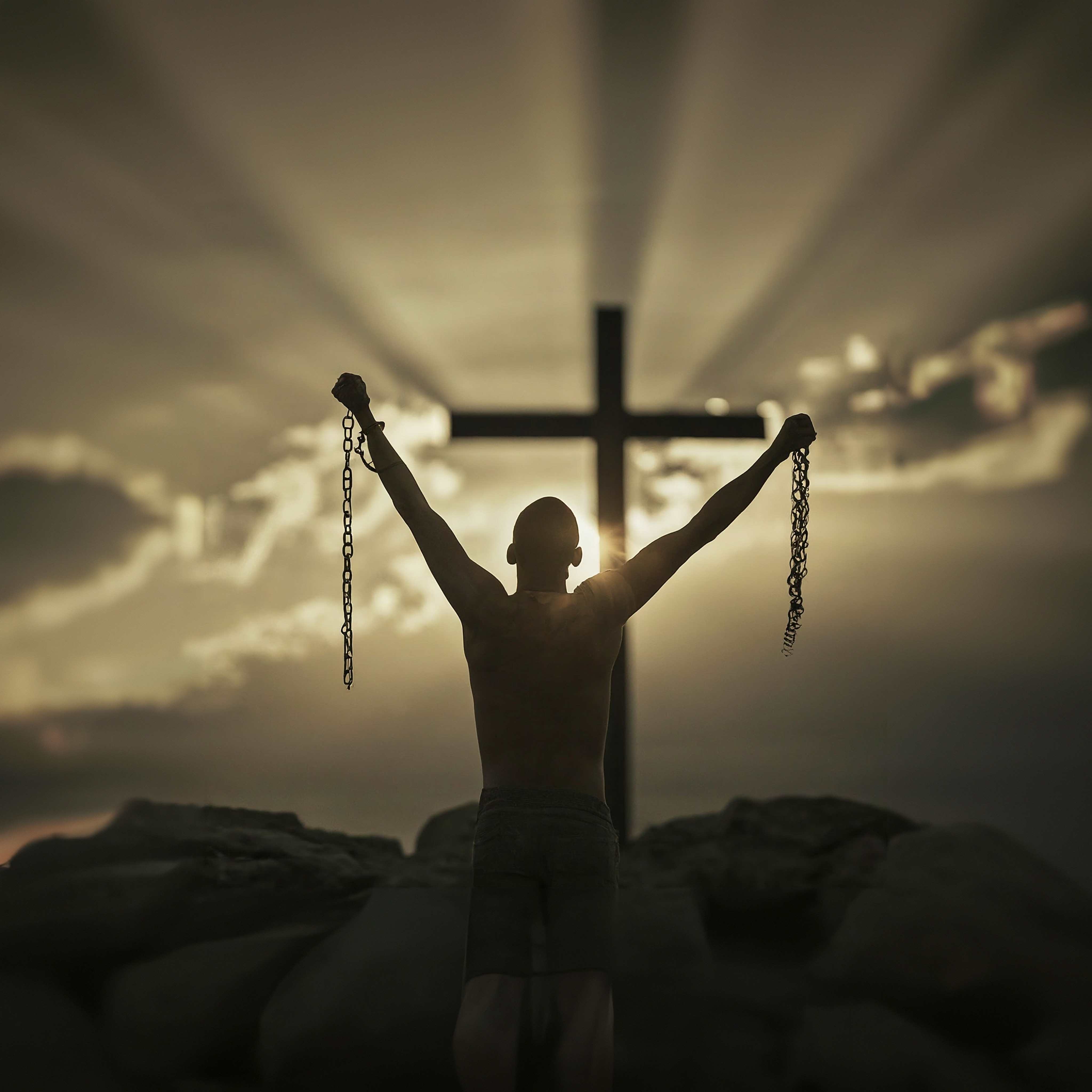
“For the law of the Spirit of life in Christ
Jesus has made me free from the law of sin and death.”
(Romans
8:2)
Abigail
– Wife of King David – Wikipedia
From Wikipedia, the free encyclopedia
Abigail
Spouses
Nabal
David
Children Chileab
Abigail (Hebrew: אֲבִיגַיִל,
Modern: ʾAvīgayīl, Tiberian: ʾĂḇīḡayīl)
was an Israelite woman in the Hebrew Bible married to Nabal; she married the
future King David after Nabal's death (1 Samuel 25).[1] Abigail was David's
third wife, after Ahinoam and Saul's daughter, Michal, whom Saul later married
to Palti, son of Laish, when David went into hiding.
Abigail became the mother of one of David's sons, who is
listed in the Book of Chronicles under the name Daniel, in the Masoretic Text
of the Books of Samuel as Chileab,[2] and in the Septuagint text of 2 Samuel
3:3 as Δαλουια, Dalouia.[3] Her name is
spelled Abigal in 2 Samuel 17:25 in the American Standard Version.
Name
Derived from the Hebrew word ab, "father", and
the Hebrew root g-y-l, "to rejoice," the name Abigail has a variety of
possible meanings including "my father's joy" and "source of
joy".[4]
Biblical narrative
In 1 Samuel 25, Nabal demonstrates ingratitude towards
David, the son of Jesse (from the tribe of Judah), and Abigail attempts to
placate David, in order to stop the future King from taking revenge. She gives
him food, and speaks to him, urging him not to "have on his conscience the
staggering burden of needless bloodshed" (verse 31, NIV) and reminding him
that God will make him a "lasting dynasty" (verse 28). Jon Levenson
calls this an "undeniable adumbration" of Nathan's prophecy in 2
Samuel 7.[5] Alice Bach notes that Abigail pronounces a "crucial
prophecy,"[6] and the Talmud regards her as one of the Tanakh's seven
female prophets.[7] Levenson, however, suggests that she "senses the drift
of history" from intelligence rather than from special revelation.[5]
After Abigail reveals to Nabal what she has done, "God
struck Nabal and he died" (v. 38), after which David married her. Abigail
is described as intelligent and beautiful. The Talmud amplifies this idea,
mentioning her as being one of the "four women of surpassing beauty in the
world" (the other three being Rahab, Sarah, and Esther). Being married to
the wealthy Nabal, she is also a woman of high socioeconomic status. Whether
David married her because he was attracted to her, or as an astute political
move, or both is unclear.[8]
Abigail and David's second wife, Ahinoam the Jezreelite,
accompany David and his war band as they seek refuge in Philistine territory.
While David and his men are encamped near Jezreel, the women are captured by
Amalekites who raided the town of Ziklag and carried off the women and
children. David led the pursuit, and they were subsequently rescued. Both wives
then settle with David in Hebron, where Abigail gives birth to David's second
son, Chileab (also called Daniel).[8]
Abigail is also listed as one of the seven Jewish women
prophets, the other six being Miriam, Deborah, Hannah, Sarah, Huldah, and
Esther.[9] In terms of her moral character, Abraham Kuyper argues that
Abigail's conduct indicates "a most appealing character and unwavering
faith,"[10] but Alice Bach regards her as subversive.[11]
Adele Berlin contrasts the story of Abigail with that of
Bathsheba. In one, the wife prevents David from murdering her foolish and
greedy husband. In the second, David orders the death of a good man because he
desires his wife. "In the Abigail story, David, the potential king, is
seen as increasingly strong and virtuous, whereas in the Bathsheba story, the
reigning monarch shows his flaws ever more overtly and begins to lose control
of his family."[8]
Levenson and Halpern suggest that Abigail may, in fact,
also be the same person as Abigail, mother of Amasa.[12] Richard M. Davidson,
however, points out that "on the basis of the final form of Old Testament
canon, references to Abigail in the biblical accounts indicate two different
individuals."[13]
Generic use
Abigail's self-styling as a handmaid[14] led to Abigail
being a traditional term for a waiting-woman, for example as the "waiting gentlewoman"
in Beaumont and Fletcher's The Scornful Lady, published in 1616.[15] Jonathan
Swift, Tobias Smollett, and Henry Fielding use Abigail in this generic sense,
as does Charlotte Brontë. Walter Scott, in The Abbot, frequently refers to
Lilias, Lady Avenel's maid as an "Abigail". Anthony Trollope makes
two references to "the abigail" (all lower case) in The Eustace
Diamonds, at the beginning of Chapter 42, whilst Thomas Mann makes the same
reference at the start of the second chapter of Part 2 in Buddenbrooks
(published in 1901). William Rose Benet notes the notoriety of Abigail Hill,
better known as "Mrs Masham", a lady-in-waiting to Queen Anne.[16]
George MacDonald Fraser makes mention of "an 'abigail' fussing about the
room" in his novel Flashman from The Flashman Papers series.
In art
Abigail, and especially her meeting with David, was a
common subject of European artwork in the Renaissance and post-Renaissance
period. Artists depicting her, or them, include Antonio Molinari, Juan Antonio
Escalante, and Peter Paul Rubens.
Abigail is a featured figure on Judy Chicago's installation
piece The Dinner Party, being represented in one of the 999 tiles of the
Heritage Floor.[17][18]