Home About Us Our Publications Make a
Donation Email: glenn.benson@yourbrotherglenn.org
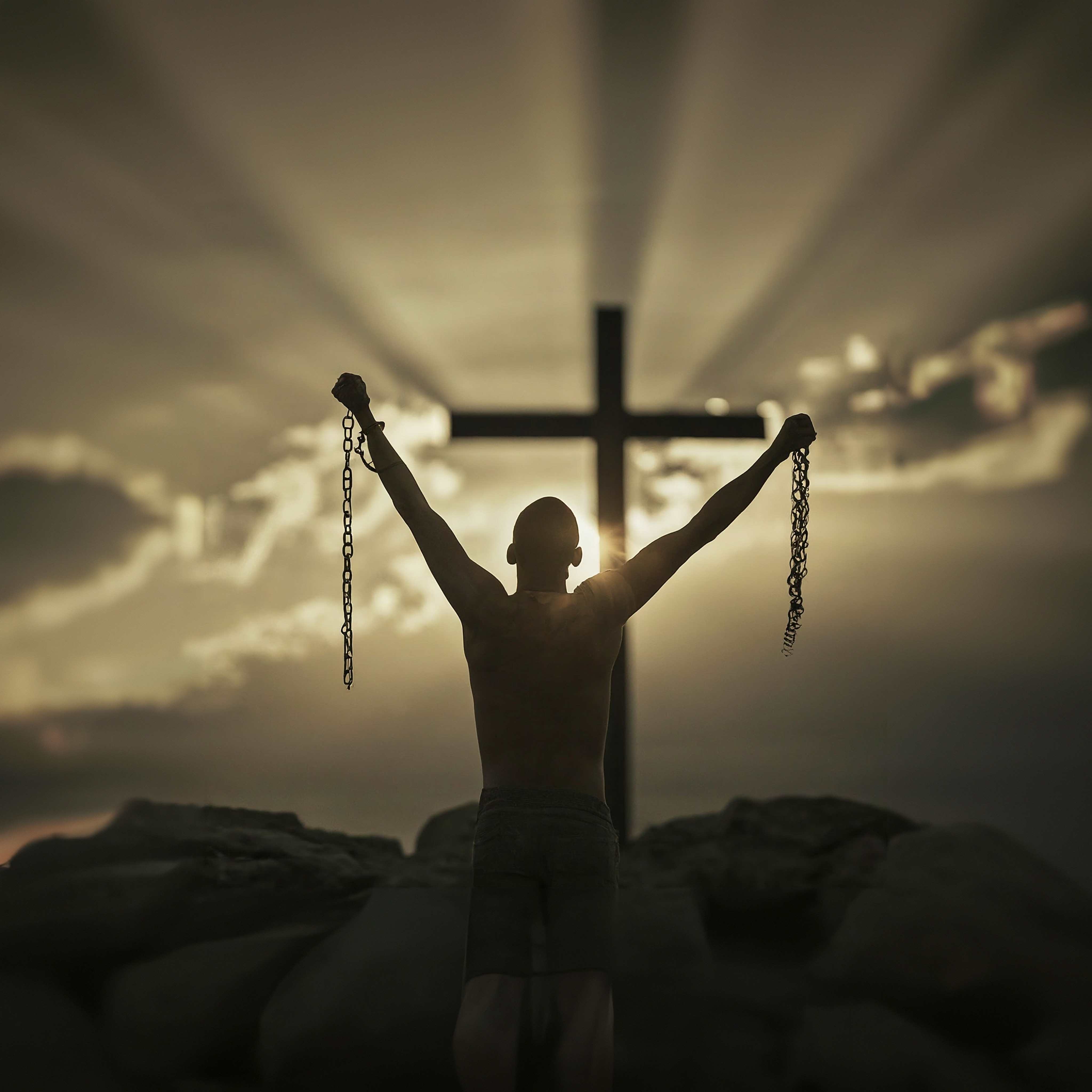
“For the law of the Spirit of life in Christ
Jesus has made me free from the law of sin and death.”
(Romans
8:2)
Abel –
Wikipedia
Abel
From Wikipedia, the free encyclopedia
Abel
Personal life
Parents
Adam (father)
Eve (mother)
Religious life
Religion Abrahamic
religions
Saint
Abel
The Just,[1] First martyr, The Righteous
Born c. 1 AM
Died c. 130
AM
Mount Qasioun
Cause of death Murdered
by his brother Cain
Venerated in All
Christian denominations that venerate saints [a]
Islam
Druze
Baháʼí Faith
Mandaeism
Feast 3 January
Abel[b] (Hebrew: הֶבֶל Hébel,
in pausa הָבֶל Hā́ḇel; Biblical
Greek: Ἅβελ Hábel; Arabic: هابيل,
Hābēl) is a biblical figure in the Book of Genesis within the
Abrahamic religions.[2] Born as the second son of Adam and Eve, the first two
humans created by God, he was a shepherd who offered his firstborn flock to God
as a religious offering (Genesis 4:1–8). God accepted Abel's offering but not
that of his older brother Cain, leading Cain to kill Abel out of jealousy; some
later interpretations suggest that Cain may have slain him with a stone.[3][4]
This act marked the first death in biblical history, making Abel the first
murder victim.[2]
Life and death
The story of Cain's murder of Abel and its consequences is
told in Genesis 4:1–18:[5]
Now the man knew his wife Eve, and she conceived and bore
Cain, saying, "I have produced a man with the help of the Lord."[6]
Next she bore his brother Abel.[7] Now Abel was a keeper of sheep, and Cain a
tiller of the ground. In the course of time Cain brought to the Lord an
offering of the fruit of the ground, and Abel for his part brought of the
firstlings of his flock, their fat portions. And the Lord had regard for Abel
and his offering, but for Cain and his offering he had no regard. So Cain was
very angry, and his countenance fell. The Lord said to Cain,
"Why are you angry,
and why has your countenance fallen?
If you do well,
will you not be accepted?
And if you do not do well,
sin is lurking at the door;
its desire is for you,
but you must master it."
Cain said to his brother Abel, "Let us go out to the
field."[8] And when they were in the field, Cain rose up against his
brother Abel, and killed him.
Then the Lord said to Cain, "Where is your brother
Abel?" He said, "I do not know; am I my brother's keeper?"[9]
And the Lord said, "What have you done? Listen; your brother's blood is
crying out to me from the ground! And now you are cursed from the ground, which
has opened its mouth to receive your brother's blood from your hand.[10] When
you till the ground, it will no longer yield to you its strength; you will be a
fugitive and a wanderer on the earth." Cain said to the Lord, "My
punishment is greater than I can bear! Today you have driven me away from the
soil, and I shall be hidden from your face; I shall be a fugitive and a wanderer
on the earth, and anyone who meets me may kill me." Then the Lord said to
him, "Not so! Whoever kills Cain will suffer a sevenfold vengeance."
And the Lord put a mark on Cain, so that no one who came upon him would kill
him.
Then Cain went away from the presence of the Lord, and
settled in the land of Nod, east of Eden. Cain knew his wife, and she conceived
and bore Enoch; and he built a city, and named it Enoch after his son Enoch.
— Book
of Genesis, 4:1–18[11]
Interpretations
Jewish and Christian interpretations
According to the narrative in Genesis, Abel is Eve's second
son. His name in Hebrew is composed of the same three consonants as a root
meaning "the air that remains after you exhale" also synonymous in
Hebrew to "nothing", as stated in Ecclesiastes. Julius Wellhausen has
proposed that the name is independent of the root.[12] Eberhard Schrader had
previously put forward the Akkadian (Old Assyrian dialect) ablu
("son") as a more likely etymology.[13]
In Christianity, comparisons are sometimes made between the
death of Abel and that of Jesus, the former thus seen as being the first martyr.
In Matthew 23:35 Jesus speaks of Abel as "righteous", and the Epistle
to the Hebrews states that "The blood of sprinkling ... [speaks] better
things than that of Abel" (Hebrews 12:24). The blood of Jesus is
interpreted as bringing mercy; but that of Abel as demanding vengeance (hence
the curse and mark).[14]
Abel is invoked in the litany for the dying in the Roman
Catholic Church, and his sacrifice is mentioned in the Canon of the Mass along
with those of Abraham and Melchizedek. The Alexandrian Rite commemorates him
with a feast day on 28 December.[15]
According to the Coptic Book of Adam and Eve (at 2:1–15),
and the Syriac Cave of Treasures, Abel's body, after many days of mourning, was
placed in the Cave of Treasures, before which Adam and Eve, and descendants,
offered their prayers. In addition, the Sethite line of the Generations of Adam
swear by Abel's blood to segregate themselves from the unrighteous.
In the Book of Enoch (22:7), regarded by most Christian and
Jewish traditions as extra-biblical, the soul of Abel is described as having
been appointed as the chief of martyrs, crying for vengeance, for the
destruction of the seed of Cain. A similar view is later shown in the Testament
of Abraham (A:13 / B:11), where Abel has been raised to the position as the
judge of the souls.
In Bereshit Rabbah (22:2), a discussion of Gen. 4:1 ff. has
Rabbi Yehoshua ben Korcha mentioning that Cain was born with a twin sister, and
Abel with two twin sisters. This is based on the principle that the otherwise
superfluous accusative article "et" always conveys some additional
teaching (Pesachim 22b). The "et"'s are parsed slightly differently
in Yebamot 62a where the two "et"'s in Gen. 4:2 indicate Cain and his
sister, and Abel and his (one) sister.
Sethian Gnostic interpretation
In the Apocryphon of John, a work belonging to Sethian
Gnosticism, Abel is the offspring of Yaldaboath and Eve, who is placed over the
elements of water and earth as Elohim, but was only given his name as a form of
deception.[16][17]
Mandaean interpretation
Main article: Hibil
According to Mandaean beliefs and scriptures including the
Qulasta, the Book of John and Genzā Rabbā, Abel is cognate with the
angelic soteriological figure Hibil Ziwa,[18] (Classical Mandaic: ࡄࡉࡁࡉࡋ
ࡆࡉࡅࡀ, sometimes translated "Splendid
Hibel"),[19] who is spoken of as a son of Hayyi[20] or of Manda
d-Hayyi,[21][22] and as a brother to Anush (Enosh) and to Sheetil (Seth),[23]
who is the son of Adam.[24] Elsewhere, Anush is spoken of as the son of
Sheetil, and Sheetil as the son of Hibil, where Hibil came to Adam and Eve as a
young boy when they were still virgins, but was called their son.[25] Hibil is
an important lightworld being (uthra) who conquered the World of Darkness.[21]
As Yawar Hibil, he is one of multiple figures known as Yawar (Classical
Mandaic: ࡉࡀࡅࡀࡓ, lit. 'Helper'), being so
named by and after his father.[23]
Islamic interpretation
Main articles: Cain and Abel in Islam and Al-Ma'ida
The Mausoleum of Abel in the Nabi Habeel Mosque
According to Shi'a Muslim belief, Abel ("Habeel")
is buried in the Nabi Habeel Mosque, located on the west mountains of Damascus,
near the Zabadani Valley, overlooking the villages of the Barada river (Wadi
Barada), in Syria. Shi'a are frequent visitors of this mosque for ziyarat. The
mosque was built by Ottoman Wali Ahmad Pasha in 1599.
In modern media
Abel is portrayed by Franco Nero in the film The Bible: In
the Beginning... (1966).
Paul Rudd played the role of Abel in the 2009 film Year
one.
In the SCP series, an anomaly named Able (with the codename
SCP-076) is based on Abel.
In Shin Megami Tensei: Devil Survivor, the main character
Kazuya is the reincarnation of Abel.
Oasis frontman Liam Gallagher penned a song titled
"Guess God Thinks I'm Abel", which appears on the band's 2005 album
Don't Believe the Truth.
The adult animated series Hazbin Hotel features Abel as a
character voiced by Patrick Stump.
Abel is depicted in the manga Record of Ragnarok as a
supporter of Adam during his fight with Zeus in the second round. He has
seemingly reconciled with Cain by the time the events of the story take place.